
Kirjahaku
Etsi kirjoja tekijän nimen, kirjan nimen tai ISBN:n perusteella.
1000 tulosta hakusanalla Joseph F Tuttle

How innovation hotspots for the world s aging population may prove to be of vital economic and strategic importance in the years ahead. Populations around the world are aging, and older adults economic influence already considerable stands to grow markedly in the decades ahead. Finding ways to make these lives better is a win-win-win: for older consumers; for aging economies; and for companies and the regions where they reside. This much-needed volume edited by Joseph Coughlin and Luke Yoquinto, Longevity Hubs, brings together contributors entrepreneurs, researchers, designers, public servants, and others who are addressing the multifaceted concerns of aging societies. Together, they explore the possibility that specific regions will soon distinguish themselves as longevity hubs: a home to disproportionate economic and innovative activity for older populations. If a region were to emerge as such a disproportionate hotspot, that area and its home nation might better weather some of the challenges posed by population aging, while at the same time providing a cash injection into the local economy thanks to aging markets domestic and foreign. Longevity Hubs explores strategies adopted by different areas government and industry leaders to promote such activity; who different regions target markets are; and how local, older adults may affect (and be affected by) innovation in their area. Longevity Hubs opens on Greater Boston, with the collected articles comprising the 'Longevity Hub' special project that ran in the Boston Globe in 2021 and 2022. Then the book zooms out to take in a more global stage, in the form of nine chapters written by representatives of cities and regions staking a claim as powerhouses of aging innovation. These include Louisville, in the US; Newcastle, in the UK; Dubai; Milan; Sao Paulo; Tel Aviv; regions in Japan and Thailand; and Aging2.0, a distributed network.
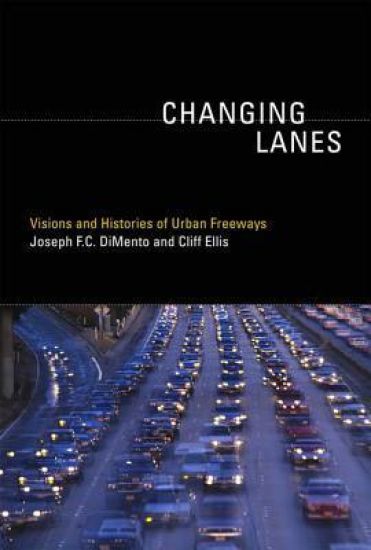
The story of the evolution of the urban freeway, the competing visions that informed it, and the emerging alternatives for more sustainable urban transportation.Urban freeways often cut through the heart of a city, destroying neighborhoods, displacing residents, and reconfiguring street maps. These massive infrastructure projects, costing billions of dollars in transportation funds, have been shaped for the last half century by the ideas of highway engineers, urban planners, landscape architects, and architects-with highway engineers playing the leading role. In Changing Lanes, Joseph DiMento and Cliff Ellis describe the evolution of the urban freeway in the United States, from its rural parkway precursors through the construction of the interstate highway system to emerging alternatives for more sustainable urban transportation.DiMento and Ellis describe controversies that arose over urban freeway construction, focusing on three cases: Syracuse, which early on embraced freeways through its center; Los Angeles, which rejected some routes and then built I-105, the most expensive urban road of its time; and Memphis, which blocked the construction of I-40 through its core. Finally, they consider the emerging urban highway removal movement and other innovative efforts by cities to re-envision urban transportation.

It is often said that there are two Frances—Catholic and secular. This notion dates back to the 1790s, when the revolutionary government sought to divorce Catholic Christianity from national life. While Napoleon formally reconciled his regime to France’s millions of Catholics, church-state relations have remained a source of conflict and debate throughout the nineteenth and twentieth centuries. In Catholic and French Forever Joseph Byrnes recounts the fights and reconciliations between French citizens who found Catholicism integral to their traditional French identity and those who found the continued presence of Catholicism an obstacle to both happiness and progress. He does so through stories of priests, legislators, intellectuals, and pilgrims whose experiences manifest the problem of being both Catholic and French in modern France. Byrnes finds that loyalties to the French nation and Catholicism became so incompatible in the revolutionary era that Catholic believers responded defensively across the nineteenth century, politicizing both religious pilgrimage and the languages of religious instruction. He shows that a détente emerged in the first decades of the twentieth century with the respect given to priests in arms during World War I and to the work of religious art historian Émile Mâle. This détente has lasted, precariously and with interruption, up to the present day.

It is often said that there are two Frances—Catholic and secular. This notion dates back to the 1790s, when the revolutionary government sought to divorce Catholic Christianity from national life. While Napoleon formally reconciled his regime to France’s millions of Catholics, church-state relations have remained a source of conflict and debate throughout the nineteenth and twentieth centuries. In Catholic and French Forever Joseph Byrnes recounts the fights and reconciliations between French citizens who found Catholicism integral to their traditional French identity and those who found the continued presence of Catholicism an obstacle to both happiness and progress. He does so through stories of priests, legislators, intellectuals, and pilgrims whose experiences manifest the problem of being both Catholic and French in modern France. Byrnes finds that loyalties to the French nation and Catholicism became so incompatible in the revolutionary era that Catholic believers responded defensively across the nineteenth century, politicizing both religious pilgrimage and the languages of religious instruction. He shows that a détente emerged in the first decades of the twentieth century with the respect given to priests in arms during World War I and to the work of religious art historian Émile Mâle. This détente has lasted, precariously and with interruption, up to the present day.

The 115,000 priests on French territory in 1789 belonged to an evolving tradition of priesthood. The challenge of making sense of the Christian tradition can be formidable in any era, but this was especially true for those priests required at the very beginning of 1791 to take an oath of loyalty to the new government—and thereby accept the religious reforms promoted in a new Civil Constitution of the Clergy. More than half did so at the beginning, and those who were subsequently consecrated bishops became the new official hierarchy of France. In Priests of the French Revolution, Joseph Byrnes shows how these priests and bishops who embraced the Revolution creatively followed or destructively rejected traditional versions of priestly ministry. Their writings, public testimony, and recorded private confidences furnish the story of a national Catholic church. This is a history of the religious attitudes and psychological experiences underpinning the behavior of representative bishops and priests. Byrnes plays individual ideologies against group action, and religious teachings against political action, to produce a balanced story of saints and renegades within a Catholic tradition.

The 115,000 priests on French territory in 1789 belonged to an evolving tradition of priesthood. The challenge of making sense of the Christian tradition can be formidable in any era, but this was especially true for those priests required at the very beginning of 1791 to take an oath of loyalty to the new government—and thereby accept the religious reforms promoted in a new Civil Constitution of the Clergy. More than half did so at the beginning, and those who were subsequently consecrated bishops became the new official hierarchy of France. In Priests of the French Revolution, Joseph Byrnes shows how these priests and bishops who embraced the Revolution creatively followed or destructively rejected traditional versions of priestly ministry. Their writings, public testimony, and recorded private confidences furnish the story of a national Catholic church. This is a history of the religious attitudes and psychological experiences underpinning the behavior of representative bishops and priests. Byrnes plays individual ideologies against group action, and religious teachings against political action, to produce a balanced story of saints and renegades within a Catholic tradition.
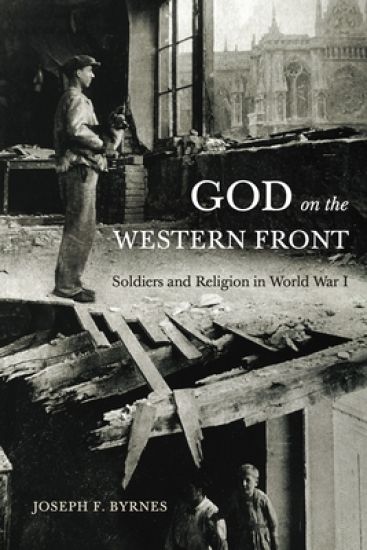
From 1914 to 1918, religious believers and hopeful skeptics tried to find meaning and purpose behind divinely willed destruction. God on the Western Front is a history of lived religion across national boundaries, religious affiliations, and class during World War I, utilizing an expansive record of primary sources.Joseph F. Byrnes takes readers on a tour of the battlefields of France, listening to the words of German, French, and English soldiers; going behind the lines to hear from the men and women who provided pastoral and medical care; and reviewing the religious writings of priests, bishops, ministers, and rabbis as they tried to make sense of it all. The story begins with citizens at home as they responded to the obligation to make war and then focuses on the “God-talk” and “nation-talk” that soldiers used to express their foundational religious experiences. Byrnes’s study attends to the words of average men who struggled to articulate their religious sentiments, alongside the generals Helmuth von Moltke, Ferdinand Foch, and Douglas Haig and the soldier theologians Franz Rosenzweig, Paul Tillich, Pierre Teilhard de Chardin, and Geoffrey Studdert Kennedy. In doing so, he shows how religious and battle experience are intertwined and showcases the wide range of spiritual responses that emerged across boundaries.Going beyond the typical constraints of studies focused either on one nation or one confessional affiliation, Byrnes’s international and interfaith approach breaks new ground. It will appeal to scholars and students of modern European history, religious history, and the history of war.
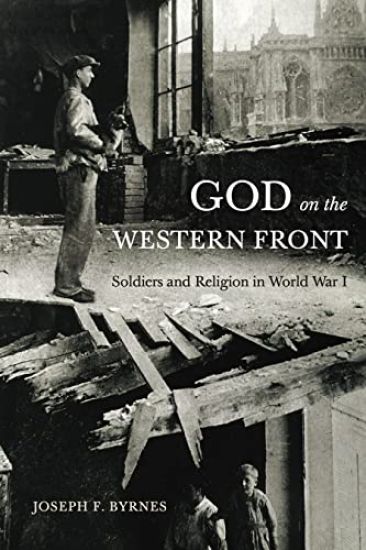
From 1914 to 1918, religious believers and hopeful skeptics tried to find meaning and purpose behind divinely willed destruction. God on the Western Front is a history of lived religion across national boundaries, religious affiliations, and class during World War I, utilizing an expansive record of primary sources.Joseph F. Byrnes takes readers on a tour of the battlefields of France, listening to the words of German, French, and English soldiers; going behind the lines to hear from the men and women who provided pastoral and medical care; and reviewing the religious writings of priests, bishops, ministers, and rabbis as they tried to make sense of it all. The story begins with citizens at home as they responded to the obligation to make war and then focuses on the “God-talk” and “nation-talk” that soldiers used to express their foundational religious experiences. Byrnes’s study attends to the words of average men who struggled to articulate their religious sentiments, alongside the generals Helmuth von Moltke, Ferdinand Foch, and Douglas Haig and the soldier theologians Franz Rosenzweig, Paul Tillich, Pierre Teilhard de Chardin, and Geoffrey Studdert Kennedy. In doing so, he shows how religious and battle experience are intertwined and showcases the wide range of spiritual responses that emerged across boundaries.Going beyond the typical constraints of studies focused either on one nation or one confessional affiliation, Byrnes’s international and interfaith approach breaks new ground. It will appeal to scholars and students of modern European history, religious history, and the history of war.
This volume has been written specifically for students of the U.S. system of government, and for students interested in federalism in practice. Joseph F. Zimmerman traces the development if the U.S. federal system from 1789 to the present day by focussing in the shifting balance of power between the nation and the states. It introduces the important theories of federalism and explains how they can be used to understand the system as it was originally drawn up and as it operates now. All the important trends in national-state relations are examined, with particular attention being given to the preemption by the federal legislature and judiciary of the powers and authority of the states.The U.S. federal system has changed radically since its inception, and continues to increase in complexity. This lucid and accessible account links the system's current practices with its history and looks forward to the future of the most important federal system in operation today.

This volume has been written specifically for students of the U.S. system of government, and for students interested in federalism in practice. Joseph F. Zimmerman traces the development if the U.S. federal system from 1789 to the present day by focussing in the shifting balance of power between the nation and the states. It introduces the important theories of federalism and explains how they can be used to understand the system as it was originally drawn up and as it operates now. All the important trends in national-state relations are examined, with particular attention being given to the preemption by the federal legislature and judiciary of the powers and authority of the states.The U.S. federal system has changed radically since its inception, and continues to increase in complexity. This lucid and accessible account links the system's current practices with its history and looks forward to the future of the most important federal system in operation today.
This is a revision and update of Zimmerman's classic study of relations between state and local government. The first edition, published in 1983, was based on three decades of research into intergovernmental affairs and examined the legal, financial, and structural foundations of state-local relations. This new edition adds a fourth decade of research and brings the work up to date through the early 1990s, adding a chapter on state mandates and local governments, reviewing and analyzing the changes in fortune of state and local governments, and the impact of those changes on their relations between each other and between themselves and the federal government.
This is a revision and update of Zimmerman's classic study of relations between state and local government. The first edition, published in 1983, was based on three decades of research into intergovernmental affairs and examined the legal, financial, and structural foundations of state-local relations. This new edition adds a fourth decade of research and brings the work up to date through the early 1990s, adding a chapter on state mandates and local governments, reviewing and analyzing the changes in fortune of state and local governments, and the impact of those changes on their relations between each other and between themselves and the federal government.
This groundbreaking book examines in detail relations between the states and the roles of United States Congress and Supreme Court in determining the nature of such relations—a distinguishing characteristic of a federal system. The neglect of interstate relations by scholars is surprising in view of the long and ongoing struggle between state power and federal power in the U.S. This new text provides a comprehensive examination of interstate relations, with up-to-date information and analysis relative to interstate suits, full faith and credit, privileges and immunities, tax exportation by states, interstate business competition, and interstate trade barriers. In addition, the work proposes a new model for improving interstate relations in the U.S. This important text will be of interest to scholars and students in American government and politics, state government and politics, and intergovernmental relations.

Zimmerman examines in detail the use of the recall by United States voters to remove elected state and local officials from office. The arguments of recall proponents and opponents are analyzed, and model constitutional and statutory provisions are developed to guide governments considering adoption of the recall or revision of current recall provisions.This book is the first since 1912 devoted to a national evaluation of the recall. The recall currently is authorized by a constitutional or statutory provision in 26 states and by home rule charters in a number of additional states. Zimmerman examines in detail the use of the recall by United States voters to remove elected state and local officials from office. The arguments of recall proponents and opponents are analyzed, and model constitutional and statutory provisions are developed to guide governments considering adoption of the recall or revision of current recall provisions.Recall attempts throughout the United States are reviewed to obtain evidence to evaluate the arguments of recall proponents and opponents. The evidence, Zimmerman suggests, generally supports the proponents. The recall has not produced a new era of public official responsibility, yet the device has not caused extensive disruption of state and local governments as feared by early opponents. In his conclusion, Zimmerman analyzes current constitutional and statutory recall provisions to develop model provisions to guide those considering adoption of the recall or revision of existing provisions. This analysis will be of particular interest to scholars and researchers of state and local government, American constitutional law, and public policy.
Wringing Success from Failure in Late-Developing Countries
Joseph F. Stepanek
Praeger Publishers Inc
1999
sidottu
Development has alleviated poverty in many countries during the 50 years since the end of War World II, yet half of mankind remains poor; a fifth are very poor. Poverty is not a state of nature, but, as Stepanek shows, can be ascribed to manmade institutions that reflect self-serving and self-indulgent ideologies, poorly tested theories and policies, weak governments, and poverty alleviation programs that are questionably designed and poorly administered. Dr. Stepanek asserts that poverty cannot be alleviated without challenging all of its root causes, and he shows that well-designed development strategies and foreign assistance programs can create growth and reduce poverty. Western governments, international banks, and donor agencies must reexamine how they design and administer foreign aid if they are to be successful. Stepanek explains foreign aid in general and in specific, in history and theory, and in its present and practical forms.
In this groundbreaking study, Zimmerman explores the town meeting form of government in all New England states. This comprehensive work relies heavily upon surveys of town officers and citizens, interviews, and mastery of the scattered writing on the subject. Zimmerman finds that the stereotypes of the New England open town meeting advanced by its critics are a serious distortion of reality. He shows that voter superintendence of town affairs has proven to be effective, and there is no empirical evidence that thousands of small towns and cities with elected councils are governed better. Whereas the relatively small voter attendance suggests that interest groups can control town meetings, their influence has been offset effectively by the development of town advisory committees, particularly the finance committee and the planning board, which are effective counterbalances to pressure groups. Zimmerman provides a new conception of town meeting democracy, positing that the meeting is a de facto representative legislative body with two safety valves—open access to all voters and the initiative to add articles to the warrant, and the calling of special meetings to reconsider decisions made at the preceding town meeting. And, as Zimmerman points out, a third safety valve—the protest referendum—can be adopted by a town meeting.

The referendum first became established with voter ratification of the Massachusetts Constitution in 1780. Other types were adopted in the nineteenth century, largely through the efforts of Progressives and Populists seeking to authorize voters to utilize the initiative-referendum and protest referendum. Certain referenda, particularly on adoption or amendment of constitutions and local government charters, are well established and non-controversial. Other referenda, the general initiative-referendum and the protest referendum, have been controversial since their inception. Zimmerman analyzes a number of general initiative and protest referendum campaigns in order to develop conclusions as to their desirability and the need for reform.Experience with the various types of referenda reveal the need for the development of a general theory of their use, combining elements of the theory of representative democracy based on the leadership-feedback model and the theory of direct democracy based upon decision making by assembled voters. Referenda experience also reveals that certain types of referenda would be unnecessary if each state government devolved broad powers to general purpose local government. Zimmerman's analysis of the development of the 16 types of referenda and their attributes and defects will be a major resource for scholars, students, policy makers, and the general public interested in issues of local and state government effectiveness and accountability.

Zimmerman places in perspective the important roles played by interstate compacts and interstate administrative agreements in the governance systems of the United States. Compacts are identified and classified by type. Particular emphasis is placed on federal government promotion of compacts, including the U.S. Congress enactment of federal-state compacts in which the federal government joins member states as partners to achieve stated goals.Formal and informal interstate administrative agreements have increased in number dramatically during the past six decades and relate to both minor and very important issues. Credit for many interstate administrative agreements must be ascribed to associations of state government officers which encourage their members to promote interstate cooperation and also draft model state laws and administrative agreements. Although compacts and agreements have lubricated the functioning of the United States governmental system, as Zimmerman makes clear, the full potential of compacts and agreements has not been achieved to date, and he makes recommendations to improve the level of interstate cooperation. An important resource for scholars and students of American government—federal, state, and local—as well as administrators and policymakers.