The California Constitution is one of the longest in the world and has been revised over 500 times since its original drafting in 1849. In its current incarnation, the constitution reflects the state's mistrust of elected officials, gives cities and towns broad home rule powers, and outlines governance for the state's university system. The California State Constitution provides an outstanding constitutional and historical account of the state's basic governing charter. In addition to an overview of California's constitutional history, it offers an in-depth, section-by-section analysis of the entire constitution, detailing the many significant changes that have been made since its initial drafting in 1849. This treatment, along with a table of cases, index, and the bibliography provides an unsurpassed reference guide for students, scholars, and practitioners of California's constitution. The second edition updates and expands the previous edition published in 1993. The book provides new analysis, with citations to court decisions and relevant scholarly commentary, as well as accompanying explanations and a lengthy introduction to provide historical and thematic context. This new edition also contains a foreword by the current Chief Justice of California, Tani Cantil-Sakauye. The Oxford Commentaries on the State Constitutions of the United States is an important series that reflects a renewed international interest in constitutional history and provides expert insight into each of the 50 state constitutions. Each volume in this innovative series contains a historical overview of the state's constitutional development, a section-by-section analysis of its current constitution, and a comprehensive guide to further research. Under the expert editorship of Professor G. Alan Tarr, Director of the Center on State Constitutional Studies at Rutgers University, this series provides essential reference tools for understanding state constitutional law. Books in the series can be purchased individually or as part of a complete set, giving readers unmatched access to these important political documents.
"Everyone knows 'drunk driving' is a 'serious' offense. And yet, everyone knows lots of 'drunk drivers' who don't get involved in accidents, don't get caught by the police, and manage to compensate adequately for their 'drunken disability.' Everyone also knows of 'drunk drivers' who have been arrested and gotten off easy. Gusfield's book dissects the conventional wisdom about 'drinking-driving' and examines the paradox of a 'serious' offense that is usually treated lightly by the judiciary and rarely carries social stigma."—Mac Marshall, Social Science and Medicine "A sophisticated and thoughtful critic. . . . Gusfield argues that the 'myth of the killer drunk' is a creation of the 'public culture of law.' . . . Through its dramatic development and condemnation of the anti-social character of the drinking-driver, the public law strengthens the illusion of moral consensus in American society and celebrates the virtues of a sober and orderly world."—James D. Orcutt, Sociology and Social Research"Joseph Gusfield denies neither the role of alcohol in highway accidents nor the need to do something about it. His point is that the research we conduct on drinking-driving and the laws we make to inhibit it tells us more about our moral order than about the effects of drinking-driving itself. Many will object to this conclusion, but none can ignore it. Indeed, the book will put many scientific and legal experts on the defensive as they face Gusfield's massive erudition, pointed analysis and criticism, and powerful argumentation. In The Culture of Public Problems, Gusfield presents the experts, and us, with a masterpiece of sociological reasoning."—Barry Schwartz, American Journal of SociologyThis book is truly an outstanding achievement. . . . It is sociology of science, sociology of law, sociology of deviance, and sociology of knowledge. Sociologists generally should find the book of great theoretical interest, and it should stimulate personal reflection on their assumptions about science and the kind of consciousness it creates. They will also find that the book is a delight to read."—William B. Bankston, Social Forces
The important role of the Temperance movement throughout American history is analyzed as clashes and conflicts between rival social systems, cultures, and status groups. Sometimes the "dry" is winning the classic battle for prestige and political power. Sometimes, as in today's society, he is losing. This significant contribution to the theory of status conflict also discloses the importance of political acts as symbolic acts and offers a dramatistic theory of status politics, Gusfield provides a useful addition to the economic and psychological modes of analysis current in the study of political and social movements.
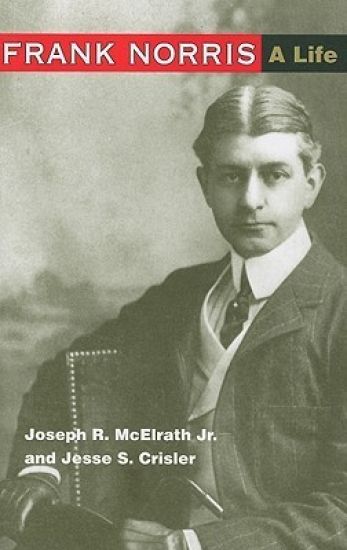
Born in Chicago in 1870, Frank Norris led a life of adventure and art. He moved to San Francisco at fifteen, spent two years in Paris painting, returned to San Francisco to become an internationally famous author, and died at age thirty-two from a ruptured appendix. During his short life, he wrote an inspired series of novels about the United States coming of age, including The Octopus, The Pit, and McTeague. Until recently, various obstacles prevented a comprehensive biography of Norris: the writer burned most of his correspondence, the 1906 San Francisco earthquake and fire devoured more, and his brother and widow dispersed his surviving papers as gifts. Joseph R. McElrath Jr. and Jesse S. Crisler spent over thirty years amassing the material necessary for this truly full-scale portrait of Norris.
The end of the 1990s saw increasing criticism of the media's treatment of the scandals in Washington. Critics complained that journalists either had not covered the political crisis well, that they had bungled it, or that they had simply blown it out of proportion. Some went so far as to call the situation Pressgate. As Hayden points out, however, the larger question remained: What was Clinton's overall relationship with the media?Hayden examines presidential-press relationships in the 1990s, focusing first on the 1992 campaign, then on issues and events over Clinton's two terms. He analyzes the press response to the programs of the Clinton era as well as the scandals, the roles of consultants like James Carville, the effectiveness of various press secretaries, and the use of pollsters like Dick Morris. He also examines the fate of the First Amendment in the 1990s and how Clinton responded to freedom of expression concerns. This analysis will be of interest to media specialists as well as the general public concerned with contemporary Washington politics and journalism.
President Bill Clinton has been more than generous, Blaney and Benoit point out, in providing fodder for examination of image restoration in politics. His accusers have also done their part in making the public aware of the president's real and perceived shortcomings. As the authors detail, Bill Clinton has been the subject of a tremendous, if not unprecedented, amount of scrutiny by his personal and political enemies.Blaney and Benoit systematically review the background of the various scandals that have marred the Clinton presidency. They concentrate on the techniques used to advance the various accusations and the approaches taken by the president and his supporters to deflect the attacks. All scholars and researchers interested in political communication and rhetoric in contemporary American politics and the presidency will find this to be essential reading.
Martial arts, once restricted to a few specific locations and practiced by small groups of devotees, have truly spread throughout the world. The plethora of tae kwando and karate dojos in U.S. shopping malls attests to the popularity of various kinds of martial arts in this country. Though generally perceived and advertised as means of self-defense, body sculpting, and self-discipline, martial arts are actually social tools that respond to altered physical, social, and psychological environments. This book examines how practitioners have responded to stimuli such as feminism, globalism, imperialism, militarism, nationalism, slavery, and the commercialization of sport. In a series of chapters devoted to Asian, African, and European systems of the late 19th to early 21st centuries, the authors examine the forces and philosophies that shaped fighting arts in diverse cultural settings. Because of political, social, and economic factors, this period witnessed the spread of martial arts to areas outside of their original contexts. Some of these arts flourished in their new environments, but others did not. The authors demonstrate that martial arts are not the conservative strongholds of tradition posited by conventional wisdom, but are instead responsive and mutable barometers of change. This book is essential for students of multicultural dialogues and devotees of martial arts performance and practice.
Winner of the Joseph Levenson Post-1900 Book PrizeThis cultural study of public space examines the cityscape of Taipei, Taiwan, in rich descriptive prose. Contemplating a series of seemingly banal subjects--maps, public art, parks--Joseph Allen peels back layers of obscured history to reveal forces that caused cultural objects to be celebrated, despised, destroyed, or transformed as Taipei experienced successive regime changes and waves of displacement. In this thoughtful stroll through the city, we learn to look beyond surface ephemera, moving from the general to the particular to see sociocultural phenomena in their historical and contemporary contexts.Watch the book trailer: https://www.youtube.com/watch?v=xBdGIoox7zM
This work brings together a selection of the author's articles, written over a period of 20 years, observing the place of alcohol in American culture. The text also contains several ethnographic studies of bars in San Diego and a study of court-mandated programmes for drink drivers.
Procrastination is a fascinating, highly complex human phenomenon for which the time has come for systematic theoretical and therapeutic effort. The present volume reflects this effort. It was a labor of love to read this scholarly, timely book-the first of its kind on the topic. It was especially encouraging to find that its authors are remarkably free of the phenomenon they have been investigating. One might have expected the opposite. It has often been argued that people select topics that trouble them and come to understand their problems better by studying or treating them in others. This does not appear to be true of the procrastination researchers represented in this book. I base this conclusion on two simple observations. First, the work is replete with recent refer ences and the book itself has reached the reader scarcely a year following its completion. Second, when one considers the remarkable pace of pro grammatic research by these contributors during the past decade, it is clear that they are at the healthy end of the procrastination continuum. The fascinating history of the term procrastination is well documented in this book. The term continues to conjure up contrasting, eloquent images-especially for poets. When Edward Young wrote in 1742, "Pro crastination is the Thief of Time," he was condemning the waste of the most precious of human commodities.
During the past 15 years, there has been remarkable progress in the analysis and manipulation of DNA and its use in nanotechnology. DNA analysis is ubiquitous in molecular biology, medical diagnostics, and forensics. Much of the readout technology is based on fluorescence detection. This volume contains contributions from many experts in the field who present an overview of many aspects of DNA technology. These chapters provide an understanding of the underlying principles and technology, rather than an exhaustive review of the literature. Written in a clear straightforward style, this book is an excellent introduction for any scientist to the use of fluorescence in DNA analysis. DNA Technology is an essential reading for all academics, bench scientists, and industry professionals wishing to take advantage of the latest and greatest in this continuously emerging field. Key Features: *Comprehensive overview of the complexities of DNA analysis, *Covers topics of universal interest to a broad field of scientists,*Accessible utility in presenting state-of-the-art DNA technology, *Chapters authored by key figures in the field.
A practical guide for those struggling to build a community of believers in a culture that wants to experience belonging over believing Who is my neighbor? Who belongs to me? To whom do I belong? These are timeless questions that guide the church to its fundamental calling. Today terms like neighbor, family, and congregation are being redefined. People are searching to belong in new places and experiences. The church needs to adapt its interpretations, definitions, and language to make sense in the changing culture. This book equips congregations and church leaders with tools to: • Discern the key ingredients people look for in community • Understand the use of space as a key element for experiencing belonging and community • Develop the “chemical compound” that produces an environment for community to spontaneously emerge • Discover how language promotes specific spatial belonging and then use this knowledge to build an effective vocabulary for community development • Create an assessment tool for evaluating organizational and personal community health
Even in the relatively serene world of North America and Western Europe, numerous conflicts with the propensity for sustained political violence are carried out by domestic groups with alarming regularity. This in-depth volume explores conflicts and potential hot spot areas in these regions, from anti-globalization protests to immigration politics to the Basque provinces and the ETA. Coverage is divided into three regions—the established democracies of the U.S., Canada, and Western Europe; the democratizing countries of post-communist Europe; and the more volatile region encompassing Russia, the Balkans, the Causasus, and Post-Soviet Eastern Europe—for a greater understanding of geographic interrelationships. This comprehensive volume is a first-stop reference source for the most significant political, cultural, and economic conflicts in North America and Europe today.With regional chronologies of events, a print and nonprint bibliography, and engaging photos, this comprehensive volume is a first-stop reference source for the most significant political, cultural, and economic conflicts in North America and Europe today.
**Selected for Doody’s Core Titles® 2024 with "Essential Purchase" designation in Communication Sciences & Disorders** Ensure you’re up to speed with the most recent findings in motor speech disorders. One of the most trusted sources on this topic, Motor Speech Disorders integrates the latest neurological research with the realities of clinical practice. The fourth edition is divided into three sections which focus on substrates of motor speech and its disorders, the disorders and their diagnoses, and finally managing various treatment types. Additionally, new research on the neurologic organization of motor control, causes of motor speech disorders, and advances in the medical and behavioral management of specific disorders is incorporated throughout. Supported by a robust evolve site, this outstanding, evidence-based resource provides everything you need to become a skilled clinical practitioner. UPDATED! Over 400 literature references emphasize clinically important information for each major part of the textbook. UPDATED Illustrations throughout text enhance your understanding of key concepts. UPDATED Case studies in Disorders chapters help clarify dense and difficult content and help hone your critical thinking skills. Cutting-edge research with an emphasis on evidence-based practice ensures that this book contains the most comprehensive and up-to-date look at the state of motor speech disorders. Logical three-part organization first covers the neurologic underpinnings of speech, then the various disorders resulting from problems in the nervous system, and then the basic principles and disorder-specific management strategies. Summary tables and boxes offer easy access to important information such as causes and characteristics to aid in differential diagnosis. Chapter outline and summary sections highlight key points to help you to focus on the most significant information. NEW! 24 new audio and video clips demonstrating various disorders have been added to the accompanying Evolve website, totaling over 150 audio and video clips in the interactive PowerPoint presentations. NEW! Clinical insights and key information summaries call out need-to-know information throughout text.
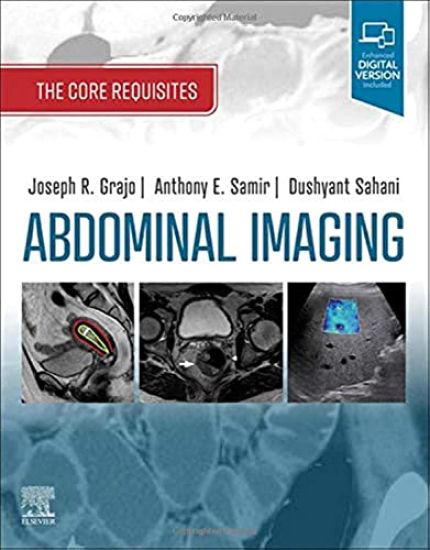
Taking a high-yield, "just the essentials" approach, Abdominal Imaging: The Core Requisites helps you establish a foundational understanding of both gastrointestinal and genitourinary imaging during rotations, prepare for the core and certifying exams, and refresh your knowledge of key concepts. This new title solves the "information overload" problem often faced by trainee and practicing radiologists by emphasizing the essential knowledge you need in an easy-to-ready hybrid format of traditional text and bullet points. Emphasizes a "just the essentials" approach to foundational abdominal imaging content presented in an easy-to-read, quick reference format, with templated content that includes numerous outlines, tables, pearls, boxed material, and bulleted text for easy reading and efficient recall. Helps you build and solidify core knowledge to prepare you for clinical practice with critical, up-to-date information on GI/GU topics, including relevant anatomy, lesion characterization, tumor staging, indication-based protocols and techniques, and more. Prioritizes high-yield topics and explains key information to help you efficiently and effectively prepare for board exams. Contains problem-based and disease-focused chapters such as right upper quadrant pain, chronic liver disease, colorectal cancer and screening, postoperative imaging, and abdominal/pelvic trauma. Includes reporting tips and recommendations with sample structured reports. Features more than 500 high-quality images spanning a variety of critical abdominal and pelvic disease processes, including discussions of advanced imaging techniques such as multiparametric MRI, dual energy CT, and elastography. Published as part of the newly reimagined Core Requisites series, an update to the popular Requisites series for today’s busy clinician. Enhanced eBook version included with purchase. Your enhanced eBook allows you to access all of the text, figures, and references from the book on a variety of devices.
The book share with its reader's gems and insights that are relevant for living a victorious life. These gems and insights are found in the word of God.
Ebola: Clinical Patterns, Public Health Concerns is a concise description and discussion of the Ebola virus and disease. The intended audience is medical practitioners, including those working in endemic areas as well as health-facility planners and public health practitioners. The book fills an important gap between large texts covering not only Ebola but other hemorrhagic fever viruses and brief pamphlet-style publications on the public health aspects of the infection. In light of the recent large outbreak in West Africa, this book is a part of the developing foundation needed to deal with emerging diseases.