Kirjahaku
Etsi kirjoja tekijän nimen, kirjan nimen tai ISBN:n perusteella.
1000 tulosta hakusanalla Joseph Rickaby

Ye Are Christ's: Eighty-Four Considerations for Boys
Joseph Rickaby
Literary Licensing, LLC
2014
nidottu

Moral Philosophy: Ethics, Deontology, and Natural Law
Joseph Rickaby
Createspace Independent Publishing Platform
2014
nidottu
An Introduction To Moral Philosophy: How To Think About Ethics And The Natural Law
Joseph Rickaby
Createspace Independent Publishing Platform
2017
nidottu
Everyone wants to be happy and everyone wants to be a good person. The trouble is that the contemporary slogan of "do what feels good", which was supposed to give us happiness and moral clarity, has led to more mental misery and confused consciences than ever before. It's obvious that doing what feels good doesn't mean it is good, but if that doesn't work then is pursuing happiness and goodness pointless or impossible? NO What can we do then? The neglected answer to that question is right here in this book.
Aquinas Ethicus - or, the moral teaching of st. thomas - Volume II is an unchanged, high-quality reprint of the original edition of 1892. Hansebooks is editor of the literature on different topic areas such as research and science, travel and expeditions, cooking and nutrition, medicine, and other genres. As a publisher we focus on the preservation of historical literature. Many works of historical writers and scientists are available today as antiques only. Hansebooks newly publishes these books and contributes to the preservation of literature which has become rare and historical knowledge for the future.
Moral Philosophy; Ethics, Deontology and Natural Law: in large print
Joseph Rickaby
Megali Verlag
2023
nidottu
Reproduction of the original. The publishing house Megali specialises in reproducing historical works in large print to make reading easier for people with impaired vision.
Moral Philosophy; Ethics, Deontology and Natural Law: in large print
Joseph Rickaby
Megali Verlag
2023
sidottu
Reproduction of the original. The publishing house Megali specialises in reproducing historical works in large print to make reading easier for people with impaired vision.
Reproduction of the original: Moral Philosophy by Joseph Rickaby
Reproduction of the original: Moral Philosophy by Joseph Rickaby
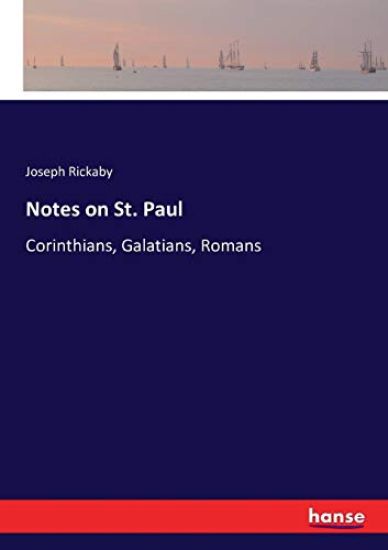
Notes on St. Paul - Corinthians, Galatians, Romans is an unchanged, high-quality reprint of the original edition of 1898. Hansebooks is editor of the literature on different topic areas such as research and science, travel and expeditions, cooking and nutrition, medicine, and other genres. As a publisher we focus on the preservation of historical literature. Many works of historical writers and scientists are available today as antiques only. Hansebooks newly publishes these books and contributes to the preservation of literature which has become rare and historical knowledge for the future.

Moral Philosophy: Ethics, Deontology and Natural Law, a classical book, has been considered essential throughout the human history, and so that this work is never forgotten we at Alpha Editions have made efforts in its preservation by republishing this book in a modern format for present and future generations. This whole book has been reformatted, retyped and designed. These books are not made of scanned copies of their original work and hence the text is clear and readable.

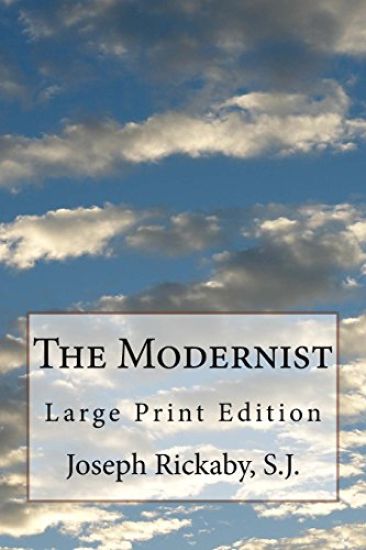
The Modernist: Large Print Edition
Joseph Rickaby S. J.
Createspace Independent Publishing Platform
2018
nidottu
With Imprimatur. Introduction 4 Chapter I 9 The Modernist versus the Church Hierarchical Chapter II 22 The Modernist versus the Church Historical Chapter III 37 The Modernist versus the Church Universal Appendix: 60 Newman and the Modernist Introduction The object of these pages is twofold: first and mainly, to show that Pius X could do no otherwise than to eject the Modernist from the Catholic Church-he has no place there; secondly, to show John Henry Newman the whole-hearted opponent of Modernism, as it was not then called, but as it existed in his day. As the Papal Encyclical and Syllabus condemns no man by name, so these pages are strictly impersonal. No individual is either mentioned or aimed at in them. I shall be glad if any one will disavow this doctrine of Modernism, and cry that it never was his. Yet let him cry out without anger. The doctrine is not imputed to him. The discourses are founded on the Syllabus Lamentabili issued July 3, 1907, and the Encyclical Pascendi dominici gregis of September 8,1907, the authorized translation of which may be had of Messrs. Burns & Oates, price twopence. Of the sixty-five propositions condemned in the Syllabus, the following are chiefly dealt with in these pages. Prop. 3. From ecclesiastical judgements and censures passed upon the free and more erudite interpretation of Scripture, it may be gathered that the faith proposed by the Church contradicts history, and that Catholic dogmas really cannot be reconciled with the truer origins of the Christian religion. Prop. 6. In the defining of truths the Church taught and the Church teaching work together in such a way that nothing is left for the Church teaching but to sanction the common opinions of the Church taught.
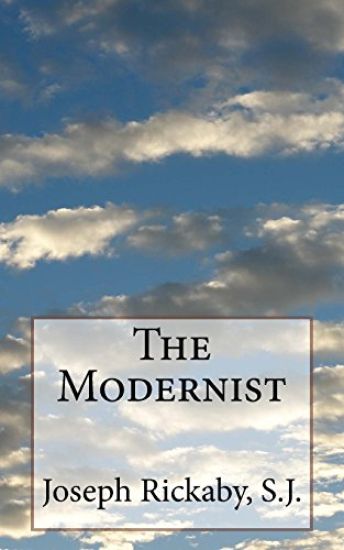
With Imprimatur Introduction 4 Chapter I 8 The Modernist versus the Church Hierarchical Chapter II 19 The Modernist versus the Church Historical Chapter III 31 The Modernist versus the Church Universal Appendix: 50 Newman and the Modernist Introduction The object of these pages is twofold: first and mainly, to show that Pius X could do no otherwise than to eject the Modernist from the Catholic Church-he has no place there; secondly, to show John Henry Newman the whole-hearted opponent of Modernism, as it was not then called, but as it existed in his day. As the Papal Encyclical and Syllabus condemns no man by name, so these pages are strictly impersonal. No individual is either mentioned or aimed at in them. I shall be glad if any one will disavow this doctrine of Modernism, and cry that it never was his. Yet let him cry out without anger. The doctrine is not imputed to him. The discourses are founded on the Syllabus Lamentabili issued July 3, 1907, and the Encyclical Pascendi dominici gregis of September 8,1907, the authorized translation of which may be had of Messrs. Burns & Oates, price twopence. Of the sixty-five propositions condemned in the Syllabus, the following are chiefly dealt with in these pages. Prop. 3. From ecclesiastical judgements and censures passed upon the free and more erudite interpretation of Scripture, it may be gathered that the faith proposed by the Church contradicts history, and that Catholic dogmas really cannot be reconciled with the truer origins of the Christian religion. Prop. 6. In the defining of truths the Church taught and the Church teaching work together in such a way that nothing is left for the Church teaching but to sanction the common opinions of the Church taught.