
Kirjahaku
Etsi kirjoja tekijän nimen, kirjan nimen tai ISBN:n perusteella.
1000 tulosta hakusanalla Joseph Townsend
A journey through Spain in the years 1786 and 1787 is an unchanged, high-quality reprint of the original edition of 1792. Hansebooks is editor of the literature on different topic areas such as research and science, travel and expeditions, cooking and nutrition, medicine, and other genres. As a publisher we focus on the preservation of historical literature. Many works of historical writers and scientists are available today as antiques only. Hansebooks newly publishes these books and contributes to the preservation of literature which has become rare and historical knowledge for the future.
A Journey Through Spain in the Years 1786 and 1787 - Vol. III is an unchanged, high-quality reprint of the original edition of 1791. Hansebooks is editor of the literature on different topic areas such as research and science, travel and expeditions, cooking and nutrition, medicine, and other genres. As a publisher we focus on the preservation of historical literature. Many works of historical writers and scientists are available today as antiques only. Hansebooks newly publishes these books and contributes to the preservation of literature which has become rare and historical knowledge for the future.

Joseph Haydn is an unchanged, high-quality reprint of the original edition of 1884. Hansebooks is editor of the literature on different topic areas such as research and science, travel and expeditions, cooking and nutrition, medicine, and other genres. As a publisher we focus on the preservation of historical literature. Many works of historical writers and scientists are available today as antiques only. Hansebooks newly publishes these books and contributes to the preservation of literature which has become rare and historical knowledge for the future.
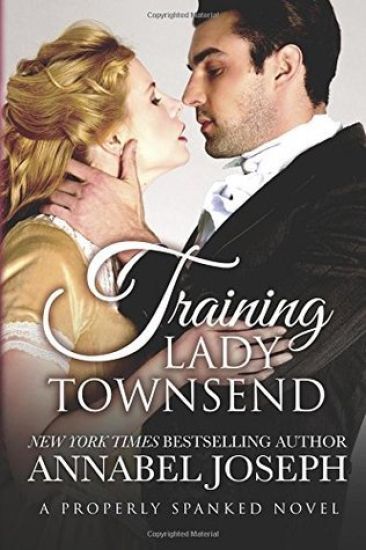
Take a rousing romp through 1790s England with this first of four Properly Spanked novels... The Lady Aurelia has been promised in marriage to the Marquess of Townsend since she was four and he was fourteen. Unfortunately, she grew up into a pillar of propriety while her betrothed grew up into a renowned rake. Of course, no one would expect such an unsuitable match to go forward...which is why they find themselves at a loss when circumstances force them to the altar and into each other's arms.Hunter, the beleaguered marquess, believes he'll survive the uneven match by continuing to frequent his well-trained coterie of whores and courtesans, but Aurelia's powerful father has other ideas. When he blocks Hunter's access to the only women shameless enough to cater to his decadent needs, the marquess informs his new wife that something will have to be done.That "something" will be the immediate commencement of her erotic training...whether she wants it or not.This 70K word novel contains acts of punishment and discipline, anal play, and other sensual practices. The Properly Spanked Series#1 Training Lady Townsend#2 To Tame A Countess#3 My Naughty Minette#4 Under A Duke's Hand
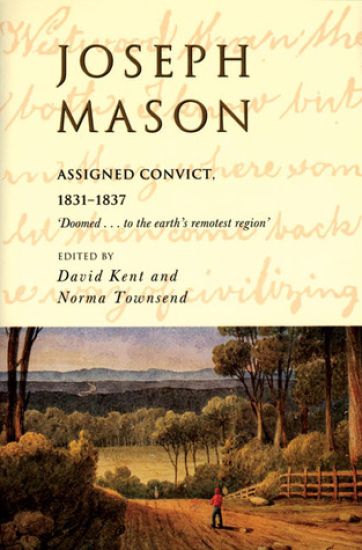
Joseph Mason, an English agricultural labourer, was convicted and transported for taking part in mass protests against the introduction of threshing machines, which were threatening to destroy the livelihood of English rural workers. Joseph was unusual among labourers in being a fluent writer and a voracious reader. His manuscript, only recently discovered, is published here for the first time. In it, he vividly describes life on the frontier, his encounters with Aboriginal people, and the flora and fauna of the bush. He tells of the living and working conditions of assigned convicts, and early horticultural and farming practices. The description of his explorations along the Nepean River captures the dramatic landscape of the gorge so accurately that it could serve as a guide for the modern bushwalker. This is a fresh and unique first-person account of the convict experience-a new and invaluable addition to the primary sources of Australian colonial history.

Admired and studied by both Mozart and Beethoven, Franz Joseph Haydn (1732-1809) imbued his life-enhancing compositions with wit, elegance and deep emotion. His output was prolific and included symphonies (most notably those written during his two visits to London, where he received a rapturous welcome), string quartets, chamber music, piano sonatas and choral works. This concise biography, first published in 1884, forms part of music critic Francis Hueffer's Great Musicians series, which was intended to provide succinct accounts of popular composers for the general reader. The author, Pauline D. Townsend, drew much of her material for the book from the painstaking research on Haydn published by the German musicologist Carl Ferdinand Pohl, archivist and librarian of the Vienna Society of the Friends of Music. A list of Haydn's works forms an appendix, based on the information in Grove's Dictionary of Music and Musicians.
Chief Joseph's Own Story and General Howard's Comment
Chief Joseph; Cyrus Townsend (EDT) Brady
Kessinger Pub
2005
pokkari

Nlp: The Essential Guide to Neuro-Linguistic Programming: The Essential Guide to Neuro-Linguistic Programming
Ian Townsend; Joseph Owen
Createspace Independent Publishing Platform
2015
nidottu
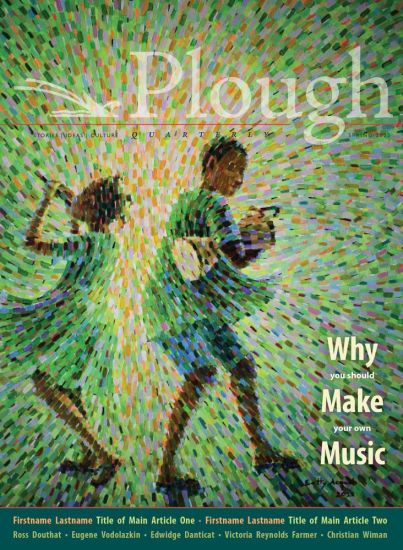
Plough Quarterly No. 31 – Why We Make Music
Christopher Tin; Stephen Michael Newby; Mary Townsend; Maureen Swinger; Joseph Julián González; Phil Christman; Eugene Vodolazkin; Esther Maria Magnis; Ben Crosby; Nathan Schram; Brittany Petruzzi; Norann Voll
PLOUGH PUBLISHING HOUSE
2022
pokkari
Communal music has the power to shape a soul and a society.In many places today, a culture of singing and making music remains robust, despite pressure from the commercial music industry. Or it was until the Covid pandemic hit and we glimpsed what a world without communal music-making could be like. According to Plato, virtuous music is vital for building a virtuous community. Jewish and Christian traditions take this insight even further: good communal music shapes and builds up the people of God. So how can we choose good music and avoid the bad? The sheer ubiquity of music available for consumption – its presence as a near-constant soundtrack to our daily lives – poses a hazard. Digital music on tap is a temptation to chronic distraction of the soul, to a habit of superficiality and non-attention. Fortunately, the remedy is straightforward: spend less time consuming prepackaged tunes and more time making music. This will be doubly rewarding if done with others – singing with one’s family, singing in church, playing in a string quartet, starting a regular jam session. If personal media players tend to cut us off from the physical presence of others, sharing in good music together breaks the spell of isolation and disembodiment. It builds friendship and community.On this theme:- Maureen Swinger’s amateur choir sings Bach’s Saint Matthew Passion.- Stephen Michael Newby says Black spirituals aren’t just for Black people. - Mary Townsend finds Dolly Parton magnificent, but would Aristotle? - Phil Christman finds catharsis in the YouTube comments of eighties songs. - Ben Crosby says congregational singing should be unabashedly weird to visitors.- Joseph Julián González draws on ancient Nahua poets in his music.- Christopher Tin explains why he weaves so many historical influences into his music. - Seven musicians talk about making your own music in schools, churches, prisons, backyards, or children’s bedrooms: Nathan Schram, Esther Keiderling, Norann Voll, Chaka Watch Ngwenya, Eileen Maendel, Adora Wong, and Brittany Petruzzi.Also in the issue: Exclusive excerpts from forthcoming books by Eugene Vodolazkin and Esther Maria Magnis- Thoughts on music from Augustine, Gregory of Nyssa, Hildegard of Bingen, Martin Luther, and Eberhard Arnold- Catholics and Anabaptists unite to commemorate the Radical Reformation- New poems by Jacqueline Saphra- A profile of Argentinian singer Mercedes Sosa.- Reviews of Kate Clifford Larson’s Walk with Me, Rowan Williams’s Shakeshafte, and Sam Quinones’s The Least of UsPlough Quarterly features stories, ideas, and culture for people eager to apply their faith to the challenges we face. Each issue includes in-depth articles, interviews, poetry, book reviews, and art.
Reprint of the original, first published in 1869.
Reprint of the original, first published in 1869.
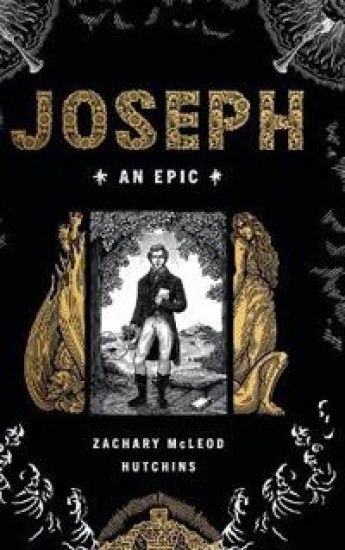
A poetic portrait of Joseph Smith's early life and career A quintessentially American saga, the life of Joseph Smith offers believers and non-believers alike an epic narrative that inhabits both grounded history and a heavenly sphere of action. Zachary McLeod Hutchins renders Smith's early life as a poetic narrative in two parts. The first introduces a very human Joseph and his youthful encounter with demonic powers seeking to prevent any communication with heaven. Following his First Vision, the teenaged prophet is charged by the angel Moroni to retrieve and translate a sacred record inscribed on gold plates. The second part picks up the story four years later, as Joseph marries Emma Hale and undertakes the plates' translation. Hutchins supplies a fictionalized excerpt from that translation, The Book of Lehi, and details Joseph's efforts to organize his growing band of followers, concluding on a note of contentment at odds with the tumultuous times to come in Smith's final years. An innovative perspective on Smith's early exploits, Joseph: An Epic reinterprets the origin story of a religious seeker and the faith he created.
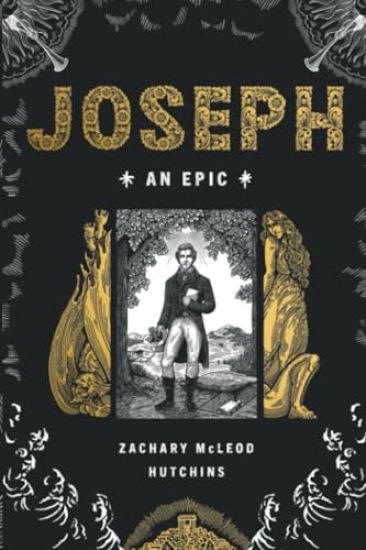
A poetic portrait of Joseph Smith's early life and career A quintessentially American saga, the life of Joseph Smith offers believers and non-believers alike an epic narrative that inhabits both grounded history and a heavenly sphere of action. Zachary McLeod Hutchins renders Smith's early life as a poetic narrative in two parts. The first introduces a very human Joseph and his youthful encounter with demonic powers seeking to prevent any communication with heaven. Following his First Vision, the teenaged prophet is charged by the angel Moroni to retrieve and translate a sacred record inscribed on gold plates. The second part picks up the story four years later, as Joseph marries Emma Hale and undertakes the plates' translation. Hutchins supplies a fictionalized excerpt from that translation, The Book of Lehi, and details Joseph's efforts to organize his growing band of followers, concluding on a note of contentment at odds with the tumultuous times to come in Smith's final years. An innovative perspective on Smith's early exploits, Joseph: An Epic reinterprets the origin story of a religious seeker and the faith he created.