Kirjojen hintavertailu. Mukana 11 244 527 kirjaa ja 12 kauppaa.

Kirjahaku

Etsi kirjoja tekijän nimen, kirjan nimen tai ISBN:n perusteella.

1000 tulosta hakusanalla Joseph Vogel

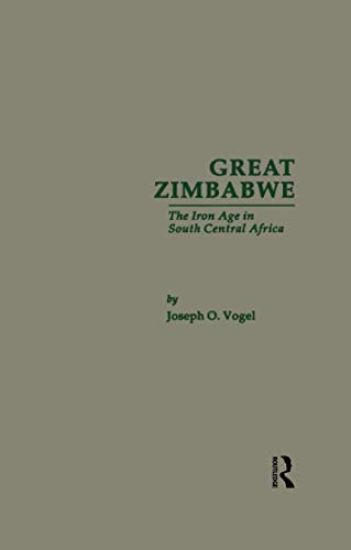
Great Zimbabwe

Great Zimbabwe

Joseph O. Vogel

Routledge
2020
nidottu
First Published in 1994. This research guide was written as a comprehensive, though by no means exhaustive, survey of the literature pertinent to studying the indigenous complex societies of south central Africa. Although the paramount focus of the compilation was the archaeology of Great Zimbabwe, the author has drawn from a broad geographical area and a wider period of time than that usually associated with Zimbabwean culture in order to demonstrate the cultural background for the growth of monumental trading towns in south central Africa.
Great Zimbabwe

Great Zimbabwe

Joseph O. Vogel

CRC Press Inc
1993
sidottu
First Published in 1994. This research guide was written as a comprehensive, though by no means exhaustive, survey of the literature pertinent to studying the indigenous complex societies of south central Africa. Although the paramount focus of the compilation was the archaeology of Great Zimbabwe, the author has drawn from a broad geographical area and a wider period of time than that usually associated with Zimbabwean culture in order to demonstrate the cultural background for the growth of monumental trading towns in south central Africa.
The Zimbabwe Culture

The Zimbabwe Culture

Innocent Pikirayi; Joseph O. Vogel

AltaMira Press,U.S.
2001
nidottu
Offering a unique and original perspective on the rise and fall of indigenous states of southern Zambezia, The Zimbabwe Culture analyzes the long contentious history of the remains of the remarkable cyclopean masonry, ranging from mighty capitals of traditional kings to humble farmsteads. Forming a cornerstone of the geographical lore of Africa in the seventeenth and eighteenth centuries, debate on the origins, development, and collapse of the Zimbabwe culture has never ceased, and with increasing archaeological research over the twentieth century, has become more complex. Thoroughly examining the growth and decline of pre-colonial states on the entire Zimbabwean Plateau and southern Zambezia, Dr. Pikirayi has contributed tremendously towards the archaeological understanding of this extraordinary culture. The Zimbabwe Culture is essential reading for all students and avocationalists of African archaeology, history, and culture.
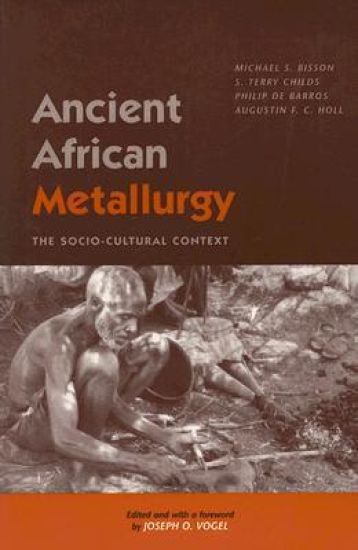
Ancient African Metallurgy

Ancient African Metallurgy

Michael S. Bisson; Terry S. Childs; Philip De Barros; Augustin F.C. Holl; Joseph O. Vogel

AltaMira Press,U.S.
2000
nidottu
Gold. Copper. Iron. Metal working in Africa has been the subject of both public lore and extensive archaeological investigation. Here, four of the leading contemporary researchers on this topic attempt to provide a complete synthesis of current debates and understandings: Where, how, and when was metal first introduced to the continent? How were iron and copper tools, implements, and objects used in everyday life, in trade, in political and cultural contexts? What role did metal objects play in the ideological systems of precolonial African peoples? Substantive chapters address the origins of metal working and the technology and the various uses and meanings of copper and iron. An ethnoarchaeological account in the words of a contemporary iron worker enriches the archaeological explanations. This book provides a comprehensive, timely summary of our current knowledge.
Georg Joseph Vogler (1749-1814)

Georg Joseph Vogler (1749-1814)

Bärbel Pelker; Rüdiger Thomsen-Fürst

Peter Lang AG
2016
sidottu
Dieses Buch beschaftigt sich mit dem zu seiner Zeit heftig umstrittenen, aber auch gluhend verehrten Komponisten, Orgelvirtuosen und Theoretiker Georg Joseph (Abbe) Vogler. Es erganzt die bislang einzige umfassende Biographie von Karl Emil von Schafhautl aus dem Jahre 1888 und bietet eine Bestandsaufnahme zu Voglers Leben und Werk. Ausfuhrlich stellen die Autoren dessen pfalz-bayerische Dienstjahre dar. Vor allem in seiner kurpfalzischen Zeit (1771-1780) schuf er die Basis fur seine zahlreichen musiktheoretischen Publikationen. Angesichts der ausserordentlich zahlreichen und weit verstreut uberlieferten Quellen, die groesstenteils nur schwer erreichbar sind, soll diese Materialsammlung eine Grundlage schaffen und weitere Forschungen anregen.
Abt Georg Joseph Vogler

Abt Georg Joseph Vogler

Karl Emil Von Schafhäutl

Hansebooks
2016
pokkari
Abt Georg Joseph Vogler - Sein Leben, Charakter und musikalisches System ist ein unver nderter, hochwertiger Nachdruck der Originalausgabe aus dem Jahr 1888. Hansebooks ist Herausgeber von Literatur zu unterschiedlichen Themengebieten wie Forschung und Wissenschaft, Reisen und Expeditionen, Kochen und Ern hrung, Medizin und weiteren Genres. Der Schwerpunkt des Verlages liegt auf dem Erhalt historischer Literatur. Viele Werke historischer Schriftsteller und Wissenschaftler sind heute nur noch als Antiquit ten erh ltlich. Hansebooks verlegt diese B cher neu und tr gt damit zum Erhalt selten gewordener Literatur und historischem Wissen auch f r die Zukunft bei.
The Specter of Capital

The Specter of Capital

Joseph Vogl

Stanford University Press
2014
sidottu
In his brilliant interdisciplinary analysis of the global financial crisis, Joseph Vogl aims to demystify finance capitalism—with its bewildering array of new instruments—by tracing the historical stages through which the financial market achieved its current autonomy. Classical and neoclassical economic theorists have played a decisive role here. Ignoring early warnings about the instability of speculative finance markets, they have persisted in their belief in the inherent equilibrium of the market, describing even major crises as mere aberrations or adjustments and rationalizing dubious financial practices that escalate risk while seeking to manage it. "The market knows best": this is a secular version of Adam Smith's faith in the market's "invisible hand," his economic interpretation of eighteenth-century providentialist theodicy, which subsequently hardened into an "oikodicy," an unquestioning belief in the self-regulating beneficence of market forces. Vogl shows that financial theory, assisted by mathematical modeling and digital technology, itself operates as a "hidden hand," pushing economic reality into unknown territory. He challenges economic theorists to move beyond the neoclassical paradigm to discern the true contours of the current epoch of financial convulsions.
The Specter of Capital

The Specter of Capital

Joseph Vogl

Stanford University Press
2014
pokkari
In his brilliant interdisciplinary analysis of the global financial crisis, Joseph Vogl aims to demystify finance capitalism—with its bewildering array of new instruments—by tracing the historical stages through which the financial market achieved its current autonomy. Classical and neoclassical economic theorists have played a decisive role here. Ignoring early warnings about the instability of speculative finance markets, they have persisted in their belief in the inherent equilibrium of the market, describing even major crises as mere aberrations or adjustments and rationalizing dubious financial practices that escalate risk while seeking to manage it. "The market knows best": this is a secular version of Adam Smith's faith in the market's "invisible hand," his economic interpretation of eighteenth-century providentialist theodicy, which subsequently hardened into an "oikodicy," an unquestioning belief in the self-regulating beneficence of market forces. Vogl shows that financial theory, assisted by mathematical modeling and digital technology, itself operates as a "hidden hand," pushing economic reality into unknown territory. He challenges economic theorists to move beyond the neoclassical paradigm to discern the true contours of the current epoch of financial convulsions.
On Tarrying

On Tarrying

Joseph Vogl

Seagull Books London Ltd
2019
nidottu
Western culture has been marked by deep divisions between action and contemplation, intervention and passivity, decisiveness and withdrawal. Conceived as radical opposites, these terms structure the history of religion, philosophy and political theory, and have left their imprint on the most intimate processes of individual decision-making and geo-political strategies. But Joseph Vogl argues for a third way: a mode of thought that doesn't insist on these divisive either/ors. Neither an active refusal to engage with the world nor a consistent strategy of resistance, tarrying, as defined by Vogl, defers, multiplies and suspends the strictures of decision-making. Vogl's readings of texts by Freud, Schiller, Sophocles, Musil and Kafka provide rich examples of how to resist the binary of activity and passivity through tarrying. The first extended analysis of tarrying as a mode of subversion, this book presents provocative new readings of major works of world literature and thought.
The Ascendancy of Finance

The Ascendancy of Finance

Joseph Vogl

Polity Press
2017
sidottu
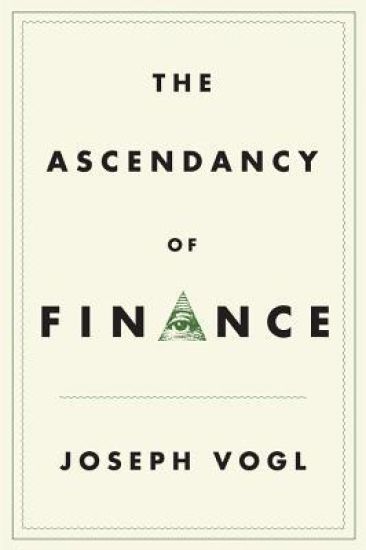
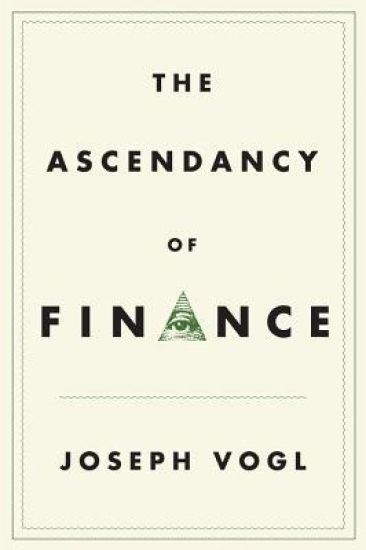
The global financial crisis of 2008 ushered in a system of informal decision-making in the grey zone between economics and politics. Legitimized by a rhetoric of emergency, ad hoc bodies have usurped democratically elected governments. In line with the neoliberal credo, the recent crisis has been used to realize the politically impossible and to re-align executive power with the interests of the finance industry. In this important book, Joseph Vogl offers a much longer perspective on these developments, showing how the dynamics of modern finance capitalism have always rested on a complex and constantly evolving relationship between private creditors and the state. Combining historical and theoretical analysis, Vogl argues that over the last three centuries, finance has become a "fourth estate," marked by the systematic interconnection of treasury and finance, of political and private economic interests. Against this historical background, Vogl explores the latest phase in the financialization of government, namely the dramatic transfer of power from states to markets in the latter half of the 20th century. From the liberalization of credit and capital markets to the privatization of social security, he shows how policy has actively enabled a restructuring of the economy around the financial sector. Political systems are "imprisoned" by the regime of finance, while the corporate model suffuses society, enclosing populations in the production of financial capital. The Ascendancy of Finance provides valuable and unsettling insight into the genesis of modern power and where it truly resides.
The Ascendancy of Finance

The Ascendancy of Finance

Joseph Vogl

Polity Press
2017
nidottu
The global financial crisis of 2008 ushered in a system of informal decision-making in the grey zone between economics and politics. Legitimized by a rhetoric of emergency, ad hoc bodies have usurped democratically elected governments. In line with the neoliberal credo, the recent crisis has been used to realize the politically impossible and to re-align executive power with the interests of the finance industry. In this important book, Joseph Vogl offers a much longer perspective on these developments, showing how the dynamics of modern finance capitalism have always rested on a complex and constantly evolving relationship between private creditors and the state. Combining historical and theoretical analysis, Vogl argues that over the last three centuries, finance has become a "fourth estate," marked by the systematic interconnection of treasury and finance, of political and private economic interests. Against this historical background, Vogl explores the latest phase in the financialization of government, namely the dramatic transfer of power from states to markets in the latter half of the 20th century. From the liberalization of credit and capital markets to the privatization of social security, he shows how policy has actively enabled a restructuring of the economy around the financial sector. Political systems are "imprisoned" by the regime of finance, while the corporate model suffuses society, enclosing populations in the production of financial capital. The Ascendancy of Finance provides valuable and unsettling insight into the genesis of modern power and where it truly resides.

Capital and Ressentiment

Capital and Ressentiment

Joseph Vogl

JOHN WILEY AND SONS LTD
2022
sidottu
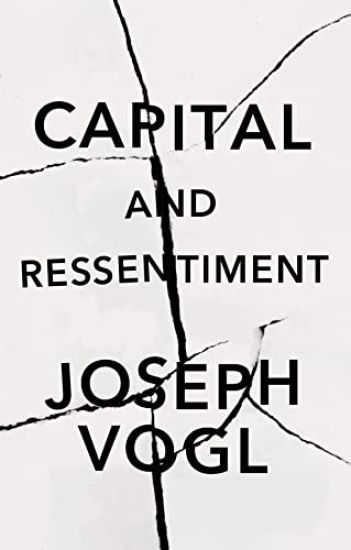
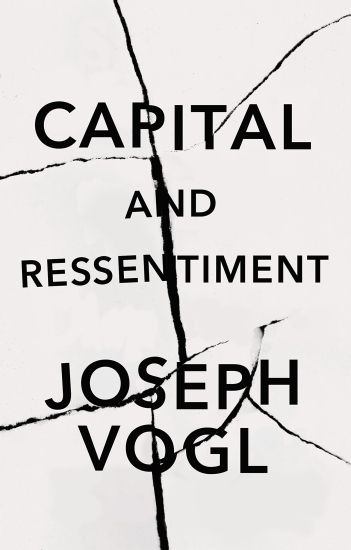
The proliferation of social media has provided ideal conditions in which feelings of anger and frustration can be expressed and shared, forming a deep pool of ressentiment that is being drawn upon and exploited by populist and authoritarian leaders.In his new book, Joseph Vogl shows how this dynamic is rooted in the fusing of finance capital and information in a new form of information capitalism that is reshaping the affective economy of our societies. The capital accumulation strategies of powerful new platforms and social media are pushing people into fragmented, opposing, and conflictual communities where ressentiment is nurtured and grows. The feelings of grievance and rejection generated by capitalism are redirected into attacks on migrants, foreigners, and others, thereby deflecting their critical potential, and bolstering the system that is their source. It is the cunning of ressentiment that provides the key to understanding why, despite the profusion of communication in our social media age, global finance and information capital can be neither understood nor attacked as a totalizing power.This brilliant analysis of the ways in which information capitalism is transforming the affective economy of our societies will be of great interest to anyone concerned with the forces that are shaping our societies today.
Capital and Ressentiment

Capital and Ressentiment

Joseph Vogl

JOHN WILEY AND SONS LTD
2022
nidottu
The proliferation of social media has provided ideal conditions in which feelings of anger and frustration can be expressed and shared, forming a deep pool of ressentiment that is being drawn upon and exploited by populist and authoritarian leaders.In his new book, Joseph Vogl shows how this dynamic is rooted in the fusing of finance capital and information in a new form of information capitalism that is reshaping the affective economy of our societies. The capital accumulation strategies of powerful new platforms and social media are pushing people into fragmented, opposing, and conflictual communities where ressentiment is nurtured and grows. The feelings of grievance and rejection generated by capitalism are redirected into attacks on migrants, foreigners, and others, thereby deflecting their critical potential, and bolstering the system that is their source. It is the cunning of ressentiment that provides the key to understanding why, despite the profusion of communication in our social media age, global finance and information capital can be neither understood nor attacked as a totalizing power.This brilliant analysis of the ways in which information capitalism is transforming the affective economy of our societies will be of great interest to anyone concerned with the forces that are shaping our societies today.