Kirjojen hintavertailu. Mukana 12 390 323 kirjaa ja 12 kauppaa.

Kirjahaku

Etsi kirjoja tekijän nimen, kirjan nimen tai ISBN:n perusteella.

1000 tulosta hakusanalla Joshua D. Pilzer

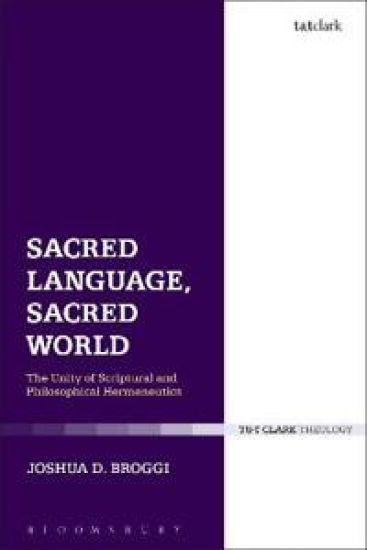
Sacred Language, Sacred World

Sacred Language, Sacred World

Joshua D. Broggi

T. T.Clark Ltd
2015
sidottu
Heidegger and Gadamer are typically read by different theologians. Heidegger tends to be read by philosophical theologians examining his contribution to matters of doubt, existential finitude, and atheism. Gadamer tends to be read by those with an interest in interpreting the Bible, especially by those with more confessional or epistemically optimistic sensibilities. In both cases, Heidegger and Gadamer have well-established associations with specific theological positions. Joshua Broggi challenges this arrangement by re-reading the primary texts as theological resources; he defends an alternative theological appropriation of their philosophical work through a close engagement with portions of their argument.What emerges from Broggi's examination is an account of the unity of tradition, reason, and scriptural language. This account goes beyond claims of their relatedness, which are uncontroversial, and advances the stronger argument that they name the very same thing. Although initially counterintuitive, the central task set by both Heidegger and Gadamer is the investigation of that one phenomenon. This argument challenges the pervasive image in which Christians rely on ‘tradition’ to ‘reason’ about the meaning of ‘scripture’. It puts into question the injunction that theologians should balance the resources of scripture, tradition, and reason. Broggi offers an account of Christian life as more fundamental than certain entities which are distilled out of it, namely: scripture, tradition and reason.
Sacred Language, Sacred World

Sacred Language, Sacred World

Joshua D. Broggi

T. T.Clark Ltd
2018
nidottu
Heidegger and Gadamer are typically read by different theologians. Heidegger tends to be read by philosophical theologians examining his contribution to matters of doubt, existential finitude, and atheism. Gadamer tends to be read by those with an interest in interpreting the Bible, especially by those with more confessional or epistemically optimistic sensibilities. In both cases, Heidegger and Gadamer have well-established associations with specific theological positions. Joshua Broggi challenges this arrangement by re-reading the primary texts as theological resources; he defends an alternative theological appropriation of their philosophical work through a close engagement with portions of their argument.What emerges from Broggi's examination is an account of the unity of tradition, reason, and scriptural language. This account goes beyond claims of their relatedness, which are uncontroversial, and advances the stronger argument that they name the very same thing. Although initially counterintuitive, the central task set by both Heidegger and Gadamer is the investigation of that one phenomenon. This argument challenges the pervasive image in which Christians rely on ‘tradition’ to ‘reason’ about the meaning of ‘scripture’. It puts into question the injunction that theologians should balance the resources of scripture, tradition, and reason. Broggi offers an account of Christian life as more fundamental than certain entities which are distilled out of it, namely: scripture, tradition and reason.
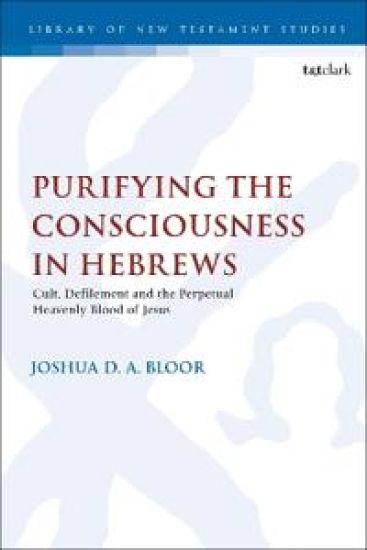
Purifying the Consciousness in Hebrews

Purifying the Consciousness in Hebrews

Joshua D. A. Bloor

BLOOMSBURY PUBLISHING PLC
2023
sidottu
Joshua D. A. Bloor argues that the purification of the consciousness of sin, via Jesus’ perpetual heavenly blood offering, is a vital motif for understanding Hebrews’ sacrificial argumentation, and vice-versa. Jesus’ ‘objective’ earthly achievements are many, yet only his ‘subjective’ heavenly blood offering purges the heavenly tabernacle and subsequently the consciousness of sin. Bloor views the Levitical cult as having a positive role in Hebrews, with Levitical ‘guilt’ foreshadowing and informing Hebrews’ notion of the ‘consciousness of sin’. Levitical sacrifices could purge the consciousness, but only Jesus’ heavenly blood can offer complete perpetual purgation. This blood is a qualitative type of purgation which continually speaks in heaven, offering eternal assurance for the recipients regarding their consciousness of sin.Bloor begins with the ‘defiled consciousness’ and situates the world of Hebrews within cultic defilement, enabling the consciousness of sin and its cosmic implications to be properly understood. From here, the solution to a defiled consciousness is explored by examining Hebrews’ cultic argumentation. Bloor highlights the distinctive purposes inherent in both Jesus’ earthly and heavenly achievements, with the latter concerned particularly with Yom Kippur imagery and the purgation of the consciousness. Bloor concludes by differentiating between Jesus’ session, present heavenly activity and perpetual heavenly blood offering. Throughout this volume, Bloor engages, critiques and advances current discourse concerning the nature and timing of Jesus’ offering in Hebrews.
Purifying the Consciousness in Hebrews

Purifying the Consciousness in Hebrews

Joshua D. A. Bloor

BLOOMSBURY PUBLISHING PLC
2024
nidottu
Joshua D. A. Bloor argues that the purification of the consciousness of sin, via Jesus’ perpetual heavenly blood offering, is a vital motif for understanding Hebrews’ sacrificial argumentation, and vice-versa. Jesus’ ‘objective’ earthly achievements are many, yet only his ‘subjective’ heavenly blood offering purges the heavenly tabernacle and subsequently the consciousness of sin. Bloor views the Levitical cult as having a positive role in Hebrews, with Levitical ‘guilt’ foreshadowing and informing Hebrews’ notion of the ‘consciousness of sin’. Levitical sacrifices could purge the consciousness, but only Jesus’ heavenly blood can offer complete perpetual purgation. This blood is a qualitative type of purgation which continually speaks in heaven, offering eternal assurance for the recipients regarding their consciousness of sin.Bloor begins with the ‘defiled consciousness’ and situates the world of Hebrews within cultic defilement, enabling the consciousness of sin and its cosmic implications to be properly understood. From here, the solution to a defiled consciousness is explored by examining Hebrews’ cultic argumentation. Bloor highlights the distinctive purposes inherent in both Jesus’ earthly and heavenly achievements, with the latter concerned particularly with Yom Kippur imagery and the purgation of the consciousness. Bloor concludes by differentiating between Jesus’ session, present heavenly activity and perpetual heavenly blood offering. Throughout this volume, Bloor engages, critiques and advances current discourse concerning the nature and timing of Jesus’ offering in Hebrews.
The Girl and the Guardian

The Girl and the Guardian

Joshua D Jones

Joshua D. Jones
2020
sidottu
PERSIA, 480 BC. Mordecai takes guardianship of his orphan cousin, Esther. Persia's King kidnaps the girl and forces her into his bed. Mordecai refuses to kneel before the Viceroy who unleashes terror in revenge. The teenage queen risks a violent death to find the help they need as they battle an ancient evil set on the destruction of their peopleBRITAIN, 21st Century. Oliver, a depressed London film student in search of meaning and beauty, visits his coffee guzzling grandfather in the Scottish highlands. With the old man's help, he discovers Mordecai and Esther⸺and the answers to so much more.WARNING: this is not your grandmother's sanitised, rose-petalled Esther. Read the scripture-saga as told by a Scottish grandfather to his grandson, Oliver, in a potent blend of dry humour, robust theology, and dark storytelling⸺the first in the Oliver Anderson Trilogy. 'Joshua's books pack a deep punch, leaves you unable to put them down, and deliver fantastic humour ' -Simcha Nathan, Israeli author of Awakened
Jozef Pilsudski

Jozef Pilsudski

Joshua D. Zimmerman

HARVARD UNIVERSITY PRESS
2022
sidottu
The story of the enigmatic Jozef Pilsudski, the founding father of modern Poland: a brilliant military leader and high-minded statesman who betrayed his own democratic vision by seizing power in a military coup.In the story of modern Poland, no one stands taller than Jozef Pilsudski. From the age of sixteen he devoted his life to reestablishing the Polish state that had ceased to exist in 1795. Ahead of World War I, he created a clandestine military corps to fight Russia, which held most Polish territory. After the war, his dream of an independent Poland realized, he took the helm of its newly democratic political order. When he died in 1935, he was buried alongside Polish kings.Yet Pilsudski was a complicated figure. Passionately devoted to the idea of democracy, he ceded power on constitutional terms, only to retake it a few years later in a coup when he believed his opponents aimed to dismantle the democratic system. Joshua Zimmerman’s authoritative biography examines a national hero in the thick of a changing Europe, and the legacy that still divides supporters and detractors. The Poland that Pilsudski envisioned was modern, democratic, and pluralistic. Domestically, he championed equality for Jews. Internationally, he positioned Poland as a bulwark against Bolshevism. But in 1926 he seized power violently, then ruled as a strongman for nearly a decade, imprisoning opponents and eroding legislative power.In Zimmerman’s telling, Pilsudski’s faith in the young democracy was shattered after its first elected president was assassinated. Unnerved by Poles brutally turning on one another, the father of the nation came to doubt his fellow citizens’ democratic commitments and thereby betrayed his own. It is a legacy that dogs today’s Poland, caught on the tortured edge between self-government and authoritarianism.
Mostly Harmless Econometrics

Mostly Harmless Econometrics

Joshua D. Angrist; Jörn-Steffen Pischke

Princeton University Press
2009
nidottu
The core methods in today's econometric toolkit are linear regression for statistical control, instrumental variables methods for the analysis of natural experiments, and differences-in-differences methods that exploit policy changes. In the modern experimentalist paradigm, these techniques address clear causal questions such as: Do smaller classes increase learning? Should wife batterers be arrested? How much does education raise wages? Mostly Harmless Econometrics shows how the basic tools of applied econometrics allow the data to speak. In addition to econometric essentials, Mostly Harmless Econometrics covers important new extensions--regression-discontinuity designs and quantile regression--as well as how to get standard errors right. Joshua Angrist and Jorn-Steffen Pischke explain why fancier econometric techniques are typically unnecessary and even dangerous. The applied econometric methods emphasized in this book are easy to use and relevant for many areas of contemporary social science. * An irreverent review of econometric essentials * A focus on tools that applied researchers use most * Chapters on regression-discontinuity designs, quantile regression, and standard errors * Many empirical examples * A clear and concise resource with wide applications
Mastering 'Metrics

Mastering 'Metrics

Joshua D. Angrist; Jörn-Steffen Pischke

Princeton University Press
2014
nidottu
Applied econometrics, known to aficionados as 'metrics, is the original data science. 'Metrics encompasses the statistical methods economists use to untangle cause and effect in human affairs. Through accessible discussion and with a dose of kung fu-themed humor, Mastering 'Metrics presents the essential tools of econometric research and demonstrates why econometrics is exciting and useful. The five most valuable econometric methods, or what the authors call the Furious Five--random assignment, regression, instrumental variables, regression discontinuity designs, and differences in differences--are illustrated through well-crafted real-world examples (vetted for awesomeness by Kung Fu Panda's Jade Palace). Does health insurance make you healthier? Randomized experiments provide answers. Are expensive private colleges and selective public high schools better than more pedestrian institutions? Regression analysis and a regression discontinuity design reveal the surprising truth. When private banks teeter, and depositors take their money and run, should central banks step in to save them? Differences-in-differences analysis of a Depression-era banking crisis offers a response. Could arresting O. J. Simpson have saved his ex-wife's life? Instrumental variables methods instruct law enforcement authorities in how best to respond to domestic abuse. Wielding econometric tools with skill and confidence, Mastering 'Metrics uses data and statistics to illuminate the path from cause to effect. * Shows why econometrics is important* Explains econometric research through humorous and accessible discussion* Outlines empirical methods central to modern econometric practice* Works through interesting and relevant real-world examples
Resolve in International Politics

Resolve in International Politics

Joshua D. Kertzer

PRINCETON UNIVERSITY PRESS
2016
sidottu
Why do some leaders and segments of the public display remarkable persistence in confrontations in international politics, while others cut and run? The answer given by policymakers, pundits, and political scientists usually relates to issues of resolve. Yet, though we rely on resolve to explain almost every phenomenon in international politics--from prevailing at the bargaining table to winning on the battlefield--we don't understand what it is, how it works, or where it comes from. Resolve in International Politics draws on a growing body of research in psychology and behavioral economics to explore the foundations of this important idea. Joshua Kertzer argues that political will is more than just a metaphor or figure of speech: the same traits social scientists and decision-making scholars use to comprehend willpower in our daily lives also shape how we respond to the costs of war and conflict. Combining laboratory and survey experiments with studies of great power military interventions in the postwar era from 1946 to 2003, Kertzer shows how time and risk preferences, honor orientation, and self-control help explain the ways leaders and members of the public define the situations they face and weigh the trade-offs between the costs of fighting and the costs of backing down. Offering a novel in-depth look at how willpower functions in international relations, Resolve in International Politics has critical implications for understanding political psychology, public opinion about foreign policy, leaders in military interventions, and international security.
Resolve in International Politics

Resolve in International Politics

Joshua D. Kertzer

Princeton University Press
2018
pokkari
Why do some leaders and segments of the public display remarkable persistence in confrontations in international politics, while others cut and run? The answer given by policymakers, pundits, and political scientists usually relates to issues of resolve. Yet, though we rely on resolve to explain almost every phenomenon in international politics—from prevailing at the bargaining table to winning on the battlefield—we don't understand what it is, how it works, or where it comes from. Resolve in International Politics draws on a growing body of research in psychology and behavioral economics to explore the foundations of this important idea.Joshua Kertzer argues that political will is more than just a metaphor or figure of speech: the same traits social scientists and decision-making scholars use to comprehend willpower in our daily lives also shape how we respond to the costs of war and conflict. Combining laboratory and survey experiments with studies of great power military interventions in the postwar era from 1946 to 2003, Kertzer shows how time and risk preferences, honor orientation, and self-control help explain the ways leaders and members of the public define the situations they face and weigh the trade-offs between the costs of fighting and the costs of backing down.Offering a novel in-depth look at how willpower functions in international relations, Resolve in International Politics has critical implications for understanding political psychology, public opinion about foreign policy, leaders in military interventions, and international security.
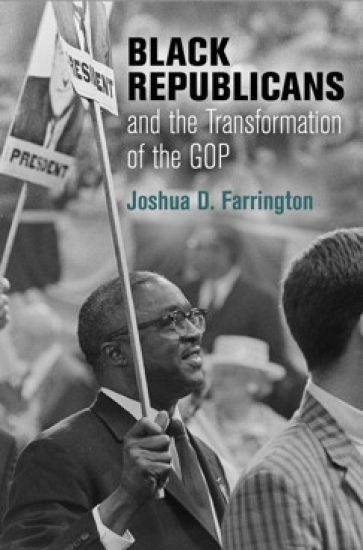
Black Republicans and the Transformation of the GOP

Black Republicans and the Transformation of the GOP

Joshua D. Farrington

University of Pennsylvania Press
2016
sidottu
Black Republicans left an indelible mark on the history of their party, the civil rights movement, and twentieth-century political development Reflecting on his fifty-year effort to steer the Grand Old Party toward black voters, Memphis power broker George W. Lee declared, "Somebody had to stay in the Republican Party and fight." As Joshua Farrington recounts in his comprehensive history, Lee was one of many black Republican leaders who remained loyal after the New Deal inspired black voters to switch their allegiance from the "party of Lincoln" to the Democrats. Ideologically and demographically diverse, the ranks of twentieth-century black Republicans included Southern patronage dispensers like Lee and Robert Church, Northern critics of corrupt Democratic urban machines like Jackie Robinson and Archibald Carey, civil rights agitators like Grant Reynolds and T. R. M. Howard, elected politicians like U.S. Senator Edward W. Brooke and Kentucky state legislator Charles W. Anderson, black nationalists like Floyd McKissick and Nathan Wright, and scores of grassroots organizers from Atlanta to Los Angeles. Black Republicans believed that a two-party system in which both parties were forced to compete for the African American vote was the best way to obtain stronger civil rights legislation. Though they were often pushed to the sidelines by their party's white leadership, their continuous and vocal inner-party dissent helped moderate the GOP's message and platform through the 1970s. And though often excluded from traditional narratives of U.S. politics, black Republicans left an indelible mark on the history of their party, the civil rights movement, and twentieth-century political development. Black Republicans and the Transformation of the GOP marshals an impressive amount of archival material at the national, state, and municipal levels in the South, Midwest, and West, as well as in the better-known Northeast, to open up new avenues in African American political history.
Gülen

Gülen

Joshua D. Hendrick

New York University Press
2013
sidottu
The "Hizmet" ("Service") Movement of Fethullah Gülen is Turkey's most influential Islamic identity community. Widely praised throughout the early 2000s as a mild and moderate variation on Islamic political identity, the Gülen Movement has long been a topic of both adulation and conspiracy in Turkey. In Gülen, Joshua D. Hendrick suggests that the Gülen Movement should be given credit for playing a significant role in Turkey's rise to global prominence. Hendrick draws on 14 months of ethnographic fieldwork in Turkey and the U.S. for his study. He argues that the movement's growth and impact both inside and outside Turkey position both its leader and its followers as indicative of a "post political" turn in twenty-first century Islamic political identity in general, and as illustrative of Turkey's political, economic, and cultural transformation in particular.
Flush Times and Fever Dreams

Flush Times and Fever Dreams

Joshua D. Rothman

University of Georgia Press
2014
pokkari
In 1834 Virgil Stewart rode from western Tennessee to a territory known as the “Arkansas morass” in pursuit of John Murrell, a thief accused of stealing two slaves. Stewart’s adventure led to a sensational trial and a wildly popular published account that would ultimately help trigger widespread violence during the summer of 1835, when five men accused of being professional gamblers were hanged in Vicksburg, nearly a score of others implicated with a gang of supposed slave thieves were executed in plantation districts, and even those who tried to stop the bloodshed found themselves targeted as dangerous and subversive. Using Stewart’s story as his point of entry, Joshua D. Rothman details why these events, which engulfed much of central and western Mississippi, came to pass. He also explains how the events revealed the fears, insecurities, and anxieties underpinning the cotton boom that made Mississippi the most seductive and exciting frontier in the Age of Jackson.As investors, settlers, slaves, brigands, and fortune-hunters converged in what was then America’s Southwest, they created a tumultuous landscape that promised boundless opportunity and spectacular wealth. Predicated on ruthless competition, unsustainable debt, brutal exploitation, and speculative financial practices that looked a lot like gambling, this landscape also produced such profound disillusionment and conflict that it contained the seeds of its own potential destruction. Rothman sheds light on the intertwining of slavery and capitalism in the period leading up to the Panic of 1837, highlighting the deeply American impulses underpinning the evolution of the slave South and the dizzying yet unstable frenzy wrought by economic flush times. It is a story with lessons for our own day.Published in association with the Library Company of Philadelphia’s Program in African American History. A Sarah Mills Hodge Fund Publication.
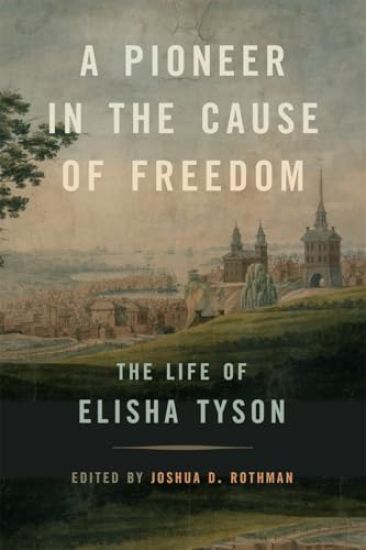
A Pioneer in the Cause of Freedom

A Pioneer in the Cause of Freedom

Joshua D. Rothman

UNIVERSITY OF GEORGIA PRESS
2025
sidottu
Descended from German Quakers who immigrated to Pennsylvania in the late seventeenth century, Elisha Tyson was born in 1749. As a young man he became wealthy in the milling business in northeastern Maryland before moving in the early 1780s to Baltimore, where he grew even wealthier and established a reputation as a prominent member of the city’s business community. Over the course of more than three decades in the late eighteenth and early nineteenth centuries, Tyson helped found abolition societies, supported schools for free Black children, and contributed to the creation of numerous Black institutions and benevolent societies. He filed freedom petitions on behalf of enslaved people and pushed for the passage of liberalized manumission laws in Maryland. He used some of his fortune to assist Black people who claimed they were illegally held in bondage to sue for their liberty, and he confronted slave traders who kidnapped free Black Americans with the aim of selling them into slavery. By the time he died in February 1824, Elisha Tyson had personally aided in the liberation of perhaps two thousand Black people.Yet the only biography published about this remarkable man was penned shortly after his death by John Shoemaker Tyson, Elisha Tyson’s nephew. In A Pioneer in the Cause of Freedom, Joshua D. Rothman—a preeminent historian of slavery and abolition—seeks to remedy that silence. Along with an annotated version of that nineteenth-century biography, Rothman provides a thorough introduction to Elisha Tyson’s religious, political, and ideological worlds as well as a set of selected documents that illuminate some of Tyson’s work.
A Pioneer in the Cause of Freedom

A Pioneer in the Cause of Freedom

Joshua D. Rothman

UNIVERSITY OF GEORGIA PRESS
2025
pokkari
Descended from German Quakers who immigrated to Pennsylvania in the late seventeenth century, Elisha Tyson was born in 1749. As a young man he became wealthy in the milling business in northeastern Maryland before moving in the early 1780s to Baltimore, where he grew even wealthier and established a reputation as a prominent member of the city’s business community. Over the course of more than three decades in the late eighteenth and early nineteenth centuries, Tyson helped found abolition societies, supported schools for free Black children, and contributed to the creation of numerous Black institutions and benevolent societies. He filed freedom petitions on behalf of enslaved people and pushed for the passage of liberalized manumission laws in Maryland. He used some of his fortune to assist Black people who claimed they were illegally held in bondage to sue for their liberty, and he confronted slave traders who kidnapped free Black Americans with the aim of selling them into slavery. By the time he died in February 1824, Elisha Tyson had personally aided in the liberation of perhaps two thousand Black people.Yet the only biography published about this remarkable man was penned shortly after his death by John Shoemaker Tyson, Elisha Tyson’s nephew. In A Pioneer in the Cause of Freedom, Joshua D. Rothman—a preeminent historian of slavery and abolition—seeks to remedy that silence. Along with an annotated version of that nineteenth-century biography, Rothman provides a thorough introduction to Elisha Tyson’s religious, political, and ideological worlds as well as a set of selected documents that illuminate some of Tyson’s work.