Kirjojen hintavertailu. Mukana 11 699 587 kirjaa ja 12 kauppaa.

Kirjahaku

Etsi kirjoja tekijän nimen, kirjan nimen tai ISBN:n perusteella.

1000 tulosta hakusanalla Joshua W James

Self-Observation in the Social Sciences
Notwithstanding the mythical demise of "introspection," self-observation has always been an integral aspect of the social sciences. In the century following the "behavioral revolution," psychology has seen a reduction not so much in the frequency as in the rigor with which self-observation is practiced. A great deal of self-observation has been renamed or obscured (as, for example, "self-report"), but this has served only to defer and impoverish important theoretical and technical work.This volume, which contributes to the development of a rigorous theory of self-observation, is organized around three general objectives: to re-animate a discourse on self-observation through a historical analysis of various self-observation traditions; to outline and begin to address some of the unique theoretical challenges of self-observation; and to elaborate some of the technical and practical details necessary for realizing a program of research dedicated to self-observation.In the first section of the book, three historians of psychology trace the evolution of self-observation. In the second, three scholars who are currently working in contemporary traditions of self-observation discuss the basic theoretical and practical challenges involved in conducting self-observation research. In the final two sections of the book, scholars from the phenomenological and narrative traditions trace the history, theory, and practice of self-observation in their respective traditions. Self-Observation in the Social Sciences continues the fine tradition set by Transaction's History and Theory of Psychology series edited by Jaan Valsiner. It is of interest to psychologists and to those who study methodology within the social sciences.
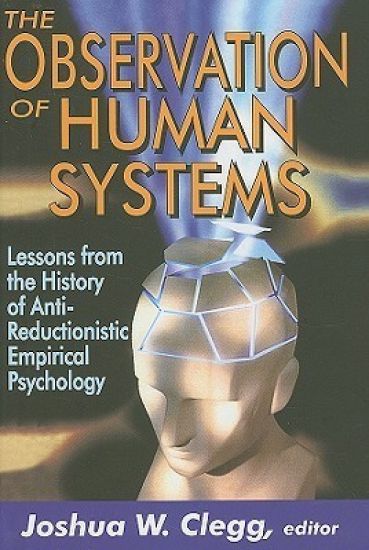
The Observation of Human Systems

The Observation of Human Systems

Joshua W. Clegg

Routledge
2017
nidottu
Contemporary mainstream psychology has moved toward methodological specificity bounded by instrumental experimentalism. However, this institutional reduction of sanctioned methods has not been fully embraced by all social scientists, nor even by all experimental psychologists. The social sciences are rife with examples of practicing empirical scientists disaffected with the reductionism and atomism of traditional experimentalism.The empirical theory and practice of four of these disaffected social scientists--Lev Vygotsky, James Baldwin, James Gibson, and Kurt Lewin--is explored in this volume. Each of the scientists considered here argued for a rigorously empirical method while still maintaining a clear anti-reductionist stance. They justified their disaffection with the dominant psychological paradigms of their respective eras in terms of a fidelity to their phenomena of study, a fidelity they believed would be compromised by radical reductionism and ontological atomism.The authors in this collection explore the theory and practice of these eminent researchers and from it find inspiration for contemporary social science. The primary argument running through these analyses is that the social sciences should take seriously the notion of holistic empirical investigation. This means, among other things, re-establishing the indissoluble ties between theory, method and procedure and resisting the manualization of research procedures. It also means developing theories of relations and not simply of elemental properties. Such theories would concern particular units, fields, or systems of relations and not be reduced to, or interpreted in the terms of, other systems. Finally, a holistic social science requires integration of the active agent into theory, method, and procedure, an integration that points toward both participatory and emancipatory methods.
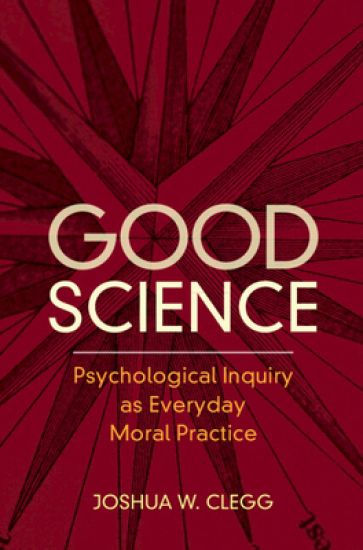
Good Science

Good Science

Joshua W. Clegg

Cambridge University Press
2022
sidottu
Good Science is an account of psychological research emphasizing the moral foundations of inquiry. This volume brings together existing disciplinary critiques of scientism, objectivism, and instrumentalism, and then discusses how these contribute to institutionalized privilege and to less morally responsive research practices. The author draws on historical, critical, feminist, and science studies traditions to provide an alternative account of psychological science and to highlight the irreducibly moral foundations of everyday scientific practice. This work outlines a theoretical framework for thinking about and practicing psychology in ways that center moral responsibility, collective commitment, and justice. The book then applies this framework, describing psychological research practices in terms of the their moral dilemmas. Also included are materials meant to aid in methods instruction and mentoring.
The Observation of Human Systems

The Observation of Human Systems

Joshua W. Clegg

AldineTransaction
2009
sidottu
Contemporary mainstream psychology has moved toward methodological specificity bounded by instrumental experimentalism. However, this institutional reduction of sanctioned methods has not been fully embraced by all social scientists, nor even by all experimental psychologists. The social sciences are rife with examples of practicing empirical scientists disaffected with the reductionism and atomism of traditional experimentalism.The empirical theory and practice of four of these disaffected social scientists--Lev Vygotsky, James Baldwin, James Gibson, and Kurt Lewin--is explored in this volume. Each of the scientists considered here argued for a rigorously empirical method while still maintaining a clear anti-reductionist stance. They justified their disaffection with the dominant psychological paradigms of their respective eras in terms of a fidelity to their phenomena of study, a fidelity they believed would be compromised by radical reductionism and ontological atomism.The authors in this collection explore the theory and practice of these eminent researchers and from it find inspiration for contemporary social science. The primary argument running through these analyses is that the social sciences should take seriously the notion of holistic empirical investigation. This means, among other things, re-establishing the indissoluble ties between theory, method and procedure and resisting the manualization of research procedures. It also means developing theories of relations and not simply of elemental properties. Such theories would concern particular units, fields, or systems of relations and not be reduced to, or interpreted in the terms of, other systems. Finally, a holistic social science requires integration of the active agent into theory, method, and procedure, an integration that points toward both participatory and emancipatory methods.
Self-Observation in the Social Sciences

Self-Observation in the Social Sciences

Joshua W. Clegg

AldineTransaction
2013
sidottu
Notwithstanding the mythical demise of "introspection," self-observation has always been an integral aspect of the social sciences. In the century following the "behavioral revolution," psychology has seen a reduction not so much in the frequency as in the rigor with which self-observation is practiced. A great deal of self-observation has been renamed or obscured (as, for example, "self-report"), but this has served only to defer and impoverish important theoretical and technical work.This volume, which contributes to the development of a rigorous theory of self-observation, is organized around three general objectives: to re-animate a discourse on self-observation through a historical analysis of various self-observation traditions; to outline and begin to address some of the unique theoretical challenges of self-observation; and to elaborate some of the technical and practical details necessary for realizing a program of research dedicated to self-observation.In the first section of the book, three historians of psychology trace the evolution of self-observation. In the second, three scholars who are currently working in contemporary traditions of self-observation discuss the basic theoretical and practical challenges involved in conducting self-observation research. In the final two sections of the book, scholars from the phenomenological and narrative traditions trace the history, theory, and practice of self-observation in their respective traditions. Self-Observation in the Social Sciences continues the fine tradition set by Transaction's History and Theory of Psychology series edited by Jaan Valsiner. It is of interest to psychologists and to those who study methodology within the social sciences.

Christ Is King

Christ Is King

Joshua W. Jipp

Fortress Press,U.S.
2015
pokkari
Until recently, many scholars have read Paul's use of the word Christos as more of a proper name ("Jesus Christ") than a title, Jesus the Messiah. One result, Joshua W. Jipp argues, is that important aspects of Paul's thinking about Jesus' messiahship have gone unrecognized. Jipp argues that kingship discourse is an important source for Paul's christological language: Paul uses royal language to present Christ as the good king. Jipp surveys Greco-Roman and Jewish depictions of the ideal king and argues for the influence of these traditions on several aspects of Paul's thought: king and law; hymning to the king; the just and faithful king; the royal roots of Paul's language of participation "in Christ"; and the enthroned king. Jipp finds that Paul's use of royal tropes is indeed significant. Christos is a royal honorific within Paul's letters, and Paul is another witness to ancient discussions of monarchy and ideal kingship. In the process, Jipp offers new and noteworthy solutions to outstanding questions concerning Christ and the law, the pistis Christou debate, and Paul's participatory language.
Reading Acts

Reading Acts

Joshua W Jipp

Cascade Books
2018
pokkari
The book of Acts tells the story of what happened after the death and resurrection of Jesus. The book is filled with adventure and entertainment as Acts narrates God's activity among his people and the world. In this book I explore one way of reading Acts that attends closely to the plotline of the book and seek to invite readers into the story that Acts tells. Along the way, I examine some of the most important themes of Acts, including divine activity, the extension of the gospel to surprising people in surprising ways, conflict and congruence between the gospel and the broader world, and the ongoing importance of Israel as God's people. While there are many excellent reasons to read Acts, I reflect too upon the theological and ethical vision of Acts for those who read this book as Christian Scripture. ""Joshua Jipp crafts a careful, readable, and engaging introduction into the many complexities readers face in the Book of Acts. Attuned to exegesis and theology alike, this book is a reliable and ideal entry point for students encountering Acts and its significance today."" --Eric Barreto, Princeton Theological Seminary ""It is difficult to fit this helpful volume into one particular genre: it is at once an introduction to Lukan studies through a close interaction with the narrative of Acts . . . and a bold call to provide a proper response to this part of the Christian Scripture that challenges the social, political, and ecclesiological identities of individual believers within their own communities. Beginning students will benefit from Joshua Jipp's wise and reliable guidance in navigating through Acts, while advanced readers will appreciate the power of his careful yet creative reading of Acts."" --David W. Pao, Trinity Evangelical Divinity School ""We need more books like this one From the first page to the last, Joshua Jipp demonstrates his profound regard for the Acts of the Apostles, as well as his intimacy with its narrative progression and theology. The result is a wonderful entryway into the study of Acts that takes seriously its importance to the church and its mission."" --Joel B. Green, Fuller Theological Seminary ""Professor Jipp's uncanny ability to distill a comprehensive, in-depth knowledge of New Testament and early Christian texts, within their Greco-Roman setting, into an interpretation of Luke's second volume means nothing but eye-opening, mind-illuminating 'a-ha' moments in reading Acts through the brilliance of this new light . . . As an introduction for non-biblical specialists, this 'opening of the Scriptures' of Acts is without equal."" --David P. Moessner, Texas Christian University Joshua Jipp is Associate Professor of New Testament at Trinity Evangelical Divinity School. He is the author of Saved by Faith and Hospitality (2017), Christ is King: Paul's Royal Ideology (2015), and Divine Visitations and Hospitality to Strangers in Luke-Acts (2013).
Meditations on the Old Testament Apocrypha: 1 Esdras Tobit Judith Wisdom of Solomon

Meditations on the Old Testament Apocrypha: 1 Esdras Tobit Judith Wisdom of Solomon

Joshua W. Sullivan

Createspace Independent Publishing Platform
2016
nidottu
In Meditations on the Old Testament Apocrypha, Pastor Joshua Sullivan explains the apocryphal books in an easy to understand fashion. Far from simply conveying historical information about the intertestamental period, each devotion helps the reader understand these books in a way that strengthens one's faith in Christ and excites one's zeal for the good works which flow from faith. The Christian reader will see many parallels between their own world and the world which brought forth these books. The reader will also be encouraged by the examples of these Jews who strove to maintain and confess the true faith in cultures and situations that sought to stamp out the true faith of the God of Israel. These books encourage modern readers to keep God's Word holy and to live holy lives according to it, even as they live in cultures saturated with the temptation to compromise. Pastor Sullivan also demonstrates how to read these books Christologically. The apocryphal authors, although not divinely inspired by the Holy Spirit, were steeped in Moses and the Prophets. They looked forward to the same Christ as the Old Testament Scriptures and as a result, they painted beautiful, if unintentional, portraits which foreshadow Christ's person and work. When read in this way, these books will deepen the reader's appreciation for Christ and the salvation He offers to all men in the promise of the gospel.Meditations on the Old Testament Apocrypha contains the King James text for the apocryphal books I Esdras, Tobit, Judith, and Wisdom of Solomon as well as original devotional material for each chapter of the apocryphal text.