Kirjojen hintavertailu. Mukana 12 459 402 kirjaa ja 12 kauppaa.

Kirjahaku

Etsi kirjoja tekijän nimen, kirjan nimen tai ISBN:n perusteella.

1000 tulosta hakusanalla Joyce Cary

Marching Soldier

Marching Soldier

Joyce 1888-1957 Cary

Hassell Street Press
2021
sidottu
This work has been selected by scholars as being culturally important and is part of the knowledge base of civilization as we know it.This work is in the public domain in the United States of America, and possibly other nations. Within the United States, you may freely copy and distribute this work, as no entity (individual or corporate) has a copyright on the body of the work.Scholars believe, and we concur, that this work is important enough to be preserved, reproduced, and made generally available to the public. To ensure a quality reading experience, this work has been proofread and republished using a format that seamlessly blends the original graphical elements with text in an easy-to-read typeface.We appreciate your support of the preservation process, and thank you for being an important part of keeping this knowledge alive and relevant.
Marching Soldier

Marching Soldier

Joyce 1888-1957 Cary

Hassell Street Press
2021
nidottu
This work has been selected by scholars as being culturally important and is part of the knowledge base of civilization as we know it.This work is in the public domain in the United States of America, and possibly other nations. Within the United States, you may freely copy and distribute this work, as no entity (individual or corporate) has a copyright on the body of the work.Scholars believe, and we concur, that this work is important enough to be preserved, reproduced, and made generally available to the public. To ensure a quality reading experience, this work has been proofread and republished using a format that seamlessly blends the original graphical elements with text in an easy-to-read typeface.We appreciate your support of the preservation process, and thank you for being an important part of keeping this knowledge alive and relevant.
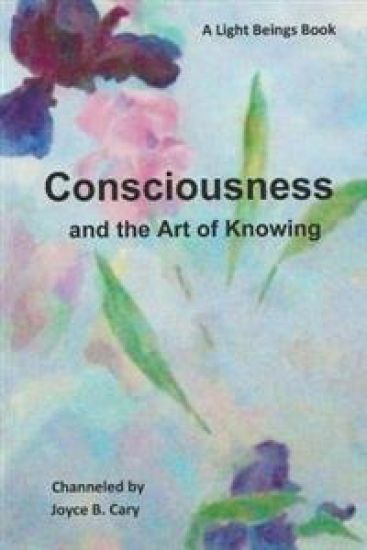
Consciousness and the Art of Knowing

Consciousness and the Art of Knowing

Joyce B. Cary

Createspace Independent Publishing Platform
2013
nidottu
Channeled Information: A Light Beings Book Table of Contents: Forward by the Light Beings 1. A Journey into True Consciousness; Choice, Energetic Change on the Planet 2. The Knowing 3. The Evolution of Consciousness; Beginning of Separation, Birth of Reasoning, Beliefs and Reasoning, Three Areas of Consciousness 4. Expansion vs. Raising of Consciousness; Expansion of Mind, Integration of the 3 Levels of Consciousness, Consciousness and Knowingness, 5. Oneness; Life Contracts, At-oneness, Change in Relationships 6. The Body; Physical Pain, Discernment; The Body, Stress, and Consciousness; Eating Consciously, Do No Harm, Small Steps Create Change 7. The Mind; Limitations of Belief 8. The Spirit; Power and Control vs. Doing No Harm 9. Love or Fear; A Different Direction, Examine Your Fears 10. Change and Cultural Beliefs;
Joyce

Joyce

CORNELL UNIVERSITY PRESS
1993
sidottu
Did James Joyce, that icon of modernity, spearhead the dismantling of the Cartesian subject? Or was he a supreme example of a modern man forever divided and never fully known to himself? This volume reads the dialogue of contradictory cultural voices in Joyce’s works—revolutionary and reactionary, critical and subject to critique, marginal and central. It includes ten essays that identify repressed elements in Joyce’s writings and examine how psychic and cultural repressions persistently surface in his texts. Contributors include Joseph A. Boone, Marilyn L. Brownstein, Jay Clayton, Laura Doyle, Susan Stanford Friedman, Christine Froula, Ellen Carol Jones, Alberto Moreirias, Richard Pearce, and Robert Spoo.
Joyce

Joyce

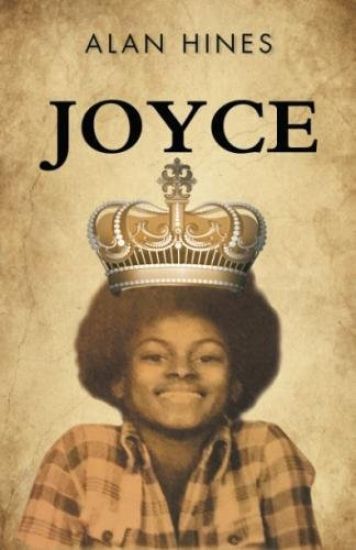
Alan Hines

Trafford Publishing
2018
pokkari
This book Joyce is diverse love poetry at its finest. It captivates the definition of the word love, as expressed within each poem.
Joyce

Joyce

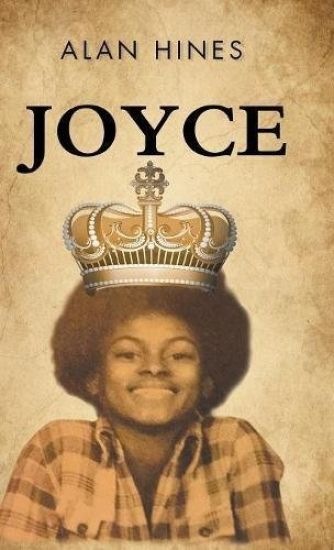
Alan Hines

Trafford Publishing
2018
sidottu
This book Joyce is diverse love poetry at its finest. It captivates the definition of the word love, as expressed within each poem.
Joyce

Joyce

Cornell University Press
2018
pokkari
Did James Joyce, that icon of modernity, spearhead the dismantling of the Cartesian subject? Or was he a supreme example of a modern man forever divided and never fully known to himself? This volume reads the dialogue of contradictory cultural voices in Joyce's works—revolutionary and reactionary, critical and subject to critique, marginal and central. It includes ten essays that identify repressed elements in Joyce's writings and examine how psychic and cultural repressions persistently surface in his texts. Contributors include Joseph A. Boone, Marilyn L. Brownstein, Jay Clayton, Laura Doyle, Susan Stanford Friedman, Christine Froula, Ellen Carol Jones, Alberto Moreirias, Richard Pearce, and Robert Spoo.
Joyce

Joyce

Ian Pindar

Haus Publishing
2025
pokkari
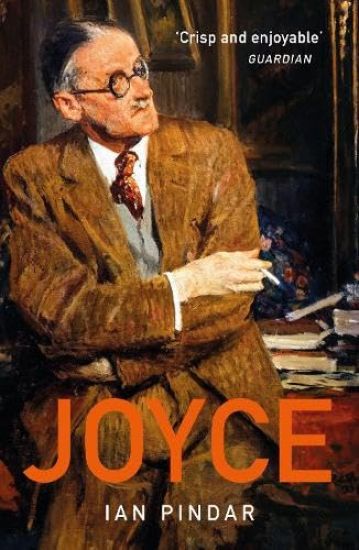
James Joyce (1882- 1941) is hailed as one of the greatest writers of the twentieth century. Rejecting his homeland and its religion as a young man, Joyce went on to reinvent the Dublin of his youth in fiction. His masterpiece, Ulysses - once banned in Britain and the United States - redefined the modern novel and has become a canonical classic, while Finnegans Wake, written as his eyesight deteriorated, cemented Joyce's legacy as one of the founding figures of modernist literature.In this lucid and compelling biography, Ian Pindar vividly explores crucial events in Joyce's life, from his self-imposed exile to his creative triumphs. Revealing how Joyce's work carefully blends the abstract and the mundane, Joyce is a timeless study of a man who revolutionised the literary landscape and captured the great human comedy of which we are all part.
The Journal of Joyce Carol Oates

The Journal of Joyce Carol Oates

Joyce Carol Oates

HarperPerennial
2008
nidottu
When her journals began, 34-year-old Oates was already a recipient of the National Book Award (1969), with many O. Henry awards, and others, under her literary belt. For all her warm critical reception, however, the author had been (and would remain) fairly reticent about the personal details of her life and background. Housed in her archive at Syracuse University, the journals run to more than 5,000 single-spaced typewritten pages. This volume focuses on excerpts from that first decade, 1973-1983, one of the most productive of Oates' long career.
Joyce's Ulysses

Joyce's Ulysses

Oxford University Press Inc
2020
nidottu
Though James Joyce was steeped in philosophy and humanism, he has received too little attention from contemporary philosophers in comparison to many of the other titans of modernist fiction. This book probes the possibilities for thinking philosophically about Joyce's masterpiece, Ulysses, presenting readings by renowned scholars such David Hills, Garry L. Hagberg, Vicki Mahaffey, Martha C. Nussbaum, Sam Slote, Wendy J. Truran, and Philip Kitcher, who also provides an introduction to the volume that considers broader themes and situates Ulysses as a work of philosophical interest. For the central characters of Ulysses--Leopold Bloom, Molly Bloom, and Stephen Dedalus, "How to live?" is an urgent question. Each must either start anew, or attempt to recover lost paths. Chapters plumb the depths of the philosophical quandaries that present themselves to these characters--reflections on death and overcoming disgust, Leopold Bloom's evocations of conscious thought, the dominance of vision in our thinking about the senses, identity, and the possibility of revising one's values are only a handful of the subjects covered in the volume. Ulysses is an intrinsically and deeply philosophical work, and these readings provide new inroads and firm orientation for Joyce's project. Readers will come away with renewed appreciation for one of our greatest works of literature in the English language, and deepened understanding of Joyce's attempt to offer alternative ways of structuring and enriching the world of our experience.
Joyce's Ulysses

Joyce's Ulysses

Oxford University Press Inc
2020
sidottu
Though James Joyce was steeped in philosophy and humanism, he has received too little attention from contemporary philosophers in comparison to many of the other titans of modernist fiction. This book probes the possibilities for thinking philosophically about Joyce's masterpiece, Ulysses, presenting readings by renowned scholars such David Hills, Garry L. Hagberg, Vicki Mahaffey, Martha C. Nussbaum, Sam Slote, Wendy J. Truran, and Philip Kitcher, who also provides an introduction to the volume that considers broader themes and situates Ulysses as a work of philosophical interest. For the central characters of Ulysses--Leopold Bloom, Molly Bloom, and Stephen Dedalus, "How to live?" is an urgent question. Each must either start anew, or attempt to recover lost paths. Chapters plumb the depths of the philosophical quandaries that present themselves to these characters--reflections on death and overcoming disgust, Leopold Bloom's evocations of conscious thought, the dominance of vision in our thinking about the senses, identity, and the possibility of revising one's values are only a handful of the subjects covered in the volume. Ulysses is an intrinsically and deeply philosophical work, and these readings provide new inroads and firm orientation for Joyce's project. Readers will come away with renewed appreciation for one of our greatest works of literature in the English language, and deepened understanding of Joyce's attempt to offer alternative ways of structuring and enriching the world of our experience.
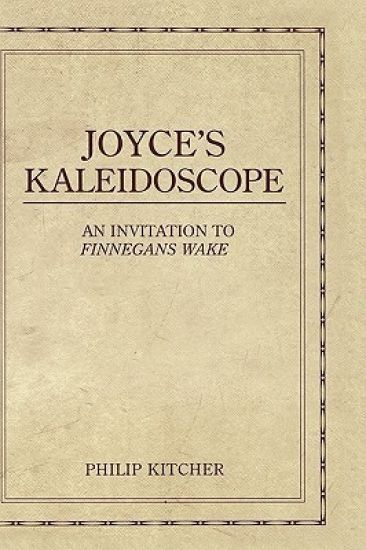
Joyce's Kaleidoscope

Joyce's Kaleidoscope

Philip Kitcher

Oxford University Press Inc
2007
sidottu
James Joyce's Ulysses, once regarded as obscure and obscene, is now viewed as one of the masterpieces of world literature. Yet Joyce's final novel, Finnegans Wake, to which he devoted seventeen years, remains virtually unread, except by scholarly specialists. Its linguistic novelties, apparently based on an immense learning that few can share, make it appear impenetrable. Joyce's Kaleidoscope attempts to dissolve the darkness and to invite lovers of literature to engage with Finnegans Wake. Philip Kitcher proposes that the Wake has at its core an age-old philosophical question, "What makes a life worth living?", and that Joyce explores that question from the perspective of someone who feels that a long life is now ending. So the complex dream language is a way of investigating issues that are hard to face directly; the reader is invited to struggle with the novel's aging dreamer who seeks reassurance about the worth of what he has done and been. Joyce finds his way to reassurance. The sweeping music and the high comedy of Finnegans Wake celebrate the ordinary doings of ordinary people. With great humanity and a distinctive brand of humanism, Joyce points us to the things that matter in our lives. His final novel is a festival of life itself. From this perspective, the supposedly opaque, or nonsensical, language opens up as a rich source for the reader's reflections: though readers won't all approach it the same way, or with the same set of references, there is meaning in it for everyone. Kitcher's detailed study of the entire text brings out its musical resonances and its musical structures. It analyzes the novel overall while bringing deep insight to the reading of key individual passages. This engaging guide will aid readers not just to make sense of the novel, but to relish the remarkable accomplishment of Joyce's least appreciated work.
Joyce's Kaleidoscope

Joyce's Kaleidoscope

Philip Kitcher

Oxford University Press Inc
2010
nidottu
James Joyce's Ulysses, once regarded as obscure and obscene, is now viewed as one of the masterpieces of world literature. Yet Joyce's final novel, Finnegans Wake, to which he devoted seventeen years, remains virtually unread, except by scholarly specialists. Its linguistic novelties, apparently based on an immense learning that few can share, make it appear impenetrable. Joyce's Kaleidoscope attempts to dissolve the darkness and to invite lovers of literature to engage with Finnegans Wake. Philip Kitcher proposes that the Wake has at its core an age-old philosophical question, "What makes a life worth living?", and that Joyce explores that question from the perspective of someone who feels that a long life is now ending. So the complex dream language is a way of investigating issues that are hard to face directly; the reader is invited to struggle with the novel's aging dreamer who seeks reassurance about the worth of what he has done and been. Joyce finds his way to reassurance. The sweeping music and the high comedy of Finnegans Wake celebrate the ordinary doings of ordinary people. With great humanity and a distinctive brand of humanism, Joyce points us to the things that matter in our lives. His final novel is a festival of life itself. From this perspective, the supposedly opaque, or nonsensical, language opens up as a rich source for the reader's reflections: though readers won't all approach it the same way, or with the same set of references, there is meaning in it for everyone. Kitcher's detailed study of the entire text brings out its musical resonances and its musical structures. It analyzes the novel overall while bringing deep insight to the reading of key individual passages. This engaging guide will aid readers not just to make sense of the novel, but to relish the remarkable accomplishment of Joyce's least appreciated work.