Kirjahaku
Etsi kirjoja tekijän nimen, kirjan nimen tai ISBN:n perusteella.
1000 tulosta hakusanalla Jr Kenneth C Gardner
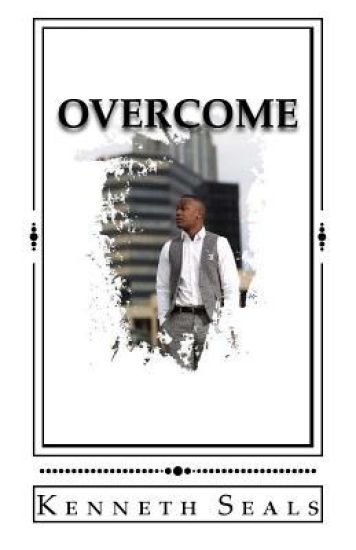
OVERCOMEThis book is for the people who need motivation, advice, or any type of wisdom to uplift them and help them while having a positive attitude and faith in yourself. With this book you are about to read, I hope it will help you elevate your mind and bring positivity into your life. Blessings to you all.- Kenneth Seals, Jr.Philippians 4:13
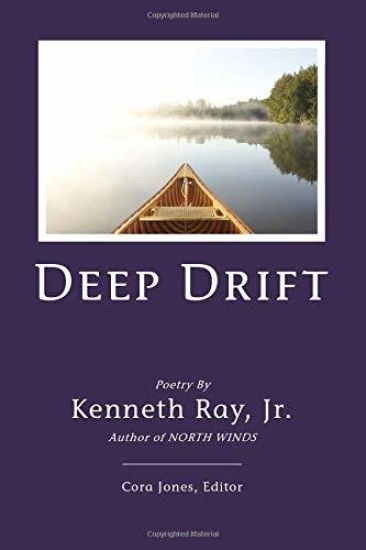
"The river wraps itself like time around us."This newest collection of poems by author Kenneth Ray is defined by currents and drifts similar to those of the historic Detroit River near which he's made his lifelong home. Nature's powerful ebb and flow inspire him to passionate expressions of life's greatest existential themes: love and heartbreak, joy and sorrow, triumph and defeat. Is it wise to stand ground and do battle, or to withdraw and allow time and its currents to wrap around the soul?Other poems, like "Ode to a Small Owl," "Reflections on Trout Fishing," and "The Natalie Chronicles" celebrate the simple but universal pleasures in the life of a naturalist and a loving father and family man, whereas the trilogy "Dear Hart" is a witty tribute to man's most primal quest: the annual autumn hunt for deer. Whether navigating big river currents or shoveling out from staggering drifts of snow, he has found one thing certain: The elements ask much of a person and require one to dig deep in order to survive. This is Kenneth Ray's second book of poetry, following his collection entitled, "North Winds." He is a lifetime Michigan resident with degrees from the University of Michigan in Ann Arbor. He makes his home "Down River," close to several generations of his large extended family. In addition to writing, he works in Michigan's Department of Natural Resources and is an avid hunter, fisherman, canoeist, outdoorsman, and conservationist.
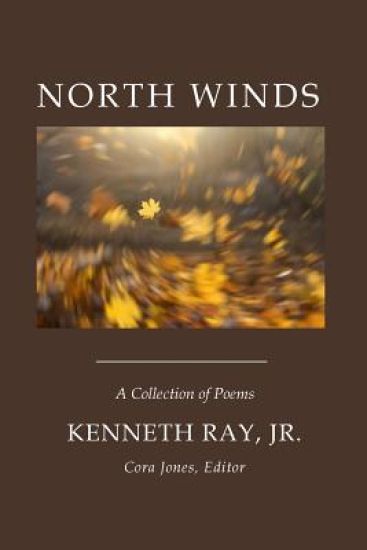
North Winds: A Collection of Poems
Kenneth Ray Jr
Createspace Independent Publishing Platform
2018
nidottu
"Lost in a deep woods Leaves rustling the way out I sit, whisper back." Inspired by a lifetime on the banks of the Detroit River, "North Winds" is a collection of poems that explore ways in which harsh weather and capricious seasons shape a man's character, and may ultimately determine his destiny. The timeless themes of confronting nature, understanding love, and finding peace in the passage of time are imbued with references to literature, fine arts, and mythology. All are framed in haiku or sonnet form, grounding in classical roots a contemporary life experienced among the oft cold winds of the north. Author Kenneth Ray ritually begins his morning contemplating the breathtaking sweep and strength of "Big Blue," finding it an ongoing source of knowledge, inspiration, and solace. He is a lifetime resident of the Upper Midwest, with degrees from the University of Michigan, in Ann Arbor. Ray makes his home "Down River," close to his daughter and a large extended family of several generations. In addition to writing, he is a hunter, fisherman, canoeist, and outdoorsman.
He Says, She Says, God Says: 3 Great Views, 1 HOT Topic
Natasha Gonell; Kenneth Fulton Jr; Kevin Magan
Createspace Independent Publishing Platform
2015
nidottu
Are you tired of jumping in and out of meaningless relationships? Have you been out of the dating scene for a while and are in need of some pointers or maybe even a strategy on how to get back in the game? Or, maybe you are ready to settle down with "the one" and don't know what you're looking for or where to begin. If any of these sounds like you, then you need to pick up the newest and hottest book on relationships: "He Says, She Says, God Says". This supreme relationship guide features three dynamic authors offering a diverse collaboration of advice from a male, female, and biblical/spiritual perspective. The three authors who have never met in person, connected through the social media site Facebook. They came together on this project based on their shared thoughts and comments on a mutual friend's post, which Natasha had shared on her page. What resulted from this union is a rarely seen amalgamation of opinions and experiences that is a must have for anyone in need of relationship advice. It is not your typical advice book, as these three get deep down into their own personal relationship experiences, both past and present. The book includes five chapters written from each author's perspective. The chapter titles include: "Are You Ready for Love?", "Dating versus Courting", "Sex", "Trust & Cheating", and "Marriage".
Say No Stay Low Play Broke
Seth K. Turner Jr; Seth Kenneth Turner Jr
Createspace Independent Publishing Platform
2016
nidottu
Melbert B. Cary, Jr. and the Press of the Woolly Whale
David Pankow; Carl Purington Rollis; Kenneth Auchincloss
Rit Cary Graphic Arts Press
2002
sidottu
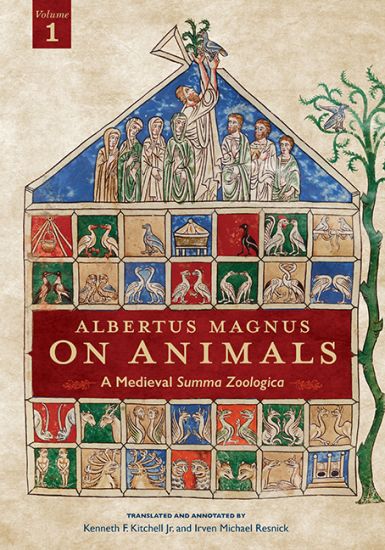
Albertus Magnus on Animals V1
Kenneth F Kitchell Jr; Irven Michael Resnick
Ohio State University Press
2020
pokkari
Albertus Magnus has long been recognized as one of the greatest minds of the Middle Ages; his contemporaries conferred upon him the title Doctor Universalis. An epitaph at his tomb described him as prince among philosophers, greater than Plato, and hardly inferior to King Solomon in wisdom. In 1941, Pope Pius XII named Albertus Magnus patron saint of scientists. In his work De animalibus, Albert integrated the vast amount of information on nature that had come down to him in previous centuries: the exposition of Michael Scotus's translation from the Arabic of Aristotle's books on the natural world (Books 1-19), Albert's own revisions to Aristotle's teachings (Books 20-21), and a "dictionary" of animals appropriated largely from the De natura rerum of Thomas of Cantimpr (Books 22-26). Albert's comprehensive treatise on living things was acknowledged as the reputable authority in biology for almost five hundred years. In this translated and annotated edition, Kenneth F. Kitchell Jr. and Irven Michael Resnick illuminate the importance of this work, allowing Albert's magnum opus to be better understood and more widely appreciated than ever before. Broken into two volumes (Books 1-10 and 11-26), Albertus Magnus On Animals is a veritable medieval scientific encyclopedia, ranging in topics from medicine, embryology, and comparative anatomy to women, hunting and everyday life, commerce, and much more-an essential work for historians, medievalists, scientists, and philosophers alike.
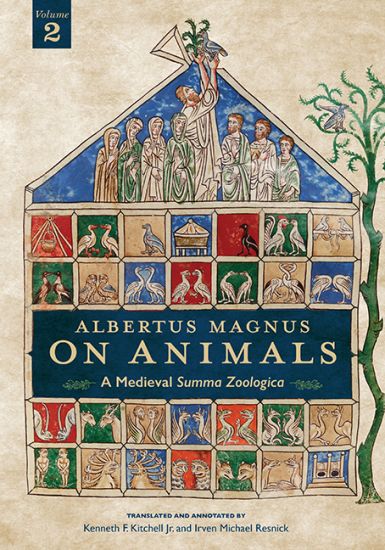
Albertus Magnus on Animals V2
Kenneth F Kitchell Jr; Irven Michael Resnick
Ohio State University Press
2020
pokkari
Albertus Magnus has long been recognized as one of the greatest minds of the Middle Ages; his contemporaries conferred upon him the title Doctor Universalis. An epitaph at his tomb described him as prince among philosophers, greater than Plato, and hardly inferior to King Solomon in wisdom. In 1941, Pope Pius XII named Albertus Magnus patron saint of scientists. In his work De animalibus, Albert integrated the vast amount of information on nature that had come down to him in previous centuries: the exposition of Michael Scotus's translation from the Arabic of Aristotle's books on the natural world (Books 1-19), Albert's own revisions to Aristotle's teachings (Books 20-21), and a "dictionary" of animals appropriated largely from the De natura rerum of Thomas of Cantimpr (Books 22-26). Albert's comprehensive treatise on living things was acknowledged as the reputable authority in biology for almost five hundred years. In this translated and annotated edition, Kenneth F. Kitchell Jr. and Irven Michael Resnick illuminate the importance of this work, allowing Albert's magnum opus to be better understood and more widely appreciated than ever before. Broken into two volumes (Books 1-10 and 11-26), Albertus Magnus On Animals is a veritable medieval scientific encyclopedia, ranging in topics from medicine, embryology, and comparative anatomy to women, hunting and everyday life, commerce, and much more--an essential work for historians, medievalists, scientists, and philosophers alike.
Cities in the Sand: Leptis Magna and Sabratha in Roman Africa
Kenneth David Matthews Jr; Alfred W. Cook
Literary Licensing, LLC
2012
sidottu
""Cities in the Sand: Leptis Magna and Sabratha in Roman Africa"" is a comprehensive book written by Kenneth David Matthews Jr. that explores the history and culture of two ancient cities in North Africa. Leptis Magna and Sabratha were both important Roman settlements that flourished during the 2nd and 3rd centuries AD. Matthews Jr. delves into the rich archaeological and historical record of these cities, describing their impressive architecture, urban planning, and cultural achievements. He also examines the social and economic conditions that allowed these cities to thrive, as well as the political and military events that ultimately led to their decline. The book is filled with stunning photographs, detailed maps, and insightful analysis, making it an essential read for anyone interested in the history of the Roman Empire, North Africa, or urban planning and architecture.This scarce antiquarian book is a facsimile reprint of the old original and may contain some imperfections such as library marks and notations. Because we believe this work is culturally important, we have made it available as part of our commitment for protecting, preserving, and promoting the world's literature in affordable, high quality, modern editions, that are true to their original work.
Cities in the Sand: Leptis Magna and Sabratha in Roman Africa
Kenneth David Matthews Jr; Alfred W. Cook
Literary Licensing, LLC
2012
nidottu
Alexis Nicole Banks is a woman torn between her career and saving her crumbling marriage. She has her hands full working her way to the top as a defense attorney for a prestigious law firm, while keeping an ever-watchful eye on her husband Marcus, who seems to be straying away from their vows daily. Alexis' life is further complicated when Carter Burroughs, an old flame, swaggers back on the scene. Carter is charming, handsome and rich, but happens to be one of the most notorious gangsters on the east coast. His only weakness is the soft spot in his heart for Alexis...his one and only true love. A change in his life would have him set his sights on winning her back at any costs. Marcus, a debonair and cunning D.C. narcotics detective has become obsessed with the biggest case of his career. He is so close to shutting down a multi-million dollar drug cartel that he can taste it. However, he is oblivious to the danger that is stalking him day to day and closing in at every turn. Disloyalty amongst road dogs, a battle for power on the streets as well as in the boardroom, and with love on the line; Alexis, Carter, and Marcus are forced to contemplate what's most important to them, when all of their lives come together in a head-on collision REKINDLED will take you on an adrenaline ride where the cost of love, loyalty and respect is bigger than anyone could ever imagine. Delve inside the mind of a woman who learns the hard way that an old love rekindled, is sometimes a flame better left unlit.
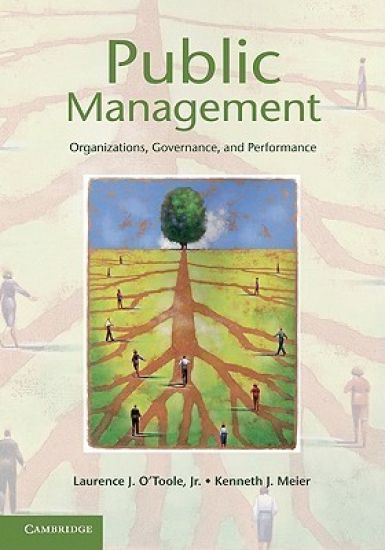
How effective are public managers as they seek to influence how public organizations deliver policy results? How, and how much, is management related to the performance of public programs? What aspects of management can be distinguished? Can their separable contributions to performance be estimated? The fate of public policies in today's world lies in the hands of public organizations, which in turn are often intertwined with others in latticed patterns of governance. Collectively, these organizations are expected to generate performance in terms of policy outputs and outcomes. In this book, two award-winning researchers investigate the effectiveness of management in the public sector. Firstly, they develop a systematic theory on how effective public managers are in shaping policy results. The rest of the book then tests this theory against a wide range of evidence, including a data set of 1,000 public organizations.
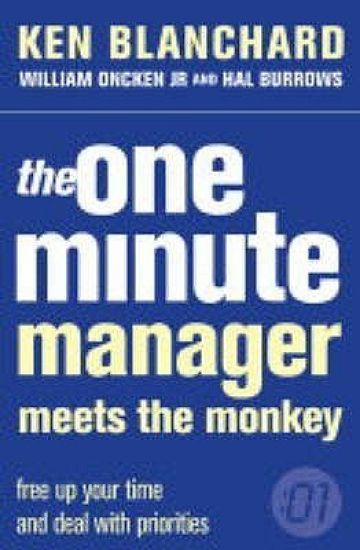
One Minute Manager Meets the Monkey
Kenneth Blanchard; Jr. Oncken; Hal Burrows
Harpercollins Publishers
2000
pokkari
With a new foreword by Ken Blanchard How management can effectively rid themselves of â??monkeysâ?? â?? other peopleâ??s responsibilities that cling to them and prevent them managing efficiently.
Introduces the Spanish-American War, including the origins of the war, specific campaigns, and the resulting peace process, and discusses its long-term effects.
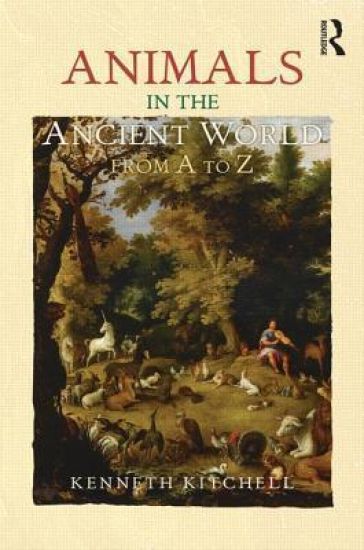
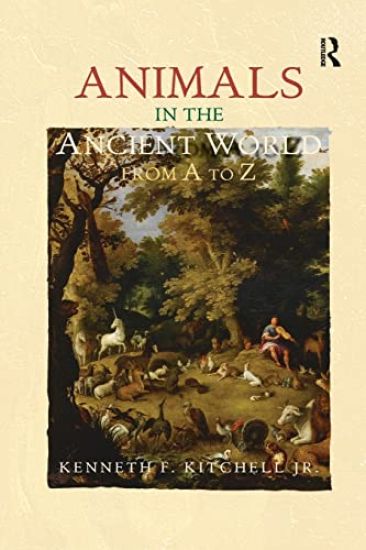
The ancient Greeks and Romans lived in a world teeming with animals. Animals were integral to ancient commerce, war, love, literature and art. Inside the city they were found as pets, pests, and parasites. They could be sacred, sacrificed, liminal, workers, or intruders from the wild. Beyond the city domesticated animals were herded and bred for profit and wild animals were hunted for pleasure and gain alike. Specialists like Aristotle, Aelian, Pliny and Seneca studied their anatomy and behavior. Geographers and travelers described new lands in terms of their animals. Animals are to be seen on every possible artistic medium, woven into cloth and inlaid into furniture. They are the subject of proverbs, oaths and dreams. Magicians, physicians and lovers turned to animals and their parts for their crafts. They paraded before kings, inhabited palaces, and entertained the poor in the arena. Quite literally, animals pervaded the ancient world from A-Z. In entries ranging from short to long, Kenneth Kitchell offers insight into this commonly overlooked world, covering representative and intriguing examples of mammals, reptiles, amphibians and invertebrates. Familiar animals such as the cow, dog, fox and donkey are treated along with more exotic animals such as the babirussa, pangolin, and dugong. The evidence adduced ranges from Minoan times to the Late Roman Empire and is taken from archaeology, ancient authors, inscriptions, papyri, coins, mosaics and all other artistic media. Whenever possible reasoned identifications are given for ancient animal names and the realities behind animal lore are brought forth. Why did the ancients think hippopotamuses practiced blood letting on themselves? How do you catch a monkey? Why were hyenas thought to be hermaphroditic? Was there really a vampire moth? Entries are accompanied by full citations to ancient authors and an extensive bibliography.Of use to Classics students and scholars, but written in a style designed to engage anyone interested in Greco-Roman antiquity, Animals in the Ancient World from A to Z reveals the extent and importance of the animal world to the ancient Greeks and Romans. It answers many questions, asks several more, and seeks to stimulate further research in this important field.
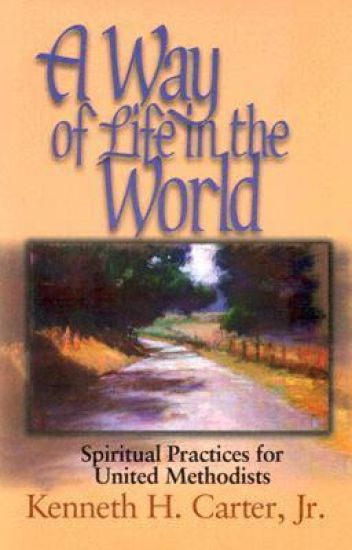
"What does it mean to be a United Methodist?" The answer to this question, says Kenneth H. Carter, Jr., is to live a particular way of life and follow a particular form of discipleship. The distinctive aspects of that way of discipleship are contained in what has recently come to be known as "the practices." Christian practices are things done together, over time, in response to God's grace. They constitute an extended argument against some harmful alternative in the culture; they address and define a fundamental human need; they come to focus in worship; and they add up to a way of life. Carter contends that there are 6 essential practices in the United Methodist tradition: (1) searching the scriptures, (2) generosity with the poor, (3) testimony, (4) singing, (5) Holy Communion, and (6) Christian conferencing. Written primarily for those who lead in United Methodist congregations, this book will give the reader not only an understanding of what the central United Methodist practices are, but also how they can be taught. Being formed in and by these practices does not happen overnight; it happens across a lifetime of observing the practices in others and trying them out oneself. Neglecting the Christian practices--failing to attend to them--can mean a life devoid of much of the purpose and power that life in the Spirit can hold.
North Texas was the traditional home of several tribes of Plains Indians, notably the Kiowa and Comanche. The first white settlers arrived in 1879, Wichita County was organized in 1882, and the railroad arrived the same year. Agriculture dominated the economy until early in the 20th century when oil was discovered in the area. This discovery led to an oil boom that peaked during World War I. For the next several years, Wichita Falls flourished as a refinery town while continuing to support the agricultural economy that was based largely on cattle and wheat. During World War II, Sheppard Air Force Base was established in Wichita Falls and is still an important contributor to the economy. The refineries have long since disappeared, but oil production and farming remain. Also important is Midwestern State University with a student body numbering approximately 6,000.
The ancient Greeks and Romans lived in a world teeming with animals. Animals were integral to ancient commerce, war, love, literature and art. Inside the city they were found as pets, pests, and parasites. They could be sacred, sacrificed, liminal, workers, or intruders from the wild. Beyond the city domesticated animals were herded and bred for profit and wild animals were hunted for pleasure and gain alike. Specialists like Aristotle, Aelian, Pliny and Seneca studied their anatomy and behavior. Geographers and travelers described new lands in terms of their animals. Animals are to be seen on every possible artistic medium, woven into cloth and inlaid into furniture. They are the subject of proverbs, oaths and dreams. Magicians, physicians and lovers turned to animals and their parts for their crafts. They paraded before kings, inhabited palaces, and entertained the poor in the arena. Quite literally, animals pervaded the ancient world from A-Z. In entries ranging from short to long, Kenneth Kitchell offers insight into this commonly overlooked world, covering representative and intriguing examples of mammals, reptiles, amphibians and invertebrates. Familiar animals such as the cow, dog, fox and donkey are treated along with more exotic animals such as the babirussa, pangolin, and dugong. The evidence adduced ranges from Minoan times to the Late Roman Empire and is taken from archaeology, ancient authors, inscriptions, papyri, coins, mosaics and all other artistic media. Whenever possible reasoned identifications are given for ancient animal names and the realities behind animal lore are brought forth. Why did the ancients think hippopotamuses practiced blood letting on themselves? How do you catch a monkey? Why were hyenas thought to be hermaphroditic? Was there really a vampire moth? Entries are accompanied by full citations to ancient authors and an extensive bibliography.Of use to Classics students and scholars, but written in a style designed to engage anyone interested in Greco-Roman antiquity, Animals in the Ancient World from A to Z reveals the extent and importance of the animal world to the ancient Greeks and Romans. It answers many questions, asks several more, and seeks to stimulate further research in this important field.