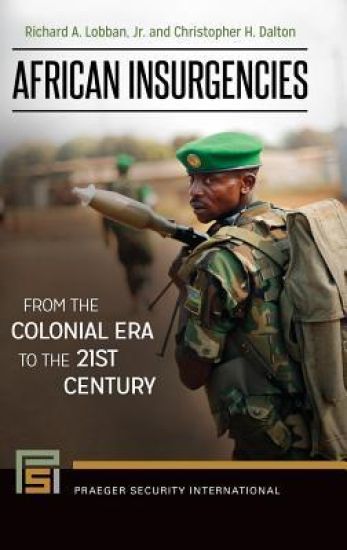
Presenting a continent-wide comparative analysis of ethnic, political, and colonially based insurgencies, this text examines the causes, tactics, outcomes, and key individuals of African insurgent events and assesses a range of foreseeable outcomes in Africa's multiple regions of continuing political instability.Insurgencies continue to erupt in many nations of Africa. The techniques and intended purposes of today's insurgencies are evolutions of historical versions of insurgencies, long-standing strife among ethnic and political groups, and modern-era movements reflective of the ever-shrinking planet, leading to revolutions in the region. This book spans the African continent to address a diverse classification of insurgencies and revolutions, weaving them together thematically and enabling readers to make connections between their purposes, tactics, outcome, and impact. Providing researchers in African and security studies with a comprehensive body of work for further studies, this eminently readable work examines the many past and current insurgencies that have occurred in Africa, identifying their causes and predominantly common bases and rationales.Coauthored by an acclaimed scholar of African studies and a U.S. Marine Corps Lieutenant Colonel with a master's degree in national security and strategic studies, this single-volume book provides an in-depth examination into the drivers, actors, tactics, weapons, intended outcomes, and sweeping consequences of the many events in Africa that have overturned existing rule or implemented rule where none existed—and in a few cases, resulted in stabilization of a nation. Readers will better understand the causal, contextual, tactical, ideological, and philosophical factors that launch insurgencies through coverage of pre-colonial insurgencies; anti-colonial resistance and national liberation movements; separatist and irredentist movements; reformist, revolutionary, and Islamist insurgencies; and genocide, warlord, and proxy insurgencies. The book's last chapter discusses how insurgent movements might be prevented through better governance, or contained or defeated with diplomatic and/or military means.
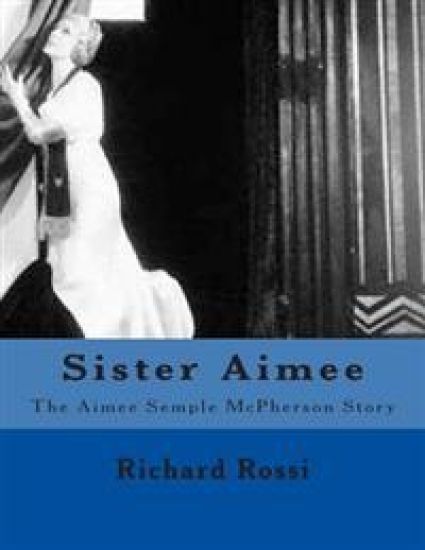
"Sister Aimee: The Aimee Semple McPherson Story": A Screenplay by Richard RossiThe front page headlines, tabloids and gossip-mongers had a field day in the Roaring Twenties, shouting: "SISTER AIMEESexSISTER AIMEESinSISTER AIMEESalvation..." According to Christianity Today writer-filmmaker Richard Rossi "probes deeper" than any other book or film on Sister Aimee. Videohound Golden Retriever Movieguide says what sets his work on Sister Aimee apart is "Rossi takes a compassionate and sympathetic look" at the total story. Both of Rossi's award-winning films are available on DVD on Amazon under the title "Richard Rossi 5th Anniversary of Sister Aimee." REVIEWS: "Sister Aimee: The Aimee Semple McPherson Story" is as provocative as it is touching and explores the human side of one of America's towering spiritual icons. You'll find a sensitive script, ample acting, and a story that portrays the Pentecostal woman, who like the rest of us, lived in a skin of real flesh...If you can believe that Christian legends still wear a skin that longs to be touched, THIS MOVIE IS A MUST-SEE " (Charisma Magazine, Ed Donnally)"In spite of being a devout atheist (an oxymoron I imagine), I've always found the people involved with any religion to be fascinating. Director Rossi wants us to know the evangelist who became a sensation touring around the world and preaching her Christian beliefs...Rossi doesn't gloss over her indiscretions. He paints a lovelorn woman...not a deified woman. Mimi Michaels (as Aimee) is a force of passion and conviction..." (Filmthreat ) In this book, considered the best of the books about Sister Aimee by the International Communion of Charismatic Churches, Academy Award-considered filmmaker Richard Rossi shares what he learned about the Miracle Woman by making two movies about Sister Aimee ("Saving Sister Aimee", the Oscar-considered documentary in which he interviewed primary witnesses like Aimee's daughter, leading man, co-pastor, and secretary and his feature dramatic film "Sister Aimee") Due to popular and worldwide demand to have his screenplay in book form, Rossi's screenplay and introduction are presented here as he tells Aimee's story in his critically acclaimed award-winning script from the Aimee biopic voted the greatest guerrilla film of all time.
This new book descends from a former combined reference book on Ancient and Medieval Nubia but now expands and focuses primarily on Prehistoric and Ancient times. It contextualizes the foundational roots of human evolution in the Paleolithic and Mesolithic stone ages and on to the Neolithic revolution built on farming and livestock. Meanwhile, Kerma was the most ancient African states and their relationship with dynastic Egypt. Precisely, ancient Kerma a was a serious political, economic and military rival to Old and Middle Kingdoms of Egypt. But in the New Kingdom the balance of regional forces was dramatically changed with Egyptians defeating Kerma and occupying and colonizing Kush/Nubia for 500 years. In the 11th century BCE the political unity of Egypt withered away and after recovering from foreign exploitation, Nubians began to reconstitute a small state at Kurru with renewed pyramid building and then finding no Egyptian resistance, these Nubians kings advanced on Egyptian Nubia and then on to Upper Egypt. Finally, Nubians were able to take over all of Egypt as the pharaohs of century-long Dynasty XXV. This so-called ‘Ethiopian” dynasty had the famed pharaohs of Piankhy, Shabaka, Shabataka, Taharka and Tanutamun ruling for various terms, three of who are mentioned in the Biblical Old Testament.Even when Nubians were expelled from Egypt by foreign Assyrian invaders, they retreated to Napata to carry on their ancient state for three more independent centuries as Egyptian remained conquered by various foreigners for 2,500 years. Most notable of these foreign conquers of Egypt were the Greeks (Ptolemies) and the Roman (who arrived and polytheists and left as Christians. During this Greco-Roman period in Egypt, Nubians strategically withdrew still further south to the Kingdom of Meroë (from the 4th century BCEE to the 4th century CE. Meroe is also covered in great detail as it was famed for many regnant queens, a unique and undeciphered writing system, iron-production and important monumental works including more pyramids than found in Egypt, Yes, smaller and later but many more pyramids that are still standing in several World Heritage sites in Nubia. After Meroë began a long decline it was finally vulnerable to attack from Christian Axum on the 4th century CE. Two murky centuries of regional rule, known as the X-Group were to follow, but by the 6th century Nubians recreated three Christian states that are covered in detail in the following Historical Dictionary of Medieval Christian Nubia and the Historical Dictionary of Sudan for Islamic and modern times.
Medieval Christian Nubia is often a neglected period of medieval African history. Because meaning is determined largely by context this work traces the Greco-Roman, Meroitic and Jewish precursors. The regional, historical and theological schisms within Christianity are also a highlight. The dynamics of the three Nubian kingdoms of Nobatia, Mukurra, and Alwa are the centerpiece of this book that covers mural arts, architecture, and the names of the leading kings and bishops. Another strength of the book is the analysis of the 700-year baqt peace treaty between Christian Nubia and Islamic Egypt; this is considered to be the longest lasting treaty in diplomatic history. The complex transition from Christianity to Islam in the 14th century is analyzed in great personal, political, and military detail.Historical Dictionary of Medieval Christian Nubia contains a chronology, an introduction, and an extensive bibliography. The dictionary section has over 200 cross-referenced entries on politics, economy, foreign relations, religion, and culture of the medieval Nubians. This book is an excellent resource for students, researchers, and anyone wanting to know more about Medieval Christian Nubia.
A must-read for Gulf Coast scientists, naturalists, and residents . . . From Florida to Mexico and along the shores of Cuba, the coasts of the Gulf of Mexico are vulnerable to sea-level rise because of their fragile and low-lying shorelines and adjacent coastal environments. In addition to wetlands, river deltas, beaches, and barrier islands, millions of people who live and work along the Gulf coast are susceptible to the affects of both intense storms in the short term and a gradual rise in sea level over the longer term. While global warming headlines any current discussion of this topic and is certainly a major factor in sea-level change, it is not the only factor. Earthquakes and other crustal shifts, the El Nino/La Nina phenomena, river impoundment and sedimentation, tides, and weather can all affect local, regional, and global sea levels. In Sea-Level Change in the Gulf of Mexico, Richard A. Davis Jr. looks at the various causes and effects of rising and falling sea levels in the Gulf of Mexico, beginning with the Gulf's geological birth over 100 million years ago, and focusing on the last 20,000 years, when global sea levels began rising as the glaciers of the last major ice age melted. Davis reviews the current situation, especially regarding beach erosion and loss of wetlands, and offers a preview of the future, when the Gulf Coast will change markedly as the twenty-first century progresses. Amply illustrated and written in a clear, straightforward style, Sea-Level Change in the Gulf of Mexico is a valuable resource for anyone who cares deeply about understanding the past, present, and future of life along the coast of the Gulf of Mexico.
Much of the world’s population lives within thirty miles of a coast, and beaches are perhaps the most popular tourist destinations worldwide. The Gulf of Mexico is no exception: millions of people make their homes nearby, and many of them spend considerable time at the beach, joined by millions more tourists and seasonal visitors.In Beaches of the Gulf Coast, Richard A. Davis Jr., a veteran coastal geologist, explores the dynamics of beach formation, providing the reader with a basic understanding of the characteristics and behavior of the beach environment and what causes it to change. He compares natural beach environments with those that have experienced human intervention, and he profiles many of the common plants and animals that grow and live on and adjacent to the beach.Following the coastline from the Florida Keys around the Gulf Coast to Varadero Beach in Cuba, Davis describes the major characteristics of beaches in each US state, with a final chapter on Mexico and Cuba. Focusing on public beaches, Davis emphasizes the special features of the beaches, indicating whether and how they are nourished—either naturally or artificially—and pointing out which beaches have problems and which ones are doing well.Including photographs, satellite images, charts, and maps that reveal the natural processes of beach formation and erosion, Davis showcases the beauty of some of the Gulf’s “best” beaches, both popular and remote. Beaches of the Gulf Coast provides a broad range of basic knowledge for all who own beachfront property, who live near the beach, or who simply love the beach and want a better understanding of this special coastal environment.
In today's increasingly difficult world we sometimes forget a crucial tool that will help us move through challenging times. This tool is Hope. Dr. Osman walks us through 10 Reasons for utilizing Hope when we feel most challenged. When we feel despair and hopelessness, when we feel that we have lost the ability to attain accomplishment, Hope is far more powerful than you think. If you can utilize Dr. Osman's advice and tap into the 10 reasons of how Hope can help you the rewards will be unbelievable.
The etiology of infantile spasms/West syndrome remains unknown; the pathophysiology is poorly understood and the optimal course of treatment is controversial. The primary goal of this volume is to carefully assess all aspects of the disorder, provide the reader with a concise guide to the most effective and efficient means for establishing the diagnosis, formulating an appropriate treatment plan and assessing the outlook for long-term outcome.Infantile Spasms: Diagnosis, Management and Prognosis also aims to provide a compact and structured knowledge-base which can be used to facilitate the development of future research protocols designed to uncover the basic mechanisms underlying this disorder and lead to more effective treatment modalities.
As Sir William Osler said “The practice of medicine is an art, based on science”. The authors believe that the art of precision medicine is knowing when the science of medicine should not be applied to your patient. This practical guide to managing patient expectations while maintaining a good medical practice presents as one of the only books of its kind. Written for anesthesiology residents in training, as well as practicing physicians, Practical Anesthetic Management focuses on giving clinicians the tools to create safer, more effective and efficient practices while catering to patient satisfaction. Featuring pearls for teaching purposes, Practical Anesthetic Management also covers topics like preoperative evaluation, tips on blood-gas analysis, and essentials of airway management, all complete with accompanying videos.
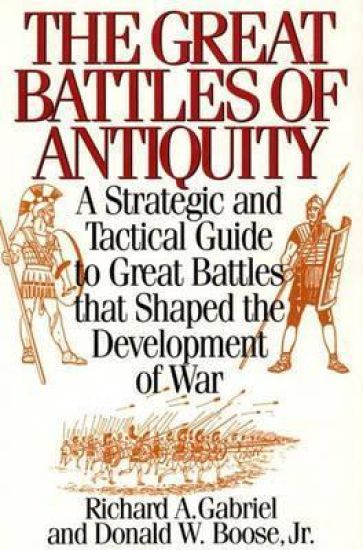
The Great Captains frequently looked to crucial battles to learn lessons that they themselves employed. While the battles of antiquity have often been examined, Western generals looked to the wars of the Greeks and the Romans, the Chinese to their own campaigns, and so on. Never before have military leaders and other students of military history had the benefit of a systematic look at the key battles throughout the ancient world. In this volume, Gabriel and Boose examine the 31 wars, campaigns or battles from Megiddo (1479 B.C.) to the fall of Constantinople (A.D. 1453) that had the greatest impact on the ancient world, stretching from the Mediterranean through the Middle East to Japan and Korea. Beginning with Megiddo, the first battle in history for which there is a relatively detailed account of strategy and tactics, Gabriel and Boose provide a systematic survey of major battles, wars, and campaigns. Each analysis begins with the Strategic Setting, which places events within the larger political and strategic context; then looks to The Antagonists, providing a comparative look at each army, its equipment, tactics, weaponry, logistics, style of combat leadership, and doctrine to assess its major strengths and weaknesses. The authors then examine The Battle, offering a detailed account of the struggle complete with maps and charts to clarify the analysis of what happened on the battlefield. The final section, Lessons of War, dissects each battle for its successes and failures that are particularly relevant to the development and conduct of war in the modern age. Each survey ends with a bibliography of key sources for further reading. This volume is designed to be an invaluable reference source for military historians and professionals as well as the general reader.
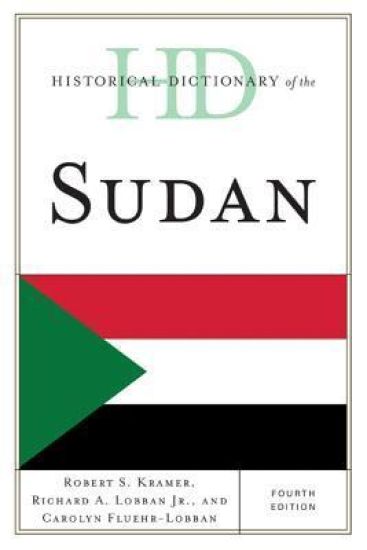
The Republic of the Sudan was long the largest country in Africa and, according to the general consensus, also one of the least successful in many ways. This was not entirely its fault since it lay along the fault line between Muslim and Christian Africa and between the Nile Valley civilizations and African Sudanic cultures. This partly explains the long and bloody warfare waged by the Southerners to achieve independence, which they did in July 2011. So this hefty book actually covers not one but two states. This fourth edition of the Historical Dictionary of the Sudan does so, first, through a lengthy and detailed chronology tracing its relatively few successes and numerous failures. The introductory essay does an admirable job of putting it all in perspective. But the most informative part is the dictionary, with now over 700 entries for this fourth edition. They deal with important personalities, politics, the economy, society, culture, religion and inevitably the civil war. There are also appendixes and an extensive bibliography.
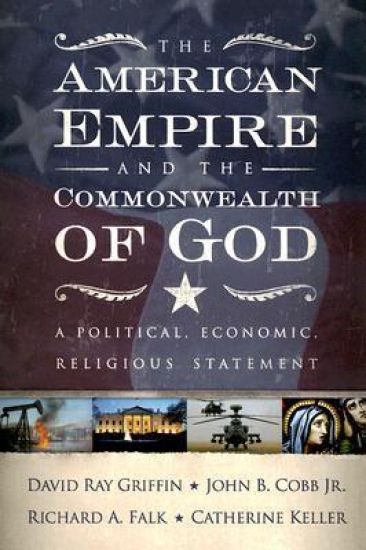
In this book, four distinguished scholars level a powerful critique of the rapid expansion of the emerging American empire and its oppressive and destructive political, military, and economic policies. Arguing that a global Pax Americana is internationally disastrous, the authors demonstrate how America's imperialism inevitably leads to rampant irreversible ecological devastation, expanding military force for imperialistic purposes, and a grossly inequitable distribution of goods--all leading to the diminished well-being of human communities.
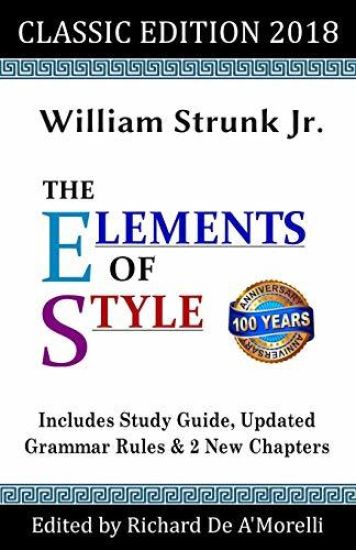
This expanded and updated Classic Edition commemorates the 100-year anniversary of William Strunk's grammar primer, The Elements of Style. Generations of writers have learned the basics of grammar from Strunk's little book. It was rated "one of the 100 most influential books written in English" by Time in 2011, and iconic author Stephen King recommended it as a grammar primer that all aspiring writers should read.Elements of Style: Classic Edition 2018 includes the full text of Strunk's original work, plus two new chapters requested by college professors and students to help clarify points of confusion in modern writing: Basic Rules of Capitalization and Style Rules for Better Writing. This edition also features some other enhancements making this grammar handbook even more useful: 1. Editor's notes have been inserted throughout the book to flag grammar rules now considered obsolete and to provide up-to-date rules for students and writers.2. Emojis have been added to help readers identify correct examples from faulty grammar at a glance.3. A Study Guide is included in the last chapter.4. The paperback version includes blank, lined pages in the back of the book for convenient notetaking.5. The e-book versions have been restyled for improved display on the latest generations of digital book-reading devices.Elements of Style: Classic Edition is now being used as a textbook in courses at University of Minnesota, University of Texas, UC Berkeley and elsewhere, giving students and writers a blueprint that they can follow to write clearly and effectively while adhering to the fundamental rules of English Grammar.Note: Some courses may alternatively specify Elements of Style 4th Edition by E.B. White, or Elements of Style 2017, loosely based on Strunk's book with over 500 up-to-date grammar and style rules for students and writers. If you are looking for one of these editions, check your favorite bookseller or college bookstore for details.
This expanded Classic Edition commemorates the 100-year anniversary of William Strunk's grammar primer, The Elements of Style. Generations of writers have learned the basics of grammar from Strunk's little book. It was rated "one of the 100 most influential books written in English" by Time in 2011, and iconic author Stephen King recommended it as a grammar primer that all aspiring writers should read.Elements of Style: Classic Edition 2018 includes the full text of Strunk's original work, plus two new chapters requested by college professors and students to help clarify points of confusion in modern writing: Basic Rules of Capitalization and Style Rules for Better Writing. This edition also features some other enhancements making this grammar handbook even more useful: 1. Editor's notes have been inserted throughout the book to flag grammar rules now considered obsolete and to provide up-to-date rules for students and writers.2. Emojis have been added to help readers identify correct examples from faulty grammar at a glance.3. A Study Guide is included in the last chapter.4. The paperback version includes blank, lined pages in the back of the book for convenient notetaking.5. The e-book versions have been restyled for improved display on the latest generations of digital book-reading devices.Elements of Style: Classic Edition is now being used as a textbook in courses at University of Minnesota, University of Texas, UC Berkeley and elsewhere, giving students and writers a blueprint that they can follow to write clearly and effectively while adhering to the fundamental rules of English Grammar.Note: Some courses may alternatively specify Elements of Style 4th Edition by E.B. White, or Elements of Style 2017, loosely based on Strunk's book with over 500 up-to-date grammar and style rules for students and writers. If you are looking for one of these editions, check your favorite bookseller or college bookstore for details.