
Kirjahaku
Etsi kirjoja tekijän nimen, kirjan nimen tai ISBN:n perusteella.
1000 tulosta hakusanalla Judith Block

It was a fair, clear, and shining morning, in the sweet May-time of the year, when a young English damsel went forth from the town of Stratford-upon-Avon to walk in the fields. As she passed along by the Guild Chapel and the Grammar School, this one and the other that met her gave her a kindly greeting; for nearly every one knew her, and she was a favorite; and she returned those salutations with a frankness which betokened rather the self-possession of a young woman than the timidity of a girl. Indeed, she was no longer in the first sensitive dawn of maidenhood-having, in fact, but recently passed her five-and-twentieth birthday-but nevertheless there was the radiance of youth in the rose-leaf tint of her cheeks, and in the bright cheerfulness of her eyes.



Reproduction of the original: Judith Shakespeare by William Black

Reproduction of the original: Judith Shakespeare by William Black

Judith ShakespeareHer Love Affairs And Other Adventures (Edition2023)
William Black
UNKNOWN
2024
nidottu
"Judith Shakespeare: Her Love Affairs And Other Adventures" by William Black is a captivating Victorian novel that intertwines romance, adventure, and historical drama. Set against the backdrop of London, the story follows Judith Shakespeare, a character shrouded in literary mystery, as she navigates love affairs and family intrigue amidst the bustling streets of the Victorian era. William Black's masterful storytelling immerses readers in a vividly depicted historical landscape, where the complexities of family dynamics and feminist ideals intersect with societal expectations and personal desires. Through Judith's adventures, the novel delves into themes of love, independence, and the pursuit of identity in a rapidly changing world. As Judith navigates the challenges of her time, readers are drawn into a rich tapestry of Victorian literature, where intrigue and romance intertwine with moments of profound insight into the human experience. Black's exploration of feminism adds depth and resonance to the narrative, offering a nuanced portrayal of a woman's journey towards self-discovery and empowerment amidst the constraints of society. Filled with twists and turns, "Judith Shakespeare: Her Love Affairs And Other Adventures" is a compelling tale that will leave readers enthralled until the very end.

As befitting her name, lovely Submit Channing-Downes was the proper, obedient wife of an aging Marquess--until her husband′s death left her penniless and alone...with one final obligation to fulfill. Entrusted with delivering a small black box to its rightful owner, she calls upon Graham Wessit, the notorious Earl of Netham, whose life has been marred by rumor and scandal. But Graham wants nothing to do w/ her gift. Fate however, has entwined these two lives in astonishing ways neither Submit nor Graham could ever imagine.

Fellows's first book for the Press, Farm Boys: Lives of Gay Men from the Rural Midwest, is one of our all-time and ongoing bestsellers and is the third bestseller at InsightOut Book Club. In A Passion to Preserve, Fellows expands upon the art of oral history he perfected in Farm Boys. Fellows' portraits of gay conservationists and preservationists should be eye opening and possibly controversial.
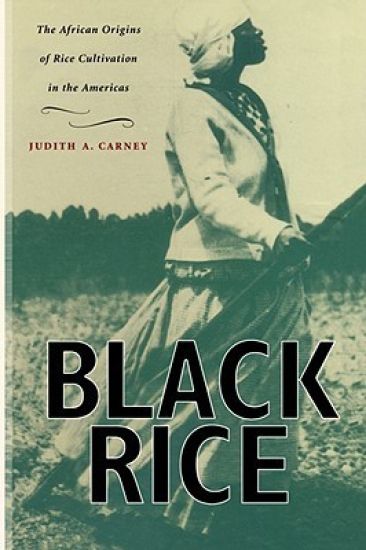
Few Americans identify slavery with the cultivation of rice, yet rice was a major plantation crop during the first three centuries of settlement in the Americas. Rice accompanied African slaves across the Middle Passage throughout the New World to Brazil, the Caribbean, and the southern United States. By the middle of the eighteenth century, rice plantations in South Carolina and the black slaves who worked them had created one of the most profitable economies in the world.Black Rice tells the story of the true provenance of rice in the Americas. It establishes, through agricultural and historical evidence, the vital significance of rice in West African society for a millennium before Europeans arrived and the slave trade began. The standard belief that Europeans introduced rice to West Africa and then brought the knowledge of its cultivation to the Americas is a fundamental fallacy, one which succeeds in effacing the origins of the crop and the role of Africans and African-American slaves in transferring the seed, the cultivation skills, and the cultural practices necessary for establishing it in the New World. In this vivid interpretation of rice and slaves in the Atlantic world, Judith Carney reveals how racism has shaped our historical memory and neglected this critical African contribution to the making of the Americas.

Racial attitudes are learned during the preschool years and directly reflect the attitudes and actions of American society. Using the self-portraits, stories, and doll-play of 400 children 3 to 5 years old, Judith Porter investigated the effects of such sociological variables as age, race, skin color, social class, interracial contact, and sex, both alone and in combination with other variables on the children's racial preferences. She is one of the first to relate these attitudes to actual interaction patterns in integrated kindergartens. Her research sheds new light on the ways in which early encounters with racism and prejudice affect the self-esteem, racial self-concept, and personality development of black children. Her study includes new findings on the effect of social class on the formation of racial attitudes. She concludes with a discussion of the implications of the data for theory, for future research, and for public policy, as well as specific recommendations for the creation of high-quality integrated nursery schools.

Black Atlas presents definitive new approaches to black geography. It focuses attention on the dynamic relationship between place and African American literature during the long nineteenth century, a volatile epoch of national expansion that gave rise to the Civil War, Reconstruction, pan-Americanism, and the black novel. Judith Madera argues that spatial reconfiguration was a critical concern for the era's black writers, and she also demonstrates how the possibility for new modes of representation could be found in the radical redistricting of space. Madera reveals how crucial geography was to the genre-bending works of writers such as William Wells Brown, Martin Delany, James Beckwourth, Pauline Hopkins, Charles Chesnutt, and Alice Dunbar-Nelson. These authors intervened in major nineteenth-century debates about free soil, regional production, Indian deterritorialization, internal diasporas, pan–American expansionism, and hemispheric circuitry. Black geographies stood in for what was at stake in negotiating a shared world.
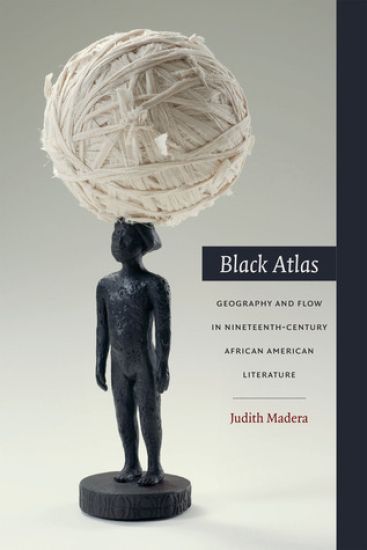
Black Atlas presents definitive new approaches to black geography. It focuses attention on the dynamic relationship between place and African American literature during the long nineteenth century, a volatile epoch of national expansion that gave rise to the Civil War, Reconstruction, pan-Americanism, and the black novel. Judith Madera argues that spatial reconfiguration was a critical concern for the era's black writers, and she also demonstrates how the possibility for new modes of representation could be found in the radical redistricting of space. Madera reveals how crucial geography was to the genre-bending works of writers such as William Wells Brown, Martin Delany, James Beckwourth, Pauline Hopkins, Charles Chesnutt, and Alice Dunbar-Nelson. These authors intervened in major nineteenth-century debates about free soil, regional production, Indian deterritorialization, internal diasporas, pan–American expansionism, and hemispheric circuitry. Black geographies stood in for what was at stake in negotiating a shared world.

How white psychiatrists pathologized African American religions In the decades after the end of slavery, African Americans were committed to southern state mental hospitals at higher rates as white psychiatrists listed "religious excitement" among the most frequent causes of insanity for Black patients. At the same time, American popular culture and political discourse framed African American modes of spiritual power as fetishism and superstition, cast embodied worship as excessive or fanatical, and labeled new religious movements "cults," unworthy of respect. As Judith Weisenfeld argues in Black Religion in the Madhouse, psychiatrists' notions of race and religion became inextricably intertwined in the decades after the end of slavery and into the twentieth century, and had profound impacts on the diagnosis, care, and treatment of Black patients. This book charts how racialized medical understandings of mental normalcy pathologized a range of Black religious beliefs, spiritual sensibilities, practices, and social organizations and framed them as manifestations of innate racial traits. Importantly, these characterizations were marshaled to help to limit the possibilities for Black self-determination, with white psychiatrists' theories about African American religion and mental health being used to promote claims of Black people's unfitness for freedom. Drawing on extensive archival research, Black Religion in the Madhouse is the first book to expose how racist views of Black religion in slavery's wake shaped the rise of psychiatry as an established and powerful profession.


This book provides a new perspective on Sienese painting after the Black Death, asking how social, religious, and cultural change affect visual imagery and style. Judith Steinhoff demonstrates that Siena's artistic culture of the mid and late fourteenth century was intentionally pluralistic, and not conservative as is often claimed. She shows that Sienese art both before and after the Black Death was the material expression of an artistically sophisticated population that consciously and carefully integrated tradition and change. Promoting both iconographic and stylistic pluralism, Sienese patrons furthered their own goals as well as addressed the culture's changing needs. Steinhoff presents both detailed case studies as well as a broader view of trends in artistic practice and patronage. She offers a new approach to interpreting artistic style in the Trecento, arguing that artists and patrons alike understood the potential of style as a vehicle that conveys specific meanings.
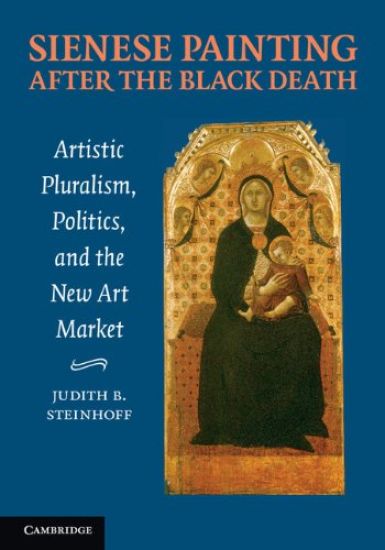
This book provides a new perspective on Sienese painting after the Black Death, asking how social, religious, and cultural change affect visual imagery and style. Judith Steinhoff demonstrates that Siena's artistic culture of the mid and late fourteenth century was intentionally pluralistic, and not conservative as is often claimed. She shows that Sienese art both before and after the Black Death was the material expression of an artistically sophisticated population that consciously and carefully integrated tradition and change. Promoting both iconographic and stylistic pluralism, Sienese patrons furthered their own goals as well as addressed the culture's changing needs. Steinhoff presents both detailed case studies as well as a broader view of trends in artistic practice and patronage. She offers a new approach to interpreting artistic style in the Trecento, arguing that artists and patrons alike understood the potential of style as a vehicle that conveys specific meanings.
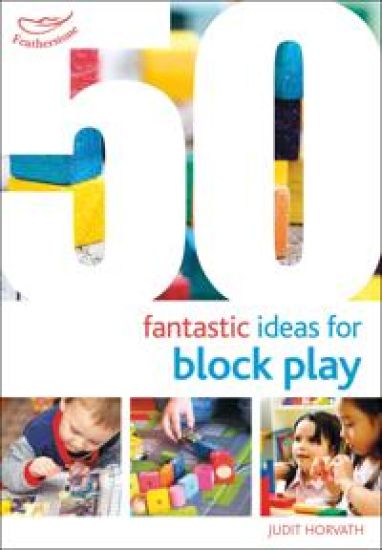
The 50 Fantastic Ideas series is packed full of fun, original, skills-based activities for Early Years practitioners to use with children aged 0-5. Each activity features step-by-step guidance, a list of resources, and a detailed explanation of the skills children will learn. Creative, simple, and highly effective, this series is a must-have for every Early Years setting.Block play stimulates learning in all areas of development: intellectual, physical, social, emotional and communication as well as early maths and literacy. In this book, experienced author and practitioner Judit Horvath has put together a variety of exciting and challenging ideas that cover them all.Some activities include cheap, easily sourced props such as play dough, pebbles, fairy lights and flowers to capture the children's imaginations, while others prompt more challenging block play to encourage the development and understanding of complex patterns, such as classifying, sequencing, counting, fractions and problem solving.This creative collection of ideas featuring colourful and fun photography is a fantastic resource for incorporating successful and exciting block play into your setting.