Kirjojen hintavertailu. Mukana 11 244 527 kirjaa ja 12 kauppaa.

Kirjahaku

Etsi kirjoja tekijän nimen, kirjan nimen tai ISBN:n perusteella.

1000 tulosta hakusanalla Judith L McFall

Family Therapy of Neurobehavioral Disorders

Family Therapy of Neurobehavioral Disorders

Judith L Johnson; William G. McCown

Routledge Member of the Taylor and Francis Group
1997
nidottu
Family Therapy of Neurobehavioral Disorders shows you a unique integration of neuropsychology and family therapy. Authors Judith L. Johnson and William G. McCown span these two broad areas by synthesizing family therapy principles and applying them specifically to traumatic brain injury and degenerative dementia. Family therapists, neuropsychologists, social workers, and counselors working with patients who experience brain dysfunction and their families learn to better address common issues and problems and of therapeutic interventions. This expert book includes case examples and working models of family reactions. The book then extends this information into practical clinical situations commonly confronted in work with these patients and their families. Readers of Family Therapy of Neurobehavioral Disorders are introduced to brain-behavior relationships including neuroanatomy of the brain as it relates to behavior, dynamics of neurologic disorders, and common symptoms of brain dysfunction. You can then use this information to help persons with traumatic brain injury and their families cope with and adjust to the issues and challenges they face. Specifically, you gain invaluable, informative insight into:the neuroanatomy of the brain and which structures mediate behavior, emotion, and cognition common issues families face when a member suffers traumatic brain injury therapeutic strategies and practical suggestions for assisting families mild head injury and familial reactions common issues faced by families confronting Alzheimer’s disease or other dementias a model of family reactions to dementia over timeChapters in Family Therapy of Neurobehavioral Disorders outline symptoms of brain dysfunction and family therapy designed to approach these symptoms. Divided into two sections, the book gives readers a model of traumatic brain injury beginning with the initial onset and proceeding through time. This section focuses on changes within the family and therapeutic strategies for helping these distressed families. Secondly, the authors address degenerative dementia with emphases on certain phases through which family members may progress as they acknowledge their loved one’s condition and then therapeutically work through the reality of it. Professionals in the medical and social sciences will find Family Therapy of Neurobehavioral Disorders a unique and irreplacable guide for developing and understanding the meshing of neuropsychology and family therapy. Also, the book serves as a solid text for students in courses such as rehabilitation, counseling, and family therapy.Translated into Spanish!

1 Corinthians

1 Corinthians

Judith L Kovacs

William B Eerdmans Publishing Co
2005
pokkari
Series: The Church's Bible (CB) Paul's first letter to the Corinthians, one of the earliest Christian writings, had enormous influence on the formation of Christian teaching. In this Church's Bible volume Judith L. Kovacs weaves comments from all the commentaries and sermon series written in Latin or Greek between the years 250 and 800, illustrating the historic Christian understanding of this crucial text. The church fathers gathered here include Augustine of Hippo, Irenaeus, Gregory of Nyssa, Athanasius, Origen, John Chrysostom, and many more. Preceding the line-by-line exegesis are a lucid essay by Robert Louis Wilken on how the church fathers interpreted the New Testament, an informative introduction to 1 Corinthians by Kovacs, and two chapters of general patristic commentary on Paul and on this letter. Completing the volume are several helpful appendixes and indexes. Freshly translating many passages into idiomatic English for the first time, Kovacs does not merely excerpt random quotes from the church fathers but instead produces a sustained interaction with their direct comments on 1 Corinthians. This soaking in the wisdom of the past is sure to spiritually refresh and intellectually sharpen contemporary readers who seek to better understand this part of Scripture.
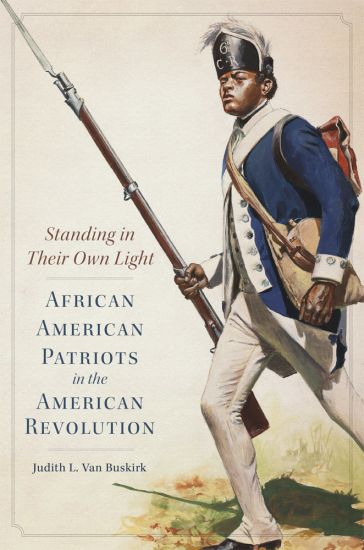
Standing in Their Own Light

Standing in Their Own Light

Judith L. Van Buskirk

University of Oklahoma Press
2017
sidottu
The Revolutionary War encompassed at least two struggles: one for freedom from British rule, and another, quieter but no less significant fight for the liberty of African Americans, thousands of whom fought in the Continental Army. Because these veterans left few letters or diaries, their story has remained largely untold, and the significance of their service largely unappreciated. Standing in Their Own Light restores these African American patriots to their rightful place in the historical struggle for independence and the end of racial oppression. Revolutionary era African Americans began their lives in a world that hardly questioned slavery; they finished their days in a world that increasingly contested the existence of the institution. Judith L. Van Buskirk traces this shift to the wartime experiences of African Americans. Mining firsthand sources that include black veterans' pension files, Van Buskirk examines how the struggle for independence moved from the battlefield to the courthouse - and how personal conflicts contributed to the larger struggle against slavery and legal inequality. Black veterans claimed an American identity based on their willing sacrifice on behalf of American independence. And abolitionists, citing the contributions of black soldiers, adopted the tactics and rhetoric of revolution, personal autonomy, and freedom. Van Buskirk deftly places her findings in the changing context of the time. She notes the varied conditions of slavery before the war, the different degrees of racial integration across the Continental Army, and the war's divergent effects on both northern and southern states. Her efforts retrieve black patriots' experiences from historical obscurity and reveal their importance in the fight for equal rights - even though it would take another war to end slavery in the United States.
Standing in Their Own Light

Standing in Their Own Light

Judith L. Van Buskirk

University of Oklahoma Press
2018
nidottu
The Revolutionary War encompassed at least two struggles: one for freedom from British rule, and another, quieter but no less significant fight for the liberty of African Americans, thousands of whom fought in the Continental Army. Because these veterans left few letters or diaries, their story has remained largely untold, and the significance of their service largely unappreciated. Standing in Their Own Light restores these African American patriots to their rightful place in the historical struggle for independence and the end of racial oppression. Revolutionary era African Americans began their lives in a world that hardly questioned slavery; they finished their days in a world that increasingly contested the existence of the institution. Judith L. Van Buskirk traces this shift to the wartime experiences of African Americans. Mining firsthand sources that include black veterans' pension files, Van Buskirk examines how the struggle for independence moved from the battlefield to the courthouse - and how personal conflicts contributed to the larger struggle against slavery and legal inequality. Black veterans claimed an American identity based on their willing sacrifice on behalf of American independence. And abolitionists, citing the contributions of black soldiers, adopted the tactics and rhetoric of revolution, personal autonomy, and freedom. Van Buskirk deftly places her findings in the changing context of the time. She notes the varied conditions of slavery before the war, the different degrees of racial integration across the Continental Army, and the war's divergent effects on both northern and southern states. Her efforts retrieve black patriots' experiences from historical obscurity and reveal their importance in the fight for equal rights - even though it would take another war to end slavery in the United States.
Generous Enemies

Generous Enemies

Judith L. Van Buskirk

University of Pennsylvania Press
2003
pokkari
In July 1776, the final group of more than 130 ships of the Royal Navy sailed into the waters surrounding New York City, marking the start of seven years of British occupation that spanned the American Revolution. What military and political leaders characterized as an impenetrable "Fortress Britannia"-a bastion of solid opposition to the American cause-was actually very different. As Judith L. Van Buskirk reveals, the military standoff produced civilian communities that were forced to operate in close, sustained proximity, each testing the limits of political and military authority. Conflicting loyalties blurred relationships between the two sides: John Jay, a delegate to the Continental Congresses, had a brother whose political loyalties leaned toward the Crown, while one of the daughters of Continental Army general William Alexander lived in occupied New York City with her husband, a prominent Loyalist. Indeed, the texture of everyday life during the Revolution was much more complex than historians have recognized. Generous Enemies challenges many long-held assumptions about wartime experience during the American Revolution by demonstrating that communities conventionally depicted as hostile opponents were, in fact, in frequent contact. Living in two clearly delineated zones of military occupation-the British occupying the islands of New York Bay and the Americans in the surrounding countryside-the people of the New York City region often reached across military lines to help friends and family members, pay social calls, conduct business, or pursue a better life. Examining the movement of Loyalist and rebel families, British and American soldiers, free blacks, slaves, and businessmen, Van Buskirk shows how personal concerns often triumphed over political ideology. Making use of family letters, diaries, memoirs, soldier pensions, Loyalist claims, committee and church records, and newspapers, this compelling social history tells the story of the American Revolution with a richness of human detail.
Postcolonial Literature from Three Continents

Postcolonial Literature from Three Continents

Judith L. Tabron

Peter Lang Publishing Inc
2003
sidottu
How can we read literatures from other cultures? The metaphors of fractal geometry can help us think about the complexity of the cultural situation of a text or an author." Postcolonial Literature from Three Continents" identifies four primary themes common to postcolonial texts - technology, memory, language, and geography - and examines them in relationship to four texts from Nigeria, the United States, and Australia so that we see both the colonized and colonizing positions of these works. The quartet of texts are Amos Tutuola's "The Palm-Wine Drinkard," H. D.'s "Helen in Egypt," Ralph Ellison's "Invisible Man," and Patrick White's "Voss."
Grief and Loss Across the Lifespan

Grief and Loss Across the Lifespan

Judith L. M. McCoyd; Jeanne Koller; Carolyn Ambler Walter

Springer Publishing Co Inc
2021
nidottu
Note to Readers: Publisher does not guarantee quality or access to any included digital components if book is purchased through a third-party seller. The third edition of this unrivaled text on loss, grief, and bereavement continues to provide a unique biopsychosocial perspective and developmental framework for understanding grieving patterns. Organized by a lifespan trajectory, this text describes developmental aspects of grieving, linking these theories to effective clinical work. Biopsychosocial developmental theories, including neurobiological and genetic information, frame chapters that include recent research on how people of that age respond to varied loss situations, and intervention strategies supported by practice experience and empirical evidence are addressed. The new edition illuminates special considerations in risk and resilience for each life phase, systematically addressing issues of oppression, marginalization, and health disparities. It includes a new chapter on grief and loss as they effect individuals over 85 and covers spiritual development for each life phase. The book restructures the adult chapters to reflect major changes in theories on expanded lifespans, adds to content on evolving living arrangements for aging individuals, and expands coverage of common losses at different points in the lifespan. This new edition includes material on ageism and its impact on health and also examines the challenges faced by older adults in the LGBT community. Additionally, the third edition explicitly incorporates the rapidly evolving science of Adverse Childhood Experiences, addressing how ACEs intersect with grief and loss. Vignettes and case studies are incorporated into each life-phase chapter, illuminating the lived experience of grief. Thought-provoking discussion questions, chapter objectives, and additional resources for both students and instructors reinforce critical thinking and an Instructor’s Manual, Casebook (of prior chapter readings), and PowerPoint slides are available for download. A free eBook is included with every text purchase. New to the Third Edition:Adds Special Considerations in Risk and Resilience to every chapter Incorporates Adverse Childhood Experiences (ACES) and their effects at various life stages Focus on neurobiological and genomic aspects of health Includes a new chapter on the Fourth Age – from 85 up Discusses spiritual development for each life phase Incorporates new case studies Restructures adult chapters to reflect major new theories about expanded lifespans Welcomes a new author who adds content on the third and fourth ages of older adulthood, ageism, and the experience of aging in LGBT communities Expands content on areas of marginalization – race, gender, financial resources, educational disparities, and more Expands content on evolving living arrangements for older adults Expands information on typical losses at different life stages Delivers expanded web materials including a casebook of prior readings from earlier editions, in addition to PowerPoint slides and class plans and activities in the Instructor Manual Key Features:Provides a complete overview of classic and current grief theories Delivers a standardized developmental approach to each age group for consistency Presents practical intervention strategies for different life stages Includes chapter objectives, vignettes, case studies, and narratives to illustrate specific forms of loss Delivers abundant instructor resources including instructor’s guide with sample syllabus and exercises, PowerPoints, class activities, and suggested resources
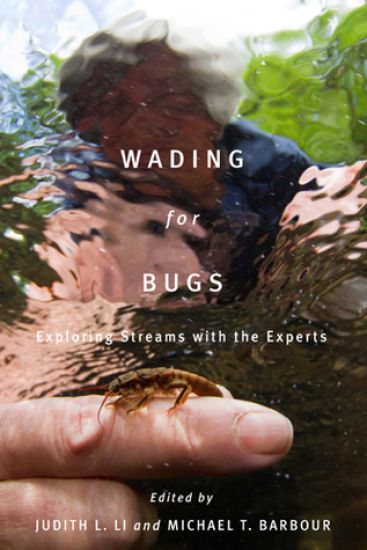
Wading for Bugs

Wading for Bugs

Judith L. Li

Oregon State University
2011
nidottu
Nearly two dozen aquatic biologists share their memorable encounters with stream insects in "Wading for Bugs." The writings in "Wading for Bugs" let readers to experience ? through the eyes of the scientists ? what it's like to study stream insects and to make discoveries that could positively affect stream health. Each insect order is introduced with a general summary, and elegant insect drawings accompany each story, along with morphological, life history, and habitat information for each species or family.
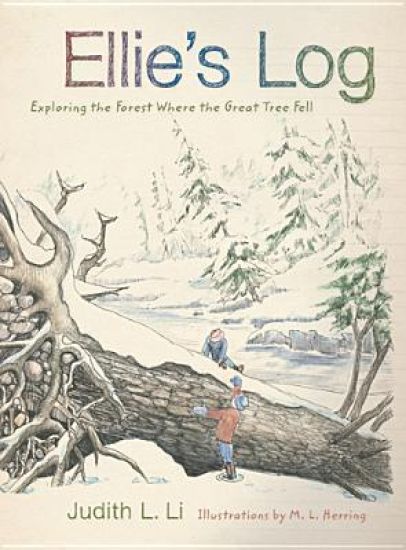
Ellie's Log

Ellie's Log

Judith L. Li

Oregon State University
2013
nidottu
After a huge tree crashes to the ground during a winter storm, ten-year-old Ellie and her new friend, Ricky, explore the forest where Ellie lives. Together, they learn how trees provide habitat for plants and animals high in the forest canopy, down among mossy old logs, and deep in the pools of a stream. The plants, insects, birds, and mammals they discover come to life in colored pen-and-ink drawings.An engaging blend of science and storytelling, Ellie’s Log also features:• Pages from Ellie’s own field notebook, which provide a model for recording observations in nature• Ellie’s advice to readers for keeping a field notebook• Ellie’s book recommendations Online resources for readers and teachers—including a Teacher’s Guide—are available at ellieslog.org.
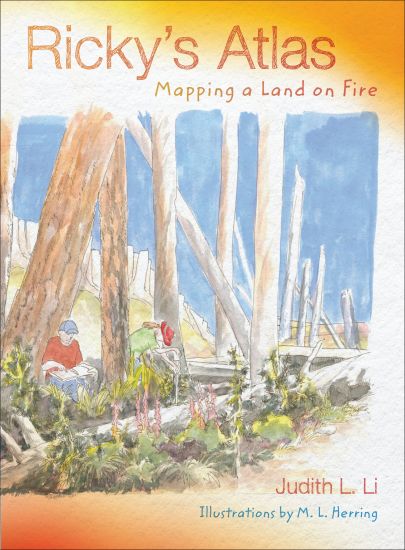
Ricky’s Atlas

Ricky’s Atlas

Judith L. Li

Oregon State University
2016
nidottu
In this sequel to Ellie’s Log: Exploring the Forest Where the Great Tree Fell, Ricky Zamora brings his love of map-making and his boundless curiosity to the arid landscapes east of the Cascade Mountains. He arrives during a wild thunderstorm, and watches his family and their neighbors scramble to deal with a wildfire sparked by lightning. Joined by his friend Ellie, he sees how plants, animals, and people adjust to life with wildfires.While hiking across a natural prairie, climbing up a fire tower, and studying historical photos and maps, Ricky and Ellie learn about the role of fire in shaping the landscape of the eastern semi-arid plateau. They experience the scary days of wildfire in progress, explore a gritty site after a wildfire, and discover how some plants and animals depend on fire to survive.Color pen-and-ink drawings accompany the text and vividly illustrate plants, animals, and events encountered in this exciting summer adventure. With his friend Ellie, Ricky creates a brightly colored diary of the fire, with maps, timelines, and sketches of what they see in this fire-prone land. Ricky’s notebook about his summer visit to his uncle’s ranch becomes an atlas of fire ecology, weather patterns, and life in the rain shadow.Upper elementary kids will enjoy the mixture of amazing adventures with actual historical, physical, and ecological data about the region. Woven into the story are the small pleasures of ranch life, intriguing histories of Native Americans and early settlers, and almost unbelievable views of ancient fossils. Ricky and Ellie’s explorations, accompanied by their hand-written notes, introduce readers to a very special landscape and history east of the mountains.
Ricky in the City

Ricky in the City

Judith L. Li; M. L. Herring

Oregon State University
2019
nidottu
It's early fall when Ricky and Ellie travel to Portland from their homes in the Cascade Mountains for a weekend school exchange. Much to their surprise, they find an astounding variety of wildlife in the city. With the help of their new friends, Jenny and Marcus, they explore Portland's habitats, from its streets and gardens to woodlands, streams, and river banks. Ellie tests her bird-watching skills while Ricky learns ways to count fish in streams. Together they are fascinated by stunning wildlife in the city's restored wetlands. The kids find insects and reptiles moving about garden patches and bioswales, song birds and squirrels in neighborhood tree canopies, falcons and eagles crossing spacious river floodplains. As they record and map how wildlife and people are connected in these city spaces, they become community scientists, contributing to actual regional databases. After they see the young trees Marcus planted in his neighborhood, the feeders Jenny tends for hummingbirds, and the fascinating wildlife underpasses built in the wetlands, Ricky and Ellie realize there are many ways people actively care for the city's wildlife. In this fourth and final story of their award-winning children's series, M. L. Herring's vivid pen and watercolor illustrations complement the engaging storytelling of Judith Li. Readers will delight in the journal pages and maps 'hand drawn' by Ricky and Ellie at the end of each chapter, while the 'Dear Reader' section offers further tips for budding citizen scientists.
DSM-IV Training Guide For Diagnosis Of Childhood Disorders

DSM-IV Training Guide For Diagnosis Of Childhood Disorders

Judith L. Rapoport; Deborah R. Ismond

Brunner-Mazel Inc
1996
nidottu
First published in 1996. Revised to reflect changes made in DSM-IV as they pertain to childhood psychiatric disorders, this updated DSM-IV Training Guide for Diagnosis of Childhood Disorders provides specific instructions for optimally using the DSM-IV. This meticulously researched companion guide will provide welcome clarification and definition of the terms and concepts included in the DSM-IV criteria for disorders pertaining specifically to children and adolescents. The volume encompasses both psychopathology specific to infancy, childhood, and adolescence and other psychiatric disorders, such as Anxiety, Obsessive-Compulsive Disorder, Depression, and Schizophrenia, that are more common as adult disorders by may appear in childhood. While the diagnostic criteria for these are largely the same for children and adults, there are differences that emerge when making differential diagnosis of these disorders for children, as illuminated in the Training Guide. This companion guide focuses on the manifestation of various disorders, differentiation among syndromes, and qualify of characteristics. Numerous and vivid case vignettes clearly illustrate clinical symptoms and demonstrate the application of diagnostic guidelines. The book highlights the multiaxial approach of DSM as a means of assessing the child from a variety of perspectives including exogenous factors influencing development, sources of a particular disorder, and the child's innate limitations and capabilities. Diagnostic criteria and main features of specific disorders are highlighted in numerous tables and figures interspersed throughout the volume. Most importantly, the Guide highlights the gray areas of diagnosis with the hope that increased clinical awareness and record keeping will lead to more accurate classification - and ultimately superior treatment - in the future. The DSM-IV Training Guide for Diagnosis of Childhood Disorders will serve clinicians well in the sometimes difficult and subjective quest for the appropriate diagnosis, treatment, and management of children and adolescents with psychiatric disorders. It will also serve to promote the kind of dialogue and research that will lead to even greater diagnostic consensus among practitioners and encourage a more reliable and valid diagnostic practice in the future.
DSM-IV Training Guide For Diagnosis Of Childhood Disorders

DSM-IV Training Guide For Diagnosis Of Childhood Disorders

Judith L. Rapoport; Deborah R. Ismond

Brunner-Mazel Inc
1996
sidottu
First published in 1996. Revised to reflect changes made in DSM-IV as they pertain to childhood psychiatric disorders, this updated DSM-IV Training Guide for Diagnosis of Childhood Disorders provides specific instructions for optimally using the DSM-IV. This meticulously researched companion guide will provide welcome clarification and definition of the terms and concepts included in the DSM-IV criteria for disorders pertaining specifically to children and adolescents. The volume encompasses both psychopathology specific to infancy, childhood, and adolescence and other psychiatric disorders, such as Anxiety, Obsessive-Compulsive Disorder, Depression, and Schizophrenia, that are more common as adult disorders by may appear in childhood. While the diagnostic criteria for these are largely the same for children and adults, there are differences that emerge when making differential diagnosis of these disorders for children, as illuminated in the Training Guide. This companion guide focuses on the manifestation of various disorders, differentiation among syndromes, and qualify of characteristics. Numerous and vivid case vignettes clearly illustrate clinical symptoms and demonstrate the application of diagnostic guidelines. The book highlights the multiaxial approach of DSM as a means of assessing the child from a variety of perspectives including exogenous factors influencing development, sources of a particular disorder, and the child's innate limitations and capabilities. Diagnostic criteria and main features of specific disorders are highlighted in numerous tables and figures interspersed throughout the volume. Most importantly, the Guide highlights the gray areas of diagnosis with the hope that increased clinical awareness and record keeping will lead to more accurate classification - and ultimately superior treatment - in the future. The DSM-IV Training Guide for Diagnosis of Childhood Disorders will serve clinicians well in the sometimes difficult and subjective quest for the appropriate diagnosis, treatment, and management of children and adolescents with psychiatric disorders. It will also serve to promote the kind of dialogue and research that will lead to even greater diagnostic consensus among practitioners and encourage a more reliable and valid diagnostic practice in the future.
Social Work in Health Settings

Social Work in Health Settings

Judith L.M. McCoyd; Jessica Euna Lee; Toba Schwaber Kerson

TAYLOR FRANCIS LTD
2022
nidottu
This fully revised and expanded fifth edition of Social Work in Health Settings: Practice in Context maintains its use of the Practice-in-Context (PiC) decision-making framework to explore a wide range of social work services in healthcare settings. The PiC is updated in this edition to attend to social determinants of health and structural conditions. The PiC framework is applied in over 30 case chapters to reflect varied health and social care settings with multiple populations.Fully updated to reflect the landscape of healthcare provision in the US since the Affordable Care Act was reaffirmed in 2020, the cases are grounded by "primer" chapters to illustrate the necessary decisional and foundational skills for best practices in social work in health settings. The cases cover micro through macro level work with individuals, families, groups, and communities across the life course. The PiC framework helps maintain focus on each of the practice decisions a social worker must make when working with a variety of clients (including military veterans, refugees, LGBTQ+ clients).The ideal textbook for social work in healthcare and clinical social work classes, this thought-provoking volume thoroughly integrates social work theory and practice and provides an excellent opportunity for understanding particular techniques and interventions.
Social Work in Health Settings

Social Work in Health Settings

Judith L.M. McCoyd; Jessica Euna Lee; Toba Schwaber Kerson

TAYLOR FRANCIS LTD
2022
sidottu
This fully revised and expanded fifth edition of Social Work in Health Settings: Practice in Context maintains its use of the Practice-in-Context (PiC) decision-making framework to explore a wide range of social work services in healthcare settings. The PiC is updated in this edition to attend to social determinants of health and structural conditions. The PiC framework is applied in over 30 case chapters to reflect varied health and social care settings with multiple populations.Fully updated to reflect the landscape of healthcare provision in the US since the Affordable Care Act was reaffirmed in 2020, the cases are grounded by "primer" chapters to illustrate the necessary decisional and foundational skills for best practices in social work in health settings. The cases cover micro through macro level work with individuals, families, groups, and communities across the life course. The PiC framework helps maintain focus on each of the practice decisions a social worker must make when working with a variety of clients (including military veterans, refugees, LGBTQ+ clients).The ideal textbook for social work in healthcare and clinical social work classes, this thought-provoking volume thoroughly integrates social work theory and practice and provides an excellent opportunity for understanding particular techniques and interventions.
Mastering Meaning

Mastering Meaning

Judith L Bergman

Lulu.com
2012
pokkari
You will never have true mastery of English as a second language until you understand its non-literal meanings, until you really know how and when to use idioms, metaphors and multiple meaning words and until you can pronounce these words correctly so that you are easily understood. Get the "inside story" in four areas: Playing with Words, Painting with Words, Grappling with Grammar and Pronouncing Words and have fun with short chapter quizzes (answers provided)!
Technology and the Global Adolescent

Technology and the Global Adolescent

Judith L. Gibbons; Katelyn E. Poelker

Cambridge University Press
2020
pokkari
Around the world, adolescents use technology for education, to further their identity and socio-emotional development, to access health information, engage in civic activities, and for entertainment. For many, technological advances, especially social media, have drastically influenced how they communicate with family, friends, and romantic partners. Challenges of technology use include the digital divide, internet addiction, and exposure to cyberbullying. The diversity of adolescents' cultural context results in heterogeneous bidirectional influences of technology and teenagers with respect to education and close relationships. Researchers, parents, and policy makers must consider the role of culture in the complex interactions of teenagers with technology.