Kirjojen hintavertailu. Mukana 11 627 463 kirjaa ja 12 kauppaa.

Kirjahaku

Etsi kirjoja tekijän nimen, kirjan nimen tai ISBN:n perusteella.

1000 tulosta hakusanalla Jukka K. Heinonen

A History of Architectural Conservation
The first book to provide a full history of the development of architectural conservation, A History of Architectural Conservation is considered a landmark publication by architectural conservation students and professionals the world over. Twenty years after its first publication, this new edition of Jukka Jokilehto’s groundbreaking book continues the story to bring the history of architectural conservation right up to the modern day. Jokilehto draws on his distinguished career of over 40 years at ICCROM (International Centre for the Study of the Preservation and Restoration of Cultural Property, founded by UNESCO) to provide studies from Europe, the Middle East, the USA, Japan, India, China, Australia and South America. This accessible and well-written introduction to the history and theory of architectural conservation is richly illustrated in full colour and will be an essential go-to guide for students and practitioners worldwide.
A History of Architectural Conservation
The first book to provide a full history of the development of architectural conservation, A History of Architectural Conservation is considered a landmark publication by architectural conservation students and professionals the world over. Twenty years after its first publication, this new edition of Jukka Jokilehto’s groundbreaking book continues the story to bring the history of architectural conservation right up to the modern day. Jokilehto draws on his distinguished career of over 40 years at ICCROM (International Centre for the Study of the Preservation and Restoration of Cultural Property, founded by UNESCO) to provide studies from Europe, the Middle East, the USA, Japan, India, China, Australia and South America. This accessible and well-written introduction to the history and theory of architectural conservation is richly illustrated in full colour and will be an essential go-to guide for students and practitioners worldwide.
Philosophy, Literature and Understanding

Philosophy, Literature and Understanding

Jukka Mikkonen

Bloomsbury Academic
2021
sidottu
Challenging existing methodological conceptions of the analytic approach to aesthetics, Jukka Mikkonen brings together philosophy, literary studies and cognitive psychology to offer a new theory on the cognitive value of reading fiction.Philosophy, Literature and Understanding defends the epistemic significance of narratives, arguing that it should be explained in terms of understanding rather than knowledge. Mikkonen formulates understanding as a cognitive process, which he connects to narrative imagining in order to assert that narrative is a central tool for communicating understanding. Demonstrating the effects that literary works have on their readers, he examines academic critical analysis, responses of the reading public and nonfictional writings that include autobiographical testimony to their writer’s influences and attitudes to life. In doing so, he provides empirical evidence of the cognitive benefits of literature and of how readers demonstrate the growth of their understanding.By drawing on the written testimony of the reader, this book is an important intervention into debates on the value of literature that incorporates understanding in new and imaginative ways.
Philosophy, Literature and Understanding

Philosophy, Literature and Understanding

Jukka Mikkonen

BLOOMSBURY PUBLISHING PLC
2022
nidottu
Challenging existing methodological conceptions of the analytic approach to aesthetics, Jukka Mikkonen brings together philosophy, literary studies and cognitive psychology to offer a new theory on the cognitive value of reading fiction.Philosophy, Literature and Understanding defends the epistemic significance of narratives, arguing that it should be explained in terms of understanding rather than knowledge. Mikkonen formulates understanding as a cognitive process, which he connects to narrative imagining in order to assert that narrative is a central tool for communicating understanding. Demonstrating the effects that literary works have on their readers, he examines academic critical analysis, responses of the reading public and nonfictional writings that include autobiographical testimony to their writer’s influences and attitudes to life. In doing so, he provides empirical evidence of the cognitive benefits of literature and of how readers demonstrate the growth of their understanding.By drawing on the written testimony of the reader, this book is an important intervention into debates on the value of literature that incorporates understanding in new and imaginative ways.
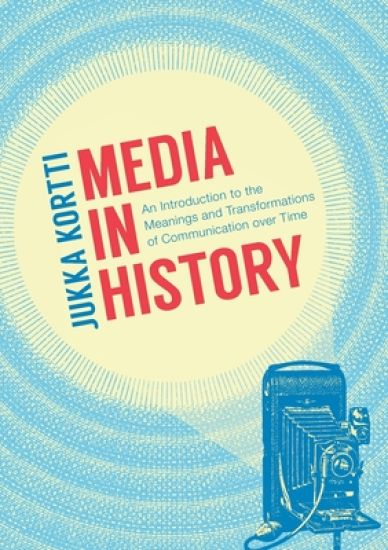
Media in History

Media in History

Jukka Kortti

Red Globe Press
2019
nidottu
Since media is omnipresent in our lives, it is crucial to understand the complex means and dimensions of media in history, and how we have arrived at the current digital culture. Media in History addresses the increasing multidisciplinary need to comprehend the meanings and significances of media development through a variety of different approaches. Providing a concise, accessible and analytical synthesis of the history of communications, from the evolution of language to the growth of social media, this book also stresses the importance of understanding wider social and cultural contexts. Although technological innovations have created and shaped media, Kortti examines how politics and the economy are central to the development of communication. Media in History will benefit undergraduate and graduate history and media studies students who want to understand the complex structures of media as a historical continuum and to reflect on their own experiences with that development.
The Cognitive Value of Philosophical Fiction

The Cognitive Value of Philosophical Fiction

Jukka Mikkonen

Bloomsbury Academic USA
2013
sidottu
Can literary fictions convey significant philosophical views, understood in terms of propositional knowledge? This study addresses the philosophical value of literature by examining how literary works impart philosophy truth and knowledge and to what extent the works should be approached as communications of their authors.Beginning with theories of fiction, it examines the case against the prevailing 'pretence' and 'make-believe' theories of fiction hostile to propositional theories of literary truth. Tackling further arguments against the cognitive function and value of literature, this study illustrates how literary works can contribute to knowledge by making assertions and suggestions and by providing hypotheses for the reader to assess.Through clear analysis of the concept of the author, the role of the authorial intention and the different approaches to the 'meaning' of a literary work, this study provides an historical survey to the cognitivist-anti-cognitivist dispute, introducing contemporary trends in the discussion before presenting a novel approach to recognizing the cognitive function of literature. An important contribution to philosophical studies of literature and knowledge.
Radio Interface System Planning for GSM/GPRS/UMTS

Radio Interface System Planning for GSM/GPRS/UMTS

Jukka Lempiäinen; Matti Manninen

Springer-Verlag New York Inc.
2010
nidottu
Radio network system planning is a comprehensive optimisation task where different planning targets - coverage, capacity and quality- have a direct influence on each other and where optimised solution is a compromise of these planning areas. In order to find out the cost effective and high quality radio network plan the well-known theoretical details have to be bound with practical radio planning issues like planning phases and planning parameters. At the same time the long-term network evolution paths and the possible changes of the radio propagation environment have to be well understood. Radio Interface System Planning for GSM/GPRS/UMTS introduces the radio system planning where these theoretical and practical details have both been emphasized and then utilized for the planning of GSM, GPRS and UMTS mobile networks. The key planning parameters for these systems are explained and the typical values for power budget, various margins, gains and losses, andfrequency reuse are given. Also, the book describes the common tasks in radio system planning. The planning methods and phases introduced in the book can also be applied to other mobile communication systems.
Low-Power Wireless Sensor Networks

Low-Power Wireless Sensor Networks

Jukka Suhonen; Mikko Kohvakka; Ville Kaseva; Timo D. Hämäläinen; Marko Hännikäinen

Springer-Verlag New York Inc.
2012
nidottu
Wireless sensor network (WSN) is an ad-hoc network technology comprising even thousands of autonomic and self-organizing nodes that combine environmental sensing, data processing, and wireless networking. The applications for sensor networks range from home and industrial environments to military uses. Unlike the traditional computer networks, a WSN is application-oriented and deployed for a specific task. WSNs are data centric, which means that messages are not send to individual nodes but to geographical locations or regions based on the data content. A WSN node is typically battery powered and characterized by extremely small size and low cost. As a result, the processing power, memory, and energy resources of an individual sensor node are limited. However, the feasibility of a WSN lies on the collaboration between the nodes. A reference WSN node comprises a Micro-Controller Unit (MCU) having few Million Instructions Per Second (MIPS) processing speed, tens of kilobytes program memory, few kilobytes data memory. In addition, the node contains a short-range radio, and a set of sensors. Supply power is typically obtained with small batteries. Assuming a target lifetime of one year using AA-size batteries, the available power budget is around 1 mW. This book covers the low-power WSNs services ranging from hardware platforms and communication protocols to network deployment, and sensor data collection and actuation. The implications of resource constraints and expected performance in terms of throughput, reliability and latency are explained. As a case study, this book presents experiments with low-energy TUTWSN technology to illustrate the possibilities and limitations of WSN applications.
The Cognitive Value of Philosophical Fiction

The Cognitive Value of Philosophical Fiction

Jukka Mikkonen

Bloomsbury Academic
2014
nidottu
Can literary fictions convey significant philosophical views, understood in terms of propositional knowledge? This study addresses the philosophical value of literature by examining how literary works impart philosophy truth and knowledge and to what extent the works should be approached as communications of their authors.Beginning with theories of fiction, it examines the case against the prevailing 'pretence' and 'make-believe' theories of fiction hostile to propositional theories of literary truth. Tackling further arguments against the cognitive function and value of literature, this study illustrates how literary works can contribute to knowledge by making assertions and suggestions and by providing hypotheses for the reader to assess.Through clear analysis of the concept of the author, the role of the authorial intention and the different approaches to the 'meaning' of a literary work, this study provides an historical survey to the cognitivist-anti-cognitivist dispute, introducing contemporary trends in the discussion before presenting a novel approach to recognizing the cognitive function of literature. An important contribution to philosophical studies of literature and knowledge.
Guerras En Europa.: I. El Ocaso del Imperio Otomano

Guerras En Europa.: I. El Ocaso del Imperio Otomano

Jukka Lehto

Createspace Independent Publishing Platform
2017
nidottu
El presente libro analiza las relaciones internacionales en Europa de 1890 a 1912, as como los principales conflictos que tuvieron lugar contra el Imperio Otomano, sin entrar en la Primera Guerra Mundial. Se analiza la Guerra Italo Turca, las Guerras Balc nicas y la Guerra de Independencia Turca.
On The Formation Of Marxism

On The Formation Of Marxism

Jukka Gronow

Haymarket Books
2017
nidottu
Karl Kautsky was, for three decades before the First World War, the main authority on the intellectual heritage of Marx and Engels. His interpretation of Marx's Capital and the basic laws and contradictions of capitalism was the reference point for both the foes and allies of Social Democracy.
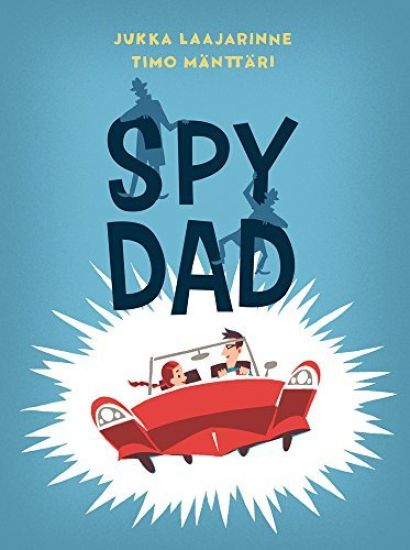
Spy Dad

Spy Dad

Jukka Laajarinne

Crocodile Books
2018
sidottu
Olivia is Fed up Having a dad who's a secret agent is hard: spies work long hours and travel a lot. Olivia wants more family time, so what's to be done? In this fast-paced story, Dad makes a decision that takes them on an adventure. With dark and mysterious characters following in their tail, Olivia's spy dad is always one step ahead. But he knows that vacations can't last forever. Will Dad's final decision make Olivia happy?
Caviar with Champagne

Caviar with Champagne

Jukka Gronow

Berg Publishers
2003
sidottu
'Life has become more joyous, comrades.' Josef Stalin, 1936Stalin's Russia is best known for its political repression, forced collectivization and general poverty. Caviar with Champagne presents an altogether different aspect of Stalin's rule that has never been fully analyzed - the creation of a luxury goods society. At the same time as millions were queuing for bread and starving, drastic changes took place in the cultural and economic policy of the country, which had important consequences for the development of Soviet material culture and the promotion of its ideals of consumption.The 1930s witnessed the first serious attempt to create a genuinely Soviet commercial culture that would rival the West. Government ministers took exploratory trips to America to learn about everything from fast food hamburgers to men's suits in Macy's. The government made intricate plans to produce high-quality luxury goods en masse, such as chocolate, caviar, perfume, liquor and assorted novelties. Perhaps the best symbol of this new cultural order was Soviet Champagne, which launched in 1936 with plans to produce millions of bottles by the end of the decade. Drawing on previously neglected archival material, Jukka Gronow examines how such new pleasures were advertised and enjoyed. He interprets Soviet-styled luxury goods as a form of kitsch and examines the ideological underpinnings behind their production.This new attitude toward consumption was accompanied by the promotion of new manners of everyday life. The process was not without serious ideological contradictions. Ironically, a factory worker living in the United States - the largest capitalist society in the world - would have been hard-pressed to afford caviar or champagne for a special occasion in the 1930s, but a Soviet worker theoretically could (assuming supplies were in stock). The Soviet example is unique since the luxury culture had to be created entirely from scratch, and the process was taken extremely serio
Caviar with Champagne

Caviar with Champagne

Jukka Gronow

Berg Publishers
2003
nidottu
Stalin's Russia is best known for its political repression, forced collectivization and general poverty. This work presents a different aspect of Stalin's rule - the creation of a luxury goods society.
Japón y la Primera Guerra Mundial

Japón y la Primera Guerra Mundial

Jukka Lehto

Createspace Independent Publishing Platform
2017
nidottu
El presente libro analiza el papel de Jap n durante la Primera Guerra Mundial tanto en sus operaciones militares como en el frente diplom tico. Su actuaci n durante la expedici n en Siberia -en el marco de la intervenci n de las potencias aliadas durante la guerra civil rusa- y su decepci n tras el Tratado de Versalles.