Kirjojen hintavertailu. Mukana 11 627 624 kirjaa ja 12 kauppaa.

Kirjahaku

Etsi kirjoja tekijän nimen, kirjan nimen tai ISBN:n perusteella.

1000 tulosta hakusanalla Jurgen Mill

Lov om kommunale og regionale valg.

Lov om kommunale og regionale valg.

Christine Boeskov; Nicoline Miller & Jørgen Elklit

Jurist- og økonom-
2021
sidottu
I 1932 udkom en kommenteret udgave af den daværende kommunale valglov (Schau og Holten, 1932), men den er naturligvis for længst blevet forældet. Derfor er der nu (igen) behov for en samlet, kommenteret udgave af kommunal- og regionalvalgloven. Nærværende værk vil være et vigtigt hjælpemiddel for de mange, der på den ene eller den anden måde har brug for et solidt og pålideligt kendskab til såvel denne lovgivning som dens baggrund og konkrete udmøntning i bekendtgørelser, vejledninger osv. Lovkommentaren henvender sig derfor primært til de personer, der i kommuner og regioner er direkte involveret i afviklingen af alle faser af de to slags valg, men også de mange kommunal- og regionspolitikere og disses bagland i de lokale partiforeninger, journalister, der dækker kommunal- og regionalvalg lokalt og nationalt, forskere m.fl.

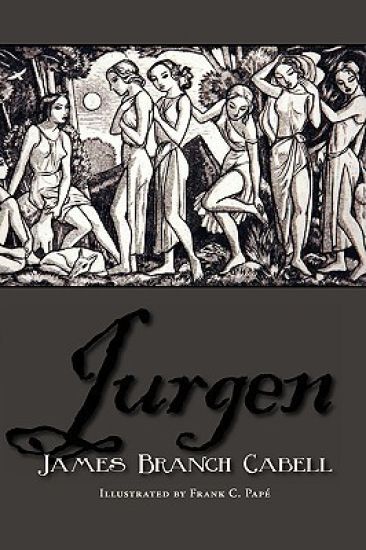
Jurgen

Jurgen

James Branch Cabell

Mint Editions
2021
pokkari
Jurgen, A Comedy of Justice (1919) is a comic fantasy novel by James Branch Cabell. Set in a world where history and fantasy collide, where a lowly pawnbroker can encounter monsters, gods, and devils, Jurgen, A Comedy of Justice is one of Cabell’s best-known works of fiction. For several years after its initial publication, the novel was the subject of an obscenity trial pursued by the New York Society for the Suppression of Vice. In 1923, after winning his case, Cabell made sure to immortalize the event with a revised edition featuring a “lost” chapter where Jurgen is persecuted for his writing by grotesque Philistines. Jurgen, A Comedy of Justice is one work in a series of novels, essays, and poems known as the Biography of the Life of Manuel. “For now had come to Jurgen and the Centaur a gold-haired woman, clothed all in white, and walking alone. She was tall, and lovely and tender to regard: and hers was not the red and white comeliness of many ladies that were famed for beauty, but rather it had the even glow of ivory […] to Jurgen this woman's countenance was in all things perfect. Perhaps this was because he never saw her as she was.” Unsatisfied with life as a lowly pawnbroker, Jurgen follows his heart in pursuit of ideal love. A proponent of medieval chivalry, he encounters gods, goddesses, kings, and queens as he passes from one otherworldly realm to the next. On his wondrous journey, he meets some of the most celebrated women in history and literature, including Guinevere, Anaitis, and Helen of Troy. Jurgen, a wily poet and legendary lover with a head full of dreams and desires, is an allegorical figure for modern humanity, a flawed hero whose kaleidoscopic world is not entirely different from our own. Cabell’s work has long been described as escapist, his novels and stories derided as fantastic and obsessive recreations of a world lost long ago. To read Jurgen, A Comedy of Justice, however, is to understand that the issues therein—the struggle for power, the unspoken distance between men and women—were vastly important not only at the time of its publication, but in our own, divisive world. With a beautifully designed cover and professionally typeset manuscript, this edition of James Branch Cabell’s Jurgen, A Comedy of Justice is a classic of fantasy and romance reimagined for modern readers.
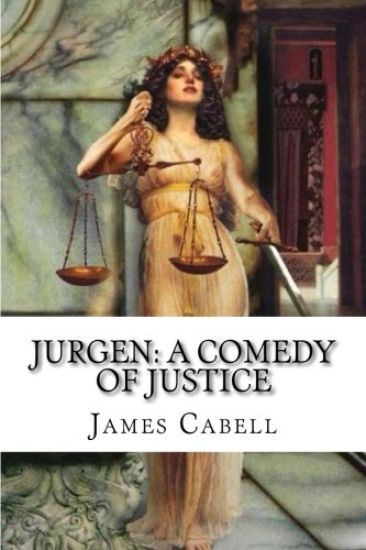
Jurgen

Jurgen

James Branch Cabell

Createspace Independent Publishing Platform
2017
nidottu
TO BURTON RASCOE Before each tarradiddle, Uncowed by sciolists, Robuster persons twiddle Tremendously big fists. "Our gods are good," they tell us; "Nor will our gods defer Remission of rude fellows' Ability to err." So this, your JURGEN, travels Content to compromise Ordainments none unravels Explicitly ... and sighs. "Others, with better moderation, do either entertain the vulgar history of Jurgen as a fabulous addition unto the true and authentic story of St. Iurgenius of Poictesme, or else we conceive the literal acception to be a misconstruction of the symbolical expression: apprehending a veritable history, in an emblem or piece of Christian poesy. And this emblematical construction hath been received by men not forward to extenuate the acts of saints.
Jurgen

Jurgen

James Branch Cabell

Createspace Independent Publishing Platform
1919
pokkari
James Branch Cabell was a prolific American author of fantasy novels. Cabell's books are known for their satirical wit. Cabell's most famous work is Jurgen: A Comedy of Justice which became the subject of an infamous court case shortly after it was published in 1919. The book centers around the magical adventures of a middle-aged pawnbroker.
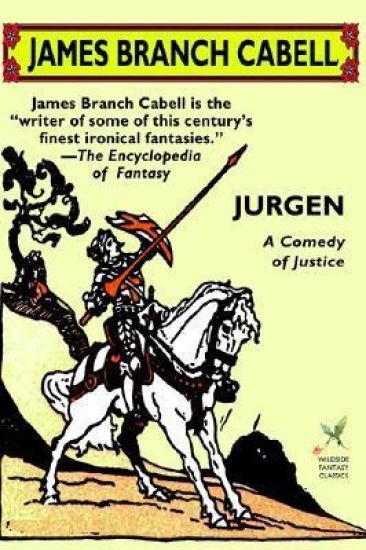
Jurgen

Jurgen

James Branch Cabell

Createspace Independent Publishing Platform
2017
nidottu
Jurgen, A Comedy of Justice is a fantasy novel by American writer James Branch Cabell, which gained fame (or notoriety) shortly after its publication in 1919. It is a humorous romp through a medieval cosmos, including a send-up of Arthurian legend, and excursions to Heaven and Hell as in The Divine Comedy. Cabell's work is recognized as a landmark in the creation of the comic fantasy novel, influencing Terry Pratchett and many others.
Jürgen

Jürgen

Heinz Strunk

Rowohlt Verlag GmbH
2017
sidottu
Heinz Strunk erzählt von Männern und Frauen und von dem, was zwischen ihnen nicht passiert. Komisch. Unerbittlich. Jürgen Dose lebt in Harburg. Er hat es auch sonst nicht immer leicht gehabt im Leben; sein Job im Parkhaus verlangt ihm viel ab, und damit fängt es erst an. Trotzdem ist für Jürgen das Glas immer halbvoll, er glaubt daran, dass wer wagt, gewinnt und er es im Leben eigentlich ganz gut getroffen hat. Um es mal deutlich zu sagen: Jürgen ist ein ganz armer Willi, nur weiß er das nicht. Das liegt unter anderem daran, dass er, abgesehen von seiner bettlägrigen Mutter und Schwester Petra vom Pflegedienst, regelmäßigen Kontakt nur zu seinem alten Freund Bernd Würmer pflegt, der im Rollstuhl sitzt und sich ununterbrochen mit ihm zankt. Beide müssen so einiges im Leben entbehren, am schmerzlichsten die Liebe einer Frau. Und da das ja kein Zustand ist, beschließen sie, was zu tun. Verheerende Erfahrungen beim Speed-Dating und mit der Lektüre von Fachwerken zum Thema Frauenaufreißen entmutigen die beiden Kavaliere nicht. Da muss man eben den Einsatz erhöhen! Eine Reise nach Polen mit der Firma "Eurolove" kostet allerdings ganz schön. Aber heiratswütig sind die da! Schönheitskönige wollen die auch nicht. So sitzen Jürgen und Bernie bald im Bus nach Breslau, zusammen mit anderen Liebessuchern. Ob das wohl gut geht?
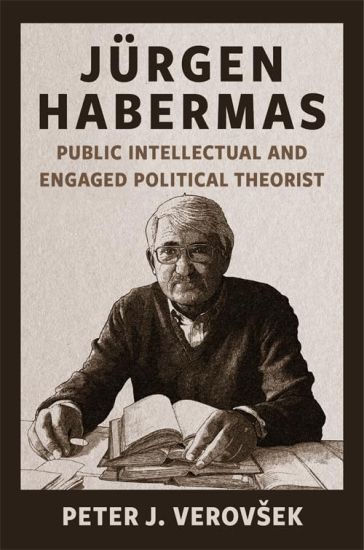
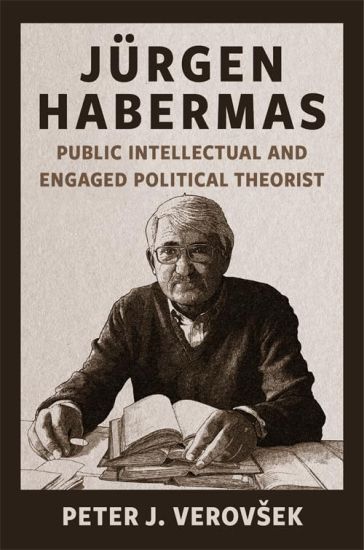
Jürgen Habermas

Jürgen Habermas

Peter J. Verovšek

Columbia University Press
2026
sidottu
Ju¨rgen Habermas is Germany’s most important postwar philosopher, the leading figure of the Frankfurt School in this period. He is best known for the concept of the public sphere, which forms the basis of his communicative understanding of democratic politics. Habermas has not only theorized the public sphere—he has also taken part in it through frequent commentary on current social, political, and cultural issues. Yet since Habermas’s extensive public-facing writings have been overlooked, his philosophy has often been criticized as apolitical. This book transforms our understanding of Habermas by focusing on his work as a public intellectual, showing how he has shaped debates far beyond the ivory tower. Peter J. Verovšek argues that while Habermas maintains a strict separation between his academic and his public-facing writings, he has also ensured that these two aspects of his work are part of a consistent whole. The book highlights the development of Habermas’s views over time and the changing nature of his public interventions. His early political writings focused on questions tied to the particular situation of postwar West Germany, but since 1989 he has increasingly turned his attention to the future of Europe and global politics more broadly. Verovšek sheds light on the interrelationship between Habermas’s participation in the public sphere and his theoretical work, demonstrating that his political engagement is crucial to understanding his philosophy. In a moment when public debate is under threat, this book offers timely new insight into Habermas’s lifelong project of defending the public sphere—both in theory and in practice.
Jürgen Habermas

Jürgen Habermas

Peter J. Verovšek

Columbia University Press
2026
pokkari
Ju¨rgen Habermas is Germany’s most important postwar philosopher, the leading figure of the Frankfurt School in this period. He is best known for the concept of the public sphere, which forms the basis of his communicative understanding of democratic politics. Habermas has not only theorized the public sphere—he has also taken part in it through frequent commentary on current social, political, and cultural issues. Yet since Habermas’s extensive public-facing writings have been overlooked, his philosophy has often been criticized as apolitical. This book transforms our understanding of Habermas by focusing on his work as a public intellectual, showing how he has shaped debates far beyond the ivory tower. Peter J. Verovšek argues that while Habermas maintains a strict separation between his academic and his public-facing writings, he has also ensured that these two aspects of his work are part of a consistent whole. The book highlights the development of Habermas’s views over time and the changing nature of his public interventions. His early political writings focused on questions tied to the particular situation of postwar West Germany, but since 1989 he has increasingly turned his attention to the future of Europe and global politics more broadly. Verovšek sheds light on the interrelationship between Habermas’s participation in the public sphere and his theoretical work, demonstrating that his political engagement is crucial to understanding his philosophy. In a moment when public debate is under threat, this book offers timely new insight into Habermas’s lifelong project of defending the public sphere—both in theory and in practice.
Jurgen Habermas

Jurgen Habermas

Robert C. Holub

Routledge
1991
nidottu
The most important intellectual in the Federal Republic of Germany for the past three decades, Habermas has been a seminal contributor to fields ranging from sociology and political science to philosophy and cultural studies. Although he has stood at the centre of concern in his native land, he has been less readily accepted outside Germany, particularly in the humanities. His theoretical work postulates the centrality of communication and understanding, and as such his strategy of debate is marked by a politically informed unity of theory and practice. Holub's book is the first detailed account of the major debates in which Habermas has engaged since the early sixties. It stems from the conviction that his critics have not understood the political strategy behind his various interventions, or the consistency that informs his intellectual activities. Habermas is viewed in dialogue with important philosophical, sociological and political currents in West Germany. Holub demonstrates how Habermas pursues a course that incorporates various aspects of his opponents' positions, while simultaneously defending perceived threats to democracy and open discussion.