Kirjojen hintavertailu. Mukana 11 244 527 kirjaa ja 12 kauppaa.

Kirjahaku

Etsi kirjoja tekijän nimen, kirjan nimen tai ISBN:n perusteella.

1000 tulosta hakusanalla Karl Galinsky

Karl Barth's Critically Realistic Dialectical Theology
`McCormack is master of this voluminous material. He is scrupulously at home in the intricate, dramatic background of Swiss socialist politics ...The result is a masterly study, often as compelling as its theme.' George Steiner, Times Literary Supplement `This meticulous and definitive study ... supersedes most previous interpretations.' Colin Gunton, Theological Book Review `it should quickly attain classic status. It is an exceptionally fine and erudite piece of work....The results of this painstaking attention to detail are truly ground-breaking. This is a major intellectual achievement, an interpretative act of great courage, and Barth studies will never look the same.' Graham Ward, Expository Times This book is a new, major intellectual biography of perhaps the most influential theologian of the twentieth century, Karl Barth. It offers the first full-scale revision of the well-known theologian Hans Urs Balthasar's seminal interpretation of Barth, which was first published in 1951. Drawing on a wealth of material, much of it unpublished during Barth's lifetime, as well as a thorough acquaintance with the best of recent German scholarship, Professor McCormack demonstrates that the fundamental decision which would control the whole of Barth's development - the turn to a new, critically realistic form of theological objectivism - was already made during the years in which Barth was at work on his first commentary on Romans. Professor McCormack further argues that the most significant subsequent decisions - both material and methodological - were made in Barth's Gottingen Dogmatics of 1924/5, and not later in the 1931 book on Anselm, as has often been alleged. Finally, he seeks to show that von Balthasar's description of a turn from dialectic to analogy, which provided the foundation for the neo-orthodox reading of Barth in the English-speaking world, fails to take seriously enough the extent to which dialectic remained a constitutive feature of Barth's outlook in the Church Dogmatics. This unique and important work provides not simply a fresh interpretation of Barth's development, but also a new paradigm for understanding the whole of Barth's theology.
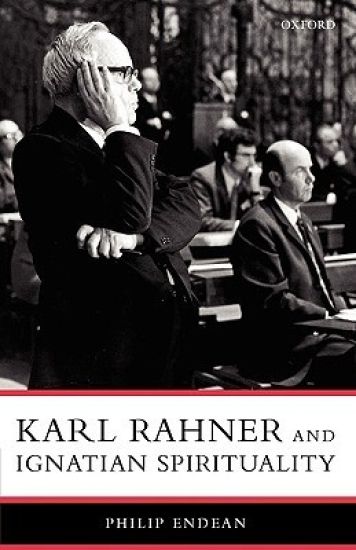
Karl Rahner and Ignatian Spirituality

Karl Rahner and Ignatian Spirituality

Philip Endean

Clarendon Press
2001
sidottu
Karl Rahner SJ, (1904-1984), perhaps the most influential figure in twentieth-century Roman Catholic theology, believed that the most significant influence on his work was Ignatius Loyola's Spiritual Exercises. This book casts significant new light on Rahner's achievement by presenting it against the background of the rediscovery of Ignatian spirituality in the middle decades of the twentieth century. It offers a fresh and contemporary theological interpretation of Ignatian retreat-giving, illuminating the creative new departures this ministry has taken in the last thirty years, as well as contributing to the lively current debate regarding the relationship between spirituality and speculative theology.
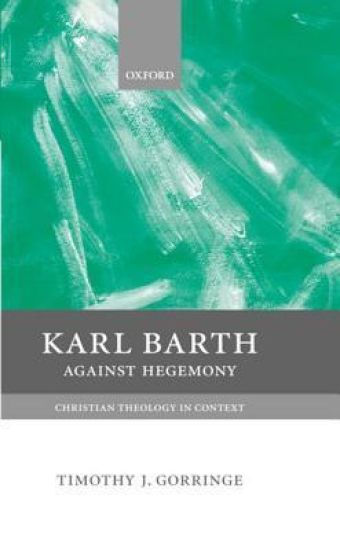
Karl Barth

Karl Barth

Timothy J. Gorringe

Clarendon Press
1999
sidottu
Karl Barth (1886-1968) was the most prolific theologian of the twentieth century. Avoiding simple paraphrasing, Dr Gorringe places the theology in its social and political context, from the First World War through to the Cold War by following Barth's intellectual development through the years that saw the rise of national socialism and the development of communism. Barth initiated a theological revolution in his two Commentaries on Romans, begun during the First World War. His attempt to deepen this during the turbulent years of the Weimar Republic made him a focus of theological resistance to Hitler after the rise to power of the Nazi party. Expelled from Germany, he continued to defy fashionable opinion by refusing to condemn communism after the Second World War. Drawing on a German debate largely ignored by Anglo-Saxon theology Dr Gorringe shows that Barth responds to the events of his time not just in his occasional writings, but in his magnum opus, the Church Dogmatics. In conclusion Dr Gorringe asks what this admittedly patriarchal author still has to contribute to contemporary theology, and in particular human liberation.
Karl Barth

Karl Barth

Timothy J. Gorringe

Clarendon Press
1999
nidottu
Karl Barth (1886-1968) was the most prolific theologian of the twentieth century. Avoiding simple paraphrasing, Dr Gorringe places the theology in its social and political context, from the First World War through to the Cold War by following Barth's intellectual development through the years that saw the rise of national socialism and the development of communism. Barth initiated a theological revolution in his two Commentaries on Romans, begun during the First World War. His attempt to deepen this during the turbulent years of the Weimar Republic made him a focus of theological resistance to Hitler after the rise to power of the Nazi party. Expelled from Germany, he continued to defy fashionable opinion by refusing to condemn communism after the Second World War. Drawing on a German debate largely ignored by Anglo-Saxon theology Dr Gorringe shows that Barth responds to the events of his time not just in his occasional writings, but in his magnum opus, the Church Dogmatics. In conclusion Dr Gorringe asks what this admittedly patriarchal author still has to contribute to contemporary theology, and in particular human liberation.
Karl Marx: Selected Writings

Karl Marx: Selected Writings

Karl Marx

Oxford University Press
2000
nidottu
This second edition of McLellan's comprehensive selection of Marx's writings includes carefully selected extracts from the whole range of Marx's political, philosophical and economic thought. Each section of the book deals with a different period of Marx's life with the sections arranged in chronological order, thus allowing the reader to trace the development of Marx's thought, from his early years as a student and political journalist in Germany right through to his final letters of the early 1880s. The inclusion of extracts from some of Marx's less well-known works alongside selections from classic texts such as The Communist Manifesto and Capital provides the reader with an unparalleled overview of Marx's thinking, whilst Professor McLellan's fully updated and revised introduction and bibliographical notes accompanying each extract put Marx's writings into biographical and historical context. This edition also includes a general bibliography and a full index of names and ideas as well as a new general introduction for each section of the book by Professor McLellan. As with the first edition, this comprehensive and clearly structured selection of Marx's writings will be essential reading for all those interested in the political thought of this perennially important figure in Western political philosophy.
Karl Barth

Karl Barth

Christiane Tietz

Oxford University Press
2021
sidottu
From the beginning of his career, Swiss theologian Karl Barth (1886-1968) was often in conflict with the spirit of his times. While during the First World War German poets and philosophers became intoxicated by the experience of community and transcendence, Barth fought against all attempts to locate the divine in culture or individual sentiment. This freed him for a deep worldly engagement: he was known as "the red pastor," was the primary author of the founding document of the Confessing Church, the Barmen Theological Declaration, and after 1945 protested the rearmament of the Federal Republic of Germany. Christiane Tietz compellingly explores the interactions between Barth's personal and political biography and his theology. Numerous newly-available documents offer insight into the lesser-known sides of Barth such as his long-term three-way relationship with his wife Nelly and his colleague Charlotte von Kirschbaum. This is an evocative portrait of a theologian who described himself as "God's cheerful partisan," who was honored as a prophet and a genial spirit, was feared as a critic, and shaped the theology of an entire century as no other thinker.
Karl Barth

Karl Barth

Christiane Tietz

Oxford University Press
2023
nidottu
From the beginning of his career, Swiss theologian Karl Barth (1886-1969) was often in conflict with the spirit of his times. While during the First World War German poets and philosophers became intoxicated by the experience of community and transcendence, Barth fought against all attempts to locate the divine in culture or individual sentiment. This freed him for a deep worldly engagement: he was known as "the red pastor," was the primary author of the founding document of the Confessing Church, the Barmen Theological Declaration, and after 1945 protested the rearmament of the Federal Republic of Germany. Christiane Tietz compellingly explores the interactions between Barth's personal and political biography and his theology. Numerous newly-available documents offer insight into the lesser-known sides of Barth such as his long-term three-way relationship with his wife Nelly and his colleague Charlotte von Kirschbaum. This is an evocative portrait of a theologian who described himself as '"God's cheerful partisan"' who was honored as a prophet and a genial spirit, was feared as a critic, and shaped the theology of an entire century as no other thinker.
Karl Marx's Theory of History

Karl Marx's Theory of History

G. A. Cohen

Oxford University Press
2001
nidottu
First published in 1978, this book rapidly established itself as a classic of modern Marxism. Cohen's masterful application of advanced philosophical techniques in an uncompromising defence of historical materialism commanded widespread admiration. In the ensuing twenty years, the book has served as a flagship of a powerful intellectual movement - analytical Marxism. In this expanded edition Cohen offers his own account of the history, and the further promise, of analytical Marxism. He also expresses reservations about traditional historical materialism, in the light of which he reconstructs the theory, and he studies the implications for historical materialism of the demise of the Soviet Union.
Karl Rahner and Ignatian Spirituality

Karl Rahner and Ignatian Spirituality

Philip Endean SJ

Oxford University Press
2004
nidottu
Karl Rahner SJ (1904-1984), perhaps the most influential figure in twentieth-century Roman Catholic theology, believed that the most significant influence on his work was Ignatius Loyola's Spiritual Exercises. This book casts significant new light on Rahner's achievement by presenting it against the background of the rediscovery of Ignatian spirituality in the middle decades of the twentieth century. It offers a fresh and contemporary theological interpretation of Ignatian retreat-giving, illuminating the creative new departures this ministry has taken in the last thirty years, as well as contributing to the lively current debate regarding the relationship between spirituality and speculative theology.
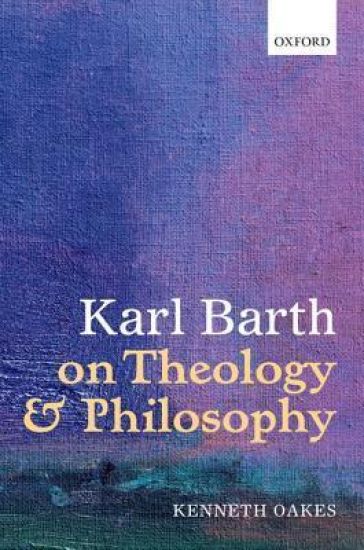
Karl Barth on Theology and Philosophy

Karl Barth on Theology and Philosophy

Kenneth Oakes

Oxford University Press
2012
sidottu
Karl Barth is often assumed to have been hostile to philosophy, wilfully ignorant of it, or too indebted to its conclusions for his own theological good. These truisms of twentieth-century theology are challenged in this original and comprehensive account of Barth's understanding of the relationship between theology and philosophy. Drawing upon a range of material from Barth's earliest writings (1909) up until interviews and roundtable discussions that took place shortly before his death (1968), Kenneth Oakes offers a developmental account of Barth's thoughts on philosophy and theology. Beginning with the nineteenth-century intellectual background to Barth's earliest theology, Oakes presents the young and 'liberal' Barth's understanding of the relationship between theology and philosophy and then tracks this understanding throughout the rest of Barth's career. While Barth never finally settled on a single, fixed account of theology and philosophy, there was still a great deal of continuity regarding this topic in Barth's oeuvre. Looking through the lens of theology and philosophy Barth's continual indebtedness to nineteenth-century modern theology is clearly seen, as well as his attempts and struggles to move beyond it. In addition to locating Barth's account of theology and philosophy historically, this study also gives attention to the specific doctrines and theological presuppositions that inform Barth's different portrayals of the relationship between theology and philosophy. Oakes asks how and why Barth used material from the doctrines under consideration-such as revelation, theological ethics, Christology- to talk about theology and philosophy. Barth is shown to have been concerned not only with the integrity and independence of theological discourse but also with the idea that theology should not lose its necessary and salutary interactions with philosophy. Finally, Oakes also considers the reception of Barth's thought in some of the luminary figures of twentieth-century philosophy, and identifies the three main impressions philosophers have had of Barth's life and work.
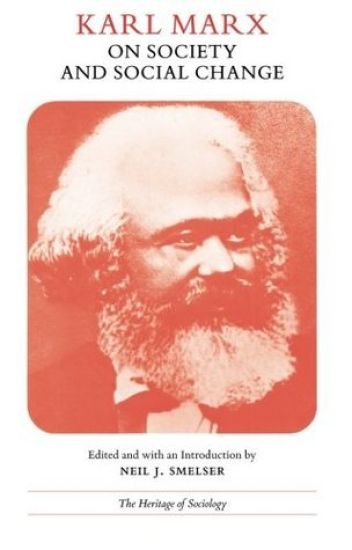
Karl Marx on Society and Social Change

Karl Marx on Society and Social Change

Karl Marx

University of Chicago Press
1975
nidottu
This volume presents those writings of Marx that best reveal his contribution to sociology, particularly to the theory of society and social change. The editor, Neil J. Smelser, has divided these selections into three topical sections and has also included works by Friedrich Engels. The first section, "The Structure of Society," contains Marx's writings on the material basis of classes, the basis of the state, and the basis of the family. Among the writings included in this section are Marx's well-known summary from the Preface of A Contribution to a Critique of Political Economy and his equally famous observations on the functional significance of religion in relation to politics. The second section is titled "The Sweep of Historical Change." The first selection here contains Marx's first statement of the main precapitalist forms of production. The second selection focuses on capitalism, its contradictions, and its impending destruction. Two brief final selections treat the nature of communism, particularly its freedom from the kinds of contradictions that have plagued all earlier forms of societies. The last section, "The Mechanisms of Change," reproduces several parts of Marx's analysis of the mechanisms by which contradictions develop in capitalism and generate group conflicts. Included is an analysis of competition and its effects on the various classes, a discussion of economic crises and their effects on workers, and Marx's presentation of the historical specifics of the class struggle. In his comprehensive Introduction to the selections, Professor Smelser provides a biography of Marx, indentifies the various intellectual traditions which formed the background for Marx's writings, and discusses the selections which follow. The editor describes Marx's conception of society as a social system, the differences between functionalism and Marx's theories, and the dynamics of economic and political change as analyzed by Marx.
Karl Marx in America

Karl Marx in America

Andrew Hartman

THE UNIVERSITY OF CHICAGO PRESS
2025
sidottu
The vital and untold story of Karl Marx’s stamp on American life. To read Karl Marx is to contemplate a world created by capitalism. People have long viewed the United States as the quintessential anti-Marxist nation, but Marx’s ideas have inspired a wide range of people to formulate a more precise sense of the stakes of the American project. Historians have highlighted the imprint made on the United States by Enlightenment thinkers such as Adam Smith, John Locke, and Thomas Paine, but Marx is rarely considered alongside these figures. Yet his ideas are the most relevant today because of capitalism’s centrality to American life. In Karl Marx in America, historian Andrew Hartman argues that even though Karl Marx never visited America, the country has been infused, shaped, and transformed by him. Since the beginning of the Civil War, Marx has been a specter in the American machine. During the Gilded Age, socialists read Marx as an antidote to the unchecked power of corporations. In the Great Depression, communists turned to Marx in hopes of transcending the destructive capitalist economy. The young activists of the 1960s were inspired by Marx as they gathered to protest an overseas war. Marx’s influence today is evident, too, as Americans have become increasingly attuned to issues of inequality, labor, and power. After decades of being pushed to the far-left corner of intellectual thought, Marx’s ideologies have crossed over into the mainstream and are more alive than ever. Working-class consciousness is on the rise, and, as Marx argued, the future of a capitalist society rests in the hands of the people who work at the point of production. A valuable resource for anyone interested in Marx’s influence on American political discourse, Karl Marx in America is a thought-provoking account of the past, present, and future of his philosophies in American society.
Karl Marx and Contemporary Philosophy
This collection brings together the latest work of some of the world's leading Marxist philosophers and new young researchers. Based upon work presented at meetings of the Marx and Philosophy Society, it offers a unique snapshot of the best current scholarship on the philosophical aspects and implications of Marx's thought.
Karl Polanyi

Karl Polanyi

Gareth Dale

Columbia University Press
2016
sidottu
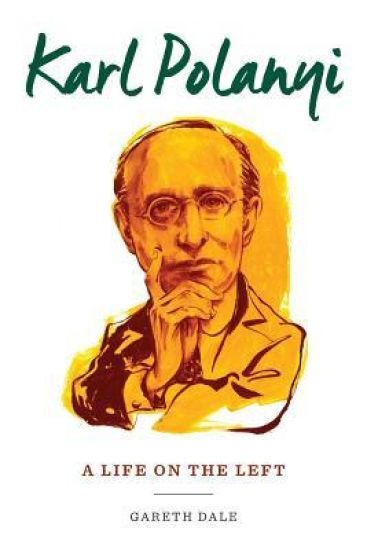
Karl Polanyi (1886-1964) was one of the twentieth century's most original interpreters of the market economy. His penetrating analysis of globalization's disruptions and the Great Depression's underlying causes still serves as an effective counterargument to free market fundamentalism. This biography shows how the major personal and historical events of his life transformed him from a bourgeois radical into a Christian socialist but also informed his ambivalent stance on social democracy, communism, the New Deal, and the shifting intellectual scene of postwar America. The book begins with Polanyi's childhood in the Habsburg Empire and his involvement with the Great War and Hungary's postwar revolution. It connects Polanyi's idealistic radicalism to the political promise and intellectual ferment of Red Vienna and the horror of fascism. The narrative revisits Polanyi's oeuvre in English, German, and Hungarian, includes exhaustive research in five archives, and features interviews with Polanyi's daughter, students, and colleagues, clarifying the contradictory aspects of the thinker's work. These personal accounts also shed light on Polanyi's connections to scholars, Christians, atheists, journalists, hot and cold warriors, and socialists of all stripes. Karl Polanyi: A Life on the Left engages with Polanyi's biography as a reflection and condensation of extraordinary times. It highlights the historical ruptures, tensions, and upheavals that the thinker sought to capture and comprehend and, in telling his story, engages with the intellectual and political history of a turbulent epoch.
Karl Polanyi

Karl Polanyi

Gareth Dale

Columbia University Press
2017
pokkari
Karl Polanyi (1886-1964) was one of the twentieth century's most original interpreters of the market economy. His penetrating analysis of globalization's disruptions and the Great Depression's underlying causes still serves as an effective counterargument to free market fundamentalism. This biography shows how the major personal and historical events of his life transformed him from a bourgeois radical into a Christian socialist but also informed his ambivalent stance on social democracy, communism, the New Deal, and the shifting intellectual scene of postwar America. The book begins with Polanyi's childhood in the Habsburg Empire and his involvement with the Great War and Hungary's postwar revolution. It connects Polanyi's idealistic radicalism to the political promise and intellectual ferment of Red Vienna and the horror of fascism. The narrative revisits Polanyi's oeuvre in English, German, and Hungarian, includes exhaustive research in five archives, and features interviews with Polanyi's daughter, students, and colleagues, clarifying the contradictory aspects of the thinker's work. These personal accounts also shed light on Polanyi's connections to scholars, Christians, atheists, journalists, hot and cold warriors, and socialists of all stripes. Karl Polanyi: A Life on the Left engages with Polanyi's biography as a reflection and condensation of extraordinary times. It highlights the historical ruptures, tensions, and upheavals that the thinker sought to capture and comprehend and, in telling his story, engages with the intellectual and political history of a turbulent epoch.
Karl Adam

Karl Adam

Robert A. Krieg

University of Notre Dame Press
1992
sidottu
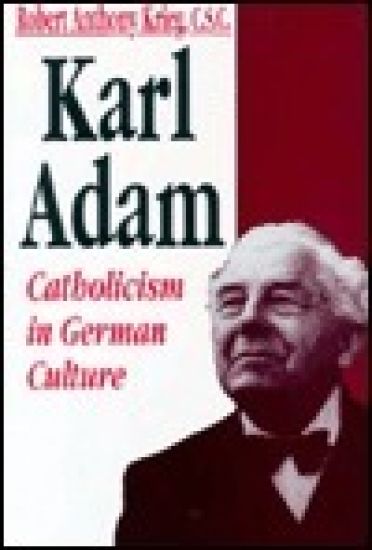
Karl Adam illuminates the life and work of one of the most highly respected and widely read Catholic theologians of the twentieth century—a theologian who not only influenced such diverse thinkers as Pope Paul VI, Karl Rahner, and Flannery O'Connor, but who also had a tremendous impact on Vatican II. Here Robert Anthony Krieg, C.S.C., unites biography and theology in an insightful analysis of Adam's most influential works, showing how he crafted a theology for his time, one that embodied the central tenets of Christian belief while simultaneously adopting the language of German neoromanticism. The book spans the century from Vatican I to Vatican II. Krief begins by describing Adam's work against the backdrop of German Catholics' struggle to enter the cultural mainstream. He then analyzes Adam's major writings in the context of the Weimar Republic and the theological fermentation between the wars. Adam's confrontation with Nazism and his impact upon ecumenism and christology after the Second World War are also discussed. The last chapter appraises Adam's reliance on German neoromanticism for his "theology of life." Church leaders, historians, and theologians will appreciate this stimulating case study on Catholicism and inculturation, which locates Adam's efforts at theological renewal in relation both to Rome's defensive stance against modernity and Berlin's nationalism during the Weimar Republic and the Third Reich.
Sämtliche Schriften. Hrsg. von Karl Lachmann
This work has been selected by scholars as being culturally important, and is part of the knowledge base of civilization as we know it. This work was reproduced from the original artifact, and remains as true to the original work as possible. Therefore, you will see the original copyright references, library stamps (as most of these works have been housed in our most important libraries around the world), and other notations in the work.This work is in the public domain in the United States of America, and possibly other nations. Within the United States, you may freely copy and distribute this work, as no entity (individual or corporate) has a copyright on the body of the work.As a reproduction of a historical artifact, this work may contain missing or blurred pages, poor pictures, errant marks, etc. Scholars believe, and we concur, that this work is important enough to be preserved, reproduced, and made generally available to the public. We appreciate your support of the preservation process, and thank you for being an important part of keeping this knowledge alive and relevant.