books give you the best possible editions of novels, including all the original illustrations, useful and informative introductions Kate Douglas Wiggin (1856-1923) was an important reformer of children's education at the turn of the century. During a period when children's place in society was little other than cheap labor, Kate Douglas Wiggin was dedicated to the betterment of youth. She was the first person to found a free kindergarten school in San Francisco in 1878. Her passion for children's rights carried over to her successful career as an author of children's books. In her 1887 tale "The Birds' Christmas Carol", Kate Douglas Wiggin tells the story of the angelic Carol Bird, a young girl who spreads mirth to everyone around her. Born on Christmas, Carol tragically falls ill when she is five years old. The novel follows her heartwarming plan to hold a majestic Christmas celebration for the neighboring Ruggles family. A true Christmas classic, this tale is sure to inspire all with Christmas joy
Mother Carey's Chickens is a novel by Kate Douglas Wiggin published in 1911 by Houghton Mifflin.The book tells the story of a poor but happy family of four children who, in spite of being fatherless, make the lives of others better. Their home life becomes complicated when Julia, a snobbish cousin, comes to live with them. The Carey children suffer many disappointments (Gilbert must forgo college, for example), but Julia is transformed when she realizes happiness has little to do with wealth.The story was dramatized in 1917, and later adapted to film. The 1938 RKO film version stars Anne Shirley and Fay Bainter as Nancy and Mother Carey respectively, and the 1963 Disney musical version (Summer Magic) stars Hayley Mills and Dorothy McGuire.1911. Another heartwarming tale from the author of Rebecca of Sunnybrook Farm. In this story the reader follows a strong-willed widow, Nancy Carey, as she struggles for the future of her beautiful daughters Nancy and Kitty and her beloved son Peter. Good humor and folksy grit help Mother Carey keep poverty and the wrong fellows for her daughters at bay Kate Douglas Wiggin (September 28, 1856 - August 24, 1923) was an American educator and author of children's stories, most notably the classic children's novel Rebecca of Sunnybrook Farm. "Mother Carey's Chickens" is the book that the Haley Mills film "Summer Magic" is based on, and one of the few novels still available from the lovely Kate Douglas Wiggin. Best known for "Rebecca of Sunnybrook Farm" (a shimmering little masterpeice in its own right), Wiggin is slipping into undserved obscurity, and for those of you looking for a sweet, gentle way to pass the time, please consider buying this lesser-known title. The book chronicles the adventures of the Careys, a fatherless family headed by wise, kind Mother Carey. My own Mom always said she tried to behave exactly like Mrs. Carey, and the old-fashioned way Mrs. Carey goes about raising her "chicks" is indeed a comforting throw-back to a warmer time. As the family grows up in the quaint hills of rural Maine, we get adventure (the move to the Yellow House), suspense (the arrival of annoying relatives, AKA The Pink of Perfection), and even a little romance (the unexpected, initially feared Mr. Hamilton & Company). It is all sentimental and borderline mushy, and I loved it. Stressed out? Tired of the frantic pace and harsh edges of novels today? Grab a blankie, a cup of tea and "Mother Carey's Chickens". They don't, they can't, make them like this anymore.
Kate Douglas Wiggin (September 28, 1856 - August 24, 1923) was an American educator and author of children's stories, most notably the classic children's novel Rebecca of Sunnybrook Farm. She started the first free kindergarten in San Francisco in 1878 (the Silver Street Free Kindergarten). With her sister during the 1880s, she also established a training school for kindergarten teachers. Kate Wiggin devoted her adult life to the welfare of children in an era when children were commonly thought of as cheap labor. Early life: Kate Douglas Smith Wiggin was born in Philadelphia, the daughter of lawyer Robert N. Smith, and of Welsh descent.Kate herself experienced a happy childhood, even though it was coloured by the American Civil War and her father's death. Kate and her sister Nora were still quite young when their widowed mother moved her little family from Philadelphia to Portland, Maine, then, three years later, upon her remarriage, to the little village of Hollis. There Kate matured in rural surroundings, with her sister and her new baby brother, Philip. From a literary point of view her childhood was most distinctive for her encounter with the novelist Charles Dickens. Her mother and another relative had gone to hear Dickens read in Portland, but Wiggin, aged 11, was thought to be too young to warrant an expensive ticket. The following day, however, she found herself on the same train as Dickens and engaged him in a lively conversation for the course of the journey, an experience which she later detailed in a short memoir, A Child's Journey with Dickens (1912). Her education was spotty, consisting of a short stint at a "dame school", some home schooling under the "capable, slightly impatient, somewhat sporadic" instruction of Albion Bradbury (her stepfather), a brief spell at the district school, a year as a boarder at the Gorham Female Seminary, a winter term at Morison Academy in Baltimore, Maryland, and a few months' stay at Abbot Academy in Andover, Massachusetts, where she graduated with the class of 1873. Although rather casual, this was more education than most women received at the time. Early career: In 1873, hoping to ease Albion Bradbury's lung disease, Kate's family moved to Santa Barbara, California, where Kate's stepfather died three years later. A kindergarten training class was opening in Los Angeles under Emma Marwedel (1818-1893), and Kate enrolled. After graduation, in 1878, she headed the first free kindergarten in California, on Silver Street in the slums of San Francisco. The children were "street Arabs of the wildest type", but Kate had a loving personality and dramatic flair. By 1880 she was forming a teacher-training school in conjunction with the Silver Street kindergarten. In 1881, Kate married (Samuel) Bradley Wiggin, a San Francisco lawyer According to the customs of the time, she was required to resign her teaching job Still devoted to her school, she began to raise money for it through writing, first The Story of Patsy (1883), then The Birds' Christmas Carol (1887). Both privately printed books were issued commercially by Houghton Mifflin in 1889, with enormous success....
Timothy's Quest is a 1922 American silent drama film produced by Dirigo Films and distributed by American Releasing. It was directed by Sidney Olcott with the child actor Joseph Depew, based on a story written by Kate Douglas Wiggin. Kate Douglas Wiggin (September 28, 1856 - August 24, 1923) was an American educator and author of children's stories, most notably the classic children's novel Rebecca of Sunnybrook Farm. She started the first free kindergarten in San Francisco in 1878 (the Silver Street Free Kindergarten). With her sister during the 1880s, she also established a training school for kindergarten teachers. Kate Wiggin devoted her adult life to the welfare of children in an era when children were commonly thought of as cheap labor. Early life: Kate Douglas Smith Wiggin was born in Philadelphia, the daughter of lawyer Robert N. Smith, and of Welsh descent.Kate herself experienced a happy childhood, even though it was coloured by the American Civil War and her father's death. Kate and her sister Nora were still quite young when their widowed mother moved her little family from Philadelphia to Portland, Maine, then, three years later, upon her remarriage, to the little village of Hollis. There Kate matured in rural surroundings, with her sister and her new baby brother, Philip. From a literary point of view her childhood was most distinctive for her encounter with the novelist Charles Dickens. Her mother and another relative had gone to hear Dickens read in Portland, but Wiggin, aged 11, was thought to be too young to warrant an expensive ticket. The following day, however, she found herself on the same train as Dickens and engaged him in a lively conversation for the course of the journey, an experience which she later detailed in a short memoir, A Child's Journey with Dickens (1912). Her education was spotty, consisting of a short stint at a "dame school", some home schooling under the "capable, slightly impatient, somewhat sporadic" instruction of Albion Bradbury (her stepfather), a brief spell at the district school, a year as a boarder at the Gorham Female Seminary, a winter term at Morison Academy in Baltimore, Maryland, and a few months' stay at Abbot Academy in Andover, Massachusetts, where she graduated with the class of 1873. Although rather casual, this was more education than most women received at the time. Early career: In 1873, hoping to ease Albion Bradbury's lung disease, Kate's family moved to Santa Barbara, California, where Kate's stepfather died three years later. A kindergarten training class was opening in Los Angeles under Emma Marwedel (1818-1893), and Kate enrolled. After graduation, in 1878, she headed the first free kindergarten in California, on Silver Street in the slums of San Francisco. The children were "street Arabs of the wildest type", but Kate had a loving personality and dramatic flair. By 1880 she was forming a teacher-training school in conjunction with the Silver Street kindergarten. In 1881, Kate married (Samuel) Bradley Wiggin, a San Francisco lawyer According to the customs of the time, she was required to resign her teaching job Still devoted to her school, she began to raise money for it through writing, first The Story of Patsy (1883), then The Birds' Christmas Carol (1887). Both privately printed books were issued commercially by Houghton Mifflin in 1889, with enormous success. Kate Wiggin had no children. She moved to New York City in 1888. When her husband died suddenly in 1889, Kate relocated to Maine. For the rest of her life she grieved, but she also traveled as frequently as she could, dividing her time between writing, visits to Europe, and giving public reading for the benefit of various children's charities.
Kate Douglas Wiggin (September 28, 1856 - August 24, 1923) was an American educator and author of children's stories, most notably the classic children's novel Rebecca of Sunnybrook Farm. She started the first free kindergarten in San Francisco in 1878 (the Silver Street Free Kindergarten). With her sister during the 1880s, she also established a training school for kindergarten teachers. Kate Wiggin devoted her adult life to the welfare of children in an era when children were commonly thought of as cheap labor. Early life: Kate Douglas Smith Wiggin was born in Philadelphia, the daughter of lawyer Robert N. Smith, and of Welsh descent.Kate herself experienced a happy childhood, even though it was coloured by the American Civil War and her father's death. Kate and her sister Nora were still quite young when their widowed mother moved her little family from Philadelphia to Portland, Maine, then, three years later, upon her remarriage, to the little village of Hollis. There Kate matured in rural surroundings, with her sister and her new baby brother, Philip. From a literary point of view her childhood was most distinctive for her encounter with the novelist Charles Dickens. Her mother and another relative had gone to hear Dickens read in Portland, but Wiggin, aged 11, was thought to be too young to warrant an expensive ticket. The following day, however, she found herself on the same train as Dickens and engaged him in a lively conversation for the course of the journey, an experience which she later detailed in a short memoir, A Child's Journey with Dickens (1912). Her education was spotty, consisting of a short stint at a "dame school", some home schooling under the "capable, slightly impatient, somewhat sporadic" instruction of Albion Bradbury (her stepfather), a brief spell at the district school, a year as a boarder at the Gorham Female Seminary, a winter term at Morison Academy in Baltimore, Maryland, and a few months' stay at Abbot Academy in Andover, Massachusetts, where she graduated with the class of 1873. Although rather casual, this was more education than most women received at the time. Early career: In 1873, hoping to ease Albion Bradbury's lung disease, Kate's family moved to Santa Barbara, California, where Kate's stepfather died three years later. A kindergarten training class was opening in Los Angeles under Emma Marwedel (1818-1893), and Kate enrolled. After graduation, in 1878, she headed the first free kindergarten in California, on Silver Street in the slums of San Francisco. The children were "street Arabs of the wildest type", but Kate had a loving personality and dramatic flair. By 1880 she was forming a teacher-training school in conjunction with the Silver Street kindergarten.
"This story," said Kate Douglas Wiggin, "could never have been written had I not as a child and girl been driven once a year to the Shaker meeting at the little village of Alfred, sixteen miles distant. The services were then open to the public. . . . I learned to know the brethren and sisters, and the Elder, as years went by, and often went to the main house to spend a day or two as the guest of Eldress Harriet, a saint, if ever there was one, or, later, with dear Sister Lucinda. . . . "Needless to say, I read every word of the book to my Shaker friends before it was published. They took a deep interest in it, evincing keen delight in my rather facetious but wholly imaginary portrait of 'Brother Ansel, ' a 'born Shaker, ' and sadly confessing that my two young lovers, 'Hetty' and 'Nathan, ' who could not endure the rigors of the Shaker faith and fled together in the night to marry and join the world's people, --that this tragedy had often occurred in their community."
Kate Douglas Wiggin (September 28, 1856 - August 24, 1923) was an American educator and author of children's stories, most notably the classic children's novel Rebecca of Sunnybrook Farm. She started the first free kindergarten in San Francisco in 1878 (the Silver Street Free Kindergarten). With her sister during the 1880s, she also established a training school for kindergarten teachers. Kate Wiggin devoted her adult life to the welfare of children in an era when children were commonly thought of as cheap labor. Kate Douglas Smith Wiggin was born in Philadelphia, the daughter of lawyer Robert N. Smith, and of Welsh descent. 1] 2] Kate herself experienced a happy childhood, even though it was coloured by the American Civil War and her father's death. Kate and her sister Nora were still quite young when their widowed mother moved her little family from Philadelphia to Portland, Maine, then, three years later, upon her remarriage, to the little village of Hollis. There Kate matured in rural surroundings, with her sister and her new baby brother, Philip. From a literary point of view her childhood was most distinctive for her encounter with the novelist Charles Dickens. Her mother and another relative had gone to hear Dickens read in Portland, but Wiggin, aged 11, was thought to be too young to warrant an expensive ticket. The following day, however, she found herself on the same train as Dickens and engaged him in a lively conversation for the course of the journey, an experience which she later detailed in a short memoir, A Child's Journey with Dickens (1912). Her education was spotty, consisting of a short stint at a "dame school", some home schooling under the "capable, slightly impatient, somewhat sporadic" instruction of Albion Bradbury (her stepfather), a brief spell at the district school, a year as a boarder at the Gorham Female Seminary, a winter term at Morison Academy in Baltimore, Maryland, and a few months' stay at Abbot Academy in Andover, Massachusetts, where she graduated with the class of 1873. Although rather casual, this was more education than most women received at the time.
Kate Douglas Wiggin (September 28, 1856 - August 24, 1923) was an American educator and author of children's stories, most notably the classic children's novel Rebecca of Sunnybrook Farm. She started the first free kindergarten in San Francisco in 1878 (the Silver Street Free Kindergarten). With her sister during the 1880s, she also established a training school for kindergarten teachers. Kate Wiggin devoted her adult life to the welfare of children in an era when children were commonly thought of as cheap labor. Wiggin went to California to study kindergarten methods. She began to teach in San Francisco with her sister Nora Smith assisting her, and the two were instrumental in the establishment of over 60 kindergartens for the poor in San Francisco and Oakland. She moved from California to New York, and having no kindergarten work on hand, devoted herself to literature. She sent The Story of Patsy and The Bird's Christmas Carol to Houghton, Mifflin & Co. who accepted them at once. Besides the talent for story-telling, she was a musician, sang well, and composed settings for her poems. She was also an excellent elocutionist. Her first literary work was Half a Dozen Housekeepers, a serial story which she sent to St. Nicholas. After the death of her husband in 1889, she returned to California to resume her kindergarten work, serving as the head of a Kindergarten Normal School. Some of her other works included Cathedral Courtship, A Summer in a Canon, Timothy's Quest, The Story Hour, Kindergarten Chimes, Polly Oliver's Problem, and Children's Rights. Nora Archibald Smith (1859-1934) was an American children's author of the late 19th and early 20th centuries, and sister of Kate Douglas Wiggin. Nora and Kate co-authored and co-edited a series of children's books. Both sisters were active in the kindergarten movement that was developing at the turn of the twentieth century, and wrote repeatedly on the subject. They were admirers of Friedrich Fr bel and promoted his theories on early childhood education.Early life Nora Archibald Smith (1859-1934) was the sister of Kate Douglas Wiggin, known best for her novel Rebecca of Sunnybrook Farm. Both girls were born in Philadelphia 1] to Robert Noah Smith and Helen Elizabeth (Dyer) Smith. Their father died shortly after Nora's birth and their mother then moved the family to Portland, Maine. She soon remarried and the family moved into Nora and Kate's stepfather's (Dr. Albion Bradbury) house in Hollis, Maine. It was in the farmhouse called "Quillcote" that both Nora and Kate grew up and to which they would later retire...............
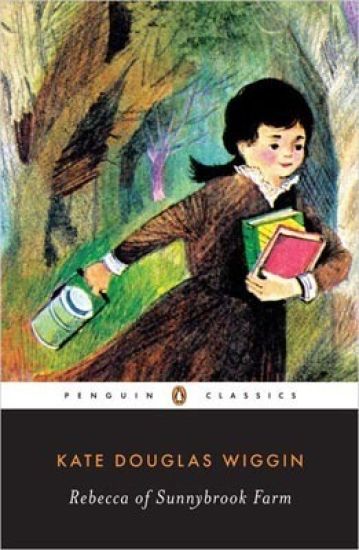
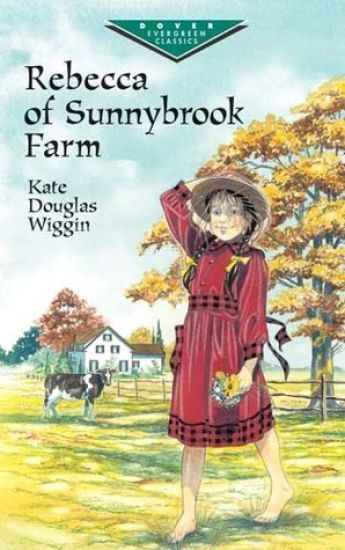
Talkative, ten-year-old Rebecca goes to live with her spinster aunts, one harsh and demanding, the other soft and sentimental, with whom she spends seven difficult but rewarding years growing up. Reprint.