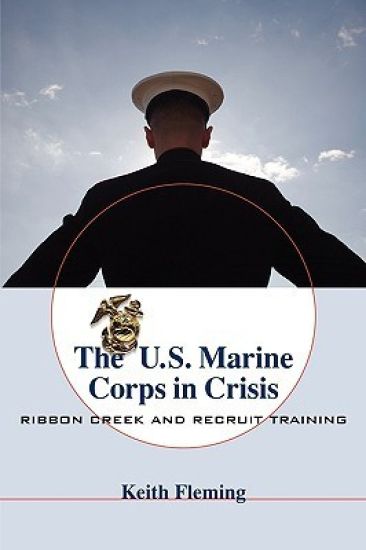
This book describes the history of a tragic event in USMC history and of how its impact led to reforms. In 1956 a Marine drill instructor led his recruit platoon on a punitive night march across Ribbon Creek, a tidal stream at the Parris Island, South Carolina, recruit depot. Six men drowned, and the resulting court-martial became a national media sensation putting the future of the corps into question. Written by a senior historian at the Marine Corps Historical Center, ""The U.S. Marine Corps in Crisis"" explores the social, political, and historical context of this tragic moment in U.S. military history as a case study in how bureaucratic institutions undertake internal reform and offering a valuable vantage point on tensions in American society during the 1950s.
Taking a concise approach to the key concepts of finance, this textbook clearly focuses on the most relevant issues around financial management, which will be of interest to business managers, students and anyone who wishes to understand the basics of finance. Covering cash and working capital, capital project appraisal, risk and uncertainty, financial markets, the cost of capital, mergers and acquisitions and valuation, financial concepts are applied to the business world using real life examples. This text is both international and contemporary in outlook, reflecting the financial environment in which all businesses operate.
Praise for Corporate Governance Best Practices "A thorough and thoughtful guidebook on the governance lay of the land." -Professor Charles M. Elson, Woolard Chair in Corporate Governance and Director of Weinberg Center for Corporate Governance, University of Delaware "Frederick Lipman provides a comprehensive approach to best corporate governance practices for all organizations, which is current, thoughtful, and practical. Directors and corporate governance personnel of public, private, and not-for-profit organizations must read this book." -Professor Raphael H. Amit, Director of Goergen Entrepreneurial Management Program, Wharton School of Business "Fred Lipman is considered by many directors and CEOs to be the preeminent expert on corporate governance in the country. His advice on this important topic, which impacts the boards of all types of organizations-public, private, and not-for-profit-is required reading in this day and age." -Frederick (Ted) Peters, Chairman and Chief Executive Officer, Bryn Mawr Bank Corporation (aka The Bryn Mawr Trust Company) "Boards of directors must be aware of best corporate governance practices in order to be effective in their oversight role and that is true for all not-for-profit organizations, including universities, as well as public and private companies. Frederick Lipman has authored a practical and comprehensive guide to 'best practices' for all boards of directors, which is required reading." -George P. Tsetsekos, PhD, Dean, Bennett S. LeBow College of Business, Drexel University "In a world of 'good,' 'better,' 'best,' where 'good' and 'better' may not be good enough, Fred Lipman's new book is a straightforward, and even comforting, compendium of BEST governance practices for serious directors. It is a handy and reassuring tool for the conscientious." -Allen R. Freedman, Audit Committee Chairman, StoneMor Partners LP,Founding Director, Association of Audit Committee Members
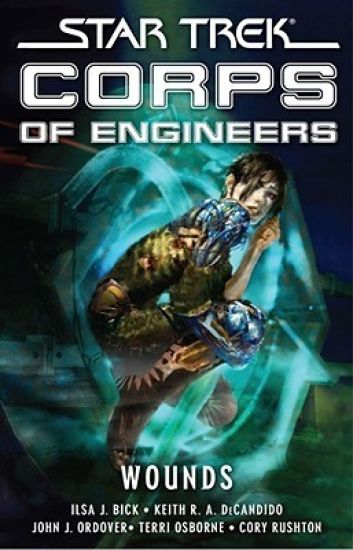
WOUNDS is the eleventh compilation of stories from the original, bestselling e-book series Star Trek: Corps of Engineers, which chronicles the assemblage of Starfleet technical personnel, a group of specalists consisting of extraordinary humans and exotic aliens that can build, program and figure out everything from alien replicators to doomsday machines. While the Dominion War has been over for a year, its legacy lives on. A mysterious murder on the Starship da Vinici leads to the Gamma Quadrant, and a pre-warp planet occupied by the Dominion still has scars from both sides of that conflict. Plus, Corsi, Soloman and Gomez are haunted by demons from their past. But the greatest threat of all comes from a visit to space station Deep Space 9, where a fissure has opened up between realities, endangering the very existence of the Bajoran system - and also stranding Doctors Lense and Bashir on a war-torn planet from which they may never escape...
Como podemos equilibrar nosso eu? Cada um de n s um ser completo, composto por corpo, mente e esp rito. Uma trindade que busca cuidar do corpo e harmoniz -lo com a mente e assim alimentar o esp rito. Tudo est interligado, pois somos feitos de energia insepar vel. Em Eu, corpo, mente e esp rito, a autora Glace Keite ensina uma f rmula acess vel a qualquer pessoa que est em busca do equil brio em sua vida. Esta f rmula tem o poder de mudar sua vida para sempre. Mas para isso necess rio iniciar a jornada do caminho que leva em dire o ao seu interior e que levar voc a alcan ar a cura, a liberta o e a transforma o em sua vida. Essa jornada j transformou a vida de milhares de pessoas e aqui voc encontrar a f rmula para transformar a sua tamb m.
Welcome to Hathaway House. Rehab Center. Safe Haven. Second chance at life and love. Keith came to Hathaway House at his sister's insistence. For he has already given up on regaining the future she keeps telling him that he can find here or, for that matter, any other future worth having. And, besides, don't they know he's too weak for the trip and for the treatment and for any of the plans the team has for him? Don't they know he's broken beyond repair, and nothing they can do will fix him? But apparently they don't because no one listens to him. Not the doctors. Not his sister. And definitely not the tiny woman who keeps delivering his coffee at 5:00 a.m. Ilse, head chef for Hathaway House, rarely ventures out of the kitchen she manages. It's easier to deal with the groceries and the staff than it is to see the pain and suffering of those she feeds. But something about Keith and his frailty calls to her. She can't help but go out of her way to ensure he has everything he needs. Even though she knows she cannot keep their relationship on a professional level, once started. Even if not in her best interests to do so. Because, in this case, surely Keith's best interests matter, so much more than her own.
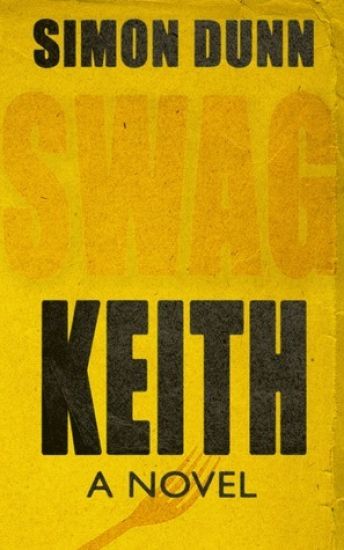
… A South African gunrunner turned Buddhist monk. … A gullible startup millionaire. … His radical feminist ex wife. … Their aid worker daughter. … The young British Muslim she met in Syria. … An ethical Serbian hitman. And an unstable Brazilian cleaner. Modern Britain. Moral chaos. Total nightmare. A new comedy about life in Brexit Britain, the lies we tell to each other – and to ourselves.
Keith Haring is synonymous with the downtown New York art scene of the 1980's. His artwork-with its simple, bold lines and dynamic figures in motion-filtered in to the world's consciousness and is still instantly recognizable, twenty years after his death. This Penguin Classics Deluxe Edition features ninety black-and-white images of classic artwork and never-before-published Polaroid images, and is a remarkable glimpse of a man who, in his quest to become an artist, instead became an icon.
Keith Jarrett ranks among the most accomplished and influential pianists in jazz history. His Köln Concert stands among the most important jazz recordings of the past four decades, not only because of the music on the record, but also because of the remarkable reception it has received from musicians and lay-listeners alike. Since the album's 1975 release, it has sold over three million copies: a remarkable achievement for any jazz record, but an unprecedented feat for a two-disc set of solo piano performances featuring no well-known songs. In Keith Jarrett's The Köln Concert, author Peter Elsdon seeks to uncover what it is about this recording, about Keith Jarrett's performance, that elicits such success. Recognizing The Köln Concert as a multi-faceted text, Elsdon engages with it musically, culturally, aesthetically, and historically in order to understand the concert and album as a means through which Jarrett articulated his own cultural and musical outlook, and establish himself as a serious artist. Through these explorations of the concert as text, of the recording and of the live performance, Keith Jarrett's The Köln Concert fills a major hole in jazz scholarship, and is essential reading for jazz scholars and musicians alike, as well as Keith Jarrett's many fans.
Keith Jarrett ranks among the most accomplished and influential pianists in jazz history. His Köln Concert stands among the most important jazz recordings of the past four decades, not only because of the music on the record, but also because of the remarkable reception it has received from musicians and lay-listeners alike. Since the album's 1975 release, it has sold over three million copies: a remarkable achievement for any jazz record, but an unprecedented feat for a two-disc set of solo piano performances featuring no well-known songs. In Keith Jarrett's The Köln Concert, author Peter Elsdon seeks to uncover what it is about this recording, about Keith Jarrett's performance, that elicits such success. Recognizing The Köln Concert as a multi-faceted text, Elsdon engages with it musically, culturally, aesthetically, and historically in order to understand the concert and album as a means through which Jarrett articulated his own cultural and musical outlook, and establish himself as a serious artist. Through these explorations of the concert as text, of the recording and of the live performance, Keith Jarrett's The Köln Concert fills a major hole in jazz scholarship, and is essential reading for jazz scholars and musicians alike, as well as Keith Jarrett's many fans.