Kirjojen hintavertailu. Mukana 11 627 064 kirjaa ja 12 kauppaa.

Kirjahaku

Etsi kirjoja tekijän nimen, kirjan nimen tai ISBN:n perusteella.

1000 tulosta hakusanalla Keith D. Walker

The Korean War

The Korean War

Keith D. McFarland

Routledge
2009
sidottu
The Korean War is the most comprehensive and detailed bibliography compiled to date on the American involvement in "The Forgotten War." In this revised and expanded second edition, Keith D. McFarland’s clearly written annotations provide concise descriptions of more than 2,600 of the most important books, articles, and documents written in English on the conflict in Korea. Key topics include origins of the war; the political and military roles of North and South Korea, the United States, the Soviet Union, China, Great Britain, Canada, Australia, South Africa, Turkey, and other United Nations members; campaigns and battles; weapons and uniforms; and the military and diplomatic aspects of the war. Specific subjects are easy to find using the index organized by topic and author, making The Korean War a necessity for every academic or research library.
The Funding of Political Parties in Britain

The Funding of Political Parties in Britain

Keith D. Ewing

Cambridge University Press
2009
pokkari
This study of the way in which political parties are funded examines in detail the corporate funding of the Conservative Party and trade union funding of the Labour Party. In so doing the author considers the legal implications of this activity. The election expenditures of the parties come under scrutiny, as does the role of the state in contributing to their financial well-being. The concluding chapters consider arguments for more extensive public funding of the political parties - as proposed by both the Houghton Committee in 1976 and the Hansard Society in 1981. In considering this issue the author draws heavily on Swedish experience, and throughout the book reference is made, where appropriate, to developments in other jurisdictions, including the United States, Canada and West Germany. This important subject is addressed from a legal perspective, though the book is written in a clear and forthright style accessible to lawyers and non-lawyers alike.
Harry H. Woodring

Harry H. Woodring

Keith D. McFarland

UNIVERSITY PRESS OF KANSAS
2021
nidottu
The names of most of President Franklin D. Roosevelt’s cabinet members are well known. Anyone familiar with FDR’s administration will remember Henry Morgenthau, Jr., Cordell Hull, Harold Ickes, Frances Perkins, Henry Wallace, and James Farley. One member of that circle, however, has remained a virtual unknown: Harry H. Woodring, the recalcitrant Secretary of War who was forced by Roosevelt to resign from the cabinet.It is doubtful that the story of any of Roosevelt’s cabinet members is more interesting than that of Woodring. With the breakdown of world peace in the 1930s, the matter of national defense became a major concern, and the United States military establishment became increasingly important. Woodring’s role in Washington during this time was a critical one; his dealings with Roosevelt were extensive, and on many key issues his influence was considerable. Why, then, his lack of notoriety?The simple fact is that until now almost nothing has been written of Woodring’s service as Secretary of War. He was one of the few individuals closely associated with Roosevelt who did not write an autobiography, memoirs, or some other personal account of what took place during those years. Keith D. McFarland is the first scholar to have had access to Woodring’s personal papers. Drawing from this new material, as well as from Woodring’s official correspondence and from personal interviews with the members of Woodring’s immediate family and dozens of Woodring’s associates, he provides in this volume the careful study that has long been needed.McFarland first traces Woodring’s early political career in Kansas. As a Democratic Governor from 1931 to 1933, Woodring worked successfully with the Republican-dominated legislature to alleviate many of the physical and economic hardships facing residents of the state during the Depression, Nevertheless, he lost his bid for re-election to Alf M. Landon. When Roosevelt won the presidency that same year, he appointed Woodring as Assistant Secretary of War.Woodring served the country well on the national level. He was influential to expanding the Army Air Corps and in making practical the Army's industrial and military mobilization plans. After the death of George Dern in 1936, Roosevelt demonstrated his confidence in Woodring by appointing him Secretary of War.The conflict between Woodring and the President arose over the sending of American military supplies and equipment to foreign nations. It was Woodring’s job as secretary of War to see that the War Department adhered to the neutrality legislation of the 1930s. Roosevelt believed that the United States should aid the enemies of Hitler, even if such action did not adhere to the spirit of the neutrality legislation. Upon the outbreak of war in Europe in 1939, FDR did everything he could to supply Britain and France with American arms and munitions. Woodring was caught between is loyalty and devotion to the President and his sincere belief that the chief executive's program would endanger the nation's security. Maintaining that it was tactically unsound to give away supplies at a time when the U.S. Army was in desperate need of such items, Woodring made concerted efforts to prevent the implementation of FDR’s program. The President was forced to ask him to resign.Few American Presidents have been more respected and admired than Franklin D. Roosevelt. There has been a tendency to disregard, ignore, or ridicule those administrative officials who disagreed with his actions and objectives. In relating the viewpoint of a distinguished, patriotic American who strongly opposed FDR’s policies and tried to change them, this book provides a clearer understanding of politics and government in pre-World War II America.
Crucible of Reason

Crucible of Reason

Keith D. Wyma

Rowman Littlefield Publishers
2004
sidottu
Weakness of will seems to be an inherent part of the human condition. We know what we ought to do and how often we knowingly, willingly fall short in actual practice. How can this be explained and what challenges does it present to systematic explanations of intentional actions? In this clear, incisive and well written inquiry, philosopher Keith Wyma subjects the thought of three prominent intentional theorists, R.M.Hare, Donald Davidson and Thomas Aquinas, to the crucible of reason to see whether and how they can account for weakness of will. Wyma is careful to clarify which actions count as incontinent or the result of weakness of will; they must be performed intentionally even as they are judged as something that ought not to be done. His in-depth study of Hare, Davidson and Aquinas on this important issue is a major contribution to understanding practical rationality and intentional action.
Crucible of Reason

Crucible of Reason

Keith D. Wyma

Rowman Littlefield Publishers
2004
nidottu
Weakness of will seems to be an inherent part of the human condition. We know what we ought to do and how often we knowingly, willingly fall short in actual practice. How can this be explained and what challenges does it present to systematic explanations of intentional actions? In this clear, incisive and well written inquiry, philosopher Keith Wyma subjects the thought of three prominent intentional theorists, R.M.Hare, Donald Davidson and Thomas Aquinas, to the crucible of reason to see whether and how they can account for weakness of will. Wyma is careful to clarify which actions count as incontinent or the result of weakness of will; they must be performed intentionally even as they are judged as something that ought not to be done. His in-depth study of Hare, Davidson and Aquinas on this important issue is a major contribution to understanding practical rationality and intentional action.
The Bibliography of Regional Fiction in Britain and Ireland, 1800–2000
Pioneering and interdisciplinary in nature, this bibliography constitutes a comprehensive list of regional fiction for every county of Ireland, Scotland, Wales and England over the past two centuries. In addition, other regions of a usually topographical or urban nature have been used, such as Birmingham and the Black Country; London; The Fens; the Brecklands; the Highlands; the Hebrides; or the Welsh border. Each entry lists the author, title, and date of first publication. The geographical coverage is encompassing and complete, from the Channel Islands to the Shetlands. An original introduction discusses such matters as definition, bibliographical method, popular readerships, trends in output, and the scholarly literature on regional fiction.
The Letter and Spirit of Biblical Interpretation – From the Early Church to Modern Practice

The Letter and Spirit of Biblical Interpretation – From the Early Church to Modern Practice

Keith D. Stanglin

Baker Academic, Div of Baker Publishing Group
2018
nidottu
For the better part of fifteen centuries, Christians read Scripture on two complementary levels, the literal and the spiritual. In the modern period, the spiritual sense gradually became marginalized in favor of the literal sense. The Bible came to be read and interpreted like any other book. This brief, accessible introduction to the history of biblical interpretation examines key turning points and figures and argues for a retrieval of the premodern spiritual habits of reading Scripture.
Building Gotham

Building Gotham

Keith D. Revell

Johns Hopkins University Press
2003
sidottu
In 1898, the New York state legislature created Greater New York, a metropolis of three and a half million people, the second largest city in the world, and arguably the most diverse and complex urban environment in history. In this far-ranging study, Keith D. Revell shows how experts in engineering, law, architecture, public health, public finance, and planning learned to cope with the daunting challenges of collective living on this new scale. Engineers applied new technologies to build railroad tunnels under the Hudson River and construct aqueducts to quench the thirst of a city on the verge of water famine. Sanitarians attempted to clean up a harbor choked by millions of gallons of raw sewage. Economists experimented with new approaches to financing urban infrastructure. Architects and planners wrestled with the problems of skyscraper regulation and regional growth. These issues of city-building and institutional change involved more than the familiar push and pull of interest groups or battles between bosses, reformers, immigrants, and natives. Revell details the ways that technical values-distinctive civic culture of expertise-helped reshape ideas of community, generate new centers of public authority, and change the physical landscape of New York City. Building Gotham thus demonstrates how a group of ambitious professionals overcame the limits of traditional means of decision-making and developed the city-building practices that enabled New York to become America's first mega-city.
Building Gotham

Building Gotham

Keith D. Revell

Johns Hopkins University Press
2005
pokkari
In 1898, the New York state legislature created Greater New York, a metropolis of three and a half million people, the second largest city in the world, and arguably the most diverse and complex urban environment in history. In this far-ranging study, Keith D. Revell shows how experts in engineering, law, architecture, public health, public finance, and planning learned to cope with the daunting challenges of collective living on this new scale. Engineers applied new technologies to build railroad tunnels under the Hudson River and construct aqueducts to quench the thirst of a city on the verge of water famine. Sanitarians attempted to clean up a harbor choked by millions of gallons of raw sewage. Economists experimented with new approaches to financing urban infrastructure. Architects and planners wrestled with the problems of skyscraper regulation and regional growth. These issues of city-building and institutional change involved more than the familiar push and pull of interest groups or battles between bosses, reformers, immigrants, and natives. Revell details the ways that technical values-distinctive civic culture of expertise-helped reshape ideas of community, generate new centers of public authority, and change the physical landscape of New York City. Building Gotham thus demonstrates how a group of ambitious professionals overcame the limits of traditional means of decision-making and developed the city-building practices that enabled New York to become America's first mega-city.
Sustaining Southern Identity

Sustaining Southern Identity

Keith D. Dickson

Louisiana State University Press
2011
sidottu
Pulitzer Prize-winning historian Douglas Southall Freeman, perhaps more than any other writer in the first half of the twentieth century, helped shape and sustain a collective identity for white southerners. A journalist, lecturer, radio broadcaster, and teacher of renown, Freeman wrote and spoke on themes related to southern memory throughout his life. Keith D. Dickson's Sustaining Southern Identity offers a masterful intellectual biography of Freeman as well as a comprehensive analysis of how twentieth-century southerners came to remember the Civil War, fashion their values and ideals, and identify themselves as citizens of the South. Dickson's work underscores Freeman's contributions to the enduring memory of Confederate courage and sacrifice in southern culture. The longtime editor of the Richmond News Leader, Freeman wrote several authoritative and extraordinarily influential multivolume historical narratives about both Confederate general Robert E. Lee and the high command of the Army of Northern Virginia. His contributions to the enduring southern memory framework - with its grand narrative of Confederate courage and sacrifice, and its attachment to symbols and rituals - still serve as a touchstone for the memory-truths that define a distinct identity in the South.
Fettered Genius

Fettered Genius

Keith D. Leonard

University of Virginia Press
2005
sidottu
In ""Fettered Genius"", Keith D. Leonard identifies how African American poets' use and revision of traditional poetics constituted an antiracist political agency. Comparing this practice to the use of poetic mastery by the ancient Celtic bards to resist British imperialism, Leonard shows how traditional poetics enable African American poets to insert racial experience, racial protest, and African American culture into public discourse by making them features of validated artistic expression. As with the Celtic bards, these poets' artistry testified to their marginalized people's capacity for imagination and reason within and against the terms of the dominant culture. In an ambitious survey that moves from slavery to the cultural nationalism of the 1960s, Leonard examines numerous poets, placing each in the context of his or her time to demonstrate the antiracist meaning of their accomplishments. The book offers new insight on the conservatism of Phillis Wheatley, Paul Laurence Dunbar, and the genteel members of the Harlem Renaissance, how their rage for assimilation functioned to refute racist notions of difference and, paradoxically, to affirm a distinctive racial experience as valid material for poetry. Leonard also demonstrates how the more progressive and ethnically distinctive poetics of Langston Hughes, Sterling Brown, Gwendolyn Brooks, Robert Hayden, and Melvin B. Tolson share some of the same ambivalence about cultural achievement as those of the earlier poets. They also have in common the self-conscious pursuit of an affirmation of the African American self through the substitution of African American vernacular language and cultural forms for traditional poetic themes and forms. The evolution of these poetics parallels the emergence of notions of ethnic identity over racial identity and, indeed, in some ways even motivated this shift. Leonard recognizes poetic mastery as the African American bardic poet's most powerful claim of ethnic tradition and of social belonging and clarifies the full hybrid complexity of African American identity that makes possible this political self-assertion. The development that is traced in ""Fettered Genius"" illustrates nothing less than the defining artistic coherence and political significance of the African American poetic tradition.
Fettered Genius

Fettered Genius

Keith D. Leonard

University of Virginia Press
2005
nidottu
In ""Fettered Genius"", Keith D. Leonard identifies how African American poets' use and revision of traditional poetics constituted an antiracist political agency. Comparing this practice to the use of poetic mastery by the ancient Celtic bards to resist British imperialism, Leonard shows how traditional poetics enable African American poets to insert racial experience, racial protest, and African American culture into public discourse by making them features of validated artistic expression. As with the Celtic bards, these poets' artistry testified to their marginalized people's capacity for imagination and reason within and against the terms of the dominant culture. In an ambitious survey that moves from slavery to the cultural nationalism of the 1960s, Leonard examines numerous poets, placing each in the context of his or her time to demonstrate the antiracist meaning of their accomplishments. The book offers new insight on the conservatism of Phillis Wheatley, Paul Laurence Dunbar, and the genteel members of the Harlem Renaissance, how their rage for assimilation functioned to refute racist notions of difference and, paradoxically, to affirm a distinctive racial experience as valid material for poetry. Leonard also demonstrates how the more progressive and ethnically distinctive poetics of Langston Hughes, Sterling Brown, Gwendolyn Brooks, Robert Hayden, and Melvin B. Tolson share some of the same ambivalence about cultural achievement as those of the earlier poets. They also have in common the self-conscious pursuit of an affirmation of the African American self through the substitution of African American vernacular language and cultural forms for traditional poetic themes and forms. The evolution of these poetics parallels the emergence of notions of ethnic identity over racial identity and, indeed, in some ways even motivated this shift. Leonard recognizes poetic mastery as the African American bardic poet's most powerful claim of ethnic tradition and of social belonging and clarifies the full hybrid complexity of African American identity that makes possible this political self-assertion. The development that is traced in ""Fettered Genius"" illustrates nothing less than the defining artistic coherence and political significance of the African American poetic tradition.
Coach of Champions

Coach of Champions

Keith D. Wunderlich; David L. Holmes Jr.

WAYNE STATE UNIVERSITY PRESS
2025
pokkari
An advocate of diversity, initiator of self-confidence, and driving force behind winners. In an era rife with racism and antisemitism, Wayne State University athletic director and track coach D.L. Holmes emerged as a first-rate coach and mentor dedicated to supporting athletes of all races. Throughout his forty-one years at the public university in Detroit (1917-58), he welcomed thousands of athletes--Black, Jewish, Eastern-European, and others--coaching many to become Olympians, world record holders, and national and AAU champions. D.L.'s character, beliefs, and attention to detail allowed members of his teams to achieve more than they ever imagined, despite the challenges of outdated training equipment and the prejudice they faced. This uplifting account captures D.L.'s uncanny ability to discover and nurture hidden talent and the motivation he inspired in scores of athletes, including several inductees of Wayne State's Hall of Fame like Tom Adams and Leroy Dues. Author Keith D. Wunderlich weaves team member interviews together with historically informed narratives of Coach Holmes and his runners. Through these stories of athletic greatness and resilience learned through defeat, D.L.'s legacy reveals the enduring power of believing in others.
Voice of Deliverance

Voice of Deliverance

Keith D. Miller

University of Georgia Press
1998
pokkari
Martin Luther King Jr.'s words defined, mobilized, and embodied much of the American civil rights movement, crystallizing the hope and demand for racial justice in America. His powerful sermons and speeches were unique in their ability to unite blacks and whites in the quest for reform. In the first full-length study of King's language, Keith D. Miller explores his words to find the intellectual roots, spiritual resonances, and actual sources of the speeches and essays that continue to reverberate in America's mind and conscience.Miller argues that King's skillful borrowing and blending of the black oral and white written traditions was in fact the key to his language and to his effectiveness. It made his message of hope and deliverance accessible to all people and enabled blacks and whites to move in harmony to action and commitment.
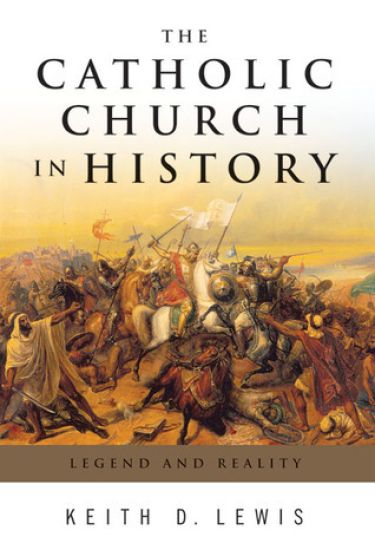
Catholic Church in History

Catholic Church in History

Keith D. Lewis

Crossroad Publishing Co ,U.S.
2006
nidottu
The darkest chapters of Catholic history usually evoke either denial or uninformed prejudice. But under the leadership of visionaries such as Pope John Paul II, a new way of understanding history is emerging - reconciliation and hope come not from ignoring history, but from a close examination of the forgotten facts, with clues to their meaning for life today. In The Catholic Church in History, Keith Lewis helps us reexamine what really happened in these controversial events, and shows us how Catholic faith offers tools for addressing mistakes and moving forward.
Sociology after Bosnia and Kosovo

Sociology after Bosnia and Kosovo

Keith D. Doubt

Rowman Littlefield
2000
nidottu
This book provides a sociological account of the events in Bosnia in the 1990s, including ethnic cleansing, mass rape, and the role of political journalists. Drawing upon a diverse group of social theorists, including Merton, Weber, and Baudrillard, Sociology After Bosnia constructs a social understanding of the experiences of people in Bosnia and the response of Western leaders to these experiences. Beyond looking at the social causes of these events, Doubt sheds light on why Bosnia and Kosovo have largely been ignored by sociologists. He shows why the personal and social tragedies of people in Bosnia and Kosovo and the world's tolerance of these tragedies challenge contemporary sociological knowledge. Doubt argues that sociologists must be willing not only to recognize this challenge, but also to respond to it in order to construct meaningfully adequate accounts of war and genocide in a postmodern era. Doing so, he contends, may yield an important and needed reconsideration of the existing body of sociologicial knowledge and a revision of how this knowledge is applied.
Information Assurance Architecture

Information Assurance Architecture

Keith D. Willett

Auerbach Publishers Inc.
2008
sidottu
Now that information has become the lifeblood of your organization, you must be especially vigilant about assuring it. The hacker, spy, or cyber-thief of today can breach any barrier if it remains unchanged long enough or has even the tiniest leak. In Information Assurance Architecture, Keith D. Willett draws on his over 25 years of technical, security, and business experience to provide a framework for organizations to align information assurance with the enterprise and their overall mission.The Tools to Protect Your Secrets from ExposureThis work provides the security industry with the know-how to create a formal information assurance architecture that complements an enterprise architecture, systems engineering, and the enterprise life cycle management (ELCM). Information Assurance Architecture consists of a framework, a process, and many supporting tools, templates and methodologies. The framework provides a reference model for the consideration of security in many contexts and from various perspectives; the process provides direction on how to apply that framework. Mr. Willett teaches readers how to identify and use the right tools for the right job. Furthermore, he demonstrates a disciplined approach in thinking about, planning, implementing and managing security, emphasizing that solid solutions can be made impenetrable when they are seamlessly integrated with the whole of an enterprise.Understand the Enterprise ContextThis book covers many information assurance subjects, including disaster recovery and firewalls. The objective is to present security services and security mechanisms in the context of information assurance architecture, and in an enterprise context of managing business risk. Anyone who utilizes the concepts taught in these pages will find them to be a valuable weapon in the arsenal of information protection.
Sea Clutter

Sea Clutter

Keith D. Ward; Robert J.A. Tough; Simon Watts

Institution of Engineering and Technology
2006
sidottu
This book provides an authoritative account of the current understanding of radar sea clutter, describing its phenomenology, EM scattering and statistical modelling and simulation, and their use in the design of detection systems and the calculation and practical evaluation of radar performance. The book pays particular attention to the compound K distribution model developed by the authors during the past 20 years. The evidence for this model, its mathematical formulation and development and practical application to the specification, design and evaluation of radar systems are all discussed. In addition, the book sets the previously empirical development of the K distribution model in the wider context of recent advances in the calculation of low grazing angle electromagnetic scattering and oceanographic modelling of the statistics of the sea surface. The authors discuss in detail the prediction of the performance of specified radar systems; at the same time, their presentation of the underlying physical principles and analytic and computational techniques employed in these calculations is sufficiently comprehensive for the reader to be well equipped to tackle related problems with confidence. These features, and appendices reviewing pertinent mathematical background material and the calculation of low grazing angle scattering by corrugated surfaces, make this book invaluable to specialist radar engineers and academic researchers, while being of considerable interest to the wider applied physics and mathematics communities.
iBPMS - Intelligent BPM Systems: Impact and Opportunity

iBPMS - Intelligent BPM Systems: Impact and Opportunity

Keith D. Swenson; Robert Shapiro; Setrag Khoshafian

Future Strategies Incorporated
2013
nidottu
Intelligent BPM Systems: Impact and Opportunity iBPMS "The need for Intelligent Business Operations (IBO) supported by intelligent processes is driving the need for a new convergence of process technologies lead by the iBPMS. The iBPMS changes the way processes help organizations keep up with business change," notes Gartner Emeritus Jim Sinur in his Foreword. Co-authors include industry experts Keith Swenson, Nathaniel Palmer, Robert Shapiro, Setrag Khoshafian, Charles Webster, James Taylor, Pieter van Schalkwyk, Steinar Carlsen et al Contents * Thriving on Adaptability: How Smart Companies Win in a Data-Driven World. * Avoiding Fragility in Innovative Learning Organizations * Adaptive Case Management for Railway Freight Operations * Creating an Integrated Platform for Enterprise-wide Process Intelligence * Process of Everything * The iBPM Ecosystem: More Human than System * Marketing Intelligent BPM to Healthcare Intelligently * How to Make Mobile BPM Robust and Intelligent * Decision Support For Intelligent BPM * Emerging Standards in Decision Modeling-an Introduction to Decision Model & Notation * A Reliable Methodology for BPM Project Implementation * Composing Services in the Future Internet: Choreography-Based Approach * Making SOA work-a Practice-Oriented Overview * Smart Tools and Visual Analytics An intelligent BPM suite provides the functionality needed to support more intelligent business operations, including real-time analytics, extensive complex event processing (CEP) and business activity monitoring (BAM) technologies and enhanced mobile, social and collaborative capabilities. The co-authors of this important book describe various aspects and approaches with regard to impact and opportunity. By reading this book, you'll learn how successful organizations keep up with business change. You'll be able to create and run an adaptive, intelligent enterprise, easily able to navigate changes.