

Kirjahaku
Etsi kirjoja tekijän nimen, kirjan nimen tai ISBN:n perusteella.
1000 tulosta hakusanalla Kelly R. Baker


The 30 Day Meditation: Acknowledging the provisions and protection of God
Kelly R. Jackson
Createspace Independent Publishing Platform
2015
nidottu


Hearing God Beyond "Signs" to Transformation: A Handbook
Kelly R. Cupples
Createspace Independent Publishing Platform
2017
nidottu

Are We Still Making Disciples?: Pushing the Church Beyond Membership and Sunday Morning Service
Kelly R. Jackson
Createspace Independent Publishing Platform
2016
nidottu
Has the church gotten away from making disciples? Have we become more church service oriented and less Christian education oriented? In the midst of ever-evolving congregations, have we began phasing out the true mission of the church? With "Are We Still Making Disciples?: Pushing the Church Beyond Membership and Sunday Morning Worship", minister and author Rev. Kelly R. Jackson explores these questions in an effort to move the church from a place of mere membership to true discipleship.Written to be a supplemental teaching tool for the church, this latest work from Rev. Jackson gives church leadership another source to draw from as they look to move people from the pew to the vineyard, with a goal of producing more disciples.This book also covers topics like the purpose of the church according to The Great Commission, how the world's influence on the church is hindering discipleship, and how the local church is becoming a destination instead of a launching pad into the world. "Are We Still Making Disciples?" challenges today's church to push its members beyond just being Sunday morning Christians. It illuminates the fact that Jesus called us to do more than just join the church. He called us to help grow the church. He called us to discipleship If the fire for true discipleship needs to be reignited in your life and in the life of your home church, "Are We Still Making Disciples?" is a great place to start

The 30 Day Meditation, Vol. 2: Preservation, Restoration, and Motivation
Kelly R. Jackson
Createspace Independent Publishing Platform
2017
nidottu

Sometimes it hurts, sometimes we're afraid, and often times we don't understand. But we won't give up. We won't stop following. We won't stop trusting. Picking up where We Will Follow ended you'll get the opportunity to come along side our family as we continue navigating this world as followers. You'll witness how fear and insecurity begin to no longer have center stage in our story. We have a calling on our lives and we're determined to fight the strongholds put in place long ago. Our story will bring tears, laughter, and shouts of joy. Our story is real and raw. Some will see themselves in our story. Others won't be able to fathom why we believed or acted the way we did. We are growing, we are learning, and we won't give



Oblivescence is Kelly R. Samuels' second full-length collection of poetry, a book carried by a daughter's relationship with her mother as they navigate the latter's struggle with dementia due to Alzheimer's-a condition that approximately 6.5 million Americans are battling. This book of memory and loss is rich in imagery as well as metaphor, and threaded with allusions to Greek mythology, clinical psychology and gardening. Readers of all kinds, but especially caregivers, mothers, daughters, and medical staff, are sure to be moved by this written exploration of what it means to remember.


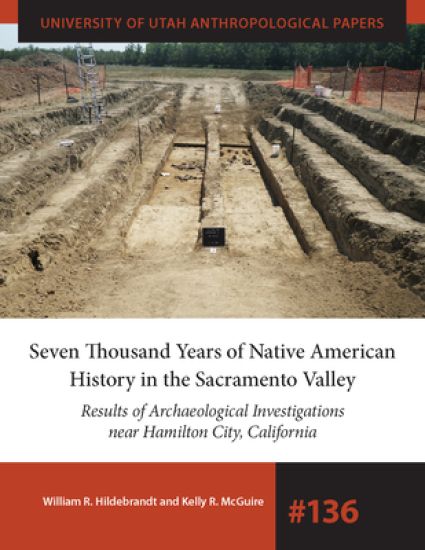
Seven Thousand Years of Native American History in the Sacramento Valley
William R. Hildebrandt; Kelly R McGuire
University of Utah Press,U.S.
2022
nidottu
The Sacramento Valley of northern California was a rich, diverse environment that supported some of the densest populations of nonagricultural people in the world. Periodic flooding, however, has buried much of the valley’s deep cultural history under alluvium. This volume shares the discovery of four buried archaeological sites, including one dating to 7,000 years ago, filled with a diversified assemblage of artifacts and a rich assortment of food remains. Stone net sinkers and associated fish bones represent the oldest fishery ever documented in the interior of California, while items such as marine shell beads and exotic obsidian, and some of the oldest charmstones ever recovered in California provide evidence for long-distance trade networks. The other three sites date between 4000 and 300 years ago and reflect increasing human population density, technological innovation, and the rise of sedentism and territoriality. This historical sequence culminated in findings from a 400- to 300-year-old house complex probably occupied by the Mechoopda Indian Tribe, who collaborated with the authors throughout the project.

Prolonged Exposure Therapy for Adolescents with PTSD Therapist Guide
Edna B. Foa; Kelly R. Chrestman; Eva Gilboa-Schechtman
Oxford University Press Inc
2008
nidottu
Traumatic events, including sexual abuse, experiencing or witnessing violence, and natural disasters, are common among adolescents. A significant number of adolescents go on to develop posttraumatic stress disorder (PTSD), which can have a severe negative impact on well-being and functioning. These adolescents require professional help to free themselves of PTSD symptoms and reclaim their lives. This therapist guide presents a proven treatment for PTSD that has been adapted for the adolescent population. The program applies the principles of Prolonged Exposure (PE) to help adolescents emotionally process their traumatic experiences. A four-phase treatment, adolescents complete each module at their own rate of progress. The pre-treatment preparation phase includes modules on motivational interviewing and case management. During the first treatment phase, modules cover the rationale for treatment, information-gathering about the trauma, and common reactions to trauma. Modules in the next phase, exposures, comprise the core of the treatment. By systematically confronting situations associated with the trauma, adolescents overcome avoidance and fear. Recounting the memory of the traumatic event helps adolescents distinguish the past from the present and promotes feelings of mastery. The final phase involves modules on relapse prevention and treatment termination. This therapist guide considers the adolescent's age and developmental level and includes developmentally appropriate materials. It offers additional guidance on tailoring the treatment to each client's unique situation, including trauma type and family structure. Handouts for parents are provided in an appendix. The corresponding teen workbook contains information on each module and forms for adolescent use. Comprehensive and effective, this program is an invaluable contribution to the treatment of adolescents with PTSD.

Patterns of American Terrorism
Brent L. Smith; Kelly R. Damphousse; Jeff Gruenewald
Routledge
2023
sidottu
Patterns of American Terrorism provides a detailed empirical examination of the patterns of behavior exhibited by persons indicted in federal criminal courts for "terrorism-related activities" in the United States over the past 35 years. Not intended to be a theoretical treatise on the etiology of terrorism, nor to be an indictment of federal counterterrorism efforts, this book seeks to provide a definitive guide to what we know about the behavior of terrorists who have targeted the United States and the country’s efforts to prosecute and punish them. Utilizing data from the American Terrorism Study, this volume provides an in-depth analysis of the temporal and spatial patterns that shaped the manner in which terrorists in the United States planned and carried out their attacks; how terrorists are investigated, prosecuted, and punished in federal courts; and how counterterrorism efforts have affected the behavior of individual terrorists and groups. Smith, Damphousse, and Gruenewald delve into the demographic characteristics and geospatial and temporal patterns of terrorist behavior as an outgrowth of research they conducted over many years in the American Terrorism Study. Building on this foundation, the authors compare "lone actor" or "lone wolf" terrorists with the patterns of behavior exhibited by groups or cells and examine more recent behaviors of ISIS conspiracies in the United States with those of terrorists from other types of groups. Providing a comprehensive overview of the nature and evolution of modern international and domestic terrorism, this book offers a wealth of findings that will be useful in setting policy and developing guidelines for counterterrorism efforts as well as in formulating hypotheses to test theoretical models. The book will be of interest to scholars and students of terrorism and political violence, criminology, sociology, international security, and political science.

Patterns of American Terrorism
Brent L. Smith; Kelly R. Damphousse; Jeff Gruenewald
Routledge
2023
nidottu
Patterns of American Terrorism provides a detailed empirical examination of the patterns of behavior exhibited by persons indicted in federal criminal courts for "terrorism-related activities" in the United States over the past 35 years. Not intended to be a theoretical treatise on the etiology of terrorism, nor to be an indictment of federal counterterrorism efforts, this book seeks to provide a definitive guide to what we know about the behavior of terrorists who have targeted the United States and the country’s efforts to prosecute and punish them. Utilizing data from the American Terrorism Study, this volume provides an in-depth analysis of the temporal and spatial patterns that shaped the manner in which terrorists in the United States planned and carried out their attacks; how terrorists are investigated, prosecuted, and punished in federal courts; and how counterterrorism efforts have affected the behavior of individual terrorists and groups. Smith, Damphousse, and Gruenewald delve into the demographic characteristics and geospatial and temporal patterns of terrorist behavior as an outgrowth of research they conducted over many years in the American Terrorism Study. Building on this foundation, the authors compare "lone actor" or "lone wolf" terrorists with the patterns of behavior exhibited by groups or cells and examine more recent behaviors of ISIS conspiracies in the United States with those of terrorists from other types of groups. Providing a comprehensive overview of the nature and evolution of modern international and domestic terrorism, this book offers a wealth of findings that will be useful in setting policy and developing guidelines for counterterrorism efforts as well as in formulating hypotheses to test theoretical models. The book will be of interest to scholars and students of terrorism and political violence, criminology, sociology, international security, and political science.

Disquieted Echoes: Chronicles of a Corrupted Soul
Daryl L. Owen; Kelly R. Owen
Createspace Independent Publishing Platform
2011
nidottu
"DARKNESS HAS A FACE".... LIKE NOTHING ELSE YOU'VE EVER READ ...A CHILLING collection of short, TRUE, stories about the life of a small boy, along with his two siblings, raised at the hands of their religiously corrupt father, whose abusive ways and twisted sense of faith took them all through a "maze" of supernatural figures and experiences that would follow, not only them, throughout their lives, but their families too. Ghosts, demonic figures and more...WARNING: Keep the lights on If you're not afraid of the dark... You WILL be ...
A.B.C.'s of Behavioral Forensics
Sridhar Ramamoorti; David E. Morrison; Joseph W. Koletar; Kelly R. Pope
John Wiley Sons Inc
2013
sidottu
Get practical insights on the psychology of white-collar criminals—and how to outsmart them Understand how the psychologies of fraudsters and their victims interact as well as what makes auditors/investigators/regulators let down their guard. Learn about the psychology of fraud victims, including boards of directors and senior management, and what makes them want to believe fraudsters, and therefore making them particularly vulnerable to deception. Just as IT experts gave us computer forensics, we now have a uniquely qualified team immersed in psychology, sociology, psychiatry as well as accounting and auditing, introducing the emerging field of behavioral forensics to address the phenomenon of fraud. Ever wonder what makes a white-collar criminal tick? Why does she or he do what they do? For the first time ever, see the mind of the fraudster laid bare, including their sometimes twisted rationalizations; think like a crook to catch a crook! The A.B.C.'s of Behavioral Forensics takes you there, with expert advice from a diverse but highly specialized authoring team of professionals (three out of the four are Certified Fraud Examiners): a former accounting firm partner who has a PhD in psychology, a former FBI special agent who has been with investigative practices of two of the Big Four firms, an industrial psychiatrist who has worked closely with the C-level suite of large and small companies, and an accounting professor who has interviewed numerous convicted felons. Along with a fascinating exploration of what makes people fall for the common and not-so-common swindles, the book provides a sweeping characterization of the ecology of fraud using The A.B.C.'s of Behavioral Forensics paradigm: the bad Apple (rogue executive), the bad Bushel (groups that collude and behave like gangs), and the bad Crop (representing organization-wide or even societally-sanctioned cultures that are toxic and corrosive). The book will make you take a longer look when hiring new employees and offers a deeper more complex understanding of what happens in organizations and in their people. The A.B.C. model will also help those inside and outside organizations inoculate against fraud and make you reflect on instilling the core values of your organization among your people and create a culture of excellence and integrity that acts as a prophylactic against fraud. Ultimately, you will discover that, used wisely, behavioral methods trump solely economic incentives. With business fraud on the rise globally, The A.B.C.'s of Behavioral Forensics is the must-have book for investigators, auditors, the C-suite and risk management professionals, the boards of directors, regulators, and HR professionals. Examines the psychology of fraud in a practical way, relating it to aspects of fraud prevention, deterrence, detection, and remediationHelps you understand that trust violation—the essence of fraud—is a betrayal of behavioral assumptions about "trusted" peopleExplains how good people go bad and how otherwise honest people cross the lineUnderscores the importance of creating a culture of excellence and integrity that inoculates an organization from fraud risk (i.e., honest behavior pays, while dishonesty is frowned upon)Provides key takeaways on what to look for when hiring new employees and in your current employees, as well as creating and maintaining a culture of control consciousnessIncludes narrative accounts of interviews with convicted white-collar criminals, as well as interpretive insights and analysis of their rationalizationsFurnishes ideas about how to enhance professional skepticism, how to resist fraudsters, how to see through their schemes, how to infuse internal controls with the people/behavioral element, and make them more effective in addressing behavioral/integrity risksProvides a solid foundation for training programs across the fraud risk management life cycle all the way from the discovery of fraud to its investigation as well as remediation (so the same fraud doesn't happen again)Enables auditors/investigators to engage in self-reflection and avoid cognitive and emotional biases and traps that lead to professional judgment errors (e.g., overconfidence, confirmation, self-deception, groupthink, halo effect, availability, speed-accuracy trade-off, etc.) Ever since the accounting scandals surrounding Enron and WorldCom surfaced, leading to the passage of the Sarbanes Oxley Act of 2002, as well as the continuing fall out from the Wall Street financial crisis precipitating the Dodd-Frank Act of 2010, fraud has been a leading concern for executives globally. If you thought you knew everything there was to know about financial fraud, think again. Get the real scoop with The A.B.C.'s of Behavioral Forensics.
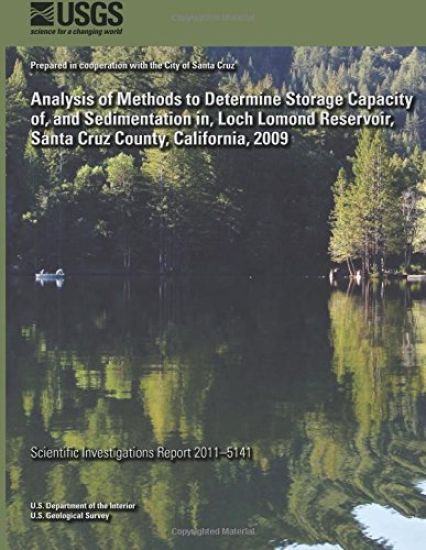
Analysis of Methods to Determine Storage Capacity of, and Sedimentation in, Loch Lomond Reservoir, Santa Cruz County, California, 2009
Lawrence A. Freeman; Loraine E. Flint; Kelly R. McPherson
Createspace Independent Publishing Platform
2014
nidottu
In 2009, the U.S. Geological Survey, in cooperation with the City of Santa Cruz, conducted bathymetric and topographic surveys to determine the water storage capacity of, and the loss of capacity owing to sedimentation in, Loch Lomond Reservoir in Santa Cruz County, California. The topographic survey was done as a supplement to the bathymetric survey to obtain information about temporal changes in the upper reach of the reservoir where the water is shallow or the reservoir may be dry, as well as to obtain information about shoreline changes throughout the reservoir. Results of a combined bathymetric and topographic survey using a new, state-of-the-art method with advanced instrument technology indicate that the maximum storage capacity of the reservoir at the spillway altitude of 577.5 feet (National Geodetic Vertical Datum of 1929) was 8,646 85 acre-feet in March 2009, with a confidence level of 99 percent. This new method is a combination of bathymetric scanning using multibeam-sidescan sonar, and topographic surveying using laser scanning (LiDAR), which produced a 1.64-foot-resolution grid with altitudes to 0.3-foot resolution and an estimate of total water storage capacity at a 99-percent confidence level. Because the volume of sedimentation in a reservoir is considered equal to the decrease in water-storage capacity, sedimentation in Loch Lomond Reservoir was determined by estimating the change in storage capacity by comparing the reservoir bed surface defined in the March 2009 survey with a revision of the reservoir bed surface determined in a previous investigation in November 1998. This revised reservoir-bed surface was defined by combining altitude data from the 1998 survey with new data collected during the current (2009) investigation to fill gaps in the 1998 data. Limitations that determine the accuracy of estimates of changes in the volume of sedimentation from that estimated in each of the four previous investigations (1960, 1971, 1982, and 1998) are a result of the limitations of the survey equipment and data-processing methods used. Previously used and new methods were compared to determine the recent (1998-2009) change in storage capacity and the most accurate and cost-effective means to define the reservoir bed surface so that results can be easily replicated in future surveys.