

Kirjahaku
Etsi kirjoja tekijän nimen, kirjan nimen tai ISBN:n perusteella.
1000 tulosta hakusanalla Kenneth B. Kidd



11 Beautiful Tools: The Social Media Success Guide for Beauty Professionals
Kenneth B. Torry; Terez D. Baskin
Terez Baskin
2013
nidottu
11 Beautiful Tools is the Social Media Success Guide for Beauty Professionals and beyond. This book will teach you how to get started on each platform and strategic tips to get you engaged. You will be able to grow your client base by increasing your search-ability online using social media platforms. Personal branding starts with your online presence. Think of the brands you love. Would you buy from a major beauty brand if they did not have a website? Nars, MAC, Sephora, Ulta Cosmetics, and all other beauty brands you know use social media to get and keep your attention. They have great places for customers and community to connect and buy from them. You should also have a great digital presence. 11 Beautiful Tools will set you apart as the beauty expert you already are. You will learn more about each major social media platform. It will also help you determine why each network is great for your business. You will also learn what customers will want to see from you as a new content creator. 11 Beautiful Tools teaches you about: -Youtube-Google+-Beautylish-Bloom.com-Facebook-Vine-Twitter-Instagram-PinterestEach platform has a unique community and it is best to craft a voice for each platform. There is no one size fits all formula. This book is going to revolutionize how you communicate to your beauty community. It will set the standard and set you apart.

Ken Marslew shares his personal journey following the murder of his son, Michael in 1994. As he grapples with the incomprehensible loss, Ken takes readers on a heart-wrenching journey that begins with the harrowing incident, the funeral and the hunt for Michael's killers. Ken confronts a legal system that he discovers to be disconnected from the concept of true justice, a struggle that persists to this day. Readers are taken behind the scenes of the offenders' trials and their verdicts, revealing the family's painful loss while also shedding light on his determined support for other victims. From this tragedy Enough is Enough is established to pursue legislative reform and to improve the justice system. His subsequent work in schools, juvenile correction centres, and mainstream prisons - both men's and women's - provides eye-opening accounts of encounters with a diverse spectrum of character, including meeting with Michael's murderers. Motivated by Murder, also shares the tragic loss of his second son, further deepening the family's sorrow. But this is not just a story of loss; it provides an invaluable source of solace for those who have endured similar grief. Ken defies the stereotypical portrayal of a victim, concluding with an uplifting affirmation of resilience and an optimistic worldview.
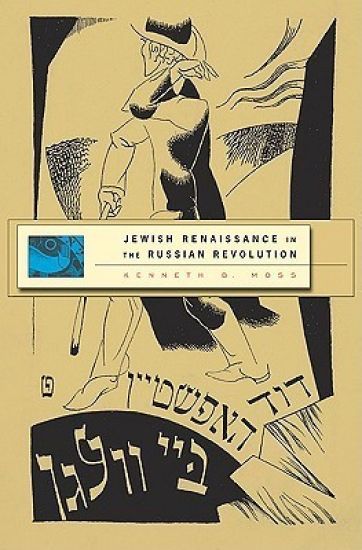
Between 1917 and 1921, as revolution convulsed Russia, Jewish intellectuals and writers across the crumbling empire threw themselves into the pursuit of a “Jewish renaissance.” At the heart of their program lay a radically new vision of Jewish culture predicated not on religion but on art and secular individuality, national in scope yet cosmopolitan in content, framed by a fierce devotion to Hebrew or Yiddish yet obsessed with importing and participating in the shared culture of Europe and the world. These cultural warriors sought to recast themselves and other Jews not only as a modern nation but as a nation of moderns.Kenneth Moss offers the first comprehensive look at this fascinating moment in Jewish and Russian history. He examines what these numerous would-be cultural revolutionaries, such as El Lissitzky and Haim Nahman Bialik, meant by a new Jewish culture, and details their fierce disagreements but also their shared assumptions about what culture was and why it was so important. In close readings of Hebrew, Yiddish, and Russian texts, he traces how they sought to realize their ideals in practice as writers, artists, and thinkers in the burgeoning cultural centers of Moscow, Kiev, and Odessa. And he reveals what happened to them and their ideals as the Bolsheviks consolidated their hold over cultural life.Here is a brilliant, revisionist argument about the nature of cultural nationalism, the relationship between nationalism and socialism as ideological systems, and culture itself, the axis around which the encounter between Jews and European modernity has pivoted over the past century.

Caring for Depression
Kenneth B. Wells; Roland Sturm; Cathy D. Sherbourne; Lisa S. Meredith
RAND Corporation
1999
nidottu
One of the major concerns about the changing U.S. health-care systems is whether they will improve or diminish the quality and cost-effectiveness of medical care. The shift from a fee-for-service to a prepaid method of reimbursement has greatly changed the incentives of patients to seek care as well as those of providers to supply it. This change poses a particular challenge for care of depressed patients, a vulnerable population that often does not advocate for its own care. This book documents the inefficiencies of our national systems--prepaid as well as fee-for-service--for treating depression and explores how they can be improved.Although depression is a major illness affecting millions of people, it is seriously undertreated in the United States. The ongoing shift of mental-health care away from specialists and toward primary medical-care providers is causing fewer depressed patients to be appropriately diagnosed and treated. Depression is frequently more devastating than other major illnesses, such as arthritis and heart disease, because it often begins at a younger age, when people are at their productive peak and thus at risk of permanently damaging their careers. It also differs from many medical conditions in that its indirect costs are usually much higher than direct treatment costs.The authors urge the integration of both medical and economic considerations in designing policies for the treatment of depression. They show that by spending more money efficiently on care, the nation will gain greater health improvements per dollar invested and a more productive population.

A revisionist account of interwar Europe’s largest Jewish community that upends histories of Jewish agency to rediscover reckonings with nationalism’s pathologies, diaspora’s fragility, Zionism’s promises, and the necessity of choice.What did the future hold for interwar Europe’s largest Jewish community, the font of global Jewish hopes? When intrepid analysts asked these questions on the cusp of the 1930s, they discovered a Polish Jewry reckoning with “no tomorrow.” Assailed by antisemitism and witnessing liberalism’s collapse, some Polish Jews looked past progressive hopes or religious certainties to investigate what the nation-state was becoming, what powers minority communities really possessed, and where a future might be found—and for whom.The story of modern Jewry is often told as one of creativity and contestation. Kenneth B. Moss traces instead a late Jewish reckoning with diasporic vulnerability, nationalism’s terrible potencies, Zionism’s promises, and the necessity of choice. Moss examines the works of Polish Jewry’s most searching thinkers as they confronted political irrationality, state crisis, and the limits of resistance. He reconstructs the desperate creativity of activists seeking to counter despair where they could not redress its causes. And he recovers a lost grassroots history of critical thought and political searching among ordinary Jews, young and powerless, as they struggled to find a viable future for themselves—in Palestine if not in Poland, individually if not communally.Focusing not on ideals but on a search for realism, Moss recasts the history of modern Jewish political thought. Where much scholarship seeks Jewish agency over a collective future, An Unchosen People recovers a darker tradition characterized by painful tradeoffs amid a harrowing political reality, making Polish Jewry a paradigmatic example of the minority experience endemic to the nation-state.

Literature and Theology in Colonial New England
Kenneth B Murdock
Harvard University Press
1949
sidottu

No nation was more deeply affected by America’s rise to world power than Japan. President Franklin Roosevelt’s uncompromising policy of unconditional surrender led to the catastrophic finale of the Asia-Pacific War and the most intrusive international reconstruction of another nation in modern history. Japan in the American Century examines how Japan, with its deeply conservative heritage, responded to the imposition of a new liberal order.The price Japan paid to end the occupation was a cold war alliance with the United States that ensured America’s dominance in the region. Still traumatized by its wartime experience, Japan developed a grand strategy of dependence on U.S. security guarantees so that the nation could concentrate on economic growth. Yet from the start, despite American expectations, Japan reworked the American reforms to fit its own circumstances and cultural preferences, fashioning distinctively Japanese variations on capitalism, democracy, and social institutions.Today, with the postwar world order in retreat, Japan is undergoing a sea change in its foreign policy, returning to an activist, independent role in global politics not seen since 1945. Distilling a lifetime of work on Japan and the United States, Kenneth Pyle offers a thoughtful history of the two nations’ relationship at a time when the character of that alliance is changing. Japan has begun to pull free from the constraints established after World War II, with repercussions for its relations with the United States and its role in Asian geopolitics.

Turns out the zombie apocalypse wasn't the end after all. Mother Nature had other ideas. But She didn't make things better and humans dropped farther down the food chain. Now a doctor has found a cure for ghoul fever. He just needs five girls to fetch a flesh-eating raver from a clutch of flesh-eating ravers - ALIVE - and bring it home.

“Letters of marque” might suggest privateers of the Elizabethan era or the American Revolution. But such conventions are duly covered in the US Constitution, and the private military instruments they sanction are very much at work today in the form of mercenaries and military contractors. A history of such practices up to the present day, Marque and Reprisal by Kenneth B. Moss offers unique insight into the role of private actors in military conflicts and the reason they are increasingly deployed in our day.Along with an overview of mercenaries and privateers, Marque and Reprisal provides a comprehensive history of the “marque and reprisal” clause in the US Constitution, reminding us that it is not as arcane as it seems and arguing that it is not a license for all forms of undeclared war. Within this historical context Moss explains why governments and states have sought control over warfare and actors—and why private actors have reappeared in force in recent conflicts. He also looks ahead to the likelihood that cyberwar will become an important venue for “private warfare.” Moss wonders if international law will be up to the challenges of private military actors in the digital realm. Is international law, in fact, equipped to meet the challenges increasingly presented in our day by such extramilitary activity?A government makes no more serious decision than whether to resort to military force and war; and when doing so, Moss suggests, it should ensure that such actions are accountable, not on the sly, and not decided in the marketplace. Marque and Reprisal should inform future deliberations and decisions on that count.

Husserl's Criticism of Reason, With Ethnomethodological Specifications marshals some of the central ideas of phenomenology for use in empirical studies of naturally occurring ordinary interaction. At the same time, Liberman outlines ways that concrete ethnomethodological studies of philosophical thinking and philosophers' work can extend Edmund Husserl's criticism of reasoning by providing specificities that Husserl never furnished. Liberman develops and applies such phenomenological ideas as the limits of apophantic reasoning and logocentrism, the benefits of aporias and negative dialectics, and theLebenswelt origins of meaning. For phenomenologists, he offers clear summaries of the most vital notions that ethnomethodologists use to locate and describe the implicit intricacies of the thinking philosophical practitioners who are actively and collaboratively engaged in formal reflections. Liberman not only engages in a dialogue and debate with the major thinkers of the phenomenological and post-phenomenological tradition, including Husserl, Heidegger, Levinas, Merleau-Ponty, and Derrida, he poses some ethnomethodological challenges to contemporary phenomenological thought. These notions are not only developed theoretically, but also illustrated practically with abundant demonstrations and detailed analyses.Husserl's Criticism of Reason is situated within a philosophical anthropological vision of how human beings have been learning how to use the tools of formal analytic reasoning to serve their thinking without suffocating it.

Concise yet comprehensive, Product Planning Essentials addresses the complex, interdisciplinary nature of product development and product management. It covers strategic issues that emerge during the product life cycle, including identifying opportunities, idea generation and evaluation, technical development, commercialization, and eventual product dismissal. Special topics include public policy, international issues, and intellectual property. An interesting summary of product development best practices from several companies appears at the end of the book. Instructors, students and practitioners will appreciate the balanced managerial and how-to orientation.
Concise yet comprehensive, Product Planning Essentials addresses the complex, interdisciplinary nature of product development and product management. It covers strategic issues that emerge during the product life cycle, including identifying opportunities, idea generation and evaluation, technical development, commercialization, and eventual product dismissal. Special topics include public policy, international issues, and intellectual property. An interesting summary of product development best practices from several companies appears at the end of the book. Instructors, students and practitioners will appreciate the balanced managerial and how-to orientation.

Concise and jargon free, this is a one-step primer on the tools and techniques of forecasting new product development. Equally useful for students and professionals, the book is generously illustrated, and features numerous current real-world industry cases and examples. Part I covers the basic foundations and processes of new product forecasting, and links forecasting to the broader processes of new product development and sales and operations planning. Part II includes detailed, step-by-step techniques of new product forecasting, from judgmental techniques to regression analysis. Each chapter in this section begins with the most basic techniques, then progresses to more advanced levels. Part III addresses managerial considerations of new product forecasting, including postlaunch issues such as cannibalization and supercession. The final chapter presents an important set of industry best practices and benchmarks.

Concise and jargon free, this is a one-step primer on the tools and techniques of forecasting new product development. Equally useful for students and professionals, the book is generously illustrated, and features numerous current real-world industry cases and examples. Part I covers the basic foundations and processes of new product forecasting, and links forecasting to the broader processes of new product development and sales and operations planning. Part II includes detailed, step-by-step techniques of new product forecasting, from judgmental techniques to regression analysis. Each chapter in this section begins with the most basic techniques, then progresses to more advanced levels. Part III addresses managerial considerations of new product forecasting, including postlaunch issues such as cannibalization and supercession. The final chapter presents an important set of industry best practices and benchmarks.

Friendship, an acquired relationship primarily based on choice rather than birth, lay at the heart of Enlightenment preoccupations with sociability and the formation of the private sphere. In Brotherly Love, Kenneth Loiselle argues that Freemasonry is an ideal arena in which to explore the changing nature of male friendship in Enlightenment France. Freemasonry was the largest and most diverse voluntary organization in the decades before the French Revolution. At least fifty thousand Frenchmen joined lodges, the memberships of which ranged across the social spectrum from skilled artisans to the highest ranks of the nobility. Loiselle argues that men were attracted to Freemasonry because it enabled them to cultivate enduring friendships that were egalitarian and grounded in emotion. Drawing on scores of archives, including private letters, rituals, the minutes of lodge meetings, and the speeches of many Freemasons, Loiselle reveals the thought processes of the visionaries who founded this movement, the ways in which its members maintained friendships both within and beyond the lodge, and the seemingly paradoxical place women occupied within this friendship community. Masonic friendship endured into the tumultuous revolutionary era, although the revolutionary leadership suppressed most of the lodges by 1794. Loiselle not only examines the place of friendship in eighteenth-century society and culture but also contributes to the history of emotions and masculinity, and the essential debate over the relationship between the Enlightenment and the French Revolution.

Undeclared War and the Future of U.S. Foreign Policy
Kenneth B. Moss
Johns Hopkins University Press
2008
sidottu
Undeclared wars have a history in the United States almost as old as the country itself and bear an importance that has grown along with the nation's power, international status, and technological proficiency. Kenneth B. Moss's highly original argument in Undeclared War and the Future of U.S. Foreign Policy demonstrates that though the framers of the Constitution had a broad notion of the varieties of war and the authority under which they would be undertaken without a formal declaration, Congress and the President are leading the United States into conflicts without fundamental oversight and accountability. The concentration of power in the president's hands is particularly troubling to Moss, and he traces the shift to congressional deference and even timidity. Presidential accountability to Congress and the public for limited wars has been harmfully weak, most recently in the wars against Vietnam and Iraq, says the author, and he proposes a new strategy for improving congressional institutions for oversight.

Undeclared War and the Future of U.S. Foreign Policy
Kenneth B. Moss
Johns Hopkins University Press
2008
nidottu
Undeclared wars have a history in the United States almost as old as the country itself and bear an importance that has grown along with the nation's power, international status, and technological proficiency. Kenneth B. Moss's highly original argument in Undeclared War and the Future of U.S. Foreign Policy demonstrates that though the framers of the Constitution had a broad notion of the varieties of war and the authority under which they would be undertaken without a formal declaration, Congress and the President are leading the United States into conflicts without fundamental oversight and accountability. The concentration of power in the president's hands is particularly troubling to Moss, and he traces the shift to congressional deference and even timidity. Presidential accountability to Congress and the public for limited wars has been harmfully weak, most recently in the wars against Vietnam and Iraq, says the author, and he proposes a new strategy for improving congressional institutions for oversight.