
Kirjahaku
Etsi kirjoja tekijän nimen, kirjan nimen tai ISBN:n perusteella.
1000 tulosta hakusanalla Kenneth J. Arrow
Public Investment, the Rate of Return, and Optimal Fiscal Policy
Kenneth J. Arrow; Mordecai Kruz
Resources for the Future Press (RFF Press)
2011
sidottu
This book, co-authored by the Nobel-prized economist, Kenneth Arrow, considers public expenditures in the context of modern growth theory. It analyzes optimal growth with public capital. A theory of 'controllability' is developed and injected into public economics and growth models. Originally published in 1970
The tension between what we wish for and what we can get, between values and opportunities, exists even at the purely individual level. A hermit on a mountain may value warm clothing and yet be hard-pressed to make it from the leaves, bark, or skins he can find. But when many people are competing with each other for satisfaction of their wants, learning how to exploit what is available becomes more difficult. In this volume, Nobel Laureate Kenneth J. Arrow analyzes why - and how - human beings organize their common lives to overcome the basic economic problem: the allocation of scarce resources. The price system is one means of organizing society to mediate competition, and Arrow analyzes its successes and failures. Alternative modes of achieving efficient allocation of resources are explored: government, the internal organization of the firm, and the 'invisible institutions' of ethical and moral principles. Professor Arrow shows how these systems create channels to make decisions, and discusses the costs of information acquisition and retrieval. He investigates the factors determining which potential decision variables are recognized as such. Finally, he argues that organizations must achieve some balance between the power of the decision makers and their obligation to those who carry out their decisions - between authority and responsibility.

Preference, Production and Capital
Hirofumi Uzawa; Kenneth J. Arrow
Cambridge University Press
2005
pokkari
This volume contains a selection of Professor Uzawa's important contributions to mathematical economics. Subjects covered by these nineteen essays include consumption, production, equilibrium, capital, growth, planning, international trade, and the theory of social overhead capital. Written in the 1960s and early 1970s, the papers form a basis upon which economic theory has developed over the last twenty years. The collection includes some of Uzawa's classic contributions, such as 'Preference and Rational Choice in the Theory of Consumption' (presented at the First Stanford Symposium), 'Time Preference, the Consumption Function, and Optimum Asset Holdings', 'Neutral Inventions and the Stability of Growth Equilibrium', 'On a Two-Sector Model of Economic Growth', 'Time Preference and the Penrose Effect in a Two-Class Model of Economic Growth', and 'On the Economics of Social Overhead Capital'. The collection will be useful not only in understanding the nature of the development in economic theory today, but also in reflecting upon the direction toward which economic theory will be advancing in the future.

Discounting for Time and Risk in Energy Policy
Robert C. Lind; Kenneth J. Arrow; Gordon R. Corey; Partha Dasgupta; Amartya K. Sen; Thomas Stauffer; Joseph E. Stiglitz; J.A. Stockfisch
Resources for the Future Press (RFF Press)
2011
sidottu
This is a collection of theoretical papers, including contributions by Partha Dasgupta and three Nobel prize-winning economists: Kenneth Arrow, Amartya Sen, and Joseph Stiglitz. Originally published in 1982.
Public Interest Law
Burton A. Weisbrod; Joel F. Handler; Komesar Neil K.; Arrow Kenneth J.
University of California Press
2022
pokkari
What is public interest law? How effective is it? What are the limits to litigation as a mechanism for conflict resolution? In this study, economists, lawyers, and sociologists evaluate an institutional form that is new to American society and, indeed, to the world--the public interest law (PIL) organization. The book introduces the reader to the structure, resources, and activities of this "nonprofit industry," and also to the factors that affect PIL firms in their choices of cases and methods of handling them. The authors examine PIL's vast range of contemporary public policy concerns. These incude such general topics as the environment, consumerism, housing, employment discrimination, medical care, occupational health and safety, education finance, and taxation. A number of base studies are presented, and a method for economic analysis and evaluation is introduced and applied. The study points to PIL's success in advocating under-represented interests, in winning courtroom decisions, and in translating legal victories into reallocations of resources. At the same time, it notes the bias of PIL towards test-case litigation, a propensity to focus on judicial victories rather than on real social change, and a tendency to use lawyers even when other types of professionals might be more effective. Many of these problems stem from uncertainty of funding and legal restrictions on "nonprofit" organizations. The result is a set of hurdles that distracts PIL firms from their principal goals. The authors do not limit themselves to PIL, but comment on the effectiveness of legal instruments as devices for social change, and on the behavior of the voluntary nonprofit sector, a little-studied portion of the economy. The book presents a fresh approach to the study of both collective-type economic problems and institutional setting in which public interest law works. This title is part of UC Press's Voices Revived program, which commemorates University of California Press's mission to seek out and cultivate the brightest minds and give them voice, reach, and impact. Drawing on a backlist dating to 1893, Voices Revived makes high-quality, peer-reviewed scholarship accessible once again using print-on-demand technology. This title was originally published in 1978.
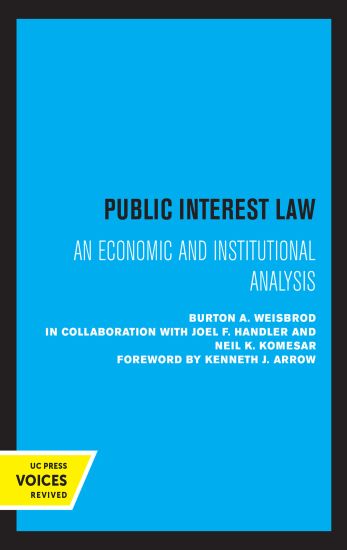
Public Interest Law
Burton A. Weisbrod; Joel F. Handler; Komesar Neil K.; Arrow Kenneth J.
University of California Press
2022
sidottu
What is public interest law? How effective is it? What are the limits to litigation as a mechanism for conflict resolution? In this study, economists, lawyers, and sociologists evaluate an institutional form that is new to American society and, indeed, to the world--the public interest law (PIL) organization. The book introduces the reader to the structure, resources, and activities of this "nonprofit industry," and also to the factors that affect PIL firms in their choices of cases and methods of handling them. The authors examine PIL's vast range of contemporary public policy concerns. These incude such general topics as the environment, consumerism, housing, employment discrimination, medical care, occupational health and safety, education finance, and taxation. A number of base studies are presented, and a method for economic analysis and evaluation is introduced and applied. The study points to PIL's success in advocating under-represented interests, in winning courtroom decisions, and in translating legal victories into reallocations of resources. At the same time, it notes the bias of PIL towards test-case litigation, a propensity to focus on judicial victories rather than on real social change, and a tendency to use lawyers even when other types of professionals might be more effective. Many of these problems stem from uncertainty of funding and legal restrictions on "nonprofit" organizations. The result is a set of hurdles that distracts PIL firms from their principal goals. The authors do not limit themselves to PIL, but comment on the effectiveness of legal instruments as devices for social change, and on the behavior of the voluntary nonprofit sector, a little-studied portion of the economy. The book presents a fresh approach to the study of both collective-type economic problems and institutional setting in which public interest law works. This title is part of UC Press's Voices Revived program, which commemorates University of California Press's mission to seek out and cultivate the brightest minds and give them voice, reach, and impact. Drawing on a backlist dating to 1893, Voices Revived makes high-quality, peer-reviewed scholarship accessible once again using print-on-demand technology. This title was originally published in 1978.

Short Stories by Kenneth J. Melville
Kenneth J. Melville
Createspace Independent Publishing Platform
2013
nidottu
This book is a compilation of seriously exciting short stories which has been written by the same author of, 'In The Pulse of Time.'The short stories deal with the depth of the human condition from: old age, to sadness, greed, philosophy and hate... Secondly the last two short stories are humorous rewrites of history.

Biophysics of Nucleic Acids Celebrating the 75th Birthday of Professor Kenneth J. Breslauer
MDPI AG
2023
sidottu
This Special Issue comprises 15 papers broadly outlining current trends in nucleic acid biophysics. It contains original research papers and reviews on structure, stability, and interactions of canonical and non-canonical nucleic acids. The authors describe the use of established, time-honored experimental and computational techniques as well as their more recently developed counterparts. Molecular insights that can be gained from the papers collected in this issue range from the fundamental to the applied with emphasis on biological functions and biomedical prospects of nucleic acids. The collection is not meant to be exhaustive, but to highlight recent advances from select laboratories worldwide. Nevertheless, it represents a useful guide for scientists who wish to familiarize themselves with biophysical topics in nucleic acid research. This Special Issue will be useful both for researchers who study fundamental aspects of nucleic acid structure, stability, and dynamics, as well as for those that are mainly interested in practical biological and biomedical applications of nucleic acids.
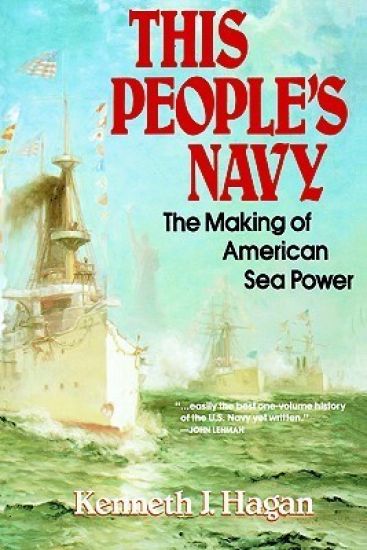
Kenneth J. Hagan pulls the curtain back for American civilians as he shares a sweeping account of the country’s naval experience.Including the wooden Continental Navy to contemporary projections of the service’s high-tech mission in the next century, The People’s Navy shares the complete making and growth of America’s sea power. “…provides a clear, interesting, and through-provoking introduction to the history of the American sea power and should be read by all historians of the United States… This book will provide standard interpretation for a long time to come.” – Reviews in American History

"Whatever you are currently reading, I promise you it is not nearly as intelligent, witty, compelling, or entertaining as The Fifth Servant....Wishnia makes history come alive." -- David Liss, author of The Devil's Company A brilliantly imagined, beautifully written combination of scrupulously researched historical novel and riveting suspense thriller, Kenneth Wishnia's The Fifth Servant carries readers back to 16th century Prague in the shadow of the Papal Inquisition--and introduces a uniquely unforgettable protagonist, a young Talmudic scholar who has three days to solve a heinous murder before official reprisals decimate the city's Jewish community. A richly atmospheric tale of religion, mystery, and intrigue, The Fifth Servant recreates life in the era when Emperor Rudolph II occupied the throne--a time of uncertainty and fear viewed through the eyes of an intrepid rabbinical student on a quest for truth and justice.

Multinuclear Solid-State Nuclear Magnetic Resonance of Inorganic Materials
Kenneth J.D. MacKenzie; M.E. Smith
Pergamon Press
2002
sidottu
Techniques of solid state nuclear magnetic resonance (NMR) spectroscopy are constantly being extended to a more diverse range of materials, pressing into service an ever-expanding range of nuclides including some previously considered too intractable to provide usable results. At the same time, new developments in both hardware and software are being introduced and refined. This book covers the most important of these new developments. With sections addressed to non-specialist researchers (providing accessible answers to the most common questions about the theory and practice of NMR asked by novices) as well as a more specialised and up-to-date treatment of the most important areas of inorganic materials research to which NMR has application, this book should be useful to NMR users whatever their level of expertise and whatever inorganic materials they wish to study.

This book presents coherent and systematic coverage of the broad and dynamic field of free atom and cluster atom chemistry. The text provides a comprehensive overview of the current literature and describes the mostimportant experimental techniques developed since 1980 including bimetallic clusters/catalysts, carbon clusters (fullerenes) and trapped single atoms. Metal atoms, clusters, and particles are covered in sequence with the Periodic Table.
Aging and Creativity examines the effects of aging on creative functioning, including age-related changes in cognition, personality, and motivation that affect performance or output. The book reviews and summarizes both lab-based and real-world-based studies. Changes in working memory, speed of processing, learning efficiency, and retrieval from long-term memory are all discussed as factors influencing creativity, as are health changes and changes in social roles with later age. The book concludes with practical implications of age effects on creativity for older people in work and everyday life.
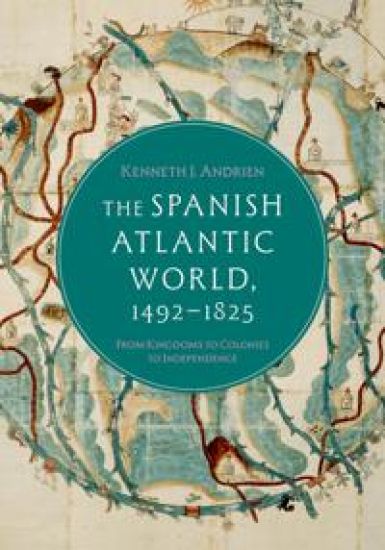
The overseas enterprises of Spain expanded dramatically following the first voyage of Christopher Columbus in 1492. The Spanish had already conquered the Canary Islands, which served as a base for the later conquest of lands in the Americas (known as the Indies) that served as the foundation of the Spanish Atlantic world. After 1492 Spanish colonists fanned out from a few Caribbean outposts to Mexico, as armies overthrew the Aztec Empire and annexed the Maya domains in southern Mexico and Central America. In just over a decade the Spaniards brought down the Inca Empire, giving the Castilians control over the vast human and mineral resources in South America. Over the course of the sixteenth century, the Castilian invaders, followed by crown bureaucrats and Catholic clergymen, consolidated control over the central regions of Mexico and Peru. Spain eventually claimed control over the vast region from the current southwest of the United States to the southern tip of South America, creating a massive domain that brought unimaginable wealth to the Kingdoms of Spain. This wide-ranging study examines the evolution of the Spanish Atlantic World from its inception with the voyages of Christopher Columbus through the period of conquest and expansion in the sixteenth century, the era of consolidation in the seventeenth century, to the reform and renovation of the eighteenth century, culminating in its slow-motion collapse by 1825. Drawing on traditions from the long Reconquest of the Iberian Peninsula from the Muslims, the first conquistadors and settlers attempted to establish a stratified patriarchal society, based on Roman Catholic values and firmly tied to metropolitan Spain and the wider Atlantic world. As Spain became mired in a series of disastrous wars with European rivals and the colonial economy expanded, diversified, and became more self-sufficient in the seventeenth century, colonial elites gained greater political and social power. Under the new French Bourbon dynasty after 1700, crown ministers framed Enlightenment-inspired policies to reform the Spanish Atlantic world, creating a more centralized state apparatus with the ability to raise taxes, curtail contraband commerce, and establish a military capable of defending the interests of the crown against its European foes. These Bourbon Reforms enjoyed successes, despite provoking opposition among conservative groups in Spain and unrest and revolts in the Indies. Finally, Spain became embroiled in the wars of the French Revolution and the rise of Napoleon Bonaparte, which led a French invasion of Iberia, political tumult in Spain and the Indies, and the collapse of the Spanish Atlantic World and independence for the Americas. Drawing on his extensive research and the most recent literature, eminent historian Kenneth J. Andrien lucidly narrates the three hundred years during which the Spanish Indies evolved from kingdoms of the crown to dependent colonies to independent nations, leading to the fracturing of the Spanish Atlantic world.

The overseas enterprises of Spain expanded dramatically following the first voyage of Christopher Columbus in 1492. The Spanish had already conquered the Canary Islands, which served as a base for the later conquest of lands in the Americas (known as the Indies) that served as the foundation of the Spanish Atlantic world. After 1492 Spanish colonists fanned out from a few Caribbean outposts to Mexico, as armies overthrew the Aztec Empire and annexed the Maya domains in southern Mexico and Central America. In just over a decade the Spaniards brought down the Inca Empire, giving the Castilians control over the vast human and mineral resources in South America. Over the course of the sixteenth century, the Castilian invaders, followed by crown bureaucrats and Catholic clergymen, consolidated control over the central regions of Mexico and Peru. Spain eventually claimed control over the vast region from the current southwest of the United States to the southern tip of South America, creating a massive domain that brought unimaginable wealth to the Kingdoms of Spain. This wide-ranging study examines the evolution of the Spanish Atlantic World from its inception with the voyages of Christopher Columbus through the period of conquest and expansion in the sixteenth century, the era of consolidation in the seventeenth century, to the reform and renovation of the eighteenth century, culminating in its slow-motion collapse by 1825. Drawing on traditions from the long Reconquest of the Iberian Peninsula from the Muslims, the first conquistadors and settlers attempted to establish a stratified patriarchal society, based on Roman Catholic values and firmly tied to metropolitan Spain and the wider Atlantic world. As Spain became mired in a series of disastrous wars with European rivals and the colonial economy expanded, diversified, and became more self-sufficient in the seventeenth century, colonial elites gained greater political and social power. Under the new French Bourbon dynasty after 1700, crown ministers framed Enlightenment-inspired policies to reform the Spanish Atlantic world, creating a more centralized state apparatus with the ability to raise taxes, curtail contraband commerce, and establish a military capable of defending the interests of the crown against its European foes. These Bourbon Reforms enjoyed successes, despite provoking opposition among conservative groups in Spain and unrest and revolts in the Indies. Finally, Spain became embroiled in the wars of the French Revolution and the rise of Napoleon Bonaparte, which led a French invasion of Iberia, political tumult in Spain and the Indies, and the collapse of the Spanish Atlantic World and independence for the Americas. Drawing on his extensive research and the most recent literature, eminent historian Kenneth J. Andrien lucidly narrates the three hundred years during which the Spanish Indies evolved from kingdoms of the crown to dependent colonies to independent nations, leading to the fracturing of the Spanish Atlantic world.
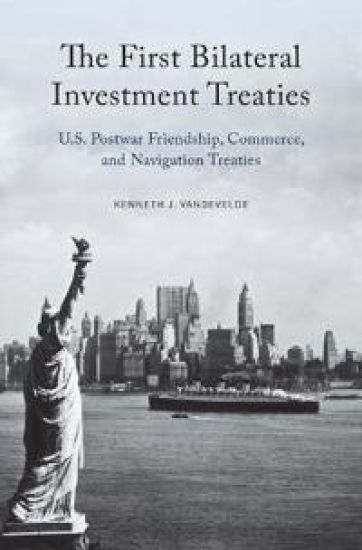
The First Bilateral Investment Treaties
Kenneth J. Vandevelde
Oxford University Press Inc
2017
sidottu
The First Bilateral Investment Treaties is the first and only history of the U.S. postwar Friendship, Commerce, and Navigation (FCN) treaty program, and focuses on the investment-related provisions of those treaties. The 22 U.S. postwar FCN treaties were the first bilateral investment treaties ever concluded, and nearly all of the core provisions in the modern network of more than 3000 international investment agreements worldwide trace their origin to these FCN treaties. This book explains the original understanding of the language of this vast network of agreements which have been and continue to be the subject of hundreds of international arbitrations and billions of dollars in claims. It is based on a review of some 32,000 pages of negotiating history housed in the National Archives. This book demonstrates that the investment provisions were founded on the New Deal liberalism of the Roosevelt-Truman administrations and were intended to acquire for U.S. companies investing abroad the same protections that foreign investors already received in the United States under the U.S. Constitution. It chronicles the failed U.S. attempt to obtain protection for investment through the proposed International Trade Organization (ITO), providing the first and only history of the investment-related provisions in the ITO Charter. It then shows how the FCN treaties, which dated back to 1776 and originally concerned with establishing trade and maritime relations, were re-conceptualized as investment treaties to provide investment protection bilaterally. This book is also a work of diplomatic history, offering an account of the negotiating history of each of the 22 treaties and describing U.S. negotiating policy and strategy.
Beyond the Tyranny of Testing
Kenneth J. Gergen; Scherto R. Gill
Oxford University Press Inc
2020
sidottu
Measurement-based assessment has dominated our educational systems at the expense of the learning and the well-being of students and teachers. In this book, Gergen and Gill propose a radical alternative to this broken system, which is based instead on an inspirational conception of schools as sites of collective meaning-making and a relational orientation to evaluation. The authors acknowledge that it is within the process of relating that the world comes to be meaningful for us, and equally, learning and well-being are embedded in relational process, which testing and grades undermine. Providing detailed illustrations using cases from pioneering schools around the globe at both the primary and secondary level, this book demonstrates how a relational orientation to evaluation in education can enhance learning processes, foster students' engagement, vitalize relationships, and elevate the evaluation of teaching and the school as a whole. Featuring collaborative learning, dialogic pedagogy, and flexible curricula, relational evaluation truly speaks to the demands of a rapidly changing world.

This book builds on two current developments in psychology scholarship and practice. The first centers on broad discontent with the individualist tradition in which the rational agent, or autonomous self, is considered the fundamental atom of social life. Critique of individualism spring not only from psychologists working in the academy, but also from communities of therapy and counseling. The second, and related development from which this work builds, is the search for alternatives to individualist understanding. Thus, therapists such as Steve Mitchell, along with feminists at the Stone Center, expand the psychoanalytic tradition to include a relational orientation to therapy. The present volume will give voice to the critique of individualism, but its major thrust is to develop and illustrate a far more radical and potentially exciting landscape of relational thought and practice that now exists. Most existing attempts to build a relational foundation remain committed to a residual form of individualist psychology. The present work carves out a space of understanding in which relational process stands prior to the very concept of the individual. More broadly, the book attempts to develop a thoroughgoing relational account of human activity. In doing so, Gergen reconstitutes 'the mind' as a manifestation of relationships and bears out these ideas in a range of everyday professional practices, including family therapy, collaborative classrooms, and organizational psychology.
Bilateral Investment Treaties: History, Policy, and Interpretation organizes, summarizes and comments upon the arbitral awards interpreting and applying BIT provisions. Policymakers and practitioners will find a thorough introduction to the operation of the BITs, including the principal arguments and case authorities on both sides of the major issues in international investment law. The book is intended to be a single-volume reference covering every important development in the 50 years of BIT programs worldwide, from 1959 until 2009. Author Kenneth Vandevelde argues that the primary purpose of the BITs is to promote the application of the rule of law to foreign investment, while a secondary purpose is to create a liberal investment regime. He further argues that BITs are based on six core principles: reasonableness, security, nondiscrimination, access, transparency and due process. The book explains each of these principles and analyzes the major BIT provisions based on them. Vandevelde addresses the host of complex questions that BITs engender: Do bilateral investment treaties attract foreign investment or otherwise contribute to economic development? Do BITs limit host state regulatory discretion too much? Why should countries continue to conclude BITs? What is meant by BIT guarantees of "fair and equitable treatment" and "full protection and security"? What is the scope of the BIT provision for most-favored-nation treatment? The book's expert analysis of these questions makes it useful to policy makers in the area of international economic relations, attorneys representing multinational companies, and anyone interested in the process of economic globalization.