Kirjojen hintavertailu. Mukana 11 213 693 kirjaa ja 12 kauppaa.

Kirjahaku

Etsi kirjoja tekijän nimen, kirjan nimen tai ISBN:n perusteella.

1000 tulosta hakusanalla Kenneth Kidd

Kenneth Clark

Kenneth Clark

James Stourton

Harpercollins Publishers
2017
pokkari
Sunday Times Art Book of the Year The astonishing life of Kenneth Clark - the greatest British art historian of his time. As writer and presenter of the TV series Civilisation he was responsible for the greatest syntheses of art, music, literature and thought ever made - 'a contribution to civilisation itself'.
Kenneth Waltz

Kenneth Waltz

Paul R. Viotti

Columbia University Press
2024
sidottu
Kenneth Waltz (1924–2013) is perhaps the most enduringly influential figure in international relations theory of the second half of the twentieth century. He is considered the father of the structural-realist or neorealist school, and his views on core questions, such as the causes of war and the structure of the international system, are foundational to the field today and likely will remain so for decades to come. Waltz’s writings on both theoretical and policy-related topics, from the balance of power to the spread of nuclear weapons, continue to fuel debate.This book is a groundbreaking intellectual biography of Kenneth Waltz, shedding new light on the development and significance of his key contributions. Paul R. Viotti draws on extensive, candid interviews with Waltz as well as Waltz’s personal files and archival research to provide a nuanced account of the great scholar’s life and thought. He traces the intellectual sources and personal experiences that shaped Waltz’s work, including an intense Lutheran upbringing; service in World War II and the Korean War; and the academic environments of Oberlin College, Columbia University, and the University of California, Berkeley. Viotti examines the key influences on Waltz’s major works, Man, the State, and War and Theory of International Politics, and analyzes their distinctive insights. Engaging with the views of Waltz’s critics and featuring reminiscences from his colleagues, this book is a compelling portrait of an intellectual titan.
Kenneth Waltz

Kenneth Waltz

Paul R. Viotti

Columbia University Press
2025
pokkari
Kenneth Waltz (1924–2013) is perhaps the most enduringly influential figure in international relations theory of the second half of the twentieth century. He is considered the father of the structural-realist or neorealist school, and his views on core questions, such as the causes of war and the structure of the international system, are foundational to the field today and likely will remain so for decades to come. Waltz’s writings on both theoretical and policy-related topics, from the balance of power to the spread of nuclear weapons, continue to fuel debate.This book is a groundbreaking intellectual biography of Kenneth Waltz, shedding new light on the development and significance of his key contributions. Paul R. Viotti draws on extensive, candid interviews with Waltz as well as Waltz’s personal files and archival research to provide a nuanced account of the great scholar’s life and thought. He traces the intellectual sources and personal experiences that shaped Waltz’s work, including an intense Lutheran upbringing; service in World War II and the Korean War; and the academic environments of Oberlin College, Columbia University, and the University of California, Berkeley. Viotti examines the key influences on Waltz’s major works, Man, the State, and War and Theory of International Politics, and analyzes their distinctive insights. Engaging with the views of Waltz’s critics and featuring reminiscences from his colleagues, this book is a compelling portrait of an intellectual titan.
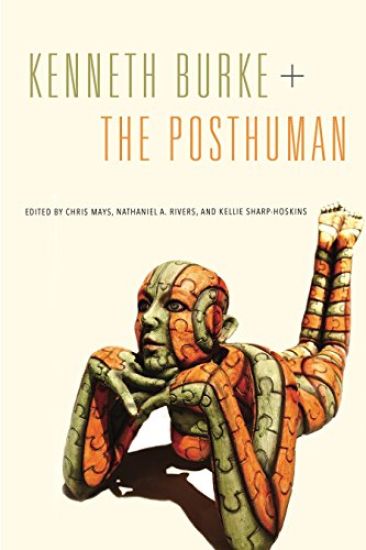
Kenneth Burke + The Posthuman

Kenneth Burke + The Posthuman

Pennsylvania State University Press
2017
sidottu
While rhetoric as a discipline is firmly planted in humanism and anthropology, posthumanism seeks to leave the human behind. This highly original examination of Kenneth Burke’s thought grapples with these ostensibly contradictory concepts as opportunities for invention, revision, and, importantly, transdisciplinary knowledge making.Rather than simply mapping posthumanist rhetorics onto Burke’s scholarship, Kenneth Burke + The Posthuman focuses on the multiplicity of ideas found both in his work and in the idea of posthumanism. Taking varied approaches organized within a framework of boundaries and futures, the contributors show that studying the humanist theories of Burke in this way creates a satisfyingly chaotic web of interconnections. The essays look at how Burke’s writing on the human mind and technology, from his earliest works to his very latest revisions, interrelates with current concepts such as new materiality and coevolution. Throughout, the contributors pay close attention to the fluidity, concerns, and contradictions inherent in language, symbolism, and subjectivity.A unique, illuminating exploration of the contested relationship between bodies and language, this inherently transdisciplinary book will propel important future inquiry by scholars of rhetoric, Burke, and posthumanism.In addition to the editors, the contributors are Casey Boyle, Kristie Fleckenstein, Nathan Gale, Julie Jung, Steven B. Katz, Steven LeMieux, Jodie Nicotra, Jeff Pruchnic, Timothy Richardson, Thomas Rickert, and Robert Wess.
Kenneth Burke + The Posthuman

Kenneth Burke + The Posthuman

Pennsylvania State University Press
2017
pokkari
While rhetoric as a discipline is firmly planted in humanism and anthropology, posthumanism seeks to leave the human behind. This highly original examination of Kenneth Burke’s thought grapples with these ostensibly contradictory concepts as opportunities for invention, revision, and, importantly, transdisciplinary knowledge making.Rather than simply mapping posthumanist rhetorics onto Burke’s scholarship, Kenneth Burke + The Posthuman focuses on the multiplicity of ideas found both in his work and in the idea of posthumanism. Taking varied approaches organized within a framework of boundaries and futures, the contributors show that studying the humanist theories of Burke in this way creates a satisfyingly chaotic web of interconnections. The essays look at how Burke’s writing on the human mind and technology, from his earliest works to his very latest revisions, interrelates with current concepts such as new materiality and coevolution. Throughout, the contributors pay close attention to the fluidity, concerns, and contradictions inherent in language, symbolism, and subjectivity.A unique, illuminating exploration of the contested relationship between bodies and language, this inherently transdisciplinary book will propel important future inquiry by scholars of rhetoric, Burke, and posthumanism.In addition to the editors, the contributors are Casey Boyle, Kristie Fleckenstein, Nathan Gale, Julie Jung, Steven B. Katz, Steven LeMieux, Jodie Nicotra, Jeff Pruchnic, Timothy Richardson, Thomas Rickert, and Robert Wess.
Kenneth Burke’s Weed Garden

Kenneth Burke’s Weed Garden

Kyle Jensen

Pennsylvania State University Press
2022
sidottu
Since its publication in 1950, Kenneth Burke’s A Rhetoric of Motives has been one of the most influential texts of theory and criticism. Critics have discovered in its pages concepts that reveal new dimensions of human motivation. And yet, despite its obvious genius, critics have interpreted A Rhetoric of Motives as a collection of provocations rather than a systematic treatment of rhetoric.In this book, Kyle Jensen argues that the coherence in Burke’s thought has yet to be fully appreciated. Drawing on unpublished drafts and voluminous correspondence, he reconstructs Burke’s drafting and revision process for A Rhetoric of Motives as well as its recently discovered second volume, The War of Words. Jensen’s extensive archival analysis reveals that Burke relied on the concept of myth to draw together the loose ends in his argument. For Burke, all general theories of rhetoric are formed and structured using mythic images and terms.By exploring what Burke added and omitted, and by putting his writing process into the context of daily life after the Second World War—including Burke’s attempts to clear the weeds from his Andover farm—Jensen sheds new light on the key problems that Burke encountered and the methods he used to overcome them. Kenneth Burke’s Weed Garden is essential for those who study Burke and the tradition of modern rhetoric that he helped found.
Kenneth Burke’s Weed Garden

Kenneth Burke’s Weed Garden

Kyle Jensen

Pennsylvania State University Press
2024
pokkari
Since its publication in 1950, Kenneth Burke’s A Rhetoric of Motives has been one of the most influential texts of theory and criticism. Critics have discovered in its pages concepts that reveal new dimensions of human motivation. And yet, despite its obvious genius, critics have interpreted A Rhetoric of Motives as a collection of provocations rather than a systematic treatment of rhetoric.In this book, Kyle Jensen argues that the coherence in Burke’s thought has yet to be fully appreciated. Drawing on unpublished drafts and voluminous correspondence, he reconstructs Burke’s drafting and revision process for A Rhetoric of Motives as well as its recently discovered second volume, The War of Words. Jensen’s extensive archival analysis reveals that Burke relied on the concept of myth to draw together the loose ends in his argument. For Burke, all general theories of rhetoric are formed and structured using mythic images and terms.By exploring what Burke added and omitted, and by putting his writing process into the context of daily life after the Second World War—including Burke’s attempts to clear the weeds from his Andover farm—Jensen sheds new light on the key problems that Burke encountered and the methods he used to overcome them. Kenneth Burke’s Weed Garden is essential for those who study Burke and the tradition of modern rhetoric that he helped found.
Kenneth Tynan

Kenneth Tynan

Dominic Shellard

Yale University Press
2012
pokkari
The first in-depth biography of theater genius Kenneth Tynan, looking behind the celebrity myth to show how Tynan’s eloquence and fervor helped change the course of theater in Britain and America Kenneth Tynan (1927–1980) lived one of the most intriguing theater lives of his century. A brilliant writer, critic, and agent provocateur, he made friends or enemies of nearly every major actor, playwright, impresario, and movie mogul of the 1950s, ‘60s, and ‘70s. He wrote for the Evening Standard, the Observer, and the New Yorker; served eleven years as dramaturg for Britain’s newly formed National Theatre, and spent his final years in Los Angeles. This biography offers the first complete appraisal of Tynan’s powerful contribution to post-war British theater, set against the context of the fifties, sixties, and seventies and his own turbulent life. Dominic Shellard highlights Tynan’s writings of 1952–1963, when the coruscating young critic came to prominence. He discusses how Tynan took his place at the vanguard of the new realist movement, helped to establish subsidized theater, fought censorship, and assisted in the creation of such groundbreaking theatrical phenomena as Oh Calcutta! in1970. The book reveals both the public and private Tynan, an outspoken, explicit, and sometimes savage critic who became one of the most influential theater figures of the twentieth century.
Kenneth Leighton

Kenneth Leighton

Carolyn J. Smith

Praeger Publishers Inc
2004
sidottu
Kenneth Leighton, best known for his organ and sacred choral music, was a composer of great depth and talent who wrote a significant body of works. Many of those works were written for large orchestras and a significant number of pieces of chamber music were composed for a variety of instrument groupings, as well as for instrumental solos. Anyone interested in 20th-century music as well as British and Scottish Cathedral music will find a wealth of works listed with a description of each.Kenneth Leighton, best known for his organ and sacred choral music, was a composer of great depth and talent who wrote a significant body of works. Many of those works were written for large orchestras and a significant number of pieces of chamber music were composed for a variety of instrument groupings, as well as for instrumental solos. Anyone interested in 20th-century music as well as British and Scottish Cathedral music will find a wealth of works listed with a description of each.This volume begins with a brief biography of Leighton and is followed by an alphabetical listing of works and performances. Also included is a discography and a bibliography of articles, reviews, books, and dissertations. The last section is a chronological list of compositions. Smith helps us to realize that Kenneth Leighton was an extraordinary composer of 20th-century music with a varied body of works and also a virtuoso pianist of some note.
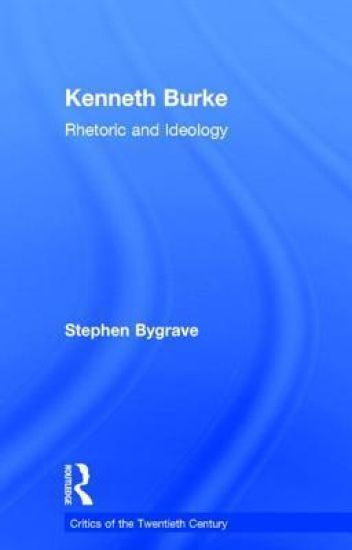
Kenneth Burke

Kenneth Burke

Stephen Bygrave

Routledge
1993
sidottu
Kenneth Burke: Rhetoric and Ideology is a lucid and accessible introduction to a major twentieth-century thinker those ideas have influenced fields as diverse as literary theory, philosophy, linguistics, politics and anthropology. Stephen Bygrave explores the content of Burke's vast output of work, focusing especially on his preoccupation with the relation between language, ideology and action. By considering Burke as a reader and writer of narratives and systems, Bygrave examines the inadequacies of earlier readings of Burke and unfolds his thought within current debates in Anglo-American cultural theory. This is an excellent re-evaluation of Burke's thought and valuble introduction to the impressive range of his ideas.
Kenneth Burke

Kenneth Burke

Stephen Bygrave

Routledge
2015
nidottu
Kenneth Burke: Rhetoric and Ideology is a lucid and accessible introduction to a major twentieth-century thinker those ideas have influenced fields as diverse as literary theory, philosophy, linguistics, politics and anthropology. Stephen Bygrave explores the content of Burke's vast output of work, focusing especially on his preoccupation with the relation between language, ideology and action. By considering Burke as a reader and writer of narratives and systems, Bygrave examines the inadequacies of earlier readings of Burke and unfolds his thought within current debates in Anglo-American cultural theory. This is an excellent re-evaluation of Burke's thought and valuble introduction to the impressive range of his ideas.
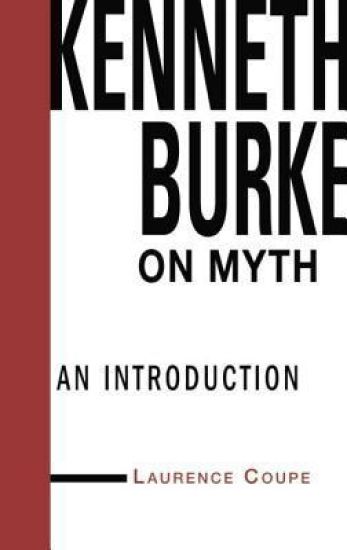
Kenneth Burke on Myth

Kenneth Burke on Myth

Lawrence Coupe

Routledge
2014
nidottu
Kenneth Burke--rhetorician, philosopher, linguist, sociologist, literary and music critic, crank--was one of the foremost theorists of literary form. He did not fit tidily into any philosophical school, nor was he reducible to any simple set of principles or ideas. He published widely, and is probably best known for two of his classic works, A Rhetoric of Motive and Philosophy ofLiterary Form. His observations on myth, however, were never systematic, and much of his writing on literary theory and other topics cannot be fully understood without fleshing out his thoughts on myth and mythmaking.
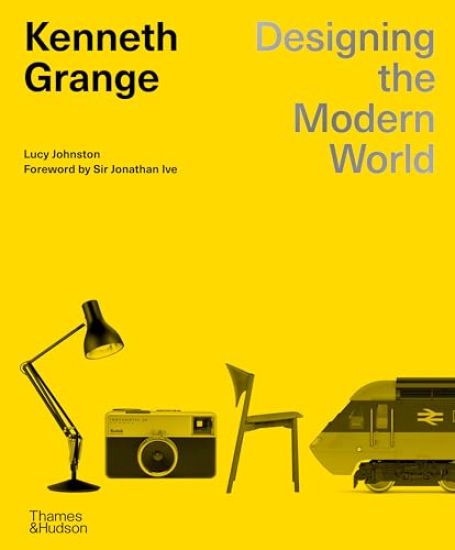
Kenneth Grange

Kenneth Grange

Lucy Johnston; Sir Jonathan Ive

THAMES HUDSON LTD
2024
sidottu
The definitive celebration of the work, life and times of Sir Kenneth Grange (born 1929), one of the most revered, innovative and influential industrial designers of the modern age. 'You may not know the name Kenneth Grange, but you'll almost certainly know his work. He has designed just about everything' The Guardian The work of renowned design pioneer Sir Kenneth Grange (born 1929) has touched the lives of almost every consumer worldwide and has had a lasting influence on today’s younger designers, from Sir Jonathan Ive, Jasper Morrison and Marc Newson to Thomas Heatherwick and the founding brothers of Joseph Joseph. For decades, Grange’s iconic products – including the InterCity 125 train for British Rail, the TX1 London black taxi, domestic appliances for Kenwood, lighting for Anglepoise, cameras for Kodak, pens for Parker and post boxes for Royal Mail, among many others – have been at the centre of tastemaking and key to the establishment of Britain’s worldwide post-war reputation as an influential hub of design excellence. Based on a series of in-depth discussions between Grange and design specialist Lucy Johnston, and her exclusive access to his extensive archive, this illuminating book explores Grange’s biography and work as seen through his eyes, illustrated with sketches, letters, scale models and product photographs. The story is set in its social, political and creative context, introducing the figures who have inspired, commissioned and worked alongside Grange as his designs transformed Britain and the world and helped to shape our modern-day consumer culture.
Kenneth Burke

Kenneth Burke

Robert Wess

Cambridge University Press
1996
sidottu
Kenneth Burke, arguably the most important American literary theorist of the twentieth century, helped define the theoretical terrain for contemporary literary and cultural studies. His perspectives were literary and linguistic, but his influences ranged across history, philosophy, and the social sciences. In this important and original study Robert Wess traces the trajectory of Burke’s long career and situates his work in relation to postmodernity. His study is both an examination of contemporary theories of rhetoric, ideology, and the subject, and an explanation of why Burke failed to complete his Motives trilogy. Burke’s own critique of the ‘isolated unique individual’ led him to question the possibility of unique individuation, a strategy which anticipated important elements of postmodern concepts of subjectivity. Robert Wess’s study is both a timely and judicious exposition of Burke’s massive oeuvre, and a crucial intervention in current debates on rhetoric and human agency.
Kenneth Burke

Kenneth Burke

Robert Wess

Cambridge University Press
1996
pokkari
Kenneth Burke, arguably the most important American literary theorist of the twentieth century, helped define the theoretical terrain for contemporary literary and cultural studies. His perspectives were literary and linguistic, but his influences ranged across history, philosophy, and the social sciences. In this important and original study Robert Wess traces the trajectory of Burke’s long career and situates his work in relation to postmodernity. His study is both an examination of contemporary theories of rhetoric, ideology, and the subject, and an explanation of why Burke failed to complete his Motives trilogy. Burke’s own critique of the ‘isolated unique individual’ led him to question the possibility of unique individuation, a strategy which anticipated important elements of postmodern concepts of subjectivity. Robert Wess’s study is both a timely and judicious exposition of Burke’s massive oeuvre, and a crucial intervention in current debates on rhetoric and human agency.
Kenneth Grahame

Kenneth Grahame

Alison Prince

Faber Faber
2009
pokkari
The Wind in the Willows needs no introduction - children have enjoyed the exploits of its characters for generations. Few would guess that its author, Kenneth Grahame, was a tortured soul. Marriage to the predatory Elspeth Thomson, when both seemed destined for the single life, was a shared fantasy of invented truth. Out of that union came a catastrophically spoiled son, 'mouse', for whom that greatest of children's stories was written. It was the child's tragedy that he was sucked into the unreality of his parents' lives and did not survive it, ending his life in suicide.Alison Prince brings her own highly acclaimed expertise as a children's writer to this remarkably perceptive biography of Kenneth Grahame. Drawing on hitherto unpublished material she uncovers layer upon layer of Grahame's personality to reveal the truth behind the myth of this intriguing man, 'the tortured soul of Mr Toad'.'Alison Prince describes the grim story of Grahame's marriage and fatherhood squarely and sensitively.' Independent'A meaty, well-constructed biography.' Allan Massie Daily Telegraph