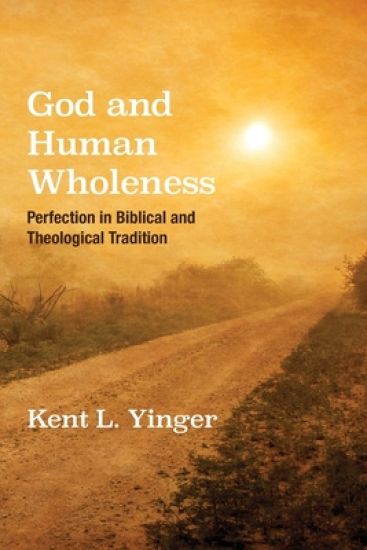
The language of perfection crops up regularly in the Bible, from Noah (""a just man and perfect in his generations,"" KJV) to Jesus (""be perfect, therefore, as your heavenly father is perfect,"" NRSV). Is flawless behavior what God expects, the only standard of righteousness that can satisfy him? Jewish tradition has long questioned this Christian assumption. Since Sanders and the New Perspective on Paul, it has come under increasing challenge from many directions. In Reclaiming Human Wholeness, Kent Yinger provides an in-depth examination of what the Bible intends with this perfection-wholeness language and of its impact on theology and spiritual life. Rather than calling to an unreachable perfection, the God of the Bible desires our flourishing and wholeness.
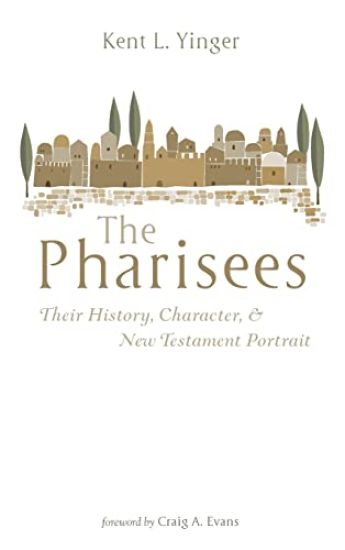
A struggle is currently underway to figure out one of the central groups in the gospel story . . . the Pharisees. Were they ""hypocrites or heroes""? Or as one recent writer put it, maybe they were just ""good guys with bad press."" Scholars of Judaism and of the NT have been painstakingly correcting, even rehabilitating, the image of the first-century Pharisees, but this seems not yet to have affected most readers of Scripture. Here at last is a book that lays out for the non-specialist the evidence for the origin and true nature of the Pharisees . . . and challenges them to re-read the gospel stories with real Pharisees in mind rather than caricatures.
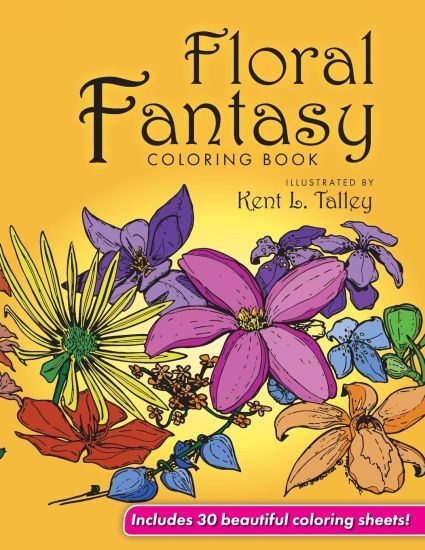
Vibrant and attractive, accurately rendered collection of beautiful flowers. A treat for coloring book fans, flower lovers, and gardening enthusiasts. Colorists can relax and enjoy as they bring their own conceptions of color and hue to these superb illustrations.
Justin Time Smith is a teacher who's been thru a rough divorce and needs to get away and leave his past behind. A road trip on your motorcycle seems in order, but leaving your past behind is no easy matter in today's electronic world. Justin's trip introduces him to new romantic partners, rekindles old relationships, puts him in dangerous situations and makes him analyze responsibilities and family. Pleasure, guilt and even jail await him on his travels. Just when he sees light at the end of the tunnel, another piece of his past surfaces unexpectedly. Charlie Moore is retired from his job but still works full time for his motorcycle club. They have their own brand of justice and Charlie makes sure it's enforced. Chance meetings between Charlie and Justin add a new dimension to Justin's peace of mind.
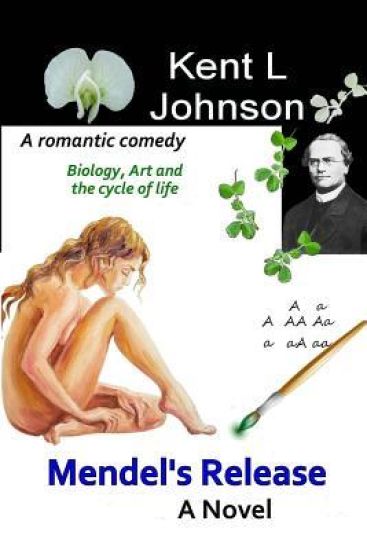
Ted has two passions, Stephanie and his art, with Stephanie being his primary art subject. Stephanie is passionate about her biological clock and Ted. Ted doesn't seem to realize that a biological clock is ticking and he finds himself alone. Stephanie is gone.Robert makes money hand over fist in ways that may not be legal and he likes to have a good time. Gregor Mendel, the father of genetics, was a monk that studied pea plants in the 1850's.A heartbroken Ted finds solace in a 19th century monk, memories, and painting. Robert makes Ted his new project and somehow it all comes together in the end with everyone's life changing, except for Mendel, who remains deceased throughout this book.A romantic tale that is full of passion and natural science plus nudity on and off of a canvas.
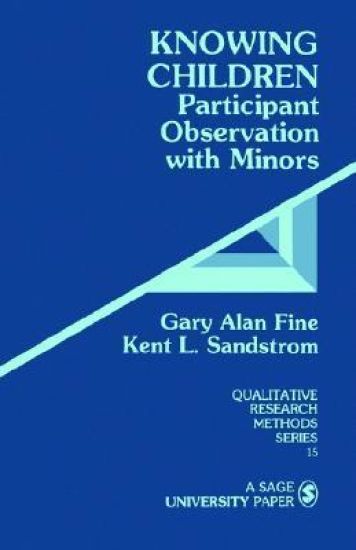
When studying children too often it is assumed that "our" view of the world will be their view of the world. Knowing Children explores this lofty assumption and explodes various myths that researchers commonly hold about children. Using the assumptions that minors are knowledgeable about their world and that the worlds of minors are special and noteworthy, Fine and Sandstrom explore the worlds of children and demonstrate that adults can greatly benefit from studying their worlds through the use of qualitative research methods. In this insightful volume Fine and Sandstrom present timely methodological statements on doing participant observation with children. Drawing on case studies of children from three age groups they provide the first extended treatment of methodological problems with qualitative research involving children which integrates previous writings. They cover general issues involved in research with children, focusing on methodological and ethical concerns as well. This volume provides a fresh view of the worlds of children while providing an invaluable reference for the ethnographic researcher. Knowing Children helps the researcher understand how and why children react to adults doing ethnographic research. This work will prove to be specifically of interest to applied researchers in child development and education. It will also be of interest to those in other human services and more traditional ethnographic fields.
Branding provides a unique way for your library to distinguish itself - its identity, personality and image. Drawing on five vividly unique case studies from libraries across the country, this book shows you how to mesh your library’s brand deeply and seamlessly within your internal culture, to leverage and better position your brand for the audiences you serve, and develop and implement promotional strategies and tactics consistent with your objectives. Section 1 – Branding – explains clearly and logical what a brand is and how to assess, develop and utilise your brand as an important institutional asset. This section also offers insider tips on environmental scanning, market research, and situation analysis to help you define, refine and update your brand. Section 2 – Positioning – steps you through the process of positioning your brand to effectively address your target audiences. You’ll determine where you are with each audience, ask the right questions to get the best results, and craft a positioning statement that will bring success to your library. Section 3 – Promotion – helps you develop an integrated marketing communication strategy, decide on the messages, messengers, and creativity approaches, and leverage your online presence to inform and engage with community members. You’ll also learn how to capitalise on traditional marketing channels, gain exposure through public relations and event strategies, and use email, website, and online tactics. Throughout the book, you get clear and practical must-have advice regarding the art and science of library branding, advocacy, ethical considerations, marketing management and evaluation.
Providing an in-depth analysis of public opinion, including its origins in political socialization, its role in the electoral process, and the impact of the media, American Public Opinion goes beyond a simple presentation of data to include a critical analysis of the role of public opinion in American democracy.New to the 11th Edition Updates all data through the 2020 elections and includes early polling through 2022. Pays increased attention to polarization. Expands focus on support for democratic values in the Trump and post-Trump era. Covers new voting patterns related to race, ethnicity, and gender. Expands coverage of political misinformation, media bias, and negativity, especially in social media.Defends political polling even in the wake of 2020 failings.
Providing an in-depth analysis of public opinion, including its origins in political socialization, its role in the electoral process, and the impact of the media, American Public Opinion goes beyond a simple presentation of data to include a critical analysis of the role of public opinion in American democracy.New to the 11th Edition Updates all data through the 2020 elections and includes early polling through 2022. Pays increased attention to polarization. Expands focus on support for democratic values in the Trump and post-Trump era. Covers new voting patterns related to race, ethnicity, and gender. Expands coverage of political misinformation, media bias, and negativity, especially in social media.Defends political polling even in the wake of 2020 failings.
This second edition offers an expanded and updated history of the field of fetal and neonatal development, allowing readers to gain a comprehensive understanding of the biological aspects that contribute to the wellbeing or pathophysiology of newborns. In this concluding opus of a long and prominent career as a clinical scientist, Dr. Longo has invited new contributions from noted colleagues with expertise in various fields to provide a historical perspective on the impact of how modern concepts emerged in the field of fetal physiology and contributed to the current attention paid to the fetal origins of diseases in adults. In addition to new chapters on maternal physiology and complications during pregnancy, others trace the history of the Society for Reproductive Investigation, governmental funding of perinatal research, and major initiatives to support training in the new discipline of maternal fetal medicine, including the Reproductive Scientist Development program. The extensive survey provided by the author, who personally knew most of the pioneers in the field, offers a unique guide for all clinical and basic scientists interested in the history of – and future approaches to diagnosing and treating – pathologies that represent the leading causes of neonatal mortality and, far too often, life-long morbidity.
The Municipal Art Society of New York recently celebrated its fiftieth year of offering walking tours to the public; in 2007 more than 10,000 people participated. This illustrated guidebook to highlights of architecture, preservation, urban planning, and public art described by two experienced guides, with pictures, route maps, and travel information, covers Manhattan from downtown skyscrapers to Harlem by way of Madison Square, Art Deco Midtown, Grand Central Terminal, Columbus Circle, Central Park, and more.
After a blistering defeat by alien forces, clone soldier Lt. Wayson Harris and his brethren have been exiled to the far reaches of the galaxy where the Unified Authority intends to use them as targets for live-fire training exercises. Now, Harris will unleash his rage against the might of the U.A. Fleet, leading an army with everything to fight for, and one thing to die for-revenge.
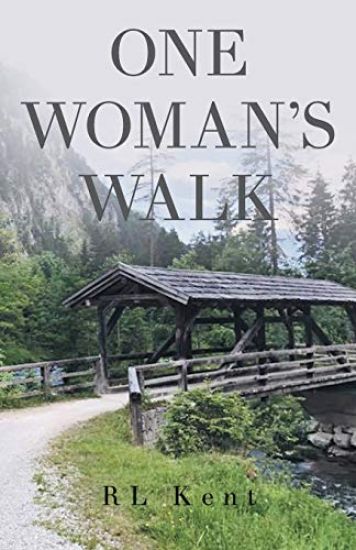
One Woman's Walk is based on my experiences. One Woman's Walk (OWW) is designed for those who do not live a traditional "white picket-fence-type" life. Maybe you can relate if your husband does/doesn't work forty hours a week, is/isn't home every weekend, and does/doesn't go to church with you every Sunday; in other words, your family is not picture perfect. The family in this book is a nontraditional family, a reflection of our western society that has become self-evident of our priorities. We revolve between stepfamilies, jobs that require you to work much more than a forty-hour workweek, required traveling, military deployments, and shift work... oh, I could go on and on, but you get the picture, right? There will be skeptics about what is said in this book, but the only thing I ask of you is to read it with an open mind. Understand OWW was written from my perspective of how God has worked in my life. In this book, I am sharing with you the tidbits and scripture that God has given me over the years as I went through each thing. As you read the scriptures with each stage, know that God gave me this scripture to reflect Him in the situation--sometimes I saw it the right away, other times it would take me longer--yet I knew His word would bring me comfort if I let it. Hopefully you will be able to draw strength from my journey that will engage you to seek Him