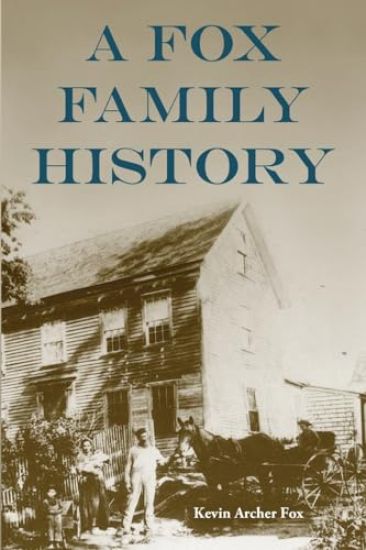
A FOX FAMILY HISTORY: Family History and Genealogy for the Descendants of Archer and Mabel Fox of Wilton, New Hampshire Although the principal audience of the book will be the descendants of Archer and Mabel Fox, it should be of interest to all Foxes descended from Thomas Foxe of Concord and other early New England Foxe immigrants. The book provides an accurate history of the Fox family, from Thomas's birth in London in 1619 to the present. In addition to the well-documented Fox lineage, the book recounts all we know about the author's maternal forbears of both Swiss (Weibel /Steinman) and Irish (Reardon/Higgins/Murphy) ancestry. The first 300 years' history of this Fox family in America is assimilated from various sources. Questions regarding Thomas Foxe's English roots, his first wife Rebecca's real surname (not "Wheat"), his possible kinship to Thomas Foxe of Cambridge and Richard Foxe of Glastonbury, and our alleged descent from the martyrologist John Foxe, are discussed.
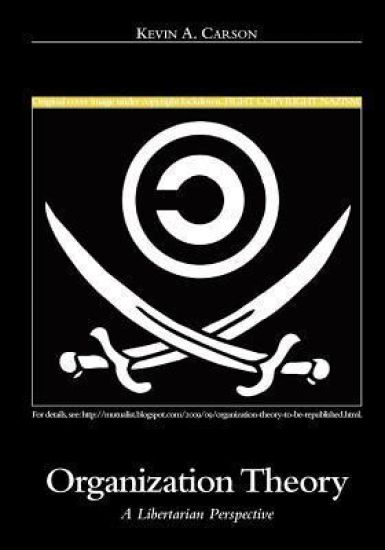
This book applies the economic principles of individualist anarchism, as developed in Studies in Mutualist Political Economy, to the study of the large organization. It integrates the insights of mainstream organization theory into that framework, along with those of more radical thinkers like Ivan Illich, Paul Goodman, and R.A. Wilson.Part One examines the ways in which state intervention in the market, including subsidies to the inefficiency costs of large size and regulatory protection against the competitive consequences of inefficiency, skews the size of the predominant business artificially upward to an extent that simply could not prevail in a free market. Part Two examines the effects of such large organizational size on the character of the system as a whole. Part Three examines the internal pathologies and contradictions of organizations larger than a free market could support. And Part Four surveys the potential building blocks of an alternative, decentralized and libertarian economic order.
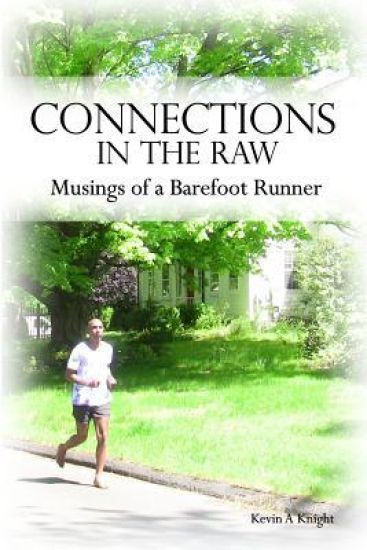
After reading a book about barefoot running, Kevin A Knight began barefoot running as a way to reduce pain in his hip and back. Not only did the pain go away, but he gained wonderful insights while he ran. In Connections in the Raw, Kevin chronicles stories and insights from years of barefoot running. Kevin shares his perspective that deep connections exist in our lives between us and the Creator, other people, and with nature, and that we all have access to wisdom that is rewarded to all who will listen. Readers interested in running and barefoot running will be enlightened, but even non-running readers will be moved by his reflections on the challenges and delights of feeling his feet on pavement. Knight hopes readers will come away with a new understanding of the wonders of creation and be inspired to listen for what it might tell them. He also hopes it encourages readers to get out and run - with or without shoes on. About the Author About the Author Kevin A Knight fits the definition of a Renaissance man. He found his own company and serves as an independent marketing research consultant to many leading global corporations. He is passionate about education reform, specifically in underserved communities. He has sat on the boards of various schools and spends most Friday mornings reading to third- and fourth-graders at a school near his home in Norwalk, Connecticut. He believes nothing keeps one grounded like visiting schools and interacting with young people. He has been a vegetarian for over three decades and loves running (of course), reading, martial arts, sports, and the theater. He is active in his church and facilitates a Bible study group and teaches Sunday school. Kevin is married to his wonderful, giving wife who is a marriage and family therapist, and they have three adult children, who occasionally go for a run with him--wearing shoes.
This is a story about Peggy and Roger. A young married couple who want to own a home yet have poor credit. One night they discover creative forms of real estate and attend a seminar on lease options. They knew nothing about this before and now are learning everything about this area. You can come along on their ride to discover how you can buy a home with "little, no, or bad credit".
Take a journey with a senior newlywed couple on their life altering move to Costa Rica. Get into their heads to understand why they decided to change their lives completely and all the things they had to do to make the move a success. Enjoy following them to romantic secluded beaches, Wildlife Parks and waterfalls. Visit the country's antiquities gold museum, have lots of laughs at their expense as they find themselves in precarious situations all over Costa Rica. Follow them as they assimilate into Costa Rican society during their first two years of living there. Bonus chapters include poems Kevin has written over the years.
"A Concise Guide to Your Rights in the Catholic Church" decodes complex Roman Catholic Church law and doctrine into a practical, sound reference book. It familiarizes Catholics with the rights and obligations written into Church law for all its members while outlining the procedures in place for vindicating these rights.
A Comprehensive 5 Stage Business Plan for Reviving the Economic prosperity of Black Communities in America Like my Hometown of Flint MichiganBlack Americans are Taxed everyday of our lives and most of that tax revenue does not return to aid our communities in any positive way. Payroll, state, county, city, property, retail taxes and more... are paid by Black Americans on a yearly basis.This story paints a dark portrait of our economic conditions currently and suggests limitations for our future revival. However, like many things in life..." the darkness actually aids us .......in finding the light in the room".What if we can use A Black Tax...in a positive way? Yes...I am proposing a Self imposed - tax ....offered by a Nation that demonstrates a love for others and community... above individual attainment "Let's rebuild our own communities" My humble suggestion to immediately change the economic conditions of the Black Community .......is to Tax Ourselves. We must create the revenue needed for Macro -economic change to Black Communities across America and eventually to the world Useless political rallies and political Rhetoric will never change our condition To think that one day..another race of people, is going to have a reversal of direction and give us what we need thru Politics or Government benefits is insane.Insane because..how many times do we have to keep trying the same old plan, and expecting a different outcome? It's not as if we don't want to do something different. The truth is...nobody has a concrete Macro-economic plan to achieve our goals If u don't believe me, then do as I've done, and research it for yourself. Set appointments to meet local leaders, politicians, Pastors, organizations and others..to ask them about a plan.It's easy to point fingers at others, and blame them for our lack of progress today. Again....Our unique history has been well documented by many authors, yet where are the detailed action plans for moving forward? Black Tax is not a new concept entirely But then again...the Bible says that there are "No New Things under the Sun".. What once was..will be again.I have researched many investment groups around the country. It is So exciting to see .....the dawning of the Collective Awakening taking place in our communities My personal view of these groups is that though the concept of Group Economics is "the Solution" for our Community Economic Revival, it must be simple enough for the participants to understand and affordable for all who want to help.Black Tax is a simple plan that allows individuals to invest as low as $100 in a needed community project, yet have equal power within the investment groups Many times when considering a project involving investments, the poor and disadvantaged have no ability to participate For black Tax...you may only buy one share of stock per project. So No-One has any power over anyone else and stock options may only be transferred via family inheritance.What do you think the Stock Market is? What do you think Mutual Funds are? What do you think foreign investment groups are? What do you think Communities like "Tulsa Black Wall Street" and "The Ninth Street Business District" here in Arkansas were building ....before their destruction by angry White Terrorist Mobs?Why were white people so mad, and why did they have to destroy these communities in the late 1800's? Because they saw that Black America had finally figured it out...that the only true social right respected in this country is Capitalism Black buying power has surpassed Trillions of dollars in 2018, yet what good is that if we aren't on the receiving end of that revenue.In fact our contribution to Economies both here and around the world greatly outweigh our percentage of the population racially.Think about it......just by investing an amount that most of us freely Spent this past weekend..... we have the opportunity to demonstrate the Depth of our love for each other and community
This book explores the theory and practice of Victorian liberal parenting by focusing on the life and writings of John Morley, one of Britain’s premier intellectuals and politicians. Reading Morley’s published works—much of which explicitly or implicitly addresses this relationship—with and against other writings of the period, and in the context of formative circumstances in his own life, it explores how living one’s life as a liberal extended to parenting. Although Victorian liberalism is currently undergoing reappraisal by scholars in the disciplines of literature and history, only a handful of studies have addressed its implications for intimate personal relations. None have considered the relationship of parent and child. Four of the chapters document how John Morley was parented and how he defined himself as a parent, based on newly available archival materials. Two other chapters analyze his many writings on or concerned with parenting and parenthood.
This book explores the theory and practice of Victorian liberal parenting by focusing on the life and writings of John Morley, one of Britain’s premier intellectuals and politicians. Reading Morley’s published works—much of which explicitly or implicitly addresses this relationship—with and against other writings of the period, and in the context of formative circumstances in his own life, it explores how living one’s life as a liberal extended to parenting. Although Victorian liberalism is currently undergoing reappraisal by scholars in the disciplines of literature and history, only a handful of studies have addressed its implications for intimate personal relations. None have considered the relationship of parent and child. Four of the chapters document how John Morley was parented and how he defined himself as a parent, based on newly available archival materials. Two other chapters analyze his many writings on or concerned with parenting and parenthood.
This book investigates the situated (re)production of categories, from the most mundane and unremarkable to those most strongly associated with power and privilege. By examining the reciprocal relationships between categorial phenomena and the basic structures and practices of social interaction, the book provides a new framework for integrating conversation analysis and membership categorization analysis.Across its ten chapters, the book describes a conversation analytic approach to studying categories and categorization, charts the development and history of membership categorization analysis, and addresses core methodological challenges and practices associated with using this approach. After mapping out the new framework developed in the book, each chapter describes intersections between categorial phenomena and the domains that comprise the infrastructure of social interaction. The book concludes by exploring applications, interventions, and impacts of understanding categories in ways examined across the preceding chapters, and by considering future avenues for excavating categorial practices in the ordinary, institutional, and technological settings of human social life.Categories in Social Interaction is essential reading for social scientists with an interest in categories of people and categorizing practices, and especially for practitioners and students of conversation analysis, membership categorization, ethnomethodology, and discursive psychology.
This book investigates the situated (re)production of categories, from the most mundane and unremarkable to those most strongly associated with power and privilege. By examining the reciprocal relationships between categorial phenomena and the basic structures and practices of social interaction, the book provides a new framework for integrating conversation analysis and membership categorization analysis.Across its ten chapters, the book describes a conversation analytic approach to studying categories and categorization, charts the development and history of membership categorization analysis, and addresses core methodological challenges and practices associated with using this approach. After mapping out the new framework developed in the book, each chapter describes intersections between categorial phenomena and the domains that comprise the infrastructure of social interaction. The book concludes by exploring applications, interventions, and impacts of understanding categories in ways examined across the preceding chapters, and by considering future avenues for excavating categorial practices in the ordinary, institutional, and technological settings of human social life.Categories in Social Interaction is essential reading for social scientists with an interest in categories of people and categorizing practices, and especially for practitioners and students of conversation analysis, membership categorization, ethnomethodology, and discursive psychology.
Alternatives to Domestic Violence, fifth edition, is an interactive treatment workbook designed for use with a wide variety of accepted curricula for intimate partner violence intervention programs. The new edition adds and revises the exercises and stories in every chapter, covering important areas including respect and accountability, maintaining positive relationships, parenting, substance abuse, and sexuality. Innovative chapters explore parenting, religion, communication, and substance abuse, and deepen readers’ understanding of controlling behavior. Chapters incorporate discussion of digital and internet-based abuse, and a new "Voice of My Partner" exercise has been added to core chapters to encourage group members to explore the impact of their behavior and learn and practice empathy-focused skills. Continuing the tradition of past editions, this edition not only focuses on the content of a good BIPP curriculum, but it also stresses the group process elements that form the backbone of any quality approach.Intimate partner violence group leaders and members will find this workbook to be a vital resource for adopting new strategies to lead a life of cooperation and shared power.
Alternatives to Domestic Violence, fifth edition, is an interactive treatment workbook designed for use with a wide variety of accepted curricula for intimate partner violence intervention programs. The new edition adds and revises the exercises and stories in every chapter, covering important areas including respect and accountability, maintaining positive relationships, parenting, substance abuse, and sexuality. Innovative chapters explore parenting, religion, communication, and substance abuse, and deepen readers’ understanding of controlling behavior. Chapters incorporate discussion of digital and internet-based abuse, and a new "Voice of My Partner" exercise has been added to core chapters to encourage group members to explore the impact of their behavior and learn and practice empathy-focused skills. Continuing the tradition of past editions, this edition not only focuses on the content of a good BIPP curriculum, but it also stresses the group process elements that form the backbone of any quality approach.Intimate partner violence group leaders and members will find this workbook to be a vital resource for adopting new strategies to lead a life of cooperation and shared power.
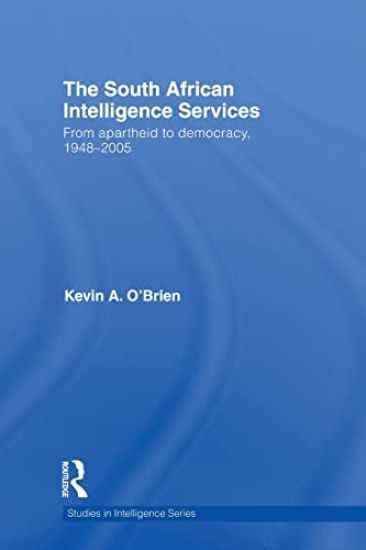
This book is the first full history of South African intelligence and provides a detailed examination of the various stages in the evolution of South Africa’s intelligence organizations and structures.Covering the apartheid period of 1948-90, the transition from apartheid to democracy of 1990-94, and the post-apartheid period of new intelligence dispensation from 1994-2005, this book examines not only the apartheid government’s intelligence dispensation and operations, but also those of the African National Congress, and its partner, the South African Communist Party (ANC/SACP) – as well as those of other liberation movements and the ‘independent homelands’ under the apartheid system. Examining the civilian, military and police intelligence structures and operations in all periods, as well as the extraordinarily complicated apartheid government’s security bureaucracy (or 'securocracy') and its structures and units, the book discusses how South Africa’s Cold War ‘position’ influenced its relationships with various other world powers, especially where intelligence co-operation came to bear. It outlines South Africa’s regional relationships and concerns – the foremost being its activities in South-West Africa (Namibia) and its relationship with Rhodesia through 1980.Finally, it examines the various legislative and other governance bases for the existence and operations of South Africa’s intelligence structures – in all periods – and the influences that such activities as the Rivonia Trial (at one end of the history) or the Truth and Reconciliation Commission (at the other end) had on the evolution of these intelligence questions throughout South Africa’s modern history.This book will be of great interest to all students of South African politics, intelligence studies and international politics in general.
This book is the first full history of South African intelligence and provides a detailed examination of the various stages in the evolution of South Africa’s intelligence organizations and structures.Covering the apartheid period of 1948-90, the transition from apartheid to democracy of 1990-94, and the post-apartheid period of new intelligence dispensation from 1994-2005, this book examines not only the apartheid government’s intelligence dispensation and operations, but also those of the African National Congress, and its partner, the South African Communist Party (ANC/SACP) – as well as those of other liberation movements and the ‘independent homelands’ under the apartheid system. Examining the civilian, military and police intelligence structures and operations in all periods, as well as the extraordinarily complicated apartheid government’s security bureaucracy (or 'securocracy') and its structures and units, the book discusses how South Africa’s Cold War ‘position’ influenced its relationships with various other world powers, especially where intelligence co-operation came to bear. It outlines South Africa’s regional relationships and concerns – the foremost being its activities in South-West Africa (Namibia) and its relationship with Rhodesia through 1980.Finally, it examines the various legislative and other governance bases for the existence and operations of South Africa’s intelligence structures – in all periods – and the influences that such activities as the Rivonia Trial (at one end of the history) or the Truth and Reconciliation Commission (at the other end) had on the evolution of these intelligence questions throughout South Africa’s modern history.This book will be of great interest to all students of South African politics, intelligence studies and international politics in general.