
Kirjahaku
Etsi kirjoja tekijän nimen, kirjan nimen tai ISBN:n perusteella.
1000 tulosta hakusanalla Kevin C

The Hatfield & McCoy Feud after Kevin Costner: Rescuing History
Tom E. Dotson
Createspace Independent Publishing Platform
2013
nidottu
The story of the Hatfields and McCoys, as presented in books newspapers and cinema is largely fiction. It is legends and lies and not history, consisting of a few historical events inside several layers of tall tales and fables reported by the yellow journalists of the late nineteenth century. Almost all the actual events occurred in Pike County, Kentucky, where this author was born in 1940. The feud story came to us by way of big city newspaper reporters who visited Pikeville Kentucky shortly after the last feud violence, in 1888. With a plethora of fictional additions by various writers, the story remained much as it was in 1888, until this book The Pikeville stories were manufactured by men who had two primary goals: 1) They wanted to see a story published which would facilitate the conviction of Wall Hatfield and the other eight members of the Hatfield faction who were in jail in Pikeville, and, 2) They wanted to justify the two cold-blooded murders that had been committed only days before the reporters arrived by a gang organized by the same men who gave the reporters the story. It is impossible to overstate the importance of the fact that none of the original feud story, which forms the basis for all the succeeding iterations, was taken from the actual record. It is all hearsay, and the hearsay came from the most prejudiced sources imaginable. The Pikeville elite not only had "a dog in the fight," they had the whole damn pack in it. The same moneyed interests that owned the newspapers also wanted the vast mineral riches underlying the land occupied by the Hatfields and McCoys, and their reporters' depictions of the people of Tug Valley as immoral and violent barbarians helped to make the swindle more palatable to the public. The Hatfield and McCoy feud is probably unique among all the events in history in that writers of feud-based fiction are more constrained than are writers of feud history. The good fiction writer is always careful to avoid writing something that is patently impossible. A fiction writer would never say that twelve hundred people regularly attended a church in an isolated mountain hollow that had only two dozen members. A "True Story" of the feud, can say that and still have reviewers from prestigious media organs laud its factual accuracy. As fiction can be made just as exciting as the screenwriter or author desires, the 2012 TV epic, "Hatfields & McCoys," and the recent fictional 'history'' books are great entertainment, but they are not history. Some of the books that followed the 2012 Kevin Costner movie contain an even greater ratio of fable to facts than did the movie. With a rare combination of facts and humor, this author calls them all to task. Tom E. Dotson, holder of a Cornell masters degree in labor history, is descended from both the Hatfields and McCoys. Having heard the events described by eyewitnesses while growing up on Blackberry Creek, and, having spent over two thousand hours in the courthouses and archives, Mr. Dotson corrects the record--using the records.

Chihuahua Kev was rescued from unknown circumstances and adopted into what he hopes will be his 'forever home'. Since moving in he has come to realise that much could depend on his behaviour and therefore has set out to analyse his own conduct to help learn how to avoid offending. Sharing a home with another dog has in itself produced problems that have had to be neutralised for the sake of apparent harmonious living. His ultimate aim is to be top dog in the pack, being his current family, but he knows this must be achieved without the others being aware of what is happening. Kevin wants to share his life and experiences and has, with help, assembled this, his autobiography. In the hope it will serve to enlighten and entertain its readers and, maybe, their canine companions.

The Baltic States of Estonia, Latvia, and Lithuania are thriving after hundreds of years of German colonization, numerous wars of conquest, and demographic Russification. Their cultures have survived, perhaps through a conscious effort to sustain many of their most ancient customs and traditions. Though the Baltic States are responding to modern and postmodern international trends, contemporary developments in the region's cultural life are part of an ongoing conversation about the way in which the Balts understand their histories, destinies, and national identities. This timely overview of the reemerging states portrays the Estonians, Latvians, and Lithuanians as they see themselves—through a historical lens.The Baltic States of Estonia, Latvia, and Lithuania are thriving after hundreds of years of German colonization, numerous wars of conquest, and demographic Russification. Their cultures have survived, perhaps through a conscious effort to sustain many of their most ancient customs and traditions. Though the Baltic States are responding to modern and postmodern international trends, contemporary developments in the region's cultural life are part of an ongoing conversation about the way in which the Balts understand their own histories, destines, and national identities. This timely overview of the reemerging states portrays the Estonians, Latvians, and Lithuanians as they see themselves—through a historical lens.The approach in each of the topical chapters is to generalize what is common among the three states and then to focus on each country in turn. Chapters on the land, people, and history; religion; marriage, family, gender, and education; holidays, cuisine, and leisure activities; language, folklore, and literature; media and cinema; performing arts; and art are a superb introduction to the Baltics and to the unique aspects of the countries. Lithuania's culture has been heavily influenced by Poland, and the capital, Vilnius, was a thriving center of Jewish learning until the Nazi years. Latvia is the most ethnically diverse and Russian-influenced. Estonia sees itself as a European country, indeed, Scandinavian.

Flap Reconstruction of the Traumatized Upper Extremity, An Issue of Hand Clinics
Kevin C. Chung
Elsevier - Health Sciences Division
2014
sidottu
This issue of Hand Clinics will focus on flap reconstruction. Flap reconstruction is a very large part of upper extremity surgery following a traumatic injury. This issue will cover the entire process including anatomy, decision-making strategies on where to source/harvest flaps, and a large number of papers tailored to specific surgical procedures: different parts of the hand and upper extremity, pediatric reconstruction, and aesthetics.

Preventing and Avoiding Complications in Hand Surgery, An Issue of Hand Clinics
Kevin C. Chung
Elsevier - Health Sciences Division
2015
sidottu
Complications of hand injuries are very common, and the primary goal of the treatment of hand trauma is simply that of avoiding complications. They can be considered to be complications of missed diagnoses, complications of treatment, or complications of injuries.

Optimizing the Treatment of Upper Extremity Injuries in Athletes, An Issue of Hand Clinics
Kevin C. Chung
Elsevier - Health Sciences Division
2017
sidottu
This volume on athletic injury is timely because it addresses many types of sports injuries and focuses not only on the treatments of these injuries, but also their prevention. The first paper was written after an extensive interview with the coaches of one of the most recognized football programs in the country. Dr. Kevin Chung's interviews with the Head and Assistant Coaches at the University of Michigan, Jim Harbaugh and Jedd Fisch, provided thoughtful insight on preventing sports injuries in the professional and college athletics.

Current Concepts in the Management of Proximal Interphalangeal Joint Disorders, An Issue of Hand Clinics
Kevin C. Chung
Elsevier - Health Sciences Division
2018
sidottu
This issue of Hand Clinics, guest edited by series consulting editor Dr. Kevin Chung, will cover Current Concepts in the Management of Proximal Interphalangeal Joint Disorders. Topics discussed in the volume include: Anatomy and biomechanics of the finger proximal interphalangeal joint; Surgical exposure of the proximal interphalangeal joint; Treating proximal interphalangeal joint dislocations; Management of proximal interphalangeal joint fracture dislocations; Proximal interphalangeal joint fusion: indications and techniques; Implant arthroplasty: selection of exposure and implant; Salvaging a failed proximal interphalangeal joint implant; Treatment of proximal interphalangeal joint contracture; Treating congenital proximal interphalangeal joint contracture; Complications of proximal interphalangeal joint injuries: prevention and treatment; and Therapy concepts for the proximal interphalangeal joint, among others.

Repairing and Reconstructing the Hand and Wrist, An Issue of Clinics in Podiatric Medicine and Surgery
Kevin C. Chung
Elsevier - Health Sciences Division
2019
sidottu
This issue of Clinics in Plastic Surgery, Guest Edited by Dr. Kevin C. Chung, is devoted to Repairing and Reconstructing the Hand and Wrist. This issue will cover both soft tissue and the bone and joint. Articles in this issue include: Approach to Fingertip Injuries; Soft Tissue Coverage of the Digits and Hands; Nerve Compression in the Upper Limb; Flexor Tendon Injuries; Tendon Transfers for Peripheral Nerve Palsies; Tendinopathy; Managing Swan-Neck and Boutonniere Deformities; The Pathogenesis and Treatment of the Stiff Digit; Nerve Tumors of the Upper Extremity; Managing Mutilating Hand Injuries; Efficiency in Digital and Hand Replantation; Hand Infections; Management of Extensor Tendon Injuries After the Flexor Tendon; Thumb Basal Joint Arthritis; Principles of Phalangeal and Metacarpal Fracture Treatment; Pediatric Hand and Wrist Fractures; Injuries Around the Proximal Interphalangeal Joint; Treatment of Carpal and Distal Radioulnar Joint Instability; Common Carpal Bone Fractures; Joint Fusion and Arthroplasty in the Hand; and Treatment of Common Congenital Hand Conditions.
American merchants established trading firms in the ports of Yokohama, Kobe and Nagasaki which operated from 1859-1899 until the repeal of the Unequal Treaties. Members of a privileged, semi-colonial community, the merchants formed the largest group of Americans in 19th century Japan. In this first book-length treatment of this group, Kevin Murphy explores their interactions with the Japanese in the treaty port system, how the Japanese leadership manipulated them to its own ends, and how the merchants themselves defined the limitations of American business in Japan through their ambiguous but deep concern with order and opportunity, restraint and dominance, and conservatism and dominance.

American merchants established trading firms in the ports of Yokohama, Kobe and Nagasaki which operated from 1859-1899 until the repeal of the Unequal Treaties. Members of a privileged, semi-colonial community, the merchants formed the largest group of Americans in 19th century Japan. In this first book-length treatment of this group, Kevin Murphy explores their interactions with the Japanese in the treaty port system, how the Japanese leadership manipulated them to its own ends, and how the merchants themselves defined the limitations of American business in Japan through their ambiguous but deep concern with order and opportunity, restraint and dominance, and conservatism and dominance.
The Easiest, Fastest and Cheapest way to achieve Crystal Clear Water. Every fish keepers first priority is the health and happiness of their fish. But their second is having a beautiful looking fish tank Ever wondered how some aquariums have crystal clear water but you just can't get yours that clear? Well it's pretty simple to achieve With a few tweaks to some errors that most beginners make and a few implementations of effective tools you can easily have crystal clear aquarium water.
Managing Information in Complex Organizations
Kevin C. Desouza; Tobin Hensgen
Routledge
2004
sidottu
This seminal work presents an effective design for processing information through five stages from data to actionable knowledge in order to influence behavior within organizations. The authors incorporate such concepts as evolution, semiotics, entropy, complexity, emergence, crisis, and chaos theory in an intriguing alternative to crisis management that can be applied to any organization. Their model shows how to evaluate and share information to enable the organization to avoid disaster rather than simply respond to it. Additionally, the text presents the first attempt at a multi-disciplinary view of information processing in organizations by tying associated disciplines to their respective impacts on the information process. Illustrations used in the text include an overlay that demonstrates how the non-use of information between agencies contributed to the 9/11 disaster, and an appendix addresses Organizing for Cyberterrorism.

Managing Information in Complex Organizations
Kevin C. Desouza; Tobin Hensgen
Routledge
2005
nidottu
This seminal work presents an effective design for processing information through five stages from data to actionable knowledge in order to influence behavior within organizations. The authors incorporate such concepts as evolution, semiotics, entropy, complexity, emergence, crisis, and chaos theory in an intriguing alternative to crisis management that can be applied to any organization. Their model shows how to evaluate and share information to enable the organization to avoid disaster rather than simply respond to it. Additionally, the text presents the first attempt at a multi-disciplinary view of information processing in organizations by tying associated disciplines to their respective impacts on the information process. Illustrations used in the text include an overlay that demonstrates how the non-use of information between agencies contributed to the 9/11 disaster, and an appendix addresses Organizing for Cyberterrorism.
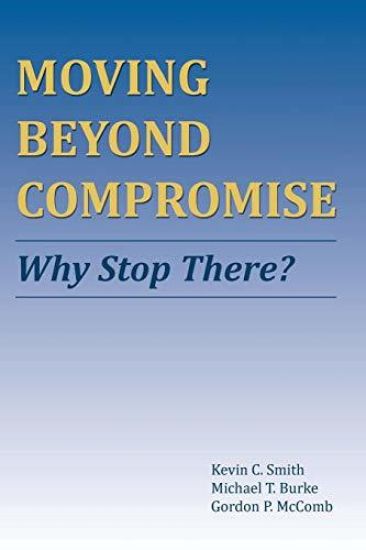
Moving Beyond Compromise: Why Stop There?
Kevin C. Smith; Michael T. Burke; Gordon P. McComb
Counsel Publishing, LLC
2016
nidottu
The process of making decisions is integral to life. We make decisions every day, from what to have for breakfast to critical issues of life and business. When two or more people are involved in making those decisions, the process often involves "compromise" and can be complicated by the basic give-and-take and trade-offs that are associated with this approach. Webster's New Twentieth Century Dictionary of the English Language defines compromise in this way: A settlement in which each side gives up some demands or makes concessions An adjustment of opposing principles, systems, etc., in which part of each is given up The result of such an adjustment or settlement Something midway between different things A laying open to danger, suspicion, or disrepute, as a compromise of one's good name, or; to surrender or give up (one's interest, principles, etc.) Compromise necessarily, then, leads to a result that has the great risk of being suboptimal because the concessions made can easily preclude consideration of alternatives and important viewpoints. One of the factors that those who promote compromise as a means of making decisions use as justification is that each side gives up something they want, and thus each side can "live with" the result. In reality, neither side will give up something critically important to them while expecting the other to do just that. The end result is often that either no decision or agreement can be reached or one or both of the parties is unhappy with the result. Too frequently, the ultimate result is failure because one or both parties do not fully support the agreement, which becomes more likely if one party feels it gave more than the other or had to give up something related to its principles or best interest. In an increasingly complex world, compromise is not the best way to reach decisions. An approach that fully and objectively examines all points of view and ideas is needed to arrive at workable solutions to problems and issues as diverse as those we see in the world today. Anyone who has worked inside any company, large or small, knows that it is often very challenging to make decisions. Different personalities, diverse interactions, company politics, and even social, political, and economic philosophies present barriers to agreement. Add to that the basic competitive nature of human beings and the result can be a bubbling stewpot of rancor, foxhole-digging, foot-dragging, backbiting, criticism, individual conflict, and an attitude of an "I win, you lose" zero-sum game that leads to, at best, nonoptimal decisions and at worst, paralysis and no decisions at all. This description applies to virtually any type of organization, not just the corporate setting. It can be seen in organizations, nonprofits, politics, families, churches, schools, and any other setting in which a group of people, whether it be two or many, must meet and make decisions on any topic. All of us have seen the results of committee deliberations aimed at making decisions in a number of these seemingly different settings. Quite often, when we watch the process, we understand the saying that "A committee is a cul-de-sac down which ideas are lured and then quietly strangled." The three authors have worked in a variety of different companies and noncorporate settings, including small local companies (fewer than 10 employees) to very large multinational corporations; they have been a part of boards of directors and trustees of nonprofits, school and church groups, neighborhood organizations, and others. They have all had the (mis)fortune of serving on committees charged with making decisions ranging from purchasing equipment to basic corporate strategy for international product development.


Impact of Technology on the Command, Control, and Organizational Structure of Insurgent Groups
Kevin C Leahy
Biblioscholar
2012
pokkari
Reconstruction Algorithm Characterization and Performance Monitoring in Limited-Angle Chromotomograhy
Kevin C Gustke
Biblioscholar
2012
pokkari