Kirjojen hintavertailu. Mukana 11 627 374 kirjaa ja 12 kauppaa.

Kirjahaku

Etsi kirjoja tekijän nimen, kirjan nimen tai ISBN:n perusteella.

1000 tulosta hakusanalla Kevin C Sudeith

Undertaking Discourse Analysis for Social Research

Undertaking Discourse Analysis for Social Research

Kevin C. Dunn; Iver B. Neumann

The University of Michigan Press
2016
nidottu
Kevin C. Dunn and Iver B. Neumann offer a concise, accessible introduction to discourse analysis in the social sciences. A vital resource for students and scholars alike, Undertaking Discourse Analysis for Social Research combines a theoretical and conceptual review with a “how-to” guide for using the method. In the first part of the book, the authors discuss the development of discourse analysis as a research method and identify the main theoretical elements and epistemological assumptions that have led to its emergence as one of the primary qualitative methods of analysis in contemporary scholarship. Then, drawing from a wide-range of examples of social science scholarship, Dunn and Neumann provide an indispensable guide to the variety of ways discourse analysis has been used. They delve into what is gained by using this approach and demonstrate how one actually applies it. They cover such important issues as research prerequisites, how one conceives of a research question, what “counts” as evidence, how one “reads” the data, and some common obstacles and pitfalls. The result is a clear and accessible manual for successfully implementing discourse analysis in social research.
Undertaking Discourse Analysis for Social Research

Undertaking Discourse Analysis for Social Research

Kevin C. Dunn; Iver B. Neumann

The University of Michigan Press
2016
sidottu
Kevin C. Dunn and Iver B. Neumann offer a concise, accessible introduction to discourse analysis in the social sciences. A vital resource for students and scholars alike, Undertaking Discourse Analysis for Social Research combines a theoretical and conceptual review with a “how-to” guide for using the method. In the first part of the book, the authors discuss the development of discourse analysis as a research method and identify the main theoretical elements and epistemological assumptions that have led to its emergence as one of the primary qualitative methods of analysis in contemporary scholarship. Then, drawing from a wide-range of examples of social science scholarship, Dunn and Neumann provide an indispensable guide to the variety of ways discourse analysis has been used. They delve into what is gained by using this approach and demonstrate how one actually applies it. They cover such important issues as research prerequisites, how one conceives of a research question, what “counts” as evidence, how one “reads” the data, and some common obstacles and pitfalls. The result is a clear and accessible manual for successfully implementing discourse analysis in social research.

Crystal Clear Aquarium Water

Crystal Clear Aquarium Water

Kevin C Matos

Kaveman Aquatics, Inc.
2021
pokkari
The Easiest, Fastest and Cheapest way to achieve Crystal Clear Water. Every fish keepers first priority is the health and happiness of their fish. But their second is having a beautiful looking fish tank Ever wondered how some aquariums have crystal clear water but you just can't get yours that clear? Well it's pretty simple to achieve With a few tweaks to some errors that most beginners make and a few implementations of effective tools you can easily have crystal clear aquarium water.
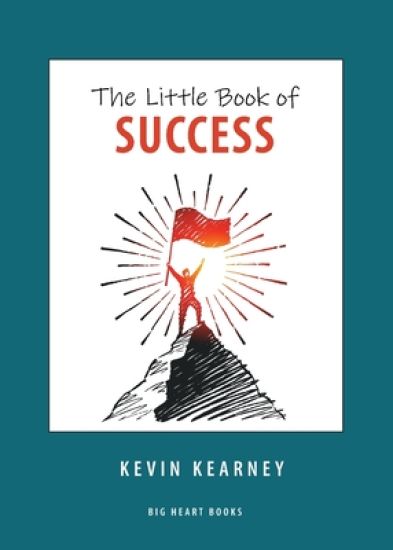
The Little Book of Success

The Little Book of Success

Kevin C. Kearney

Big Heart Books
2019
nidottu
This is the book I wish I had when I was younger. It is for both the young getting started in their career and those who find themselves in transition mid-stream. Success does not have to be complicated or overwhelming. It is showing up each day and giving it your best, improving yourself daily, being patient with your growth and being grateful for what you have. This is my attempt at a winning formula to get you going. Enjoy the journey.
[Your Name]

[Your Name]

Kevin C. Pattison

Global Stabilized Energy LLC
2020
nidottu
yourname.blog I know there are more ways to see God then just faith alone for some the intellectual if they see it, it will be the scientific proof for His (Gods) existences, for the religious it is the completed Bible guided by the Universe to end up where God and self are one by education too For the spiritual it is knowing God from within (not thinking you know or believing you know but when you "know" it is right gods way it JUST IS correct) all together to know how the Universe works. It is One God, One Love and One truth to have all the knowledge in the Universe and live in one reality all together Gods reality or the same as what could be our reality what is the small part in all of us on our spiritual side. We are able to have the way with the right formula to find the whole truth to set us free by using the four truths 1. Man 2. Woman 3. God 4. Human simultaneously together to find the one truth per issue. God is education by the whole truth (not partial truths like the church teaches unknowingly) when using the parallel universe for the part of God that can be split, separated and divided up explaining why when and how God is the way for knowledge in all thing and living things that which is inside all of us (we can get to with the right teachings). I would like to unite the professionals in their related fields to open their minds all together as one to define God as it is not all in this book.
General Walter Krueger

General Walter Krueger

Kevin C. Holzimmer

University Press of Kansas
2007
sidottu
He made his name in the jungles of the Pacific theater, was featured on the cover of ""Time"" magazine, was tapped by Douglas MacArthur to lead the invasion of Japan, and made crucial contributions to the army's tactical and operational doctrine. Yet General Walter Krueger is still one of the least-known army commanders of World War II. Kevin Holzimmer's book resurrects the brilliant career of this great military leader while deepening our understanding of the Pacific War. As head of the Sixth U.S. Army, Krueger exemplified the art of command at the operational level of war and played a pivotal role in the defeat of Japan that until now has not been fully recognized. To the public he was a ""mystery man,"" and his abrasive personality may have sometimes caused problems for MacArthur, but his commander credited him as ""swift and sure in attack, tenacious and determined in defense, modest and restrained in victory."" And although Krueger left no diaries or memoirs - and stubbornly refused to record many of his personal views - Kevin Holzimmer has mined military archives on Krueger and his Sixth Army to produce a compelling biography that finally acknowledges his importance. Holzimmer first analyzes the experiences of Krueger's prewar career: testing the triangular infantry division in the late 1930s, serving in the War Plans Division, and participating in peacetime maneuvers. This training prepared him for the challenges of command in the Pacific, where he successfully forged and led a large combined-arms effort that effectively integrated infantry, armor, artillery, naval, and air forces. Holzimmer then details Krueger's remarkable leadership in the military campaigns against the Japanese. By placing Krueger's philosophy of command within the context of evolving military doctrine, Holzimmer shows how he produced tough victories against a determined enemy in an enormously difficult war zone. Unlike some overly cautious commanders of the war, Krueger was aggressive when the situation dictated, and even MacArthur admitted that ""history has not given him due credit for his greatness."" By showing how he breathed life into Pacific war strategy and made sure it was executed successfully, this book gives him that credit and fills a glaring gap in American military history.
The Nature Study Movement

The Nature Study Movement

Kevin C. Armitage

University Press of Kansas
2009
sidottu
Beginning in the late nineteenth century, thousands of Americans turned to an unexpected pastime that had been theirs to take up all along: the study of nature. Armed with cameras and collecting jars, everyday citizens wandered the country's forests, prairies, and mountains to gain an appreciation of local flora and fauna and to escape the increasingly industrialized world as well. Kevin Armitage presents the first comprehensive history of the nature study movement, demonstrating its significance to American environmental thought and politics. He shows how nature study, as both a pedagogic and popular idea, has had a lasting effect on American culture and society, and his reevaluation of the movement has much to tell us about the American relationship with the nonhuman world. Armitage explains that the ways in which nature study advocates tried to reconcile science with spirit were surprising, incomplete, and sometimes contradictory. As Progressive Era Americans embraced scientific modernity, they became increasingly uneasy about the dispassionate character of social and economic life, turning to nature for unmediated experiences that might enhance the joy of living. By examining the complex ways American culture struggled with science and its application to the natural world, Armitage shows how the development of nature study reflected the social dynamics of an emerging industrial society - and exerted a decisive influence on some of the great conservationists of the twentieth century, including Aldo Leopold and Rachel Carson, both of whom were encouraged to study nature at an early age. Armitage reveals how nature study advocates, notably progressive educators, devoted themselves to inculcating an appreciation of nature among children through direct contact with the natural world. Indeed, by 1907 ""Nature Study"" had been incorporated into a great many school curricula. He also tells how educators like John Dewey and Booker T. Washington contributed to conservationist thought and includes biographical sketches of some of the major, if often overlooked, nature study conservationists: Anna Botsford Comstock, Ernest Thompson Seton, Mabel Osgood Wright, Gene Stratton Porter, and Liberty Hyde Bailey. The nature study movement left a rich legacy that has been too long overlooked. Armitage shows that the personal study of nature remains central to modern environmentalism - and that in nature study one finds much that is universal to modern America.
General Walter Krueger

General Walter Krueger

Kevin C. Holzimmer

UNIVERSITY PRESS OF KANSAS
2022
nidottu
He made his name in the jungles of the Pacific theater, was featured on the cover of Time magazine, was tapped by Douglas MacArthur to lead the invasion of Japan, and made crucial contributions to the army’s tactical and operational doctrine. Yet General Walter Krueger is still one of the least-known army commanders of World War II. Kevin Holzimmer’s book resurrects the brilliant career of this great military leader while deepening our understanding of the Pacific War.As head of the Sixth U.S. Army, Krueger exemplified the art of command at the operational level of war and played a pivotal role in the defeat of Japan that until now has not been fully recognized. To the public he was a “mystery man,” and his abrasive personality may have sometimes caused problems for MacArthur, but his commander credited him as “swift and sure in attack, tenacious and determined in defense, modest and restrained in victory.” And although Krueger left no diaries or memoirs—and stubbornly refused to record many of his personal views—Kevin Holzimmer has mined military archives on Krueger and his Sixth Army to produce a compelling biography that finally acknowledges his importance. Holzimmer first analyzes the experiences of Krueger”s prewar career: testing the triangular infantry division in the late 1930s, serving in the War Plans Division, and participating in peacetime maneuvers. This training prepared him for the challenges of command in the Pacific, where he successfully forged and led a large combined-arms effort that effectively integrated infantry, armor, artillery, naval, and air forces. Holzimmer then details Krueger’s remarkable leadership in the military campaigns against the Japanese. By placing Krueger's philosophy of command within the context of evolving military doctrine, Holzimmer shows how he produced tough victories against a determined enemy in an enormously difficult war zone. Unlike some overly cautious commanders of the war, Krueger was aggressive when the situated dictated, and even MacArthur admitted that “history has not given him due credit for his greatness.” By showing how he breathed life into Pacific war strategy and made sure it was executed successfully, this book gives him that credit and fills a glaring gap in American military history.
Dublin Tenement Life

Dublin Tenement Life

Kevin C. Kearns

Gill Books
2006
nidottu
This book is totally unique. It is based on the original and wholly authentic testimonies of survivors of the old Dublin tenements. For nearly 150 years, the wretched, squalid tenements of Dublin were widely judged to be the worst slums in all of Europe. By the 1930's, 6400 tenements were occupied by almost 112,000 tenants. Some districts had up to 800 people to the acre, up to 100 occupants in one building and twenty family members crammed into a single tiny room. It was a hard world of hunger, disease, high mortality, unemployment, heavy drinking, prostitution and gang warfare. But despite their hardship, the tenement poor enjoyed an incredibly close knit community life in which they found great security and indeed, happiness. As one policeman recalls from over half a century ago, they were 'extraordinarily happy for people who were so savagely poor'.
In Our Day

In Our Day

Kevin C. Kearns

Gill
2022
sidottu
For over fifty years, Kevin C. Kearns trekked the rough-and-tumble streets of the heart of Dublin, hoping to record and preserve the city’s vanishing oral history. Armed only with a Sony tape recorder, the ordinary people he encountered – street traders, dockers, factory workers, tram drivers, housewives and midwives, children and grandparents – shared private stories of hardship, joy, sorrow, suffering, survival and triumph. In Our Day is the culmination of a life’s work – a treasure trove bursting with whispers from the past – 450 vignettes, memories and recollections gathered to present an evocative, poignant portrait of a forgotten Dublin. ‘Without Kevin, the lives of ordinary decent Dubliners would be forgotten. This book is a celebration of them.’ Joe Duffy
A Year of Glory and Gold

A Year of Glory and Gold

Kevin C. Kearns

Gill
2023
sidottu
The 1930s in Ireland is often remembered as a bleak period of economic stagnation and unemployment. But, 1932, hailed by the Irish Press as a ‘new era’, was an early glimmer of the modernity that Ireland would later reach, with key events including Olympic gold medals and the rise of Jack Doyle, the Eucharistic Congress, a so-called gold rush and the election of Éamon de Valera, all hinting at Ireland’s future success. The soundtrack scoring all this change was the jazz craze, loosening the conservative moral order of the time. Bringing new forms of dress, lifestyle and behaviour, it excited a younger generation for the future, while leaving an older generation wary of such rapid change. A Year of Glory and Gold is an energetic biography of a bright year in Ireland’s history, combining deep archival research with spirited storytelling by one of Ireland’s best-loved social historians.
Gospel According to Star Trek

Gospel According to Star Trek

Kevin C. Neece

Lutterworth Press
2018
nidottu
What's Christian about Star Trek? Nothing. That's the way most people see it and that certainly seems to be the way the franchise is intended. There's no question that the Trek universe is based on a doggedly humanistic worldview and is set in a future time when religion has essentially vanished from Earth. If that's the case, how can there even be a Gospel According to Star Trek? In The Gospel According to Star Trek, you'll discover how the continuing voyages of Kirk and company aboard the Enterprise - from the Original Series to Star Trek Beyond - tell us more about our human quest for God than you ever imagined. You'll learn how Star Trek creator Gene Roddenberry's own spiritual quest informed the franchise, what he and the series really have to say about God and religion, and the amazing image of Christ contained in Star Trek's most popular character. You'll also see how Star Trek can help us recover a deeper, more fully human gospel that embraces our humanity instead of denigrating it and echoes the call of both Spock and Christ: 'Live long and prosper!' (John 10:10).
Intellectuals and Apparatchiks

Intellectuals and Apparatchiks

Kevin C. O'Connor

Lexington Books
2006
sidottu
This book traces the origins and activities of an alliance of conservative Communist Party authorities and Russian nationalists during the late Soviet era. Specifically, it examines how and to what extent hitherto orthodox Communists sought political allies in the Russian nationalist movement in order to garner support for halting the reform program and saving the Soviet state from collapse. Focusing on the perestroika period, Dr. Kevin O'Connor explains in detail how Marxism-Leninsim receded into irrelevance, forcing orthodox Communists to abandon their Marxist principles in favor of great Russian nationalism.
Intellectuals and Apparatchiks

Intellectuals and Apparatchiks

Kevin C. O'Connor

Lexington Books
2008
nidottu
This book traces the origins and activities of an alliance of conservative Communist Party authorities and Russian nationalists during the late Soviet era. Specifically, it examines how and to what extent hitherto orthodox Communists sought political allies in the Russian nationalist movement in order to garner support for halting the reform program and saving the Soviet state from collapse. Focusing on the perestroika period, Dr. Kevin O'Connor explains in detail how Marxism-Leninsim receded into irrelevance, forcing orthodox Communists to abandon their Marxist principles in favor of great Russian nationalism.
Under the Table

Under the Table

Kevin C. Fitzpatrick; Allen Katz

The Lyons Press
2014
sidottu
"I love a martini—But two at the most.Three, I'm under the table;Four, I'm under the host."Raise a glass to Dorothy Parker's wit and wisdom. Kevin C. Fitzpatrick, founder and president of the Dorothy Parker Society, gives us an intoxicating new look at the doyenne of the ripping riposte through the lens she most preferred: the bottom of a glass. A bar book for Parker enthusiasts and literary tipplers alike, Under the Table offers a unique take on Mrs. Parker, the Algonquin Round Table, and the Jazz Age by celebrating the cocktails that she, her bitter friends, and sweetest enemies enjoyed. Each entry of this delicious compendium offers a fascinating and lively history of a period cocktail, a complete recipe, and the characters associated with it. The book also features a special selection of twenty first–century speakeasy-style recipes from the country's top mixologists. Topping it off are excerpts from Parker's poems, stories, and other writings that will allow you to enjoy her world from the speakeasies of New York City to the watering holes of Hollywood.
Beardless Irises

Beardless Irises

Kevin C. Vaughn

Schiffer Publishing Ltd
2015
nidottu
All the information you need to choose, grow, and appreciate the beardless iris—from basic planting information to help beginners, to essential hybridizing details. Beardless irises are cousins of the more familiar bearded irises, but are much more variable, with plants ranging from four-inch-tall dwarfs with tiny flowers to five-foot stalks with dinner-plate-size flowers. In addition, beardless irises of at least one type will grow in virtually every gardening situation from dry shade to standing water in full sun. No other group of perennials offers such versatility. Here, all five major groups are covered in detail: Siberian, Japanese, Pacific Coast Native, spuria, and Louisiana. The garden uses, development of the modern hybrids, and recommended cultures are given for each of the diverse groups of beardless irises. In addition, a separate chapter covers the techniques for creating your own beardless hybrids.
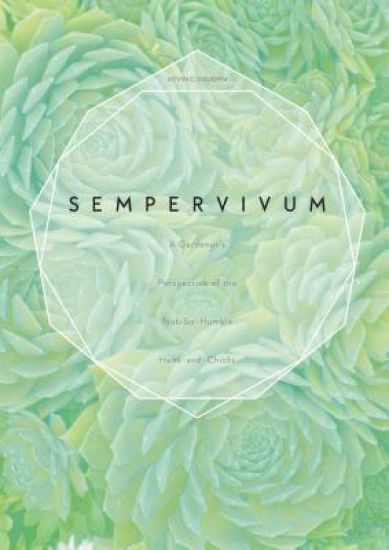
Sempervivum

Sempervivum

Kevin C. Vaughn

Schiffer Publishing Ltd
2018
sidottu
Sempervivum have long fascinated gardeners and are useful plants for gardening situations in which other plants might fail. Many people are aware of only a single, rather uninteresting green cultivar, but selections from the wild and the work of hybridizers have resulted in over 7,000 cultivars with a range in size from 1/2 in. to over one foot in diameter and colors from gold to black. Clearly the gardener has never had a better choice. This book covers all aspects of their history, taxonomy, culture, propagation, hybridizing, people involved in the production of Sempervivum, and a long list of cultivars that are recommended for the gardener. Color illustrations show not only the cultivars, but garden uses and cultural practices.
Managing Information in Complex Organizations

Managing Information in Complex Organizations

Kevin C. Desouza; Tobin Hensgen

Routledge
2004
sidottu
This seminal work presents an effective design for processing information through five stages from data to actionable knowledge in order to influence behavior within organizations. The authors incorporate such concepts as evolution, semiotics, entropy, complexity, emergence, crisis, and chaos theory in an intriguing alternative to crisis management that can be applied to any organization. Their model shows how to evaluate and share information to enable the organization to avoid disaster rather than simply respond to it. Additionally, the text presents the first attempt at a multi-disciplinary view of information processing in organizations by tying associated disciplines to their respective impacts on the information process. Illustrations used in the text include an overlay that demonstrates how the non-use of information between agencies contributed to the 9/11 disaster, and an appendix addresses Organizing for Cyberterrorism.
Managing Information in Complex Organizations

Managing Information in Complex Organizations

Kevin C. Desouza; Tobin Hensgen

Routledge
2005
nidottu
This seminal work presents an effective design for processing information through five stages from data to actionable knowledge in order to influence behavior within organizations. The authors incorporate such concepts as evolution, semiotics, entropy, complexity, emergence, crisis, and chaos theory in an intriguing alternative to crisis management that can be applied to any organization. Their model shows how to evaluate and share information to enable the organization to avoid disaster rather than simply respond to it. Additionally, the text presents the first attempt at a multi-disciplinary view of information processing in organizations by tying associated disciplines to their respective impacts on the information process. Illustrations used in the text include an overlay that demonstrates how the non-use of information between agencies contributed to the 9/11 disaster, and an appendix addresses Organizing for Cyberterrorism.
The Abolitionist Decade, 1829-1838

The Abolitionist Decade, 1829-1838

Kevin C. Julius

McFarland Co Inc
2004
nidottu
The years between America's founding and the cusp of the Civil War are often overlooked in discussions of America's struggle over slavery. The conflagration that nearly destroyed the country did not ignite quickly, but was the culmination of a long-smoldering debate that saw significant developments in those intervening decades. In particular, the period from 1829 to 1838 witnessed the growth of the Abolitionist movement, begun by determined visionaries bent on bringing the evils of slavery to the forefront of America's consciousness and ending a glaring injustice. Attacked by their opponents, scorned by both sides for their missionary zeal, often relegated to a footnote in history, the Abolitionists were key in shaping the argument over slavery and bringing America's greatest internal struggle to its conclusion.This examination of the Abolitionist movement presents a year-by-year outline of the period from 1829 to 1838, chronicling the growth of the Abolitionists as a social and political group. By giving an overview of other important occurrences each year, it depicts the movement in a broader context, cementing relationships between seemingly disparate elements of American history and giving the movement its full due in the struggle to end slavery.