Kirjojen hintavertailu. Mukana 12 539 340 kirjaa ja 12 kauppaa.

Kirjahaku

Etsi kirjoja tekijän nimen, kirjan nimen tai ISBN:n perusteella.

1000 tulosta hakusanalla Kevin Lewis

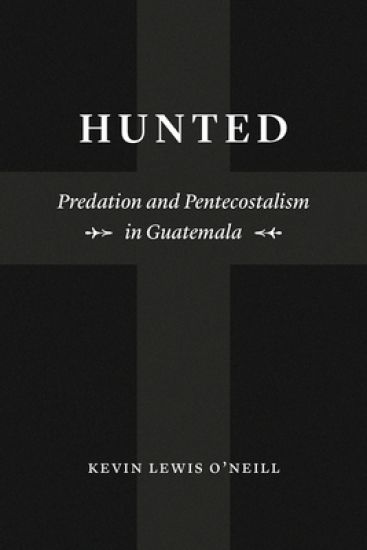
Hunted

Hunted

Kevin Lewis O'Neill

University of Chicago Press
2019
sidottu
“It’s not a process,” one pastor insisted, “rehabilitation is a miracle.” In the face of addiction and few state resources, Pentecostal pastors in Guatemala City are fighting what they understand to be a major crisis. Yet the treatment centers they operate produce this miracle of rehabilitation through extraordinary means: captivity. These men of faith snatch drug users off the streets, often at the request of family members, and then lock them up inside their centers for months, sometimes years.Hunted is based on more than ten years of fieldwork among these centers and the drug users that populate them. Over time, as Kevin Lewis O’Neill engaged both those in treatment and those who surveilled them, he grew increasingly concerned that he, too, had become a hunter, albeit one snatching up information. This thoughtful, intense book will reframe the arc of redemption we so often associate with drug rehabilitation, painting instead a seemingly endless cycle of hunt, capture, and release.
Hunted

Hunted

Kevin Lewis O'Neill

University of Chicago Press
2019
nidottu
“It’s not a process,” one pastor insisted, “rehabilitation is a miracle.” In the face of addiction and few state resources, Pentecostal pastors in Guatemala City are fighting what they understand to be a major crisis. Yet the treatment centers they operate produce this miracle of rehabilitation through extraordinary means: captivity. These men of faith snatch drug users off the streets, often at the request of family members, and then lock them up inside their centers for months, sometimes years.Hunted is based on more than ten years of fieldwork among these centers and the drug users that populate them. Over time, as Kevin Lewis O’Neill engaged both those in treatment and those who surveilled them, he grew increasingly concerned that he, too, had become a hunter, albeit one snatching up information. This thoughtful, intense book will reframe the arc of redemption we so often associate with drug rehabilitation, painting instead a seemingly endless cycle of hunt, capture, and release.
City of God

City of God

Kevin Lewis O'Neill

University of California Press
2009
pokkari
In Guatemala City today, Christianity isn't just a belief system - it is a counterinsurgency. Amidst postwar efforts at democratization, multinational mega-churches have conquered street corners and kitchen tables, guiding the faithful to build a sanctified city brick by brick. Drawing on rich interviews and extensive fieldwork, Kevin Lewis O'Neill tracks the culture and politics of one such church, looking at how neo-Pentecostal Christian practices have become acts of citizenship in a new, politically relevant era for Protestantism. Focusing on everyday practices - praying for Guatemala, speaking in tongues for the soul of the nation, organizing prayer campaigns to combat unprecedented levels of crime - O'Neill finds that Christian citizenship has re-politicized the faithful as they struggle to understand what it means to be a believer in a desperately violent Central American city. Innovative, imaginative, conceptually rich, "City of God" reaches across disciplinary borders as it illuminates the highly charged, evolving relationship between religion, democracy, and the state in Latin America.
Secure the Soul

Secure the Soul

Kevin Lewis O'Neill

University of California Press
2015
sidottu
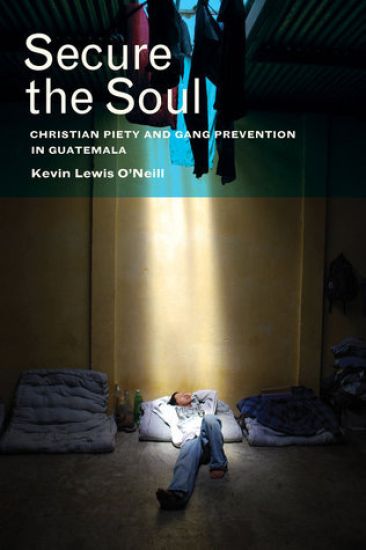
"I'm not perfect," Mateo confessed, "Nobody is. But I try." Secure the Soul shuttles between the life of Mateo, a born-again, ex-gang member in Guatemala and the gang prevention programs that work so hard to keep him alive. Along the way, this poignantly written ethnography uncovers the Christian underpinnings of Central American security. In the streets of Guatemala City - amid angry lynch mobs, overcrowded prisons, and paramilitary death squads - millions of dollars empower church missions, faith-based programs, and seemingly secular security projects to prevent gang violence through the practice of Christian piety. With Guatemala increasingly defined by both God and gangs, Secure the Soul details an emerging strategy of geopolitical significance: regional security by way of good Christian living.
Secure the Soul

Secure the Soul

Kevin Lewis O'Neill

University of California Press
2015
pokkari
"I'm not perfect," Mateo confessed, "Nobody is. But I try." Secure the Soul shuttles between the life of Mateo, a born-again, ex-gang member in Guatemala and the gang prevention programs that work so hard to keep him alive. Along the way, this poignantly written ethnography uncovers the Christian underpinnings of Central American security. In the streets of Guatemala City - amid angry lynch mobs, overcrowded prisons, and paramilitary death squads - millions of dollars empower church missions, faith-based programs, and seemingly secular security projects to prevent gang violence through the practice of Christian piety. With Guatemala increasingly defined by both God and gangs, Secure the Soul details an emerging strategy of geopolitical significance: regional security by way of good Christian living.
Unforgivable

Unforgivable

Kevin Lewis O'Neill

University of California Press
2025
sidottu
The first book to expose how the Catholic Church systematically covers up scandal by moving abusers across borders. Clerical sexual abuse is as global as the Roman Catholic Church, with bishops moving credibly accused priests not simply between parishes but also across international borders. Unforgivable follows the movement of one such perpetrator from the Great Plains of central Minnesota to the Indigenous highlands of Guatemala, where this priest had access to children and even raised one as his own. Although Father David Roney is at the center of this particular story, author Kevin Lewis O'Neill offers ample evidence that offshoring priests is a common practice. These maneuvers and the callous indifference of the Church—even once caught red-handed—reveal the limits of justice. They also lay bare the disturbing fact that the scale of clerical sexual abuse is far bigger than anyone has yet considered. Rigorously researched and viscerally important, this book raises urgent questions about holding the Catholic Church accountable.
Art of Captivity / Arte Del Cautiverio

Art of Captivity / Arte Del Cautiverio

Kevin Lewis O'Neill; Benjamin Fogarty-Valenzuela

University of Toronto Press
2020
sidottu
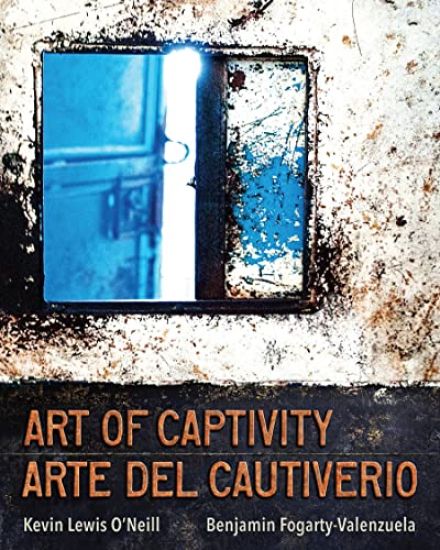
Through a series of rich photographs, Art of Captivity / Arte del Cautiverio tells a compelling story about the war on drugs in Central America. Entirely bilingual in both English and Spanish, the book focuses on the country of Guatemala, now the principle point of transit for the cocaine that is produced in the Andes and bound for the United States and Canada. Alongside a spike in the use of crack cocaine, Guatemala City has witnessed the proliferation of Pentecostal drug rehabilitation centers. The centers are sites of abuse and torment, but also lifesaving institutions in a country that does not provide any other viable social service to those struggling with drug dependency. Art of Captivity / Arte del Cautiverio explores these centers as architectural forms, while also showcasing the cultural production that takes place inside them, including drawings and letters created by those held captive. This stunning work of visual ethnography humanizes those held inside these centers, breaks down stereotypes about drug use, and sets the conditions for a hemispheric conversation about prohibitionist practices – by revealing intimate portraits of a population held hostage by a war on drugs.
Art of Captivity / Arte Del Cautiverio

Art of Captivity / Arte Del Cautiverio

Kevin Lewis O'Neill; Benjamin Fogarty-Valenzuela

University of Toronto Press
2020
pokkari
Through a series of rich photographs, Art of Captivity / Arte del Cautiverio tells a compelling story about the war on drugs in Central America. Entirely bilingual in both English and Spanish, the book focuses on the country of Guatemala, now the principle point of transit for the cocaine that is produced in the Andes and bound for the United States and Canada. Alongside a spike in the use of crack cocaine, Guatemala City has witnessed the proliferation of Pentecostal drug rehabilitation centers. The centers are sites of abuse and torment, but also lifesaving institutions in a country that does not provide any other viable social service to those struggling with drug dependency. Art of Captivity / Arte del Cautiverio explores these centers as architectural forms, while also showcasing the cultural production that takes place inside them, including drawings and letters created by those held captive. This stunning work of visual ethnography humanizes those held inside these centers, breaks down stereotypes about drug use, and sets the conditions for a hemispheric conversation about prohibitionist practices – by revealing intimate portraits of a population held hostage by a war on drugs.
Unforgivable

Unforgivable

Kevin Lewis O'Neill

University of California Press
2026
pokkari
The first book to expose how the Catholic Church systematically covers up scandal by moving abusers across borders. Clerical sexual abuse is as global as the Roman Catholic Church, with bishops moving credibly accused priests not simply between parishes but also across international borders. Unforgivable follows the movement of one such perpetrator from the Great Plains of central Minnesota to the Indigenous highlands of Guatemala, where this priest had access to children and even raised one as his own. Although Father David Roney is at the center of this particular story, author Kevin Lewis O'Neill offers ample evidence that offshoring priests is a common practice. These maneuvers and the callous indifference of the Church—even once caught red-handed—reveal the limits of justice. They also lay bare the disturbing fact that the scale of clerical sexual abuse is far bigger than anyone has yet considered. Rigorously researched and viscerally important, this book raises urgent questions about holding the Catholic Church accountable.
Making Sense of Dental Practice Management

Making Sense of Dental Practice Management

Raj Rattan; Kevin Lewis

Radcliffe Publishing Ltd
1996
nidottu
Managing a dental practice has become increasingly complex in recent years, after changes within both the National Health Service and the private sector. Modern dental practice requires that dentists meet demanding business and management challenges as well as employing their clinical expertise. However, most dentists receive little or no formal training in practice management. In this book established management principles are applied specifically to dentistry. It shows how to best serve the interests of patients by effective management of staff, finances, premises and resources. It assumes no prior knowledge, is concise and offers clear, practical advice. It is the definitive guide for dentists, vocational trainees, dental students, practice managers and administrators, and a useful reference for those undertaking the DGDP and MGDS examinations.
Cree Pedagogy

Cree Pedagogy

Angelina Weenie; Willie J. Ermine; Kevin Lewis; Ida Swan; Mary Sasakamoose; Jeffery Cappo; Deanna Pelletier

Canadian Scholars
2024
pokkari
Dance Your Style: Cree Pedagogy examines the intrinsic value of First Nations perspectives, languages, and knowledges without the framing of Indigenization, decolonization, incorporation, or adaptation. Organized into three parts, this title focuses on the First Nations pedagogy on its own terms: a pedagogy rooted in land, language, culture, community, and Elder knowledge.This text opens with foundational principles such as exploring the history, theory, analysis, and implementation of First Nations pedagogy, and the introduction to core concepts of language at the heart methodology and practice, teaching as a gift, and the passing of knowledge. Part two focuses on askiy kiskinohmakewina: Earth Teachings; reflecting on how the land teaches us, what we learn from connecting to the land, and the philosophy of land-based education. Part three features waseyaw, which means the elements of nature shine a light on the path forward. It refl ects on the knowledge of Elders and knowledge keepers, presents insights from Elders on Culture Camps, and maskikiw mahtahitowin, medicine thinking.With contributions from leading Indigenous Studies scholars, Elders, and community leaders in Canada, Dance Your Style is a powerful and essential text for college and university students in Indigenous Studies and Education courses that promotes thoughtful interactions with the text through practical exercises and thought-provoking discussion questions.
The Counts of Tripoli and Lebanon in the Twelfth Century
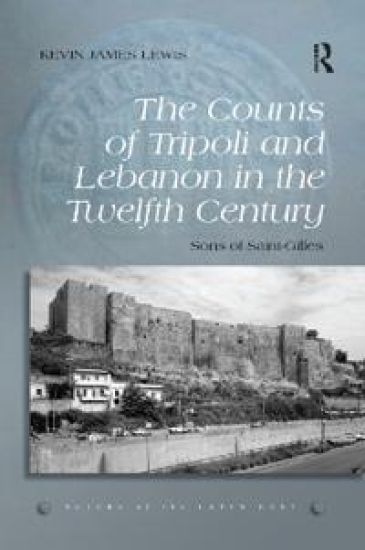
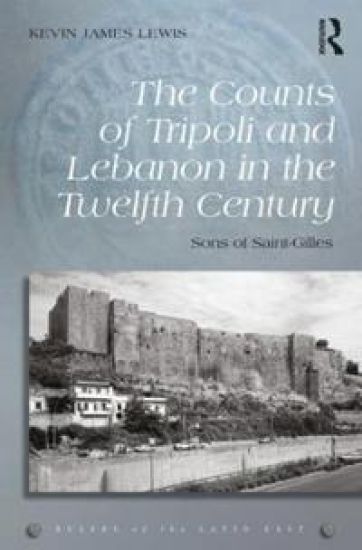
The county of Tripoli in what is now North Lebanon is arguably the most neglected of the so-called ‘crusader states’ established in the Middle East at the beginning of the twelfth century. The present work is the first monograph on the county to be published in English, and the first in any western language since 1945. What little has been written on the subject previously has focused upon the European ancestry of the counts of Tripoli: a specifically Southern French heritage inherited from the famous crusader Raymond IV of Saint-Gilles. Kevin Lewis argues that past historians have at once exaggerated the political importance of the counts’ French descent and ignored the more compelling signs of its cultural impact, highlighting poetry composed by troubadours in Occitan at Tripoli’s court. For Lewis, however, even this belies a deeper understanding of the processes that shaped the county. What emerges is an intriguing portrait of the county in which its rulers struggled to exert their power over Lebanon in the face of this region’s insurmountable geographical forces and its sometimes bewildering, always beguiling diversity of religions, languages and cultures. The counts of Tripoli and contemporary Muslim onlookers certainly viewed the dynasty as sons of Saint-Gilles, but the county’s administration relied upon Arabic, its stability upon the mixed loyalties of its local inhabitants, and its very existence upon the rugged mountains that cradled it. This book challenges prevailing knowledge of this little-known crusader state and by extension the medieval Middle East as a whole..
The Counts of Tripoli and Lebanon in the Twelfth Century
The county of Tripoli in what is now North Lebanon is arguably the most neglected of the so-called ‘crusader states’ established in the Middle East at the beginning of the twelfth century. The present work is the first monograph on the county to be published in English, and the first in any western language since 1945. What little has been written on the subject previously has focused upon the European ancestry of the counts of Tripoli: a specifically Southern French heritage inherited from the famous crusader Raymond IV of Saint-Gilles. Kevin Lewis argues that past historians have at once exaggerated the political importance of the counts’ French descent and ignored the more compelling signs of its cultural impact, highlighting poetry composed by troubadours in Occitan at Tripoli’s court. For Lewis, however, even this belies a deeper understanding of the processes that shaped the county. What emerges is an intriguing portrait of the county in which its rulers struggled to exert their power over Lebanon in the face of this region’s insurmountable geographical forces and its sometimes bewildering, always beguiling diversity of religions, languages and cultures. The counts of Tripoli and contemporary Muslim onlookers certainly viewed the dynasty as sons of Saint-Gilles, but the county’s administration relied upon Arabic, its stability upon the mixed loyalties of its local inhabitants, and its very existence upon the rugged mountains that cradled it. This book challenges prevailing knowledge of this little-known crusader state and by extension the medieval Middle East as a whole..