Happy Birthday Kieran is a personalized kids activity book, it includes personalized crosswords, word searches, number puzzles, jokes, drawing and coloring >It is suitable for children between 6-11 years old It is the perfect birthday present for Kieran, and is a great keepsake for parents to remember their child's early years and birthdays This personalized book is available for other names also This is a great gift for children and an amazing keepsake for parents Happy Birthday Kieran
When animal crimes investigator Kieran Yeats take on the case of Captain Isobel "Izzy" Tremblay, a decorated Canadian Air Force pilot shot down over Iraq, she enters a frightening world of international terrorism. Jihadists, or Daesh as they call themselves, have followed Izzy from Iraq to her home n Victoria, Canada, kidnapped her PTSD dog Beatrice, and sent a note demanding money for her safe return. In five days, the jihadists say, they want $10,000 or Beatrice will die. With the help of her friend, former RCMP constable Miranda Blake, Kieran begins the hunt for Beatrice. Their search leads them to Russian dogfighters, a trio of militants making IEDs in a Victoria loft, and finally, to a group of jihadists on the RCMP's watch list. But the jihadists prove elusive, and as time ticks away, thing look bleak: will they be in time to save Beatrice?
Merry Christmas Kieran is a personalized kids activity book, it includes personalized crosswords, word searches, number puzzles, jokes, drawing and coloring >It is suitable for children between 6-11 years old It is a unique Christmas present for Kieran, and is the perfect gift this Xmas This personalized book is also available for other names This is a great gift for children and an amazing keepsake for parents
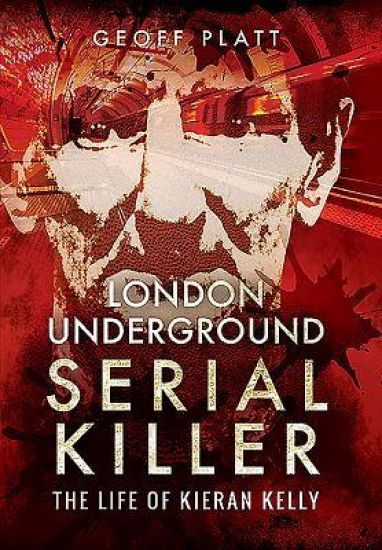
The full story of the life and times of Kieran Patrick Kelly, the London Underground Serial Killer, who wandered up and down the Northern Line of the London Underground between 1960 and 1983, pushing innocent people that he had never met under trains, and who finished up killing over thirty people. The book provides a full biography of Kelly, discussing the details of his crimes, his victims and his ability to evade justice; he managed to secure mistrials or acquittals in twenty-five trials before being eventually convicted and sentenced to die to prison, which he did in Durham, in 2001. It could be argued that Kelly is the most investigated serial killer in the history of the world. His murders were investigated as they occurred between 1953 and 1983; they were re-investigated in 1983 and again in 2015. The author of this book played major roles in the two latter enquiries, conducting the entire enquiry in 1983 and acting as a consultant to the 2015 enquiry. More is known about Kelly than any other serial killer in history.He was arrested before he had finished killing, then murdered his cellmate in the police station and was interviewed by the author ten minutes after this final murder, before spending the next two years discussing his crimes and his motivations with the author. The end result is a truly unique insight into the mind of a serial killer!
The definitive visual history of key World War Two aircraft A visually stunning, accessible, and fascinating account of 50 key aircraft from World War Two, illustrated by the outstanding photograph archive of the Imperial War Museum. Delve into the origins, development, and operations of the iconic aircraft, with stories of the brave crew members that flew in them and made these aircraft the legends they have become today. Focussing on the aircraft of both the Allies and the Axis powers, it contains fascinating insights into the technological advances and tactical roles these iconic aircraft would play in the war. In association with Imperial War Museums, the history of these key aircraft is examined; from the early years of the war, when outdated biplanes were still flying in combat, to the development of advanced jet aircraft. This impactful book looks at the performance of both famous and lesser known aircraft, weaving together the story of aerial conflict, when mastery of the air created the need to fly faster, further and higher, carrying increasingly more weapons, pushing both Allied and Axis powers to the limit in the quest to develop the ultimate aircraft of World War Two. Featured aircraft: British: Avro Lancaster / Avro Manchester / Bristol Beaufighter / Bristol Blenheim / De Havilland Mosquito / Fairey Firefly / Fairey Swordfish / Gloster Meteor / Gloster Gladiator / Handley Page Halifax / Hawker Hurricane / Hawker Tempest / Hawker Typhoon / Short Stirling / Short Sunderland / Supermarine Spitfire / Vickers Wellington German: Dornier Do 17/ Focke Wulf Fw190 / Focke Wulf Fw200 Condor / Heinkel He 111 / Junkers JU87 Stuka / Junkers Ju 88 / Messerschmitt Bf 109 / Messerschmitt Bf 110 / Messerschmitt ME 163 Komet / Messerschmitt ME 262 US: Bell P-39 Airacobra / Bell P-63 Kingcobra / Boeing B-17 Flying Fortress / Boeing B-29 Superfortress / Consolidated B-24 Liberator / Consolidated PBY Catalina / Curtiss P-40 / Douglas Boston / Douglas C-47 Skytrain / Douglas SBD Dauntless / Grumman F4F Wildcat / Grumman F6F Hellcat / Grumman TBF Avenger / Lockheed Hudson / Lockheed P-38 Lightning / Martin B-26 Marauder / North American B-25 Mitchell / North American P-51 Mustang / Northrop P-61 Black Widow / Republic P-47 Thunderbolt / Vought F4U Corsair Japan: Mitsubishi A6M Reisen (Zero). USSR: Yakolev Yak-9
The polar bear is one of the most recognisable animals on the planet. Yet if global warming continues at its present pace, summer sea ice could disappear entirely from the Arctic Ocean by the year 2040. Polar bears could be extinct within a generation. This book offers an account of this iconic species: its life, its past, and its future.
Climate Change in the Anthropocene reviews current science on anthropogenic sources and projections for climatic change. Written in a clear and accessible style, the book covers this rapidly changing field, including the drivers of climate change, the physics and chemistry behind the science of climate change, paleoclimates, climate variables, a comparison of global warning of 1.5° vs 2°C and the impacts of these climatic changes both at a global and a U.S. regional level. Infographics throughout help to explain concepts in a visual way, providing users with a better understanding of climate change. In addition, the book is ideal for advanced researchers who need to explain the underpinning science of climate change for grant applications and working with policy experts, etc. This is an essential book for anyone whose work is impacted by climate change in the earth and environmental sciences.
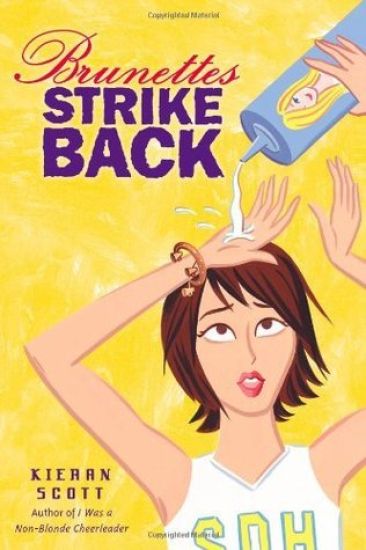
Sequel to I Was A Non-Blonde Cheerleader from New York Times bestseller Kieran Scott New Jersey transplant and spunky brunette Annisa and her sand Dune High cheerleading squad are headed to nationals Just when she thinks her blonde teammates have accepted her, some of the girls have suddenly made it their mission to convert Annisa to the blonde side. Annisa thinks her luck is finally changing when her old squad makes a surprise appearance at nationals, but soon it turns into a Jersey versus Florida turf battle. torn between two worlds, and two hair colors, can one non-blonde cheerleader make it through the sea of highlights and rock nationals her own way?
New Jersey transplant and sassy brunette Annisa Gobrowski has a problem-literally everyone at her Florida high school is blonde. No lack of golden highlights is going to stop Annisa from making the cheerleading squad. But after accidentally breaking the most popular girl in school's nose, and discovering the cheerleaders all hate her, she starts having second thoughts. Is it too much to ask to land a spot on the team, win the heart of her dreamy crush and make tons of new friends? Annisa is on the verge of giving up, but the cheerleader in her just won't let her quit. She may be a little different, but Sand Dune High had better watch out-this non-blonde is here to stay in this hilariously funny novel from Private author Kieran Scott.
The third Non-Blonde Cheerleader novel-now with a new look New Jersey transplant and non-blonde cheerleader Annisa Gobrowski has a major boy problem: The Sand Dune High National Championship cheerleading squad has gone coed, and not everyone is happy about it. As if dealing with her teammates freaking out over the guy cheerleaders wasn't enough stress, her boyfriend, Daniel, just signed up. At first Annisa is psyched to spending more time with Daniel, and stunting with the guys is pretty cool. But then the battle of the sexes starts to heat up, and Annisa is caught between her squadmates and the guys. Can one non-blonde figure out a way to keep the girls from killing the guys? Or will the battle turn into an all out cheer-war?
The atrocities of civil wars present us with many difficult questions. How do seemingly ordinary individuals come to commit such extraordinary acts of cruelty, often against unarmed civilians? Can we ever truly understand such acts of 'evil'? Based on a wealth of original interviews with perpetrators of violence in Sierra Leone's civil war, this book provides a detailed response. Moving beyond the rigid bounds of political science, the author engages with sociology, psychology and social psychology, to provide a comprehensive picture of the complex individual motives behind seemingly senseless violence in Sierra Leone's war. Highlighting the inadequacy of current explanations that centre on the anarchic nature of brutality, or conversely, its calculated rationality, this book sheds light on the critical but hitherto neglected role played by the emotions of shame and disgust. Drawing on first-hand accounts of strategies employed by Sierra Leone's rebel commanders, it documents the manner in which rebel recruits were systematically brutalised and came to perform horrifying acts of cruelty as routine. In so doing, it offers fresh insight into the causes of extreme violence that holds relevance beyond Sierra Leone to the atrocities of contemporary civil wars.
The atrocities of civil wars present us with many difficult questions. How do seemingly ordinary individuals come to commit such extraordinary acts of cruelty, often against unarmed civilians? Can we ever truly understand such acts of 'evil'? Based on a wealth of original interviews with perpetrators of violence in Sierra Leone's civil war, this book provides a detailed response. Moving beyond the rigid bounds of political science, the author engages with sociology, psychology and social psychology, to provide a comprehensive picture of the complex individual motives behind seemingly senseless violence in Sierra Leone's war. Highlighting the inadequacy of current explanations that centre on the anarchic nature of brutality, or conversely, its calculated rationality, this book sheds light on the critical but hitherto neglected role played by the emotions of shame and disgust. Drawing on first-hand accounts of strategies employed by Sierra Leone's rebel commanders, it documents the manner in which rebel recruits were systematically brutalised and came to perform horrifying acts of cruelty as routine. In so doing, it offers fresh insight into the causes of extreme violence that holds relevance beyond Sierra Leone to the atrocities of contemporary civil wars.
In the last forty years, action theory has revitalized moral philosophy. Philosophers have explored the nature of agency, what is involved in acting for a reason, how we know what we are doing, the role of intention, desire, and belief in motivating action, and more. At their most ambitious, philosophers have claimed that action theory is the foundation of ethics. For rationalists or constitutivists, the standards of practical reason derive from the nature of agency as a functional or teleological kind. They are no more mysterious than the standards for being a good clock or a good heart, given the function of clocks and hearts. In this collection of new and previously published essays, Kieran Setiya defends a causal theory of intentional action on which it is explained by knowledge in intention, a form of practical knowledge that transcends prior evidence. Such knowledge rests on knowing how to do the things we do. The theory is otherwise minimalist: agents need not regard their reasons as good, put means to ends, or adopt particular aims. It follows that we must reject the rationalist or constitutivist approach: the nature of agency is too thin to support the standards of practical reason. But the upshot is not nihilism. Instead, the requirement of means-end coherence is explained by the cognitive aspect of intention; and the standards of practical reason are those of ethical virtue, applied to practical thought.
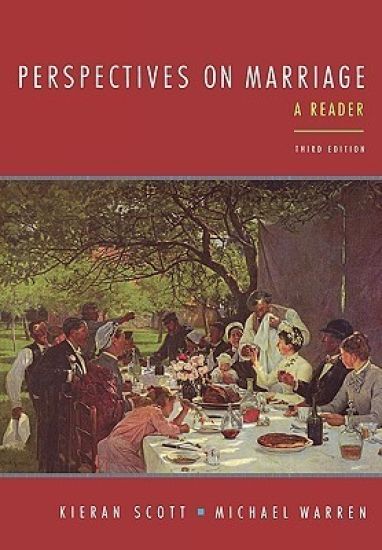
Thoroughly revised and updated in this third edition, Perspectives on Marriage is a comprehensive and multidisciplinary anthology ideal for courses in the theology and spirituality of marriage. This edition features thirteen new articles and incorporates the best of contemporary perspectives on marriage and sexuality. The selections represent a wide range of approaches, from the historical and canonical to the sociological, psychological, and ministerial. Striking a balance between solid theological material and stimulating readings on today's issues, the volume explores marriage in its historical context; current views on the theology of marriage; the meanings and transitions of marriage; attitudes toward sexuality; communication, conflict, and change; commitment, divorce, and annulment; the spirituality of marriage; and various religious perspectives on marriage. The third edition includes a new section on issues that affect marriage--such as the commercialization of marriage and the financial stresses accompanying marriage--as well as new selections on such topics as same-sex marriage, cohabitation, the theology of dating, and counseling. Each essay is enhanced by a detailed editors' introduction and by helpful discussion questions. Rich, provocative, and challenging, Perspectives on Marriage, Third Edition, is the most extensive and up-to-date reader of its kind.
Between the end of the Second World War and the early twenty-first century, Britain became multicultural. This vivid book tells that remarkable story. Kieran Connell, an historian of Irish and German heritage who grew up in Balsall Heath, inner-city Bir-mingham, takes readers into multicultural communities across Britain at key moments in their development. Journeying far beyond London, Multicultural Britain ex-plores the messy contradictions of the country's transition into today's diverse society. It reveals the ordinary people who have forged Britain's multiculturalism; skewers public leaders, from Enoch Powell to Harold Wilson to Margaret Thatcher, who have too often weaponized race for their own political ends; and shines a light on the shifting nature of British racism, revealing its enduring day-to-day impact on ethnic-minority groups. Between postcolonial reckonings and immigration anxieties, how people live together in Brexit Britain remains an urgent question for our time. Connell's fresh, thought-provoking book unveils British multiculturalism not as a problematic idea, but as a rich and complex lived reality.
This book offers a unique analysis of paramilitary imprisonment in Northern Ireland. The central focus of the book is the struggle between inmates and the state concerning the prisoners' assertion of their status as political prisoners. Drawing upon interviews with former Republican and Loyalist prisoners as well as prison managers and staff, this book locates that experience within the broader theoretical literature on imprisonment. Four forms of prison resistance are examined by which prisoners asserted their political status. Dirty protest and hunger strike are characterised as resistance through self sacrifice. Violence, destruction and intimidation are examined as prison resistance becoming an extension of armed struggle. Escape is analysed as a form of resistance through ridicule. And finally law is considered as instrumental resistance and a dialogical process with a range of audiences. The book then considers a range of prison management adopted by the prison authorities. `Reactive Containment' is described as a military-led model of management which incapacitated the terrorist `enemy' but acknowledged the political character of the inmates. `Criminalization' is viewed as a strategy designed to deny any practical or symbolic acceptance of the political motivation of prisoners. `Managerialism', it is argued, encompasses a series of scientific discourses to rationalise conflicting interactions with prisoners, from pragmatic accommodations to a dogged determination to prevent further recognition of de facto political status. The book concludes with an analysis of the early release of paramilitary prisoners and the conflict resolution process and some reflections on political prisons as spaces both during and after a political conflict.
Can we have objective knowledge of right and wrong, of how we should live and what there is reason to do? The thought that we can is beset by sceptical problems. In the face of radical disagreement, can we be sure that we are not deceived? If the facts are independent of what we think, is our reliability a mere coincidence? Can it be anything but luck when our beliefs are true? In Knowing Right From Wrong, Kieran Setiya confronts these questions in their most compelling and articulate forms: the argument from ethical disagreement; the argument from reliability and coincidence; and the argument from accidental truth. In order to resist the inference from disagreement to scepticism, he argues, we must reject epistemologies of intuition, coherence, and reflective equilibrium. The problem of disagreement can be solved only if the basic standards of epistemology in ethics are biased towards the truth. In order to solve the problem of coincidence, we must embrace arguments for reliability in ethics that rely on ethical beliefs. Such arguments do not beg the question in an epistemically damaging way. And in order to make sense of ethical knowledge as non-accidental truth, we must give up the independence of ethical fact and belief. We can do so without implausible predictions of convergence or relativity if the facts are bound to us through the natural history of human life. If there is objective ethical knowledge, human nature is its source.
Nowhere in Europe are people more likely to enjoy a regular flutter in stocks and shares than in Britain. Whether we consider the millions of online stockbroking accounts or the billions spent on spread betting - it is a national pastime in today's Britain to play the markets. How did this distinctively British obsession with investment and speculation come about? Playing the Market tells this story by exploring the history of financial capitalism in Britain during the twentieth century from below. It explains how and why everyday British people increasingly invested, speculated, and gambled in stocks and shares from the outbreak of World War I, over the postwar decades and the Thatcher years, up until the premiership of Tony Blair. The study accounts for a momentous shift in attitudes towards stock market investment that occurred throughout the twentieth century. In the interwar period, traditional moral and cultural constraints about the stock market, which were still powerful in the Victorian period, gradually began to collapse in public and private life. In the following decades, financial securities lost their stigma of being either immoral or suitable only for the upper classes. Promising higher than average returns and a similar thrill of risk and reward as gambling in horses or the football pools, the stock market became a popular pastime for millions of Britons - even in the postwar decades, when Britain had nationalized industries and politicians of both parties indulged in staunchly anti-finance rhetoric. With the expansion of popular investment after both world wars, Britain developed a stock market culture that was unique across Europe and gave rise to a market populist sentiment that eventually proved fertile soil for the arrival of Thatcherism.