Kirjojen hintavertailu. Mukana 11 342 296 kirjaa ja 12 kauppaa.

Kirjahaku

Etsi kirjoja tekijän nimen, kirjan nimen tai ISBN:n perusteella.

1000 tulosta hakusanalla Kurt Jahn-Nottebohm

Kurt Gödel: Collected Works: Volume III

Kurt Gödel: Collected Works: Volume III

Kurt Gödel

Oxford University Press Inc
1995
sidottu
Kurt Gödel (1906 - 1978) was the most outstanding logician of the twentieth century, famous for his hallmark works on the completeness of logic, the incompleteness of number theory, and the consistency of the axiom of choice and the continuum hypothesis. He is also noted for his work on constructivity, the decision problem, and the foundations of computability theory, as well as for the strong individuality of his writings on the philosophy of mathematics. He is less well known for his discovery of unusual cosmological models for Einstein's equations, in theory permitting time travel into the past. The Collected Works is a landmark resource that draws together a lifetime of creative thought and accomplishment. The first two volumes were devoted to Gödel's publications in full (both in original and translation), and the third volume featured a wide selection of unpublished articles and lecture texts found in Gödel's Nachlass. These long-awaited final two volumes contain Gödel's correspondence of logical, philosophical, and scientific interest. Volume IV covers A to G, with H to Z in volume V; in addition, Volume V contains a full inventory of Gödel's Nachlass. All volumes include introductory notes that provide extensive explanatory and historical commentary on each body of work, English translations of material originally written in German (some transcribed from the Gabelsberger shorthand), and a complete bibliography of all works cited. Kurt Gödel: Collected Works is designed to be useful and accessible to as wide an audience as possible without sacrificing scientific or historical accuracy. The only comprehensive edition of Gödel's work available, it will be an essential part of the working library of professionals and students in logic, mathematics, philosophy, history of science, and computer science and all others who wish to be acquainted with one of the great minds of the twentieth century.
Kurt Gödel: Collected Works

Kurt Gödel: Collected Works

Kurt Gödel

Oxford University Press Inc
2001
nidottu
Kurt Gödel (1906 - 1978) was the most outstanding logician of the twentieth century, famous for his hallmark works on the completeness of logic, the incompleteness of number theory, and the consistency of the axiom of choice and the continuum hypothesis. He is also noted for his work on constructivity, the decision problem, and the foundations of computability theory, as well as for the strong individuality of his writings on the philosophy of mathematics. He is less well known for his discovery of unusual cosmological models for Einstein's equations, in theory permitting time travel into the past. The Collected Works is a landmark resource that draws together a lifetime of creative thought and accomplishment. The first two volumes were devoted to Gödel's publications in full (both in original and translation), and the third volume featured a wide selection of unpublished articles and lecture texts found in Gödel's Nachlass. These long-awaited final two volumes contain Gödel's correspondence of logical, philosophical, and scientific interest. Volume IV covers A to G, with H to Z in volume V; in addition, Volume V contains a full inventory of Gödel's Nachlass. All volumes include introductory notes that provide extensive explanatory and historical commentary on each body of work, English translations of material originally written in German (some transcribed from the Gabelsberger shorthand), and a complete bibliography of all works cited. Kurt Gödel: Collected Works is designed to be useful and accessible to as wide an audience as possible without sacrificing scientific or historical accuracy. The only comprehensive edition of Gödel's work available, it will be an essential part of the working library of professionals and students in logic, mathematics, philosophy, history of science, and computer science and all others who wish to be acquainted with one of the great minds of the twentieth century.
Kurt Gödel: Collected Works: Volume II

Kurt Gödel: Collected Works: Volume II

Kurt Gödel

Oxford University Press Inc
2001
nidottu
Kurt Gödel (1906 - 1978) was the most outstanding logician of the twentieth century, famous for his hallmark works on the completeness of logic, the incompleteness of number theory, and the consistency of the axiom of choice and the continuum hypothesis. He is also noted for his work on constructivity, the decision problem, and the foundations of computability theory, as well as for the strong individuality of his writings on the philosophy of mathematics. He is less well known for his discovery of unusual cosmological models for Einstein's equations, in theory permitting time travel into the past. The Collected Works is a landmark resource that draws together a lifetime of creative thought and accomplishment. The first two volumes were devoted to Gödel's publications in full (both in original and translation), and the third volume featured a wide selection of unpublished articles and lecture texts found in Gödel's Nachlass. These long-awaited final two volumes contain Gödel's correspondence of logical, philosophical, and scientific interest. Volume IV covers A to G, with H to Z in volume V; in addition, Volume V contains a full inventory of Gödel's Nachlass. All volumes include introductory notes that provide extensive explanatory and historical commentary on each body of work, English translations of material originally written in German (some transcribed from the Gabelsberger shorthand), and a complete bibliography of all works cited. Kurt Gödel: Collected Works is designed to be useful and accessible to as wide an audience as possible without sacrificing scientific or historical accuracy. The only comprehensive edition of Gödel's work available, it will be an essential part of the working library of professionals and students in logic, mathematics, philosophy, history of science, and computer science and all others who wish to be acquainted with one of the great minds of the twentieth century.
Kurt Gödel: Collected Works: Volume III

Kurt Gödel: Collected Works: Volume III

Kurt Gödel

Oxford University Press Inc
2001
nidottu
Kurt Gödel (1906 - 1978) was the most outstanding logician of the twentieth century, famous for his hallmark works on the completeness of logic, the incompleteness of number theory, and the consistency of the axiom of choice and the continuum hypothesis. He is also noted for his work on constructivity, the decision problem, and the foundations of computability theory, as well as for the strong individuality of his writings on the philosophy of mathematics. He is less well known for his discovery of unusual cosmological models for Einstein's equations, in theory permitting time travel into the past. The Collected Works is a landmark resource that draws together a lifetime of creative thought and accomplishment. The first two volumes were devoted to Gödel's publications in full (both in original and translation), and the third volume featured a wide selection of unpublished articles and lecture texts found in Gödel's Nachlass. These long-awaited final two volumes contain Gödel's correspondence of logical, philosophical, and scientific interest. Volume IV covers A to G, with H to Z in volume V; in addition, Volume V contains a full inventory of Gödel's Nachlass. All volumes include introductory notes that provide extensive explanatory and historical commentary on each body of work, English translations of material originally written in German (some transcribed from the Gabelsberger shorthand), and a complete bibliography of all works cited. Kurt Gödel: Collected Works is designed to be useful and accessible to as wide an audience as possible without sacrificing scientific or historical accuracy. The only comprehensive edition of Gödel's work available, it will be an essential part of the working library of professionals and students in logic, mathematics, philosophy, history of science, and computer science and all others who wish to be acquainted with one of the great minds of the twentieth century.
Kurt Gödel: Collected Works: Volume IV

Kurt Gödel: Collected Works: Volume IV

Kurt Gödel

Clarendon Press
2003
sidottu
Kurt Gödel (1906 - 1978) was the most outstanding logician of the twentieth century, famous for his hallmark works on the completeness of logic, the incompleteness of number theory, and the consistency of the axiom of choice and the continuum hypothesis. He is also noted for his work on constructivity, the decision problem, and the foundations of computability theory, as well as for the strong individuality of his writings on the philosophy of mathematics. He is less well known for his discovery of unusual cosmological models for Einstein's equations, in theory permitting time travel into the past. The Collected Works is a landmark resource that draws together a lifetime of creative thought and accomplishment. The first two volumes were devoted to Gödel's publications in full (both in original and translation), and the third volume featured a wide selection of unpublished articles and lecture texts found in Gödel's Nachlass. These long-awaited final two volumes contain Gödel's correspondence of logical, philosophical, and scientific interest. Volume IV covers A to G, with H to Z in volume V; in addition, Volume V contains a full inventory of Gödel's Nachlass. All volumes include introductory notes that provide extensive explanatory and historical commentary on each body of work, English translations of material originally written in German (some transcribed from the Gabelsberger shorthand), and a complete bibliography of all works cited. Kurt Gödel: Collected Works is designed to be useful and accessible to as wide an audience as possible without sacrificing scientific or historical accuracy. The only comprehensive edition of Gödel's work available, it will be an essential part of the working library of professionals and students in logic, mathematics, philosophy, history of science, and computer science and all others who wish to be acquainted with one of the great minds of the twentieth century.
Kurt Gödel: Collected Works: Volume V

Kurt Gödel: Collected Works: Volume V

Kurt Gödel

Clarendon Press
2003
sidottu
Kurt Gödel (1906 - 1978) was the most outstanding logician of the twentieth century, famous for his hallmark works on the completeness of logic, the incompleteness of number theory, and the consistency of the axiom of choice and the continuum hypothesis. He is also noted for his work on constructivity, the decision problem, and the foundations of computability theory, as well as for the strong individuality of his writings on the philosophy of mathematics. He is less well known for his discovery of unusual cosmological models for Einstein's equations, in theory permitting time travel into the past. The Collected Works is a landmark resource that draws together a lifetime of creative thought and accomplishment. The first two volumes were devoted to Gödel's publications in full (both in original and translation), and the third volume featured a wide selection of unpublished articles and lecture texts found in Gödel's Nachlass. These long-awaited final two volumes contain Gödel's correspondence of logical, philosophical, and scientific interest. Volume IV covers A to G, with H to Z in volume V; in addition, Volume V contains a full inventory of Gödel's Nachlass. All volumes include introductory notes that provide extensive explanatory and historical commentary on each body of work, English translations of material originally written in German (some transcribed from the Gabelsberger shorthand), and a complete bibliography of all works cited. Kurt Gödel: Collected Works is designed to be useful and accessible to as wide an audience as possible without sacrificing scientific or historical accuracy. The only comprehensive edition of Gödel's work available, it will be an essential part of the working library of professionals and students in logic, mathematics, philosophy, history of science, and computer science and all others who wish to be acquainted with one of the great minds of the twentieth century.
Kurt Gödel: Collected Works: Volume IV

Kurt Gödel: Collected Works: Volume IV

Kurt Gödel

Oxford University Press
2014
nidottu
Kurt Gödel (1906 - 1978) was the most outstanding logician of the twentieth century, famous for his hallmark works on the completeness of logic, the incompleteness of number theory, and the consistency of the axiom of choice and the continuum hypothesis. He is also noted for his work on constructivity, the decision problem, and the foundations of computability theory, as well as for the strong individuality of his writings on the philosophy of mathematics. He is less well known for his discovery of unusual cosmological models for Einstein's equations, in theory permitting time travel into the past. The Collected Works is a landmark resource that draws together a lifetime of creative thought and accomplishment. The first two volumes were devoted to Gödel's publications in full (both in original and translation), and the third volume featured a wide selection of unpublished articles and lecture texts found in Gödel's Nachlass. The final two volumes contain Gödel's correspondence of logical, philosophical, and scientific interest. Volume IV, published for the first time in paperback, covers A to G, with H to Z in volume V; in addition, Volume V contains a full inventory of Gödel's Nachlass. All volumes include introductory notes that provide extensive explanatory and historical commentary on each body of work, English translations of material originally written in German (some transcribed from the Gabelsberger shorthand), and a complete bibliography of all works cited. Kurt Gödel: Collected Works is designed to be useful and accessible to as wide an audience as possible without sacrificing scientific or historical accuracy. The only comprehensive edition of Gödel's work available, it will be an essential part of the working library of professionals and students in logic, mathematics, philosophy, history of science, and computer science and all others who wish to be acquainted with one of the great minds of the twentieth century.
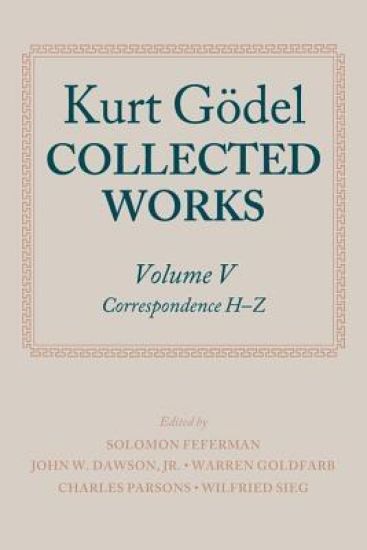
Kurt Gödel: Collected Works: Volume V

Kurt Gödel: Collected Works: Volume V

Kurt Gödel

Oxford University Press
2014
nidottu
Kurt Gödel (1906 - 1978) was the most outstanding logician of the twentieth century, famous for his hallmark works on the completeness of logic, the incompleteness of number theory, and the consistency of the axiom of choice and the continuum hypothesis. He is also noted for his work on constructivity, the decision problem, and the foundations of computability theory, as well as for the strong individuality of his writings on the philosophy of mathematics. He is less well known for his discovery of unusual cosmological models for Einstein's equations, in theory permitting time travel into the past. The Collected Works is a landmark resource that draws together a lifetime of creative thought and accomplishment. The first two volumes were devoted to Gödel's publications in full (both in original and translation), and the third volume featured a wide selection of unpublished articles and lecture texts found in Gödel's Nachlass. These long-awaited final two volumes contain Gödel's correspondence of logical, philosophical, and scientific interest. Volume V, published for the first time in paperback, includes H to Z as well as a full inventory of Gödel's Nachlass, while Volume IV covers A to G. All volumes include introductory notes that provide extensive explanatory and historical commentary on each body of work, English translations of material originally written in German (some transcribed from the Gabelsberger shorthand), and a complete bibliography of all works cited. Kurt Gödel: Collected Works is designed to be useful and accessible to as wide an audience as possible without sacrificing scientific or historical accuracy. The only comprehensive edition of Gödel's work available, it will be an essential part of the working library of professionals and students in logic, mathematics, philosophy, history of science, and computer science and all others who wish to be acquainted with one of the great minds of the twentieth century.
Kurt Schwitters

Kurt Schwitters

Megan R. Luke

University of Chicago Press
2014
sidottu
German artist Kurt Schwitters (1887-1948) is best known for his pioneering work in fusing collage and abstraction, the two most transformative innovations of twentieth-century art. Considered the father of installation art, Schwitters was also a theorist, a Dadaist, and a writer whose influence extends from Robert Rauschenberg and Eva Hesse to Thomas Hirschhorn. But while his early experiments in collage and installation from the interwar period have garnered much critical acclaim, his later work has generally been ignored. In the first book to fill this gap, Megan R. Luke tells the fascinating, even moving story of the work produced by the aging, isolated artist under the Nazi regime and during his years in exile. Combining new biographical material with archival research, Luke surveys Schwitters' experiments in shaping space and the development of his Merzbau, describing his haphazard studios in Scandinavia and the United Kingdom and the smaller, quieter pieces he created there. She makes a case for the enormous relevance of Schwitters' aesthetic concerns to contemporary artists, arguing that his later work provides a guide to new narratives about modernism in the visual arts. These pieces, she shows, were born of artistic exchange and shaped by his rootless life after exile, and they offer a new way of thinking about the history of art that privileges itinerancy over identity and the critical power of humorous inversion over unambiguous communication. Packed with images, Kurt Schwitters completes the narrative of an artist who remains a considerable force today.
Kurt Wolff

Kurt Wolff

Kurt Wolff

University of Chicago Press
2013
nidottu
Kurt Wolff (1887-1963) was a singular presence in the literary world of the twentieth century, a cultural force shaping modern literature itself and pioneering significant changes in publishing. During an intense, active career that took him from Weimar Germany to New York City, where he founded Pantheon Books, Wolff nurtured an extraordinary array of writers, among them Franz Kafka, Lou Andreas-Salome, Boris Pasternak, Gunter Grass, Robert Musil, Paul Valery, Julian Green, Giuseppe Lampedusa, and Anne Morrow Lindbergh. His essays and letters, many published here for the first time in English, illuminate the complex relations - between publisher and author, publisher and editor, publisher and reading public - that work at their best, as in Wolff's case, to sustain culture.
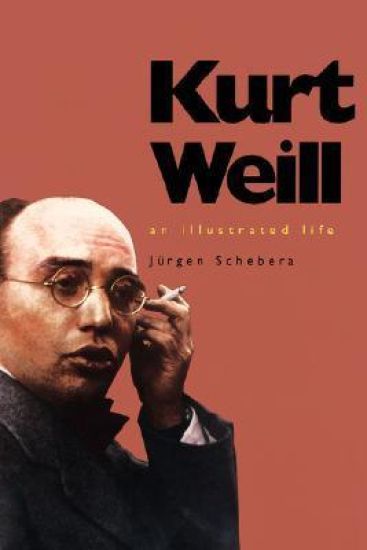
Kurt Weill

Kurt Weill

Jürgen Schebera

Yale University Press
1997
pokkari
Kurt Weill—the famed composer of The Threepenny Opera, Rise and Fall of the City of Mahagonny, Knickerbocker Holiday, One Touch of Venus, Lost in the Stars, and many other musical works—led a life as rich and complex as the music for which he is so justly acclaimed. This engaging and lavishly illustrated book draws on a wealth of previously unexplored written and pictorial material to present a biography of Weill that is the most up-to-date and balanced ever written.Jürgen Schebera explores the many phases of Weill's life, from his childhood as the son of a cantor in the Jewish section of Dessau, Germany, to his renunciation of Germany in 1933, his emigration to America in 1935, and his premature death there in 1950. Schebera describes Weill's rise to prominence during the Weimar Republic, when he created brilliant orchestral and chamber music and became a leading operatic innovator; his marriage, divorce, and remarriage to the famed actress Lotte Lenya; his escape from Nazi Germany, exile in France, and move to America; his collaboration with such famed writers and lyricists as Georg Kaiser, Bertolt Brecht, Maxwell Anderson, Moss Hart, Ira Gershwin, S.J. Perelman, and Ogden Nash; and his efforts in the United States to aid the mobilization for war. He presents fascinating information about Weill's musical creations: an anti-war musical (Johnny Johnson); a biblical drama (The Eternal Road); his first American song "hit," "September Song;" a Kiddush for cantor, chorus, and organ; a new genre of Broadway opera (Street Scene); a musical tragedy (Lost in the Stars); and many other musical ventures in New York and Hollywood. Schebera contends that it is pointless to argue the relative merits of Weill's music from his European and American periods, as many critics have done, for as Weill himself said, "I have never acknowledged the difference between 'serious' music and 'light' music. There is only good music and bad music." And, in fact, the current international renaissance of Kurt Weill's works attests to the beauty, originality, and variety of the music he composed throughout his career.First published in Germany to enthusiastic reviews, this English edition adds new information and illustrations to the earlier work.
Kurt Vonnegut

Kurt Vonnegut

Marc Leeds; Peter Reed

Praeger Publishers Inc
2000
sidottu
Since the publication of his first short stories in the 1950s, Kurt Vonnegut has enjoyed much popular acclaim and has, since the 1970s, gained growing amounts of attention from the scholarly community. In the course of his career, he has become increasingly concerned with visual images. While such imagery occurs in his short fiction and novels, he has also written plays, in which ideas are visually represented on the stage. In recent years, he has devoted more and more of his time and energy to graphic art, producing paintings that are then silk screened. The contributors to this volume look at the visual images created by Vonnegut in his literary art, along with the images and representations of his thought that increasingly are being brought to life in other media. Much of Vonnegut's present significance, his talents as a mythmaker, and his impulse toward visual imagery were anticipated by Leslie Fiedler in The Divine Stupidity of Kurt Vonnegut, published in the September 1970 issue of Esquire. That essay is reprinted here as a prescient introduction to the volume. The essays that follow look at comic elements in Vonnegut's science fiction, the representation of authors in his works, and the translation of his writings into film. The book also examines Vonnegut's graphic art and includes photos of several of his works.
Kurt Vonnegut

Kurt Vonnegut

Jerome Klinkowitz

Routledge
2019
sidottu
Drawing on his experiences as a young man in the Great Depression and the Second World War, Kurt Vonnegut created a new style of fiction responsive to the post-war world and unique in its appeal to both popular audiences and avant-garde critics. His work was profoundly innovative and yet perfectly lucid. In this comprehensive introductory study, originally published in 1982, Jerome Klinkowitz traces Vonnegut’s influences within the American middle class, his early efforts as a short-story writer for magazines in the 1960s and his startling and unprecedented success as a bestselling experimental novelist with Slaughterhouse-Five. His self-consciously moral posture led to readers throughout the world accepting him as their spokesman for humane values, a role which Klinkowitz considers within the context of his work.
Kurt Vonnegut

Kurt Vonnegut

Jerome Klinkowitz

Routledge
2021
nidottu
Drawing on his experiences as a young man in the Great Depression and the Second World War, Kurt Vonnegut created a new style of fiction responsive to the post-war world and unique in its appeal to both popular audiences and avant-garde critics. His work was profoundly innovative and yet perfectly lucid. In this comprehensive introductory study, originally published in 1982, Jerome Klinkowitz traces Vonnegut’s influences within the American middle class, his early efforts as a short-story writer for magazines in the 1960s and his startling and unprecedented success as a bestselling experimental novelist with Slaughterhouse-Five. His self-consciously moral posture led to readers throughout the world accepting him as their spokesman for humane values, a role which Klinkowitz considers within the context of his work.
Kurt Vonnegut: Kurt Vonnegut: Letters
NAMED ONE OF THE BEST BOOKS OF THE YEAR BYNewsweek/The Daily Beast - The Huffington Post - Kansas City Star - Time Out New York - Kirkus ReviewsThis extraordinary collection of personal correspondence has all the hallmarks of Kurt Vonnegut's fiction. Written over a sixty-year period, these letters, the vast majority of them never before published, are funny, moving, and full of the same uncanny wisdom that has endeared his work to readers worldwide. Included in this comprehensive volume: the letter a twenty-two-year-old Vonnegut wrote home immediately upon being freed from a German POW camp, recounting the ghastly firebombing of Dresden that would be the subject of his masterpiece Slaughterhouse-Five; wry dispatches from Vonnegut's years as a struggling writer slowly finding an audience and then dealing with sudden international fame in middle age; righteously angry letters of protest to local school boards that tried to ban his work; intimate remembrances penned to high school classmates, fellow veterans, friends, and family; and letters of commiseration and encouragement to such contemporaries as Gail Godwin, G nter Grass, and Bernard Malamud. Vonnegut's unmediated observations on science, art, and commerce prove to be just as inventive as any found in his novels--from a crackpot scheme for manufacturing "atomic" bow ties to a tongue-in-cheek proposal that publishers be allowed to trade authors like baseball players. ("Knopf, for example, might give John Updike's contract to Simon and Schuster, and receive Joan Didion's contract in return.") Taken together, these letters add considerable depth to our understanding of this one-of-a-kind literary icon, in both his public and private lives. Each letter brims with the mordant humor and openhearted humanism upon which he built his legend. And virtually every page contains a quotable nugget that will make its way into the permanent Vonnegut lexicon. - On a job he had as a young man: "Hell is running an elevator throughout eternity in a building with only six floors." - To a relative who calls him a "great literary figure" "I am an American fad--of a slightly higher order than the hula hoop." - To his daughter Nanny: "Most letters from a parent contain a parent's own lost dreams disguised as good advice." - To Norman Mailer: "I am cuter than you are." Sometimes biting and ironical, sometimes achingly sweet, and always alive with the unique point of view that made him the true cultural heir to Mark Twain, these letters comprise the autobiography Kurt Vonnegut never wrote. Praise for Kurt Vonnegut: Letters "Splendidly assembled . . . familiar, funny, cranky . . . chronicling Vonnegut's] life in real time."--Kurt Andersen, The New York Times Book Review " This collection is] by turns hilarious, heartbreaking and mundane. . . . Vonnegut himself is a near-perfect example of the same flawed, wonderful humanity that he loved and despaired over his entire life."--NPR "Congenial, whimsical and often insightful missives . . . one of Vonnegut's] very best."--Newsday "These letters display all the hallmarks of Vonnegut's fiction--smart, hilarious and heartbreaking."--The New York Times Book Review
Kurt Cobain

Kurt Cobain

Frohman Jesse

Thames Hudson Ltd
2014
sidottu
In July 1993, Nirvana was the biggest band in the world, and Kurt Cobain was subject to an intense level of celebrity and public scrutiny. In New York City to play the famed Roseland Ballroom and promote their new album In Utero, Cobain and Nirvana were photographed by Jesse Frohman – and Cobain gave a candid interview to Jon Savage – for an article in the Observer. Only nine months later, Cobain killed himself. It was the last formal photo shoot Nirvana ever did, and one of the last major interviews Cobain ever gave. Twenty years after his death, they are published here together for the first time since the Observer article, including previously unpublished material, and accompanied by new commentary from Frohman and Savage about that day, and an essay by pop culture maven Glenn O’Brien on what it all might have meant. Frohman’s 100-plus photographs, including contact sheets, get to the heart of one of the most beloved bands of all time, at the height of their success – and the moment when everything was starting to unravel. We see Cobain as he was just months before his death, by turns feral and refined, posing on his own, goofing around with his band mates, engrossed in his music and always ambivalent about the spotlight. Savage’s interview reveals an optimistic side of Cobain seemingly at odds with his public image, and particularly poignant as we look back on his life. This book offers a powerful, moving portrait of Kurt Cobain and will be an important contribution to the literature of rock and roll.
Kurt Gödel

Kurt Gödel

Cambridge University Press
2010
sidottu
Kurt Gödel (1906–1978) did groundbreaking work that transformed logic and other important aspects of our understanding of mathematics, especially his proof of the incompleteness of formalized arithmetic. This book on different aspects of his work and on subjects in which his ideas have contemporary resonance includes papers from a May 2006 symposium celebrating Gödel's centennial as well as papers from a 2004 symposium. Proof theory, set theory, philosophy of mathematics, and the editing of Gödel's writings are among the topics covered. Several chapters discuss his intellectual development and his relation to predecessors and contemporaries such as Hilbert, Carnap, and Herbrand. Others consider his views on justification in set theory in light of more recent work and contemporary echoes of his incompleteness theorems and the concept of constructible sets.
Kurt Weill: The Threepenny Opera

Kurt Weill: The Threepenny Opera

Cambridge University Press
1990
pokkari
This is a book on the best known of the Weill-Brecht collaborations which explores the extent and significance of the composer's contribution. After a detailed reconstruction of the work's genesis and continued revision over three decades, Stephen Hinton examines the spin-offs on which Weill and Brecht participated: the instrumental suite, the film, the lawsuit, the novel, and the musical and textual revisions of songs. In a survey of the stage history, Hinton pays particular attention to pioneering productions in Germany and Great Britain. Kim Kowalke provides an exhaustive account of the history of The Threepenny Opera in America, Geoffrey Abbott addresses questions concerning authentic performance practice, and David Drew analyses large-scale motivic relationships in the music. Among the earliest writings on the work reprinted here, those by Theodor W. Adorno, Ernst Bloch and Walter Benjamin appear for the first time in English translation. The book contains numerous illustrations, a discography, and music examples.
Kurt Gödel and the Foundations of Mathematics
This volume commemorates the life, work and foundational views of Kurt Gödel (1906–78), most famous for his hallmark works on the completeness of first-order logic, the incompleteness of number theory, and the consistency - with the other widely accepted axioms of set theory - of the axiom of choice and of the generalized continuum hypothesis. It explores current research, advances and ideas for future directions not only in the foundations of mathematics and logic, but also in the fields of computer science, artificial intelligence, physics, cosmology, philosophy, theology and the history of science. The discussion is supplemented by personal reflections from several scholars who knew Gödel personally, providing some interesting insights into his life. By putting his ideas and life's work into the context of current thinking and perceptions, this book will extend the impact of Gödel's fundamental work in mathematics, logic, philosophy and other disciplines for future generations of researchers.