
Kirjahaku
Etsi kirjoja tekijän nimen, kirjan nimen tai ISBN:n perusteella.
1000 tulosta hakusanalla L Perry

We all have that one special friend that knows all about us. That one friend or a group of friends we can't go a day without communicating with them. That friend that knows all about us even when we aren't talking. You can relate, right? Yea But what if I tell you God also wants to have that kind of close-knit communion with you? He wants you to speak to Him about everything on your mind. No wonder He assured us in Jeremiah 33:3 (KJV), "Call to me and I will answer you, and will tell you great and hidden things that you have not known."Yes, it can be frustrating when you have to pray without receiving answers. That is why God has inspired Apostle L'Tanya C. Perry, MDiv. to pen down this thought-provoking devotional to shift you into an active relationship with God in prayers. Within the next 30 days, she would unveil from God's Word the lifestyle of prayer and how to always command results and receive speedy answers when you pray. Let us pray

Over Periscope Pond; Letters from Two American Girls in Paris October 1916-January 1918
L Day Perry
Alpha Editions
2023
nidottu
Seat Weaving, a classical book, has been considered important throughout the human history, and so that this work is never forgotten we at Alpha Editions have made efforts in its preservation by republishing this book in a modern format for present and future generations. This whole book has been reformatted, retyped and designed. These books are not made of scanned copies of their original work and hence the text is clear and readable.
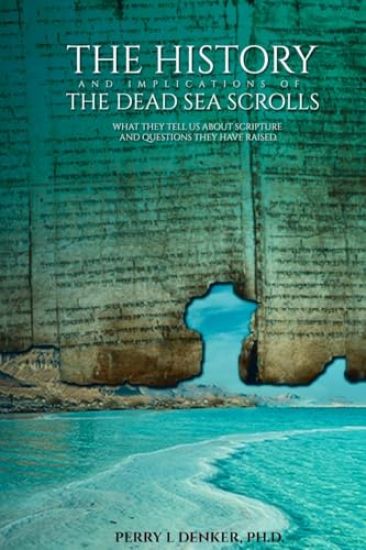
Embark on an exhilarating journey through the ancient world with "The History and Implications of the Dead Sea Scrolls." Delve into the fascinating realm of documents written before, during, and after Jesus' time on earth, offering concrete insights into a pivotal era in Judeo-Christian heritage. Unravel the mysteries surrounding their discovery, liberation, and the figures who brought them to light. Discover how the Dead Sea Scrolls have influenced biblical understanding and underscored a precursor to early Christianity. Join as we illuminate the profound impact of one of the greatest archaeological and religious finds of the 20th century. The Dead Sea Scrolls comprise a collection of Jewish documents found between 1947 and 1956 near the Dead Sea in the Judean desert. These texts include fragments from almost every book of the Hebrew Bible (also known as the Old Testament) and other Jewish texts such as hymns, prayers, and philosophical writings. The texts are primarily written in Hebrew, Aramaic, and Greek and provide valuable insights into the beliefs and practices of the Jewish people in the Second Temple period, 516 Before Common Era (BCE) to 70 Common Era (CE). The discovery of the Dead Sea Scrolls has been of great significance to the study of the Bible, particularly the Hebrew Bible. One of the most important aspects of the scrolls is that they provide scholars with access to much older versions of biblical texts than previously available. The scrolls date from 250 BCE to 68 CE. Prior to the unearthing of the Dead Sea Scrolls, the most ancient existing manuscripts of the Hebrew Bible originated in the 9th to 10th century CE.The Dead Sea Scrolls have helped scholars better understand the development and transmission of biblical texts over time. They have also offered significant insights into the beliefs and rituals of the Jewish society responsible for creating and safeguarding these writings.Additionally, the scrolls shed light on the cultural and historical context in which the Hebrew Bible was written and have contributed to the ongoing study of the text and its interpretation.The Scrolls also raise important questions and debates within biblical studies. For example, some scholars have argued that the scrolls provide evidence of alternative Jewish beliefs and practices that were suppressed by the mainstream Jewish community. Others have argued that the scrolls offer proof of a more diverse and complex Judaism than previously thought. Still, others have argued that the scrolls provide evidence of a more fluid and dynamic process of textual transmission than previously believed.The Dead Sea Scrolls are a valuable source of information about the Hebrew Bible and the beliefs and practices of the Jewish people in the Second Temple period. They provide important insights into the history and development of the text of the Hebrew Bible and shed light on the broader cultural and social context in which these texts were produced. At the same time, they raise important questions and debates that continue to be explored by scholars today.

An examination of the rise of the private sector in command economies.

This book aims to acquaint the reader with both the shared features and the diversity of the private and cooperative experience in the nations of the Communist bloc of Europe. It contributes to understanding of the difficulties standing in the way of a private-sector future in command economies.

"Existential Musing" is a collection of existential thoughts unique in today's published world. Author Perry Angle brings us parables, poems, dialogues, a short story and a play, all with his unusual approach to this world which he believes to be in free fall and decay. He is a modern example of an individual who finds that discord, indifference and waste are products of man. He writes of his beloved South with vigor, sensitivity, humility and intensity born of a longing for the land he knew as a boy all the while knowing that it can never be again.




Restoring the Soul of the University – Unifying Christian Higher Education in a Fragmented Age
Perry L. Glanzer; Nathan F. Alleman; Todd C. Ream
Inter-Varsity Press,US
2017
sidottu
Christianity Today's 2018 Book of the Year Award of Merit - Politics/Public Life Has the American university gained the whole world but lost its soul? In terms of money, prestige, power, and freedom, American universities appear to have gained the academic world. But at what cost? We live in the age of the fragmented multiversity that has no unifying soul or mission. The multiversity in a post-Christian culture is characterized instead by curricular division, the professionalization of the disciplines, the expansion of administration, the loss of community, and the idolization of athletics. The situation is not hopeless. According to Perry L. Glanzer, Nathan F. Alleman, and Todd C. Ream, Christian universities can recover their soul—but to do so will require reimagining excellence in a time of exile, placing the liberating arts before the liberal arts, and focusing on the worship, love, and knowledge of God as central to the university. Restoring the Soul of the University is a pioneering work that charts the history of the university and casts an inspiring vision for the future of higher education.

This account of the CoMission--a group of 83 Christian organizations formed to instruct Russian public school teachers in how to teach Christian ethics--provides unique insights both into postcommunist Russia and Western evangelical movements. Interviews with over 100 people intimately involved in Russian education, politics, and evangelism make the narrative's analysis thorough, accessible, and personal. The author's comprehensive research and first-person experience result in an informative, instructive, and compelling book.




The Quest for Purpose
Perry L. Glanzer; Jonathan P. Hill; Byron R. Johnson
State University of New York Press
2017
sidottu
Demonstrates how students and educators can resist narrow, utilitarian views of higher education's purpose.While the search for meaning and purpose appears to be a constant throughout human history, there are characteristics about our current time period that make this search different from any other previous time, particularly for college students. In this book, Perry L. Glanzer, Jonathan P. Hill, and Byron R. Johnson explore college students' search for meaning and purpose and the role that higher education plays. To shed empirical light on this complex issue, the authors draw on in-depth interviews with four hundred college students from different types of institutions across the United States. They also analyze three sets of national survey data: the National Study of Youth and Religion, College Students Beliefs and Values, and their own Gallup-conducted survey of 2,500 college students. Their research identifies important social, educational, and cultural influences that shape students' quests and the answers they find. Arguing against a utilitarian view of education, Glanzer, Hill, and Johnson conclude that colleges and universities can and should cultivate and aid students in their journeys, and they offer suggestions for doing so.


Computer technology has impacted the practice of medicine in dramatic ways. Imaging techniques provide noninvasive tools which alter the diagnostic process. Sophisticated monitoring equipment presents new levels of detail for both patient management and research. In most of these technology applications, the com puter is embedded in the device; its presence is transparent to the user. There is also a growing number of applications in which the health care provider directly interacts with a computer. In many cases, these applications are limited to administrative functions, e.g., office practice management, location of hospital patients, appointments, and scheduling. Nevertheless, there also are instances of patient care functions such as results reporting, decision support, surveillance, and reminders. This series, Computers and Medicine, will focus upon the direct use of infor mation systems as it relates to the medical community. After twenty-five years of experimentation and experience, there are many tested applications which can be implemented economically using the current generation of computers. More over, the falling cost of computers suggests that there will be even more extensive use in the near future. Yet there is a gap between current practice and the state-of the-art.


American educators have consistently splintered our humanity into pieces throughout higher education’s history. Although key leaders of America’s colonial colleges shared a common functional understanding of humans as made in God’s image with a robust but vulnerable moral conscience, latter moral philosophers did not build upon that foundation. Instead, they turned to shards of our identity to help students find their moral bearings. They sought to create ladies and gentlemen, honorable students, and finally, good professionals. As a result, fragmentation ensued as university leaders pitted these identity fragments against each other inciting a war of attrition.As the war of identities raged, its effects spilled out beyond the bounds of the curriculum into the co-curricular dimension that struggled with moving beyond being en loco parentis. The major identity they cultivated was that of being a political citizen. Thus, the major identity and story of students’ lives became the American political story of democracy—what I call Meta-Democracy. In higher education guided by Meta-Democracy, students lose their autonomy to administrators who reduce the student identities they try to develop along with the range of virtues that comprise the good life. The Dismantling of Moral Education: How Higher Education Reduced the Human Identity explains why and how we arrived at diminishing ourselves.