In Larry the adorable pooch's latest adventure, he goes on vacation with Pete and the family to Portland, Oregon. As usual, in hot pursuit of a tempting treat, he gets separated from the family and frantically tries to find them again. Along the way he discovers some of the city's most fun and interesting landmarks and cultural attractions, including the waterfront, the zoo, the Portland Art Museum, Hawthorne Bridge, Old Town, and the Park Blocks. List of attractions Larry visits: Old TownOMSIThe waterfrontHawthorne BridgeThe Park BlocksPowell's BooksThe zooInternational Rose Test GardenPortland Art MuseumJen WeldHawthorne BridgeLight Rail and streetcarUnion Station
In Larry the adorable pooch's latest adventure, he goes on vacation with Pete and the family to Philadelphia, home of the Liberty Bell and other great American historical landmarks. As usual, in hot pursuit of a tempting treat, Larry gets separated and frantically tries to find them again. Along the way he discovers some of the city's most fun and interesting landmarks and cultural attractions, including: City Hall (+Penn statue)Ben Franklin BridgePhilliesLiberty BellIndependence HallPat's and Geeno'sBetsy Ross HouseRittenhouse SquareOldenberg ClothespinElevated TrainLove ParkArt Museum + Rocky StatueZoo
Join Larry the pup and his owner Pete as they explore Boston, MA. From Fenway Park's Green Monster to the swan boats in Boston Public Garden, locals and visitors learn about Boston's history and cultural landmarks when Larry gets lost chasing after a tasty treat. As Larry searches the city for Pete, he visits Quincy Market, Freedom Trail, Boston Harbor, and more. With colorful illustrations and facts about each location, the latest addition to the Larry Gets Lost series is sure to delight and educate young readers. Larry makes friends and finds adventures wherever he goes, but where will he find Pete?
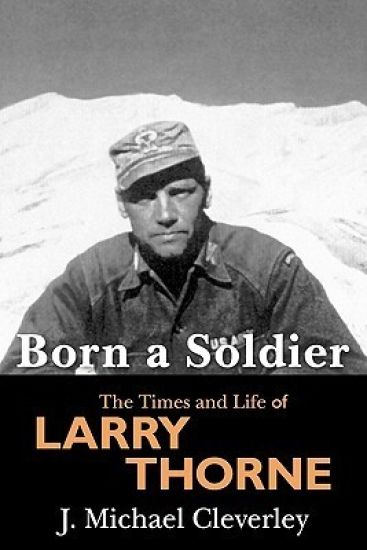
Born a Soldier is a tour of the mid-20th century's conflicts with the remarkable Larry Thorne. Capturing the "times" as well as the "life" of its protagonist, it is a journey with a truly amazing and colorful man. Born "Lauri T rni," Thorne fought in Finland's first to last battles with Russia winning the country's equivalent of the Congressional Medal of Honor. As the legendary leader of one of the most elite companies in the Finnish army, one of the best armies of World War II, Thorne carried a price on his head, dead or alive, from the Red Army, reputedly the only Finnish soldier so singled out. When World War changed to Cold War, Thorne was a refugee, political prisoner, fugitive, exile, and illegal alien, and eventually gained legal status in the US through an Act of Congress. An early member of the Green Berets he was soon a legend there, too: the book The Green Berets' first Vietnam hero, "Kornie" in Chapter One, the chapter that served as the basis for the movie.
This book takes a lofty vision of "recovery" and of "a life in the community" for every adult with a serious mental illness promised by the U.S. President's 2003 New Freedom Commission on Mental Health and shows the reader what is entailed in making this vision a reality. Beginning with the historical context of the recovery movement and its recent emergence on the center stage of mental health policy around the world, the authors then clarify various definitions of mental health recovery and address the most common misconceptiosn of recovery held by skeptical practitioners and wroried families. With this framework in place, the authors suggest fundamental principles for recovery-oreinted care, a set of concrete practice guidelines developed in and for the field, a recovery guide model of practice as an alternative to clinical case management, and tools to self-assess the recovery orientation of practices and practitioners. In doing so, this volume represents the first book to go beyond the rhetoric of recovery to its implementation in everyday practice. Much of this work was developed with the State of Connecticut's Department of Mental Health and Addiction Services, helping the state to win a #1 ranking in the recent NAMI report card on state mental health authorities. Since initial development of these principles, guidelines, and tools in Connecticut, the authors have become increasingly involved in refining and tailoring this approach for other systems of care around the globe as more and more governments, ministry leaders, system managers, practitioners, and people with serious mental illnesses nad their families embrace the need to transform mental health services to promote recovery and community inclusion. If you've wondered what all of the recent to-do has been about with the notion of "recovery" in mental health, this book explains it. In addition, it gives you an insider's view of the challenges and strategies involved in transforming to recovery and a road map to follow on the first few steps down this exciting, promising, and perhaps long overdue path.
This book provides a reassessment of the significance of Max Weber's work for the current debates about the institutional and organizational dynamics of modernity. It re-evaluates Weber's sociology of bureaucracy and his general account of the trajectory of modernity with reference to the strategic social structures that dominated the emergence and development of modern society. Included here are detailed analyses of contemporary issues such as the collapse of communism, fordism, coporatism and traditionalism in both Western and Eastern societies. All of the contributors are scholars of international repute. They undertake analyses of Weber's texts and his broader intellectual inheritance to reassert the centrality of Weberian sociology for our understanding of the moral, political and organizational dilemmas of late modernity. These analyses challenge orthodox readings of Weber as the prophet of the iron cage. Instead they offer interpretations of his work which emphasize the reality of modernity as a dual process with the potential for both disarticulation of rational structures and deeper colonization of daily life. Not only is this book essential reading for Weber specialists but it also provides compelling analyses of modernity and the inherently contingent nature of global cultural and stuctural transformation. Martin Albrow, Roehampton Institute; Stewart Clegg, University of Western Sydney; David Chalcraft, Oxford Brookes University; John Eldridge, Glasgow University; Larry J
This book provides a reassessment of the significance of Max Weber's work for the current debates about the institutional and organizational dynamics of modernity. It re-evaluates Weber's sociology of bureaucracy and his general account of the trajectory of modernity with reference to the strategic social structures that dominated the emergence and development of modern society. Included here are detailed analyses of contemporary issues such as the collapse of communism, fordism, coporatism and traditionalism in both Western and Eastern societies. All of the contributors are scholars of international repute. They undertake analyses of Weber's texts and his broader intellectual inheritance to reassert the centrality of Weberian sociology for our understanding of the moral, political and organizational dilemmas of late modernity. These analyses challenge orthodox readings of Weber as the prophet of the iron cage. Instead they offer interpretations of his work which emphasize the reality of modernity as a dual process with the potential for both disarticulation of rational structures and deeper colonization of daily life. Not only is this book essential reading for Weber specialists but it also provides compelling analyses of modernity and the inherently contingent nature of global cultural and stuctural transformation. Martin Albrow, Roehampton Institute; Stewart Clegg, University of Western Sydney; David Chalcraft, Oxford Brookes University; John Eldridge, Glasgow University; Larry J
So you’ve been asked to lead a quality control initiative? Or maybe you’ve been assigned to a quality team. Perhaps you’re a CEO whose main concern is to make your company faster, more efficient, and less expensive. Whatever your role is, quality control is a critical concept in every industry and profession. Quality Control For Dummies is the straightforward, easy guide to improving your company’s quality. It covers all of today’s available options and provides expert techniques for introducing quality methods to your company, collecting data, designing quality processes, and more. This hands-on guide gives you all the tools you’ll ever need to enhance your company’s quality, including: Understanding the importance of quality standardsPutting fundamental quality control methods to useListening to your customer about quality issuesWhipping quality control into shape with LeanWorking with value stream mappingFocusing on the 5S methodSupplement a process with KanbanFixing tough problems with Six SigmaUsing QFD to win customers overImproving you company with TOC This invaluable reference is written from an unbiased viewpoint, giving you all the facts about each theory with no fuzzy coverings. It also includes steps for incorporating quality into a new product and Web sites packed with quality control tips and techniques. With Quality Control For Dummies, you’ll be able to speed up production, eliminate waste, and save money!
Early in the twenty-first century, Abu Dhabi was the quintessential boom town as the proceeds from vast oil production transformed its traditional landscape. But since 2007, the Emirate has become a showcase where explosive piecemeal expansion was superseded by visionary planning and development management – with a deliberate focus on sustainability, livability, and cultural sensitivity. Planning the Future of Abu Dhabi explains this dramatic transformation. Working with Abu Dhabi colleagues, Canadians led the founding of a progressive planning agency. Their rapid and comprehensive process resulted in state-of-the-art guidance for development, including thorough urban and regional plans, a development control system, transportation innovations, environmental stewardship, and training for handover to local management. Larry Beasley, the overall project leader, and Michael White, the key in-country lead, bring together the Canadians to tell the story of how the Emirate was repositioned as a model in the Middle East for advanced, responsible growth.
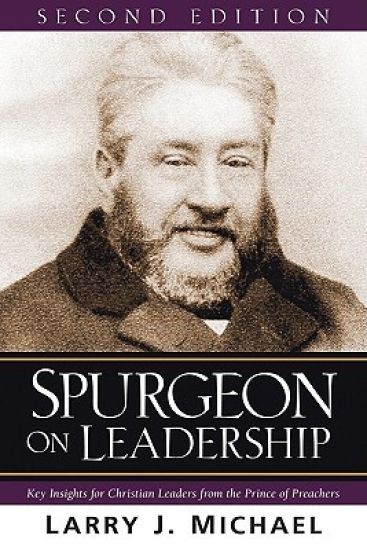
The impact of Charles Haddon Spurgeon continues to inspire evangelical leaders more than a century after his death. The nineteenth century "Prince of Preachers" demonstrated leadership ability that remains pertinent and applicable today. This is the highly anticipated revised and expanded edition of Spurgeon on Leadership. Students of leadership and pastors will continue to find a treasure trove of information from the man who pastored the first megachurch, began a college to train pastors, founded an orphanage, instituted countless charitable organizations, and could communicate with prime ministers and common people alike. No doubt among churches today this type of leader is in high demand, and Spurgeon's leadership style and innovations provide a challenging model. "I'm thrilled that [this] wonderful and insightful new book will introduce a new generation to Spurgeon's model of leadership." --Rick Warren, Pastor of Saddleback Church and author of The Purpose Driven Life "I highly recommend this book to all serious students of leadership!" --John C. Maxwell, Founder of the INJOY Group
A handbook to enable ministry leaders to help others through bereavementGrief is a difficult topic that ministry leaders deal with on a regular basis. Do they have confidence in helping those who are suffering the loss of a loved one? Do they feel equipped to meet the differing needs that occur in the life of a survivor? Can they lead someone through a process of grief reconciliation? Are they able to plan and implement a bereavement ministry in their church or parish? Here is a book that can help leaders in a practical way to minister to those who are grieving. In addition, they will discover essential tools to deal with grief's difficult questions.Drawing upon his thirty years of experience as a pastor and as a professional grief counselor, Dr. Michael provides a valuable resource for pastors and other grief leaders to use within their churches and organizations, and their surrounding communities. This work is a practical guide that will bring a greater understanding of the impact that loss has upon individuals and will provide competent counsel for ministering to them. In addition, it will equip the leader to implement a ministry of grief education and bereavement within a church or organization.
The empowering story of Larry Hite’s unlikely rise to the top of the hedge fund world—with critical insights and lessons you can take to the bank In The Rule, legendary trader and hedge fund pioneer Larry Hite recounts his working-class upbringing in Brooklyn as a dyslexic, partially blind kid who was anything but a model student—and how he went on to found and run Mint Investment Management Company, one of the most profitable and largest quantitative hedge funds in the world. Hite’s wild success is based on his deep understanding that markets are flawed—just like people. Through his early-life struggles and failures, Hite came to know himself well—his fears, his frustrations, his self-doubt, and his tolerance for all of the above. This motivational book reveals that by accepting the facts of his life and of himself, he was able to accept markets as they are. And that was the key to his success. In these pages, you’ll walk of the footsteps of an investing legend, who imparts smart, practical trading lessons throughout the journey. Making a successful living in trading isn’t about beating the markets. It’s about meeting markets where they are, embracing the fact of risk, knowing yourself, and playing it strictly by the numbers. The Rule shows that investing decisions are not only bets or gambles, but investments in time, energy, and attention. By focusing on realistic returns on your investments—versus what you expect or hope to get—you immediately improve your probability for success.
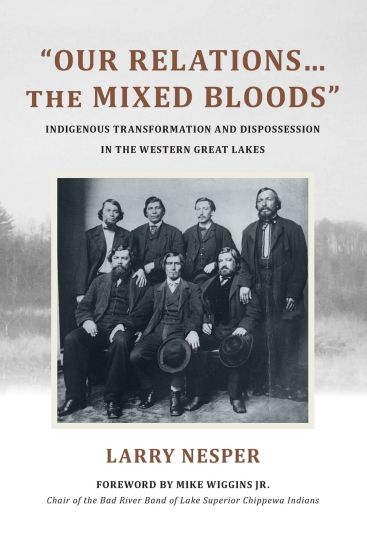
Articulates the relationships between kinship, racial ideology, mixed blood treaty provisions, and landscape transformation in the Great Lakes region.In the Great Lakes region of the nineteenth century, "mixed bloods" were a class of people living within changing indigenous communities. As such, they were considered in treaties signed between the tribal nations and the federal government. Larry Nesper focuses on the implementation and long-term effects of the mixed-blood provision of the 1854 treaty with the Chippewa of Wisconsin. That treaty not only ceded lands and created the Ojibwe Indian reservations in the region, it also entitled hundreds of "mixed-bloods belonging to the Chippewas of Lake Superior," as they appear in this treaty, to locate parcels of land in the ceded territories. However, quickly dispossessed of their entitlement, the treaty provision effectively capitalized the first mining companies in Wisconsin, initiating the period of non-renewable resource extraction that changed the demography, ecology, and potential future for the region for both natives and non-natives. With the influx of Euro-Americans onto these lands, conflicts over belonging and difference, as well as community leadership, proliferated on these new reservations well into the twentieth century. This book reveals the tensions between emergent racial ideology and the resilience of kinship that shaped the historical trajectory of regional tribal society to the present.
Articulates the relationships between kinship, racial ideology, mixed blood treaty provisions, and landscape transformation in the Great Lakes region.In the Great Lakes region of the nineteenth century, "mixed bloods" were a class of people living within changing indigenous communities. As such, they were considered in treaties signed between the tribal nations and the federal government. Larry Nesper focuses on the implementation and long-term effects of the mixed-blood provision of the 1854 treaty with the Chippewa of Wisconsin. That treaty not only ceded lands and created the Ojibwe Indian reservations in the region, it also entitled hundreds of "mixed-bloods belonging to the Chippewas of Lake Superior," as they appear in this treaty, to locate parcels of land in the ceded territories. However, quickly dispossessed of their entitlement, the treaty provision effectively capitalized the first mining companies in Wisconsin, initiating the period of non-renewable resource extraction that changed the demography, ecology, and potential future for the region for both natives and non-natives. With the influx of Euro-Americans onto these lands, conflicts over belonging and difference, as well as community leadership, proliferated on these new reservations well into the twentieth century. This book reveals the tensions between emergent racial ideology and the resilience of kinship that shaped the historical trajectory of regional tribal society to the present.
Meltdown reveals how the Consumer Financial Protection Bureau was able to curb unsafe and unfair practices that led to the 2008 financial crisis. In interviews with key government, industry, and advocacy groups along with deep archival research, Kirsch and Squires show where the CFPB was able to overcome many abusive practices, where it was less able to do so, and why.Open for business in 2011, the CFPB was Congress's response to the financial catastrophe that shattered millions of middle-class and lower-income households and threatened the stability of the global economy. But only a few years later, with U.S. economic conditions on a path to recovery, there are already disturbing signs of the (re)emergence of the high-risk, high-reward credit practices that the CFPB was designed to curb. This book profiles how the Bureau has attempted to stop abusive and discriminatory lending practices in the mortgage and automobile lending sectors and documents the multilayered challenges faced by an untested new regulatory agency in its efforts to transform the broken—but lucrative—business practices of the financial services industry.Authors Kirsch and Squires raise the question of whether the consumer protection approach to financial services reform will succeed over the long term in light of political and business efforts to scuttle it. Case studies of mortgage and automobile lending reforms highlight the key contextual and structural conditions that explain the CFPB's ability to transform financial service industry business models and practices. Meltdown: The Financial Crisis, Consumer Protection, and the Road Forward is essential reading for a wide audience, including anyone involved in the provision of financial services, staff of financial services and consumer protection regulatory agencies, and fair lending and consumer protection advocates. Its accessible presentation of financial information will also serve students and general readers.
What if everything you thought you knew about nutrition for health and weight loss was wrong? What if doing the opposite of what you've been taught actually made significant changes in your weight and health? Would you follow a way of eating that goes against conventional wisdom, focusing mainly on saturated fats, cholesterol and protein? When patients question me on the efficacy of what they are about to embark upon, my response is simple and concise: it's all about the sugar. Even when supposedly "healthy" sugar that comes from "healthy" whole grains, oatmeal, yogurt and milk that you've been consuming forever, it still has deleterious effects on your body. Besides the politics of why it's supposedly "healthy," the reality is that when you cut those foods out of your diet and replace them with the foods that you've been told not to eat, your weight and health will improve!
In turbulent times, King David united a nation--and his hard-earned wisdom can bring us together today. This new 30 Days With book offers a month of readings plus ideas for small-group discussion. David ranks among the world's greatest heroes for defeating Goliath and best-selling authors for writing Psalms. He is honored by Jews, Christians and Muslims. In this book, pastor, educator and leadership coach Larry Buxton shows us how David embodies 14 crucial values shared by effective leaders to this day.Just as the first volume in this series invites readers to spend 30 Days With Abraham Lincoln, one of the greatest unifying figures in American history, Buxton's book is a call for all of us to remember values that unite us. Buxton dedicates "this book to everyone who believes that the character of any leader is of critical importance to our nation, our institutions, our congregations and our homes; and to all those who seek to let God shape their character as more virtuous human beings, that their influence may spread to heal our world."Answering that call in the opening pages are two nationally known political leaders--one a Democrat and one a Republican, who came together in these pages to urge all of us to read these 30 short stories drawn from David's often tragically learned lessons about life.In his Foreword, U.S. Sen. Tim Kaine writes: "From the blockbuster arc of David's life, Larry Buxton assembles 30 short chapters on key leadership traits--patience, vision, humility, integrity, openness, tenderness, forgiveness, courage, gratitude, self-control, surrender, perseverance, calmness, justice. Buxton helps us see how David either exhibited these values or catastrophically failed to achieve them. The chapters are probing and conversational--with references from the worlds of literature, sports, politics and entertainment to illustrate how to apply these lessons to our everyday challenges." In his Preface, Andrew H. Card, who served in Washington D.C. during two Bush administrations, writes: "No matter what your faith or tradition of worship--and, no matter your role in business, management, philanthropy, sports, politics, government or family--you will find the adventures in these 30 daily readings extremely relevant and highly motivating. We need to meet David again through Larry Buxton's wise retelling of these stories--so that we all can lift up the best values in leadership in our institutions, our nation and our world."
In turbulent times, King David united a nation--and his hard-earned wisdom can bring us together today. This new 30 Days With book offers a month of readings plus ideas for small-group discussion. David ranks among the world's greatest heroes for defeating Goliath and best-selling authors for writing Psalms. He is honored by Jews, Christians and Muslims. In this book, pastor, educator and leadership coach Larry Buxton shows us how David embodies 14 crucial values shared by effective leaders to this day.Just as the first volume in this series invites readers to spend 30 Days With Abraham Lincoln, one of the greatest unifying figures in American history, Buxton's book is a call for all of us to remember values that unite us. Buxton dedicates "this book to everyone who believes that the character of any leader is of critical importance to our nation, our institutions, our congregations and our homes; and to all those who seek to let God shape their character as more virtuous human beings, that their influence may spread to heal our world."Answering that call in the opening pages are two nationally known political leaders--one a Democrat and one a Republican, who came together in these pages to urge all of us to read these 30 short stories drawn from David's often tragically learned lessons about life.In his Foreword, U.S. Sen. Tim Kaine writes: "From the blockbuster arc of David's life, Larry Buxton assembles 30 short chapters on key leadership traits--patience, vision, humility, integrity, openness, tenderness, forgiveness, courage, gratitude, self-control, surrender, perseverance, calmness, justice. Buxton helps us see how David either exhibited these values or catastrophically failed to achieve them. The chapters are probing and conversational--with references from the worlds of literature, sports, politics and entertainment to illustrate how to apply these lessons to our everyday challenges." In his Preface, Andrew H. Card, who served in Washington D.C. during two Bush administrations, writes: "No matter what your faith or tradition of worship--and, no matter your role in business, management, philanthropy, sports, politics, government or family--you will find the adventures in these 30 daily readings extremely relevant and highly motivating. We need to meet David again through Larry Buxton's wise retelling of these stories--so that we all can lift up the best values in leadership in our institutions, our nation and our world."