Kirjahaku
Etsi kirjoja tekijän nimen, kirjan nimen tai ISBN:n perusteella.
1000 tulosta hakusanalla Larry R. Beuchat

What are you trying to do with your money? Few of us take the time to analyze our financial needs and goals to answer that pressing question. In "Wealth Odyssey," author Larry R. Frank Sr. uses his extensive financial background to provide a universal road map that will help you determine the wealth you need to support your chosen lifestyle. Frank discusses such topics as: The Wealth Rule The Earning-Spending-Saving Formula Using debt wisely Risk management "Wealth Odyssey" is a practical, no-nonsense guide that will help you develop a personal definition of wealth and create an effective strategy for long-term financial success.




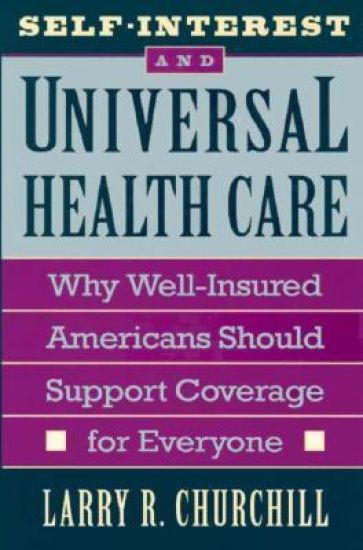
“I’m covered—why should I foot the bill for somebody who isn’t?”This question, unspoken but simmering at the center of the debate over universal health care coverage, comes in for a thoughtful hearing—and, perhaps, gentle corrective—in Larry Churchill’s timely book. Churchill, whose Rationing Health Care in America put the nation’s health care crisis into perspective, here does the same for our crisis of conscience over health care coverage. As Clinton and Congress spar over the financing and organization of a national health system, the true debate, this book reveals, is about moral and political values, about the meaning and ethics of health care reform.Churchill begins by cutting through the confused discussion about rationing health care. Concerns about rationing, with all the moral and political questions they raise, deflect our attention from a more important issue, which this book brings into focus. Arguing that care is already rationed by ability to pay, Churchill suggests that the proper question is not whether to ration but how to do so fairly, and that answering requires a clear sense of the aims of a health care system. In pursuit of this necessary understanding, Churchill explores values and concepts such as security and solidarity, self-interest and social affinity, rights and responsibilities. Drawing on philosophical ideas of justice and individual responsibility, rendered here with remarkable clarity, he shows that universal care is morally as well as economically comprehensible and that a truly inclusive health care system should be seen as a common civic purpose rather than as a supply of services to be consumed. Accessible, deeply felt, and cogently argued, this book should revise the terms of the national debate over health care reform.

Fighting My Greatest Enemy: Myself: Trust in God/Confia en Dios
Larry R. Hardin
Dianne's Consultant Services
2019
nidottu
Assess job performance to predict future success.
Get new employees up to speed quickly.
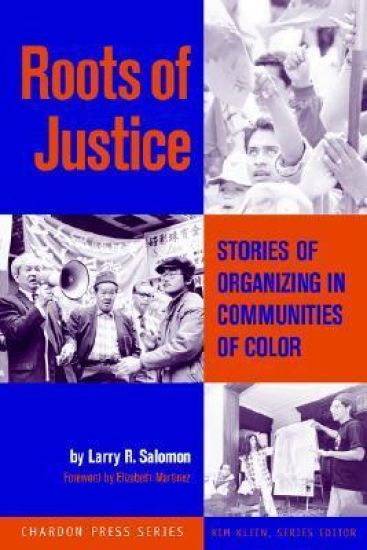
With a foreword by Elizabeth Martinez, Roots of Justice recaptures some of the nearly forgotten histories of communities of color. These are the stories of people who fought back against exploitation and injustice--and won. From the Zoot Suiters who refused to put up with abuse at the hands of the Navy, to the women who organized the welfare rights movement of the 1970s, Roots of Justice shows how, through organizing, ordinary people have made extraordinary contributions to change society.

Hybrid Neural Network and Expert Systems presents the basics of expert systems and neural networks, and the important characteristics relevant to the integration of these two technologies. Through case studies of actual working systems, the author demonstrates the use of these hybrid systems in practical situations. Guidelines and models are described to help those who want to develop their own hybrid systems. Neural networks and expert systems together represent two major aspects of human intelligence and therefore are appropriate for integration. Neural networks represent the visual, pattern-recognition types of intelligence, while expert systems represent the logical, reasoning processes. Together, these technologies allow applications to be developed that are more powerful than when each technique is used individually. Hybrid Neural Network and Expert Systems provides frameworks for understanding how the combination of neural networks and expert systems can produce useful hybrid systems, and illustrates the issues and opportunities in this dynamic field.

Hybrid Intelligent Systems summarizes the strengths and weaknesses of five intelligent technologies: fuzzy logic, genetic algorithms, case-based reasoning, neural networks and expert systems, reviewing the status and significance of research into their integration. Engineering and scientific examples and case studies are used to illustrate principles and application development techniques. The reader will gain a clear idea of the current status of hybrid intelligent systems and discover how to choose and develop appropriate applications. The book is based on a thorough literature search of recent publications on research and development in hybrid intelligent systems; the resulting 50-page reference section of the book is invaluable. The book starts with a summary of the five major intelligent technologies and of the issues in and current status of research into them. Each subsequent chapter presents a detailed discussion of a different combination of intelligent technologies, along with examples and case studies. Four chapters contain detailed case studies of working hybrid systems. The book enables the reader to:Describe the important concepts, strengths and limitations of each technology; Recognize and analyze potential problems with the application of hybrid systems; Choose appropriate hybrid intelligent solutions; Understand how applications are designed with any of the approaches covered; Choose appropriate commercial development shells or tools. An invaluable reference source for those who wish to apply intelligent systems techniques to their own problems.
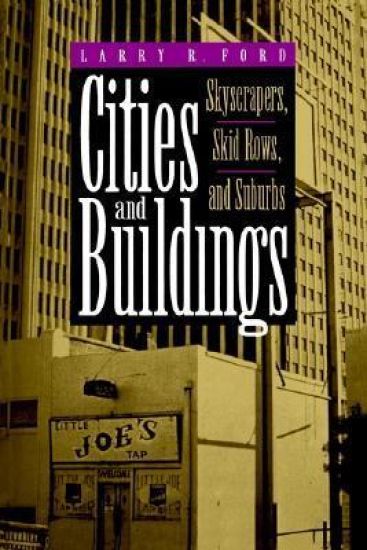
In this text, Ford offers an account of the relationship between urban architecture - especially vernacular architecture - and the spatial arrangement and development of cities in North America. From office towers in the central business district to commercial strips in the "edge city", Ford shows how changes in the built environment parallel changes in urban economies and human culture. Focusing on ordinary structures rather than famous landmarks, the book aims to provide a guide to understanding the changing character of any urban landscape. Ford describes how the idea - as well as the appearance - of the modern city has changed with the evolution of buildings such as skyscrapers, skid-row hotels, single family bungalows and ranches, large apartment buildings, public-housing towers, motels, mini-malls and festival market-places. Through illustrated case studies of specific building types in particular places, Ford explores the conflicting forces of decline, revitalization and preservation that constantly transform the urban scene.
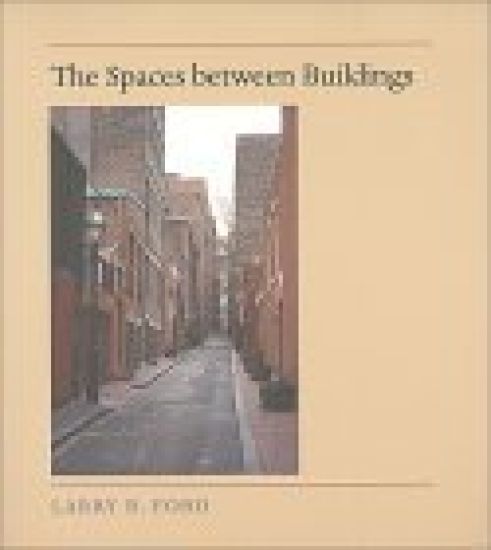
Gates and fences, sidewalks and driveways, alleys and parking lots-these ordinary features have an important architectural impact, influencing how a building relates to the spaces around it. As geographer Larry R. Ford argues, architectural histories and guidebooks tell us surprisingly little about the character of American cities because they concentrate on buildings taken out of context, buildings divorced from space. In The Spaces between Buildings, Ford focuses on the neglected "nooks and crannies" between structures, supplementing his analysis with three photographic essays. Long before Ford knew anything about geography or architecture, he was a connoisseur of front porches, alleys, and loading docks. As a kid in Columbus, Ohio, he knew where to find coal chutes to play in, which rooftops and fire escapes were ideally suited for watching parades, and which stoops were perfect for waiting for a bus. To him the spaces between buildings seemed wonderfully integrated and connected. The Spaces between Buildings is the result of Ford's preoccupation with the relationship of buildings to one another and how their means of access and boundaries organize the areas around us. As Ford observes, a city with friendly, permeable facades and a great variety of street-level doors is more conducive to civic life than a city characterized by fortresslike structures with blank walls and invisible doors. Life on the street is defined and guided by the nature of the surrounding buildings. Similarly, a residential neighborhood with front porches, small lawns or gardens, and houses with lots of windows and architectural details presents a more walkable and gregarious setting than a neighborhood where public space is surrounded by walls, three-car garage doors, blank facades, and concrete driveways. Ford begins by looking at the growth of four urban places, each representing a historical era as much as a geographic location: the Islamic medina; the city shaped by the Spanish renaissance; the nineteenth-century North American city; and the twentieth-century American city. His first essay also discusses the evolution of the free-standing structure as a basic urban building type and the problems encountered in beautifying the often work-a-day back and side yards that have helped to create the image of the untidy American city. The second essay examines the urban trend toward viewing lawns, gardens, hedges, and trees as an essential adjunct to architecture. The final essay focuses on pedestrian and vehicular spaces. Here the author includes the landscape of the garage, sidewalks, streets, and alleys. In its exploration of how spaces become places, The Spaces between Buildings invites readers to see anew the spaces they encounter every day and often take for granted.
What makes a good downtown, and why? Are today's downtowns, with their waterfront parks, festival markets, sports arenas, and cultural centers, more vibrant and lively than the "central business districts" of the nineteenth and early twentieth centuries? Was there ever a "golden age" of downtowns? In this book, noted urban scholar Larry Ford casts a critical and practiced eye on sixteen contemporary urban centers to offer an expert's view of the best-and worst-of downtown America. Ford begins with a brief history of U.S. urban development. He then explains his criteria for evaluating downtowns before proceeding with an on-the-street examination of the featured sixteen cities. Each is rated based on use of physical site, particularly for housing (unlike suburbs, Ford notes, most downtowns are located in challenging physical locales, such as harbors, rivers, hills, or peninsulas), street morphology, civic space, functional aspects (office space, retail stores, and convention centers), and the support districts in the fringe areas surrounding the downtown core.Ford concludes with a suggested model of downtown structure based upon the case studies and with a look at the possible effects of increasing globalization on the downtowns of the late twenty-first century. This book will appeal to those interested in urban studies, landscape studies, American studies, architecture, historic preservation and planning, and urban geography. Featured cities: Atlanta, Baltimore, Charlotte, Cleveland, Columbus, Denver, Indianapolis, Minneapolis, Phoenix, Pittsburgh, Portland, Providence, San Antonio, San Diego, Seattle, and St. Louis
The philosopher Jacques Barzun thought that "whoever wants to know the heart and mind of America had better learn baseball." And whoever wants to know baseball had better learn about umpires. As Larry Gerlach points out in The Men in Blue, these arbiters transform competitive chaos into organized sport. They make it possible to "play ball," but nobody loves them. Considering the abuse meted out by fans and players, why would any sane person want to be an umpire? Many reasons emerge in conversations with a dozen former major league arbiters. While nobody loves them, they love the game. Gerlach has elicited entertaining stories from these figures under fire--about their lonely travels, their dealings with umpire baiters, battles for unionization, breaking through the color line, and much more. From Beans Reardon, who came up to the National League in 1926, to Ed Sudol, who retired in 1977, here is a witty and telling portrait of baseball from the boisterous Golden Age to the Jet Age of Instant Replay.