
Kirjahaku
Etsi kirjoja tekijän nimen, kirjan nimen tai ISBN:n perusteella.
1000 tulosta hakusanalla Laura E. Kennedy

Berlin Borderline: Ein unglaublicher Tatsachenbericht
Laura E
Createspace Independent Publishing Platform
2014
nidottu
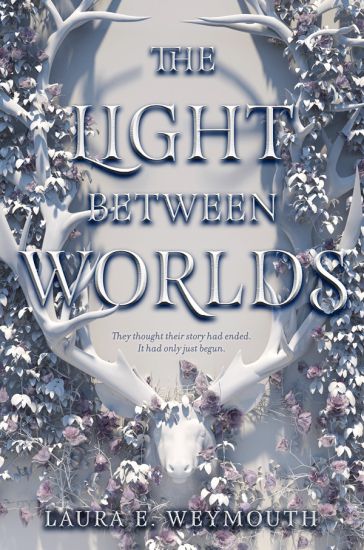
What happens when you return to the real world after being in a fantastical one like Narnia? This YA debut by Laura E. Weymouth is perfect for fans of Melissa Albert's The Hazel Wood and Lev Grossman's The Magicians.Six years ago, sisters Evelyn and Philippa Hapwell were swept away to a strange and beautiful kingdom called the Woodlands, where they lived for years. But ever since they returned to their lives in post-WWII England, they have struggled to adjust.Ev desperately wants to return to the Woodlands, and Philippa just wants to move on. When Ev goes missing, Philippa must confront the depth of her sister's despair and the painful truths they've been running from. As the weeks unfold, Philippa wonders if Ev truly did find a way home, or if the weight of their worlds pulled her under.Walking the line between where fantasy and reality meet, this lyrical and magical novel is, above all else, an exploration of loss and healing, and what it means to find where you belong. This edition uses deckle edges; the uneven paper edge is intentional.
What happens when you return to the real world after being in a fantastical one like Narnia? This YA debut by Laura E. Weymouth is perfect for fans of Melissa Albert's The Hazel Wood and Lev Grossman's The Magicians.Six years ago, sisters Evelyn and Philippa Hapwell were swept away to a strange and beautiful kingdom called the Woodlands, where they lived for years. But ever since they returned to their lives in post-WWII England, they have struggled to adjust.Ev desperately wants to return to the Woodlands, and Philippa just wants to move on. When Ev goes missing, Philippa must confront the depth of her sister's despair and the painful truths they've been running from. As the weeks unfold, Philippa wonders if Ev truly did find a way home, or if the weight of their worlds pulled her under.Walking the line between where fantasy and reality meet, this lyrical and magical novel is, above all else, an exploration of loss and healing, and what it means to find where you belong.
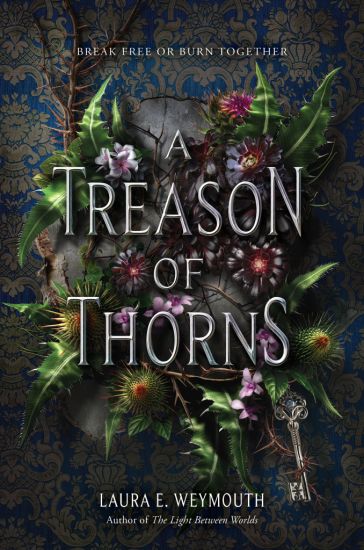
Dark, gripping, and utterly unique, this atmospheric historical fantasy from critically acclaimed author Laura E. Weymouth is perfect for fans of The Hazel Wood and Caraval.Violet Sterling has spent the last seven years in exile, longing to return to Burleigh House. One of the six great houses of England, Burleigh's magic kept both the countryside and Violet happy. That is, until her father's treason destroyed everything. Now she's been given a chance to return home. But Burleigh isn't what she remembered. Wild with grief, Burleigh's very soul is crying out in pain. As its tormented magic ravages the countryside, Vi must decide how far she's willing to go to save her house--before her house destroys everything she's ever known.A house left unchecked will lead to ruin.But I will not let it ruin me.
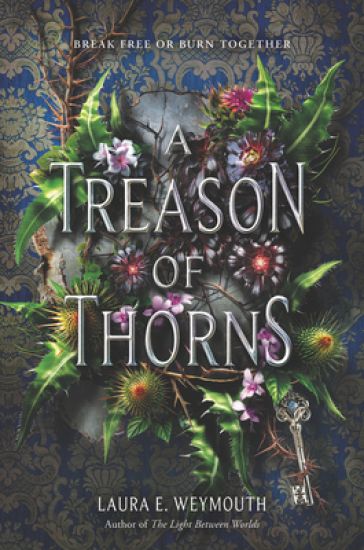
Dark, gripping, and utterly unique, this atmospheric historical fantasy from critically acclaimed author Laura E. Weymouth is perfect for fans of The Hazel Wood and Caraval.Violet Sterling has spent the last seven years in exile, longing to return to Burleigh House. One of the six great houses of England, Burleigh's magic kept both the countryside and Violet happy. That is, until her father's treason destroyed everything. Now she's been given a chance to return home. But Burleigh isn't what she remembered. Wild with grief, Burleigh's very soul is crying out in pain. As its tormented magic ravages the countryside, Vi must decide how far she's willing to go to save her house--before her house destroys everything she's ever known.A house left unchecked will lead to ruin.But I will not let it ruin me.

The Elusive Everyday in the Fiction of Marilynne Robinson
Laura E. Tanner
Oxford University Press
2021
sidottu
Framing Marilynne Robinson's fiction within the dynamics of everyday life, this study highlights the tensions of form and content that haunt moments of transcendence in her work. Robinson's novels, it argues, construct a world that is mimetic as well as symbolic and revelatory. Although the heightened apprehension of the quotidian in Robinson's novels often registers powerfully and beautifully in representational terms, its aesthetic intensity is enacted at the expense of characters who patrol the margins of the ordinary with unceasing vigilance. Inhabiting the everyday self-consciously, her protagonists perform a forced relationship to the ordinary that seldom relaxes into the natural or the familiar; scarred by grief, illness, aging, and trauma, they inhabit a world of transcendent beauty suffused with the terrifying threat of loss. Stiffly perched on the edge of un-cushioned furniture or propped awkwardly in the midst of someone else's conversation, Robinson's characters hover in the margins of a lived experience they are often forced to observe self-consciously and vigilantly. The signature acts of transfiguration that punctuate Robinson's narratives originate from and anticipate the inevitability of absence: the death of loved ones (Housekeeping), the impending death of the self (Gilead), the fracture of family (Home), the repetition of trauma and abandonment (Lila), the prohibition of everyday intimacy in interracial romance (Jack). Highlighting the tensions of the uncomfortable ordinary that disrupt a trajectory of transcendence in her fiction, this book situates Robinson's novels within sociological, psychological, and phenomenological studies of trauma, grief, aging, race, and gender, as well as narrative theory and everyday life studies. Focusing on the experiential dynamics of the lived worlds her novels invoke, The Elusive Everyday argues for the complexity, relevance, and contemporaneity of Robinson's fiction.
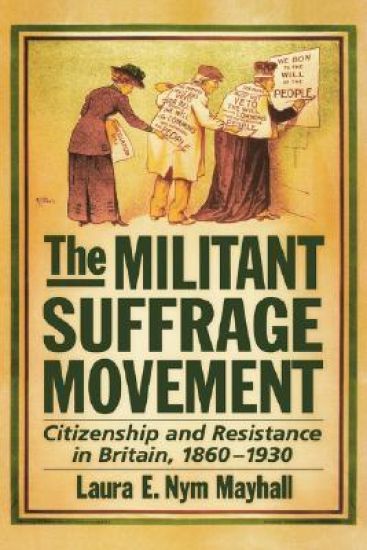
The image of upper-class women chaining themselves to the rails of 10 Downing Street, smashing windows of public buildings, and going on hunger strikes in the cause of "votes for women" have become visually synonomous with the British suffragette movement over the past century. Their story has become lore among feminists, in effect separating women's fight for voting rights from contemporary issues in British political history and disconnecting their militancy from other forms of political militancy in Britain in the 19th and early 20th centuries. Mayhall examines the strategies that suffragettes employed to challenge the definitions of citizenship in Britain. She examines the resistance origins within liberal political tradition, its emergence during Britain's involvement in the South African War, and its enactment as spectacle. Enlarging the study of the militant campaign for suffrage, Mayhall analyzes not only its implications for the social history of gender but also, and more importantly, its connections to British political and intellectual history. This book is already being touted as a critical revisionist work in the history of suffrage in Britain.
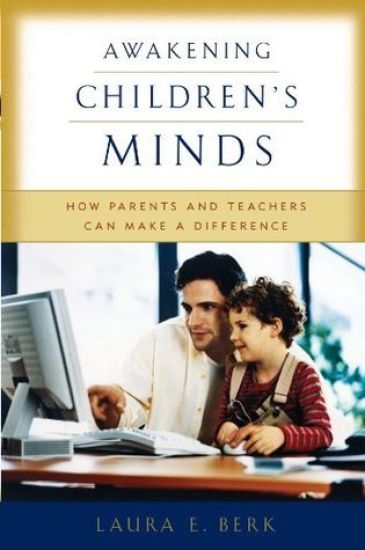
This book's central message is that parent and teachers contribute profoundly to the development of competent, caring, well-adjusted children. In particular, it argues that adult-child communication in shared activites is the wellspring of psychological development. These dialogues enhance language skills, reasoning ability, problem-solving strategies, the capacity to bring action under the control of thought, and the child's cultural and moral values. The author explains how children weave the voices of more expert cultural members into dialogues with themselves. She also offers concrete suggestions for creating and evaluating quality educational environments - at home, in child care, in preschool, and in primary school - and addresses the unique challenges of helping children with special needs. Parents, Berk writes, need a consistent way of thinking about their role in children's lives, one that can guide them in making effective child-rearing decisions. Awakening Children's Minds gives us the basic guidance we need to raise caring, thoughtful, intelligent children.
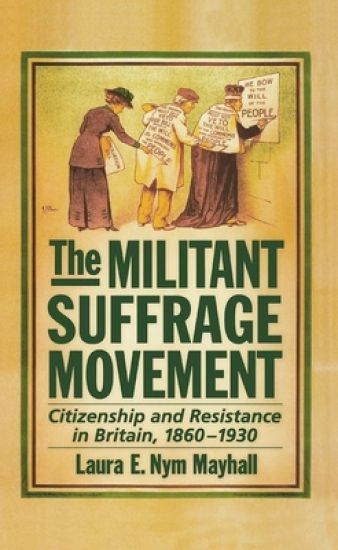
The image of middle-class women chaining themselves to the rails of 10 Downing Street, smashing windows of public buildings, and going on hunger strikes in the cause of "votes for women" have become visually synonymous with the British suffragette movement over the past century. Their story has become a defining moment in feminist history, in effect separating women's fight for voting rights from contemporary issues in British political history and disconnecting their militancy from other forms of political activism in Britain in the 19th and early 20th centuries. Drawing upon private papers, pamphlets, newspapers, and the records of a range of suffrage and political organizations, Laura E. Nym Mayhall examines militancy as both a political idea and a set of practices that suffragettes employed to challenge their exclusion from the political nation. She traces the development of the suffragettes' concept of resistance from its origins within radical liberal discourse in the 1860s, to its emergence as political practice during Britain's involvement in the South African War, its reliance on dramatic spectacle by suffragette organizations, and its memorialization following enfranchisement. She reads closely the language and tactics militants used, analyzing their challenges in the courtroom, on the street, and through legislation as reasoned actions of female citizens. The differences in strategy among militants are highlighted, not just in the use of violence, but also in their acceptance and rejection of the authority of the law and their definitions of the ideal relationship between individuals and the state. Variations in the nature of protest continued even during World War I, when most suffragettes suspended their activities to serve the nation's war effort, while others joined peace movements, opposed the state's reduction of civil liberties in wartime, and continued the struggle for suffrage. Mayhall's revealing account of the militant suffrage movement sheds new light upon the social history of gender but, more importantly, it connects this movement to the political and intellectual history of Britain. Not only did militancy play an essential role in the achievement of women's political rights but it also contributed to the practice of engaged citizenship and the growth of liberal democracy.
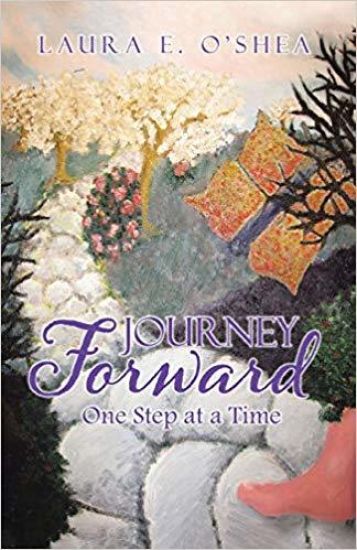
I believed in my friends more than myself...They had convinced me to leave my family to stop my dad from sexually assaulting me. Being there for my family was my life. I thought our small LGBTQ+ community would be my chosen family. We survived suicidal ideation and sexual assault, but our lives overwhelm and divide us. What happens when my friends are gone? I try to take steps forward with my education and friendships. I am not sure if I am enough. Who am I now?
"Tanner deals with the central question of all narrative texts: how the reader is manipulated into empathy or distance by the text. . . . This study . . . is the sort that needs to be redone in every classroom and by every mature reader. . . . Tanner offers provocative and useful discussions of rape and torture . . . " —Choice "This thoughtful and disturbing book raises serious questions about 'the consequences . . . of reading representations of rape and torture.' " —American Literature "In this incisive exploration of twentieth-century novels, art, and ads, Laura Tanner explains the mechanisms by which reader and viewer are implicated in violence. Equally effective as a challenge to textual assault is the grace and gentleness of Tanner's own prose. Intimate Violence signals the emergence of an astute and humane critical voice." —Wendy Steiner Through an examination of such notorious works as The White Hotel and American Psycho, Laura Tanner leads us in a disturbing exploration of the reader's complicity with fictional depictions of intimate violence.
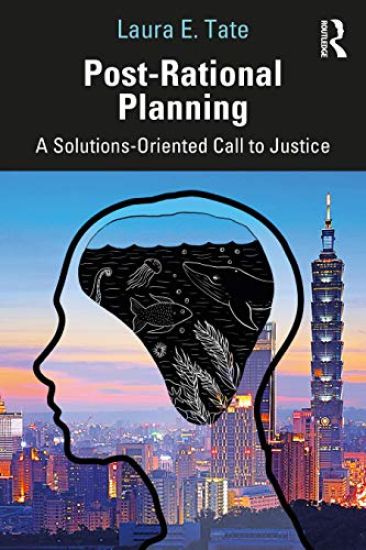
Post-Rational Planning confronts today’s threats to truth, particularly after recent news events that present alternative facts and media smear campaigns, often described as post-truth politics. At the same time, it appreciates critical tensions: between rationality (prized by planners and other policy professionals) and desires for positive, socially just outcomes. Rather than abandoning quests for truth, this book provides planners, policy professionals, and students with tools for better responding to debates over truth.Post-Rational Planning examines planners’ unease with emotion and politics, advocating for more scholarship and practice capable of unpacking uses of rhetoric and framing to support or counter key planning decisions impacting social justice. This includes learning from recent works engaging with rhetoric, narrative construction, and framing in planning, while introducing other valuable concepts from disciplines like psychology, including confirmation bias; identity-protective cognition; from marketing and adult education. Each chapter sheds new light on a specific topic requiring a response through post-rational practice. It starts with recent research findings, then demonstrates them with case examples, enabling their use in classroom and practice settings. Each chapter ends by summarizing key lessons in "Take-aways for Practice," better enabling readers of all levels to synthesize and use key ideas.
Post-Rational Planning confronts today’s threats to truth, particularly after recent news events that present alternative facts and media smear campaigns, often described as post-truth politics. At the same time, it appreciates critical tensions: between rationality (prized by planners and other policy professionals) and desires for positive, socially just outcomes. Rather than abandoning quests for truth, this book provides planners, policy professionals, and students with tools for better responding to debates over truth.Post-Rational Planning examines planners’ unease with emotion and politics, advocating for more scholarship and practice capable of unpacking uses of rhetoric and framing to support or counter key planning decisions impacting social justice. This includes learning from recent works engaging with rhetoric, narrative construction, and framing in planning, while introducing other valuable concepts from disciplines like psychology, including confirmation bias; identity-protective cognition; from marketing and adult education. Each chapter sheds new light on a specific topic requiring a response through post-rational practice. It starts with recent research findings, then demonstrates them with case examples, enabling their use in classroom and practice settings. Each chapter ends by summarizing key lessons in "Take-aways for Practice," better enabling readers of all levels to synthesize and use key ideas.
This book offers us the wisdom of a distinguished group of international psychoanalysts about supervision and other aspects of the psychoanalytic training experience. It serves as a stimulus to our thinking about the most important aspect of psychoanalytic education.
This book highlights perspectives from religious traditions worldwide, in conversation with other communities who promote, critique, or question the idea of human rights. It shows how human rights can provide a platform for dialogue among groups of people from diverse backgrounds who seek to address pressing issues of human well-being.In each chapter, readers will be introduced to religious and human rights perspectives on specific global issues. Intersecting with these issues, the work examines history and philosophy of human rights, for a generally accessible overview of human rights theory, foundations, and critique. Specific case studies woven through the book will also help both students and advocates – whether they are part of religious communities or not – engage more deeply with particular areas of concern.This volume is a useful resource for undergraduate students who are learning about the relationship between religion and human rights in a classroom for the first time, as well as upper-level and graduate students looking for a broad basis of knowledge and a starting point for digging deeper into specific areas of scholarship.
This book highlights perspectives from religious traditions worldwide, in conversation with other communities who promote, critique, or question the idea of human rights. It shows how human rights can provide a platform for dialogue among groups of people from diverse backgrounds who seek to address pressing issues of human well-being.In each chapter, readers will be introduced to religious and human rights perspectives on specific global issues. Intersecting with these issues, the work examines history and philosophy of human rights, for a generally accessible overview of human rights theory, foundations, and critique. Specific case studies woven through the book will also help both students and advocates – whether they are part of religious communities or not – engage more deeply with particular areas of concern.This volume is a useful resource for undergraduate students who are learning about the relationship between religion and human rights in a classroom for the first time, as well as upper-level and graduate students looking for a broad basis of knowledge and a starting point for digging deeper into specific areas of scholarship.
Thriving in College with ADHD
Laura E. Knouse; Will Canu; Kate Flory; Cynthia M. Hartung
TAYLOR FRANCIS LTD
2023
nidottu
Developed by four professors who also happen to be ADHD experts, this interactive and customizable workbook provides coaching to students with ADHD to make skills like managing time, motivating and organizing oneself, and "adulting" a workable part of everyday college life. Other books for college students with ADHD only describe personal experiences or just give advice, but this workbook promotes learning through interactive exercises and behavioral practice. It will allow you to address issues most relevant to your needs at whatever pace feels right. Modules are designed to be engaging, digestible, and activity-oriented. With practice, you will come away with improved skills that will help you to succeed in college, and to live your best life. This workbook can be used on its own; however, an accompanying Thriving in College guide for therapists uses an approach that mirrors what you will be learning and doing. If you have this workbook and are getting support from a therapist, encourage them to use the therapist guide along with you!Parents can also benefit from information in this workbook, to help their college students along the way and to understand ADHD and how it impacts the college years.

Thriving in College with ADHD
Laura E. Knouse; Will Canu; Kate Flory; Cynthia M. Hartung
TAYLOR FRANCIS LTD
2023
sidottu
Developed by four professors who also happen to be ADHD experts, this interactive and customizable workbook provides coaching to students with ADHD to make skills like managing time, motivating and organizing oneself, and "adulting" a workable part of everyday college life. Other books for college students with ADHD only describe personal experiences or just give advice, but this workbook promotes learning through interactive exercises and behavioral practice. It will allow you to address issues most relevant to your needs at whatever pace feels right. Modules are designed to be engaging, digestible, and activity-oriented. With practice, you will come away with improved skills that will help you to succeed in college, and to live your best life. This workbook can be used on its own; however, an accompanying Thriving in College guide for therapists uses an approach that mirrors what you will be learning and doing. If you have this workbook and are getting support from a therapist, encourage them to use the therapist guide along with you!Parents can also benefit from information in this workbook, to help their college students along the way and to understand ADHD and how it impacts the college years.
Identity, Oppression, and Diversity in Archaeology
Laura E. Heath-Stout
TAYLOR FRANCIS LTD
2024
nidottu
Identity, Oppression, and Diversity in Archaeology documents how racism, classism, sexism, heterosexism, and ableism affect the demographics of archaeology and discusses how knowledge that archaeologists produce is shaped by the discipline’s demographic homogeneity.Previous research has shown that, like many academic fields, archaeology is numerically dominated by straight white cisgender people, and those in positions of authority are predominantly men. This book examines how and why those demographic trends persist. It also elucidates how individual archaeologists’ social identities shape the research they conduct, and therefore, how our demographics affect and limit our knowledge production on a disciplinary scale. It explains how, through unflinching reflection, proactive policymaking, and sincere community-building, we can build a diverse and inclusive discipline.This book will appeal to archaeologists who have an interest in diversity and inclusion within the discipline as well as scholars in other disciplines who are engaged in research on diversity in academia.