Kirjojen hintavertailu. Mukana 12 428 612 kirjaa ja 12 kauppaa.

Kirjahaku

Etsi kirjoja tekijän nimen, kirjan nimen tai ISBN:n perusteella.

1000 tulosta hakusanalla Laura Sandor

Kübeke elutervet vihkamist

Kübeke elutervet vihkamist

Maarja Kruusmets; Laura Loolaid; Kristi Reisel; Veiko Belials; Meelis Friedenthal; Artur Räpp; Miikael Jekimov; Triinu Meres; Kristjan Sander

Fantaasia
2024
sidottu
Manfred Kalmsteni ja Kadri Kääramehe koostatud fantastikakogu, milles rõhutakse jonnakale ja igipüsivale lootusele ühiskondades või olukordades, kus aeg on end huvitavaks ja tulevik inimvaenulikuks kirjutanud.Apaatiale, künismile ja üleüldisele minnalaskmisele heidavad seekord kinda: Meelis Friedenthal, Häli Kivisild, Veiko Belials, Artur Räpp, Kristi Reisel, Kristjan Sander, Maarja Kruusmets, Miikael Jekimov, Laura Loolaid, Manfred Kalmsten, Lüüli Suuk ja Triinu Meres.
Body/Sex/Work

Body/Sex/Work

Carol Wolkowitz; Rachel Lara Cohen; Teela Sanders

Red Globe Press
2013
nidottu
Body/Sex/Work focuses on the intimate, embodied and sexualised labour that occurs within body work and sex work. Bringing together an internationally renowned group of academics, it explores, empirically and theoretically, labour processes, workplace relations, regulation and resistance in some of the many work sites that make up the body work and sex work sectors. The book makes a key contribution to research recognising the embodiment of labour and the body, reframing the key questions in critical studies of work and employment.Key Benefits:- The first book that draws together the sub-disciplines of body work and sex work- Written by leading international experts- Contains cutting edge empirical research on contemporary topicsBody/Sex/Work is an ideal companion for upper level undergraduate and postgraduate students of labour and organisation studies, body studies, gender, and sexuality. It will also appeal to researchers and lecturers in these fields.
Laura

Laura

Vera Caspary

Vintage
2012
pokkari
In the doorway of an elegant New York apartment, blood seeps over silk negligee, over polished wood floors and plush carpet: a beautiful young woman lies dead, her face disfigured by a single gun shot. But who was Laura?
Laura

Laura

Larry Watson

Washington Square Press Inc.,N.Y.
2001
pokkari
In a captivating departure, Larry Watson, "a writer whose work is worthy of prizes" ("Los Angeles Times Book Review"), unveils a portrait of faith, obsession, and enduring love -- and a work of greater tenderness than anything he has yet written. "Laura" Love captures Paul Finley, in, of all places, his own bedroom -- literally waking him from his dreams. The night he discovers Laura Pettit standing at his windowsill, Paul is eleven years old, a boy naturally inclined toward seriousness, precociously adept at the art of watching the world without being watched. Laura is twenty-two, a fiercely passionate and independent poet already experiencing the first flickers of fame, a beautiful woman on the brink of seducing Paul's father. No matter; Paul is smitten. When she leaves him to rejoin the grown-ups' party downstairs, Laura issues Paul a wholly impossible command, one that will haunt and consume both of them for the rest of their lives: "Forget me." Laying bare the inner life of one man during the course of nearly four decades, Larry Watson delivers a riveting treatise on the excruciating power of love -- and two of the most remarkable characters in recent American literature. Infused with breathtaking pathos and delicate grace, "Laura" is an extraordinary triumph of the novelist's art.
Laura

Laura

Barbara L. Estrin

Duke University Press
1994
pokkari
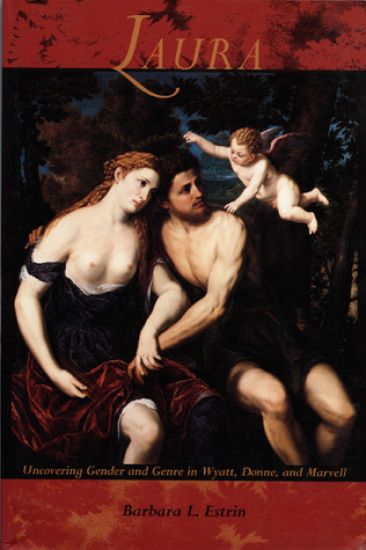
How do men imagine women? In the poetry of Petrarch and his English successors-Wyatt, Donne, and Marvell-the male poet persistently imagines pursuing a woman, Laura, whom he pursues even as she continues to deny his affections. Critics have long held that, in objectifying Laura, these male-authored texts deny the imaginative, intellectual, and physical life of the woman they idealize. In Laura, Barbara L. Estrin counters this traditional view by focusing not on the generative powers of the male poet, but on the subjectivity of the imagined woman and the imaginative space of the poems she occupies. Through close readings of the Rime sparse and the works of Wyatt, Donne, and Marvell, Estrin uncovers three Lauras: Laura-Daphne, who denies sexuality; Laura-Eve, who returns the poet’s love; and Laura-Mercury, who reinvents her own life. Estrin claims that in these three guises Laura subverts both genre and gender, thereby introducing multiple desires into the many layers of the poems. Drawing upon genre and gender theories advanced by Jean-FranÇois Lyotard and Judith Butler to situate female desire in the poem’s framework, Estrin shows how genre and gender in the Petrarchan tradition work together to undermine the stability of these very concepts.Estrin’s Laura constitutes a fundamental reconceptualization of the Petrarchan tradition and contributes greatly to the postmodern reassessment of the Renaissance period. In its descriptions of how early modern poets formulate questions about sexuality, society and poetry, Laura will appeal to scholars of the English and Italian Renaissance, of gender studies, and of literary criticism and theory generally.
Laura

Laura

Barbara L. Estrin

Duke University Press
1994
sidottu
How do men imagine women? In the poetry of Petrarch and his English successors-Wyatt, Donne, and Marvell-the male poet persistently imagines pursuing a woman, Laura, whom he pursues even as she continues to deny his affections. Critics have long held that, in objectifying Laura, these male-authored texts deny the imaginative, intellectual, and physical life of the woman they idealize. In Laura, Barbara L. Estrin counters this traditional view by focusing not on the generative powers of the male poet, but on the subjectivity of the imagined woman and the imaginative space of the poems she occupies. Through close readings of the Rime sparse and the works of Wyatt, Donne, and Marvell, Estrin uncovers three Lauras: Laura-Daphne, who denies sexuality; Laura-Eve, who returns the poet’s love; and Laura-Mercury, who reinvents her own life. Estrin claims that in these three guises Laura subverts both genre and gender, thereby introducing multiple desires into the many layers of the poems. Drawing upon genre and gender theories advanced by Jean-FranÇois Lyotard and Judith Butler to situate female desire in the poem’s framework, Estrin shows how genre and gender in the Petrarchan tradition work together to undermine the stability of these very concepts.Estrin’s Laura constitutes a fundamental reconceptualization of the Petrarchan tradition and contributes greatly to the postmodern reassessment of the Renaissance period. In its descriptions of how early modern poets formulate questions about sexuality, society and poetry, Laura will appeal to scholars of the English and Italian Renaissance, of gender studies, and of literary criticism and theory generally.
Laura!

Laura!

Tracey Richardson

Createspace Independent Publishing Platform
2013
nidottu
Laura is a fictionalized story of Laura Boult of St. Maurice, Louisiana. She left her small town and went to the big city in 1900 after having four boys with two different common-law husbands. In 1905, after being fired by the famous Schubert Brothers of Broadway fame, she left New York in disgrace with an all-black dance troupe headed to Paris, France. It was in Paris that she met the handsome Fran oise Goldman who taught her how to drop her strap and step out of her tap pants to fame and fortune, the likes of which she had never imagined. In 1940, just days before the Germans invaded Paris, Laura, Fran oise, and their daughter fled for their lives, arriving in New York with little more than the clothes they carried in their suitcases. While in New York, they worked at whatever jobs that were offered them. Laura returned to a liberated Paris in 1948 where, with the help of her former stage manger Jules Eitenne, she regained both her fame and her fortune.