This volume collects twenty of Lawrence Kramer’s seminal writings on art song (especially Lieder), opera, and word-music relationships. All examine the formative role of culture in musical meaning and performance, and all seek to demonstrate the complexity and nuance that arise when words and music interact. The diverse topics include words and music, music and poetry, subjectivity, the sublime, mourning, sexuality, decadence, orientalism, the body, war, Romanticism, modernity, and cultural change. Several of the earlier essays have been revised for this volume, which also contains a preface by the author and a foreword by Richard Leppert. The volume should be essential reading for scholars, students, performing musicians, and other music-lovers interested in musicology, word-music relationships, cultural studies, aesthetics, and intermediality.
A lyrical, provocative journey into the art, memory, and meaning of experience. What does it mean to have an experience? When did we begin to believe we could “have" one at all? In Experience: A History, Lawrence Kramer traces the cultural birth of experience as a singular, life-defining event. Moving lyrically between criticism and memoir, he guides readers from Petrarch and Nietzsche to Virginia Woolf and Anne Carson; from Haydn’s Creation to Billie Holiday's searing “Strange Fruit.” Along the way we encounter Niagara Falls and the Galápagos, Parisian department stores and Café Society, Emerson, Henry James, Schubert, and Chopin. Anticipated as early as the fourteenth century and accelerating after the eighteenth, records of concentrated, unforgettable moments begin to proliferate—until the possibility of having an experience becomes a demand for one. Experience turns into something to seek, curate, even consume. Yet its power lies in its particulars: the convergence of history, art, memory, and self. At once personal and tender, challenging and vulnerable, Experience fuses philosophical argument with intimate recollection. The result is both a sweeping intellectual history and a deeply human reckoning with the experiences that shape and unsettle modern life.
Walt Whitman worked as a nurse in an army hospital during the Civil War and published "Drum-Taps," his war poems, as the war was coming to an end. Later, the book came out in an expanded form, including "When Lilacs Last in the Dooryard Bloom'd," Whitman's passionate elegy for Lincoln. The most moving and enduring poetry to emerge from America's most tragic conflict, "Drum-Taps" also helped to create a new, modern poetry of war, a poetry not just of patriotic exhortation but of somber witness. "Drum-Taps" is thus a central work not only of the Civil War but of our war-torn times. But "Drum-Taps" as readers know it from "Leaves of Grass" is different from the work of 1865. Whitman cut and reorganized the book, reducing its breadth of feeling and raw immediacy. This edition, the first to present the book in its original form since its initial publication 150 years ago, is a revelation, allowing one of Whitman's greatest achievements to appear again in all its troubling glory.
In Music, Awake Her, Martha Kapos discovers a way of using sonata form to emphasise and reveal key episodes of feeling, ones returned to in different poems written in various moods over a period of nearly 30 years. She imagines sonata form as a narrative structure – with relations to parents giving rise to the two key themes, the child’s conflicts, modulations and resolutions between the two outlining an emotional trajectory that leads from early life, the exposition, through adulthood, development, to the new poems embodying the recapitulations of old age. In his Afterword, American musicologist Lawrence Kramer writes that the ‘revisited past is the only past we have. The question of sonata form is how to find it.’ The interlocking of themes and images here makes this Selected and New Poems a remarkable, and psychologically acute, showcase for Martha Kapos’s work. With an afterword by Lawrence Kramer: Sonata, What Do You Want of Me?
This is the fifth of The Game Changer Book Series, inspired by Iman Aghay. This series is a collection of behind-the-scenes stories - stories that most people never realize have laid the foundation for a successful business or company. These stories are personal, connected to the author's heart, and many of them are being shared for the first time with you, our reader. In reading this collection, you will resonate with this old adage: "Everyone you meet is fighting a battle you know nothing about Be kind, always...".Iman Aghay is a serial entrepreneur, international speaker, and 6-time #1 best-selling author.He is best known as the founder of Success Road Academy and has created over 50 courses that help coaches, authors, speakers, and entrepreneurs grow their business aligned with their life purpose.In 2010, Iman founded Success Road Academy, which has become an industry leader in online marketing and training. Through Success Road Academy, Iman has worked with over 150,000 business owners, in various niches, and helped them expand their business and impact. Iman is also the founder of Entrepreneurs International Network, which has a community of over 150,000 members in 5 countries. Iman is also part owner of JV Insider Circle, the world's leading community for entrepreneurs to find partnerships and deals, by utilizing community and connection. He continues making an impact through using community to connect entrepreneurs to their life purpose, and the people who can assist them.He has become widely successful by helping other people to achieve greatness in their own lives.Iman's TEDx talk is one of the world's top-rated speeches, which focuses on how to live a life with no regrets.Iman has mastered creating a successful heart-centered business. He believes that all entrepreneurs can build a business based on their life's purpose. His vision of having a massive positive impact on 100 million people has fueled his love and passion for guiding entrepreneurs to success.As the Leaders' Mentor, Iman's focus was and always is serving his clients and community with the utmost excellence and integrity.
Obwohl sich Kamerun zu den in der Verfassung verankerten universellen Menschenrechtsgrunds tzen bekennt, werden Frauen in Bezug auf Landrechte nach wie vor diskriminiert. Die Verantwortung f r die derzeitige Situation liegt vor allem bei den gesetzlichen und gewohnheitsrechtlichen Bestimmungen, die nicht nur miteinander in Konflikt stehen, sondern auch nicht sehr eindeutig sind. Das Landeigentum wird durch eine F lle von Gesetzen, Verordnungen und Verwaltungsanordnungen geregelt, die sich st ndig ndern. Diese Gesetze sind f r den Schutz der Landrechte von Frauen nicht sehr wirksam, da sie geschlechtsneutral sind, obwohl sie in einer gewohnheitsrechtlich gepr gten Gesellschaft gelten, in der die Gewohnheiten geschlechtsspezifisch sind. Das Gewohnheitsrecht ist im Prinzip des Patriarchats verwurzelt, das von der Vorherrschaft des Mannes und der Unterordnung der Frau ausgeht. Die Verweigerung der Landrechte von Frauen durch das Gewohnheitsrecht beruht auf vier Irrt mern: Frauen sind unbest ndig, Frauen sind Eigentum, Frauen sind gut f r Leviratsehen und Witwen werden wahrscheinlich wieder heiraten. In Wirklichkeit haben Frauen keine eigene Identit t und k nnen nicht mit einer so wertvollen Ressource (Land) betraut werden.
Human Physiology, Biochemistry and Basic Medicine is a unique perspective that draws together human biology, physiology, biochemistry, nutrition, and cell biology in one comprehensive volume. In this way, it is uniquely qualified to address the needs of the emerging field of humanology, a holistic approach to understanding the biology of humans and how they are distinguished from other animals. Coverage starts with human anatomy and physiology and the details of the workings of all parts of the male and female body. Next, coverage of human biochemistry and how sugars, fats, and amino acids are made and digested is discussed, as is human basic medicine, covering the science of diseases and human evolution and pseudo-evolution. The book concludes with coverage of basic human nutrition, diseases, and treatments, and contains broad coverage that will give the reader an understanding of the entire human picture.
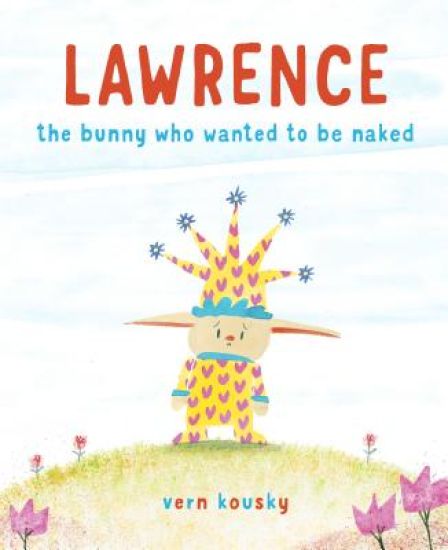
In this funny, charming, and oh-so-relatable picture book, meet a young bunny named Lawrence who is determined to decide what he wears--or doesn't wear. Ever since he was a tiny bunny, Lawrence's mother has dressed him up in all the most fashionable clothes--the brightest colors and the most interesting styles. Lawrence wears homemade sweater suits. And inflatible helium balloon pants. The only problem? Lawrence hates wearing clothes and longs to hop naked through the fields--just like all the other bunnies. So Lawrence comes up with an ingenious plan to turn the tables on his mother. Ultimately, the mother-son duo devise a way to put their considerable creative talents to use, in a way that makes both of them happy. In this picture book that's perfect for Easter and year round, kids will laugh out loud at (and understand ) Lawrence's quest for independence, just as parents will identify with how hard it is to let go of your one-and-only special bunny....
With its skyline dominated by the campus of the University of Kansas, the history of Lawrence cannot be divorced from the history of the academy, its influence, and impact. The history of any town, however, is much more than the story of one institution o
The story of the last years of the life of T.E. Lawrence - Lawrence of Arabia - a scholar, writer, soldier and reluctant hero. Retiring to his cottage in Dorset he hopes to escape his past but is pulled into political intrigue. While he has powerful friends, with his uncompromising manner he has made dangerous enemies. In May 1935 Lawrence dies in a tragic motorcycle accident. However with such enemies was his untimely death an assassination and cover up by the British Secret Service?
Lawrence is one of the council assassins, perhaps the one who ended up with the worst ability-he's a snake shifter, and he secretes his venom even in his human form. He's never been able to eliminate it entirely from his saliva and bloodstream, and that means he's made sure to stay away from sex and hookups as much as possible-until now. When he's sent to kidnap the son of Gavin White, the man experimenting on shifters, he discovers Griffith is his mate.Griffith is a geneticist. He works for a shifter-owned company that tries to help the shifters and humans who were experimented on by the Glass Research Company. When he's kidnapped by a cute blond who tells him his father is doing the opposite-experimenting on shifters to turn them into war machines-he's horrified, and he wants to help.Lawrence has no idea what to do with the knowledge that Griffith is his mate. They can't bond, not with the venom in Lawrence's saliva, so he decides not to tell Griffith about it. He hasn't counted on Griffith's stubbornness, though, and when he has to rush to help his mate, he knows he won't be able to stay away, even though it would be the right thing to do.