Kirjahaku
Etsi kirjoja tekijän nimen, kirjan nimen tai ISBN:n perusteella.
51 tulosta hakusanalla Lenoida Busi

Controlling Fluctuations of Diabetes Blood Glucose, Healing and Preventing Nerve Damage with Baby's Milk
Leonida Lidman
CCB Publishing
2009
pokkari
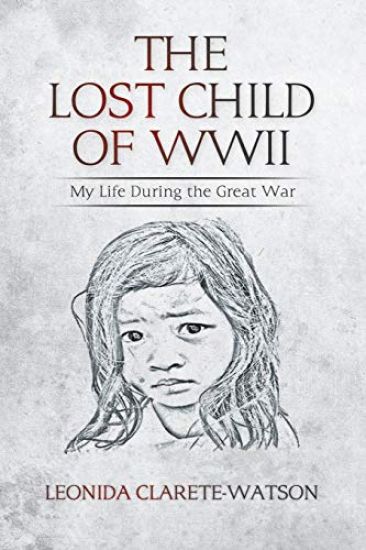

Let me take you back to the earliest childhood memory I have of my father. Growing up in the province of Pampanga, just outside the city of Porac, we didn't have a lot of money. We lived in a small village just south of the province in a small hut. Like many families back then, we made do with what we had and struggled to get by, just like everyone else at that time. My father was in the Philippine Army, and he would be gone for weeks at a time, sometimes months at a time. But I always knew when he returned home because I would wake up to a bunch of grapes on my pillow. I would smile as I awoke and whisper, "Daddy's home."

Let me take you back to the earliest childhood memory I have of my father. Growing up in the province of Pampanga, just outside the city of Porac, we didn't have a lot of money. We lived in a small village just south of the province in a small hut. Like many families back then, we made do with what we had and struggled to get by, just like everyone else at that time. My father was in the Philippine Army, and he would be gone for weeks at a time, sometimes months at a time. But I always knew when he returned home because I would wake up to a bunch of grapes on my pillow. I would smile as I awoke and whisper, "Daddy's home."

Explainable AI with Python
Leonida Gianfagna; Antonio Di Cecco
Springer Nature Switzerland AG
2021
nidottu
This book provides a full presentation of the current concepts and available techniques to make “machine learning” systems more explainable. The approaches presented can be applied to almost all the current “machine learning” models: linear and logistic regression, deep learning neural networks, natural language processing and image recognition, among the others.Progress in Machine Learning is increasing the use of artificial agents to perform critical tasks previously handled by humans (healthcare, legal and finance, among others). While the principles that guide the design of these agents are understood, most of the current deep-learning models are "opaque" to human understanding. Explainable AI with Python fills the current gap in literature on this emerging topic by taking both a theoretical and a practical perspective, making the reader quickly capable of working with tools and code for Explainable AI.Beginning with examples of what Explainable AI (XAI) is and why it is needed in the field, the book details different approaches to XAI depending on specific context and need. Hands-on work on interpretable models with specific examples leveraging Python are then presented, showing how intrinsic interpretable models can be interpreted and how to produce “human understandable” explanations. Model-agnostic methods for XAI are shown to produce explanations without relying on ML models internals that are “opaque.” Using examples from Computer Vision, the authors then look at explainable models for Deep Learning and prospective methods for the future. Taking a practical perspective, the authors demonstrate how to effectively use ML and XAI in science. The final chapter explains Adversarial Machine Learning and how to do XAI with adversarial examples.
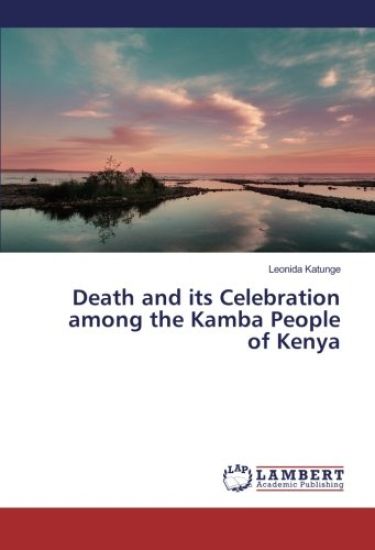
Death and its Celebration among the Kamba People of Kenya
Leonida Katunge
Lap Lambert Academic Publishing
2016
nidottu

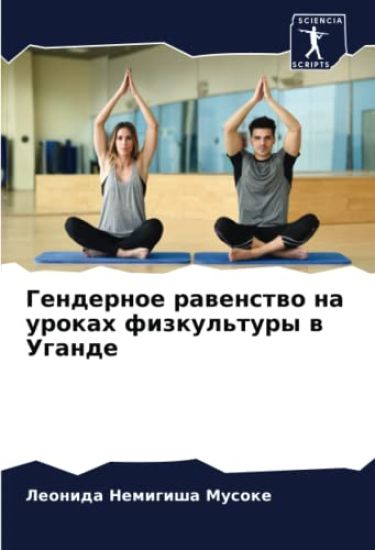
Gendernoe rawenstwo na urokah fizkul'tury w Ugande
Leonida Nemigisha Musoke
Sciencia Scripts
2022
nidottu
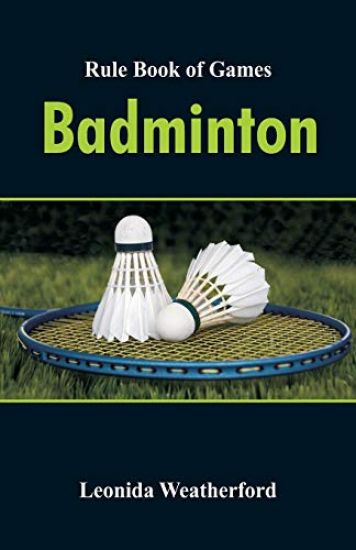
Badminton is a racquet sport played using racquets to hit a shuttlecock across a net. Although it may be played with larger teams, the most common forms of the game are "singles" (with one player per side) and "doubles" (with two players per side). Badminton is often played as a casual outdoor activity in a yard or on a beach; formal games are played on a rectangular indoor court. Points are scored by striking the shuttlecock with the racquet and landing it within the opposing side's half of the court. Badminton offers a wide variety of basic strokes, and players require a high level of skill to perform all of them effectively. All strokes can be played either forehand or backhand. A player's forehand side is the same side as their playing hand: for a right-handed player, the forehand side is their right side and the backhand side is their left side. To win in badminton, players need to employ a wide variety of strokes in the right situations. These range from powerful jumping smashes to delicate tumbling net returns. Often rallies finish with a smash, but setting up the smash requires subtler strokes. For example, a net shot can force the opponent to lift the shuttlecock, which gives an opportunity to smash. If the net shot is tight and tumbling, then the opponent's lift will not reach the back of the court, which makes the subsequent smash much harder to return. This book features an enormous amount of information about Badminton throughout the world. This is a comprehensive text, offering both beginners and advanced Badminton players the knowledge necessary to play this sport.

Boxing is considered the oldest event which man used in his life. However, in the beginning it was used in a very rough manner. As the interest of people arouse towards this event, it was needed to make the game refined for which boxing federation was created, which has full control over the game. Boxing is a combat sport in which two people, usually wearing protective gloves, throw punches at each other for a predetermined set of time in a boxing ring. Boxing is an indoor sport which gained so much momentum these days that it is popular in almost all over the world. There are some categories in Boxing bouts for e.g., light heavy, heavy weight etc. Boxing needs stamina, strength and fitness and a Boxer should work out regularly so as to fulfil his goal. This book features an enormous amount of information about boxing thought the world. This book also includes biographies and starts with the most basics of basics and explains the hows and whys of boxing at a pace where even the most ignorant can soon know as much about the sport as any professional.

Nuclear Weapons and Warfare and China's Grand Security Challenges
Leonida Weatherford
Alpha Edition
2018
sidottu
Nuclear weapons, the means of producing them, and their potential use play significant roles in international relations and homeland security. Throughout its history recommendations for defense planners and helped policymakers make informed national security decisions with regard to the Nuclear Nonproliferation Treaty and the nuclear activities of India, Pakistan, China, North Korea, Iran, and other nations. World events in recent years have led observers, particularly since late 2013, to conclude that the international security environment in recent years has undergone a shift from the post-Cold War era that began in the late 1980s and early 1990s, also sometimes known as the unipolar moment (with the United States as the unipolar power), to a new and different situation that features, among other things, renewed great power competition with China and Russia and challenges by these two countries and others to elements of the U.S.-led international order that has operated since World War II. At the technical level, India has the means for an assured strike capability against Pakistan. But it will take at least another decade before India acquires similar assurance against China. The pernicious nature of the Indo-Pakistani ideological rivalry, Pakistan's continued resort to low-intensity warfare, and China's huge nuclear lead do not bode well for deterrence and crisis stability in the Asia-Pacific. After the Cold War and especially in the 21st century, an increasingly complex array of internal and external security concerns confronts China's leaders with new challenges. A nuclear weapon derives its destructive force from nuclear reactions of fission or fusion, thus making even a nuclear weapon with a relatively small yield significantly more powerful than the largest conventional explosives. A wide range of subjects from fundamentalism and terrorism to regional and international security, China's contribution to nuclear and missile proliferation, and bargaining asymmetries between India and China absorbed the attention of the workshop.
China's Viewpoint of India's Economic Development Representation
Leonida Weatherford
Alpha Edition
2018
sidottu
Trends in global defence industry have impinged India in many ways. India's defence industry has witnessed significant changes since the end of the Cold War. In the 1990s, changes in both institutional and policy spheres became more prominent. The most far reaching change that has occurred in recent years in India's defence-industrial sector is related to its opening up to the market. Long protected as a closed sector, India's defence industry has now opened up for private participation. As if this was not enough, it is also showing enough willingness to become an exporter and dares to venture into the competitive global arms market. Emerging countries are having an ever greater impact on politics and economics. China and India in particular--both of which have strong ties with Japan--form the kernel of the BRIC group of rapidly developing nations (Brazil, Russia, India, and China). In terms of scale, the BRICs include the world's largest nations, and account for about 40% of the global population and 30% of the world's land. The international community was formerly dominated by a cluster of European nations with populations on the order of 50 million people, but with the assimilation of countries having over a billion people, the international community is taking on a very different complexion. The challenges facing China and India for sustaining rapid economic growth and meeting the MDGs are similar in nature. First there is the matter of continuing to reduce poverty and hunger and maintain food security. Two other serious issues concern the widening rural-urban income gap and the degradation of the environment. Also of concern is the need to restructure agriculture and markets to meet more diversified consumer and export market food demand, and the need to adopt policies that enable both countries to maintain comparative advantage in commodity production. How these challenges are addressed will determine to a large degree the success in meeting the MDGs, the ability to sustain growth and the role that these economies will play in world markets. This book makes an interesting reading for historians, defence and policy analysts, researchers and general readers alike.

Der Tod und seine Feier beim Volk der Kamba in Kenia
Leonida Katunge
Verlag Unser Wissen
2025
pokkari

La muerte y su celebración entre los kamba de Kenia
Leonida Katunge
Ediciones Nuestro Conocimiento
2025
nidottu
La mort et sa célébration chez les Kamba du Kenya
Leonida Katunge
Editions Notre Savoir
2025
pokkari


A morte e a sua celebração entre o povo Kamba do Quénia
Leonida Katunge
Edicoes Nosso Conhecimento
2025
pokkari