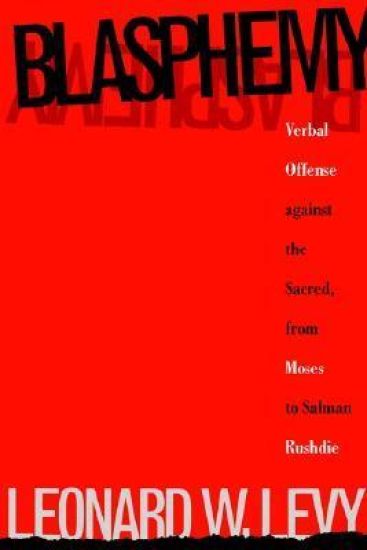
Leonard Levy traces the varied meanings of blasphemy throughout Western law. He argues that while past sanctions against the crime have inhibited all manner of cultural, political, scientific, and literary expression, we also pay a price for our extraordinary expansion of the scope of permissible speech. We have become, he charges, not only a free society but one that is 'numb' to outrage. |Pfanz provides the definitive account of the fighting between the Army of the Potomac and Robert E. Lee's Army of Northern Virginia at Cemetery Hill and Culp's Hill--two of the most critical engagements fought at Gettysburg on July 2 and 3, 1863. ""A defin
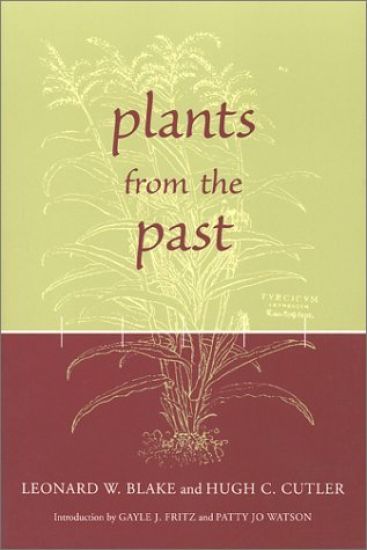
Plants from the Past is a fascinating, comprehensive record of the work of two dedicated plant scientists who were instrumental in the establishment of archaeobotany and paleoethnobotany as vigorous subdisciplines within American archaeology. Hugh Carson Cutler and Leonard Watson Blake worked together for many decades at the Missouri Botanical Garden in St. Louis, identifying and interpreting plant remains from archaeological sites all over North America. Covering a period of 30 years and tracing the development of the study of plant remains from archaeological sites, the volume will give archaeologists access to previously unavailable data and interpretations. It features the muchsought-after extensive inventory ""Plants from Archaeological Sites East of the Rockies,"" which serves as a reference to archaeobotanical collections curated at the Illinois State Museum. The chapters dealing with protohistory and early historic foodways and trade in the upper Midwest are especially relevant at this time of increasing attention to early Indian-white interactions. The editors' introduction provides coherence and historical context for the papers and points to the book's potential as a resource for future research. Graced by Dr. Blake's brief introductions to each chapter, Plants from the Past neatly compiles the earliest research in archaeobotany by two originators of the science.
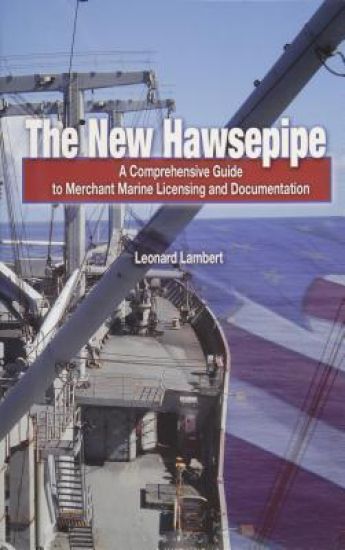
The New Hawsepipe takes the mystery out of all Coast Guard and STCW 95 requirements. Striving to climb through the ranks to Merchant Marine? Let The New Hawespipe be your travel mate. This companion reference guide will take you step-by-step through classes, exams, sea time, and how to build positive relationships with Coast Guard personnel and will serve as your closest ally while you build your maritime career. Topics covered include: – IMO policy changes, STCW 95 – Setting realistic goals for completing all requirements – Gaining the right sea time for the right license – Planning, from applications to licensing – Class descriptions and expectations – Finding endorsements and expiration dates for increased job marketability – Comprehensive list of Coast Guard-approved training facilities, financial aid resources, and how to transfer from the military to the Merchant Marines – Preparation for all Coast Guard exams, including off-site and Category I classes – Monitoring Coast Guard policy changes
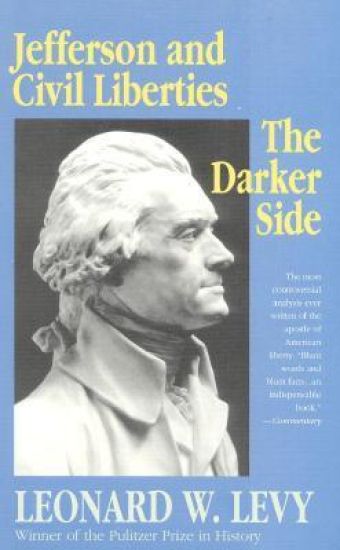
In the most controversial analysis ever written of the apostle of American liberty, the distinguished constitutional historian Leonard W. Levy examines Jefferson’s record on civil liberties and finds it strikingly wanting. Clearing away the saintliness that surrounds the hero, Mr. Levy tries to understand why the “unfamiliar” Jefferson supported loyalty oaths; countenanced internment camps for political suspects; drafted a bill of attainder; urged prosecutions for seditious libel; condoned military despotism; used the Army to enforce laws in time of peace; censored reading; chose professors for their political opinions; and endorsed the doctrine that means, however odious, are justified by ends. "Implicitly," Mr. Levy writes, "this book is a study of libertarian leadership in time of power and time of danger...Jefferson should be seen [by his biographers] as a whole man in the perspective of his times, but my task is to determine the validity of his historical reputation as the apostle of liberty." "Blunt words and blunt facts...an indispensable book."—Commentary.
Don Scheller is a poet, teacher, and visual artist, who makes his home in Buffalo, NY. The images and poems included in this volume were created independently of each other, over the course of 40 years. Scheller's sometimes dark, always thought-provoking, black & white photographs visually reinforce the introspective message in each of his poems, including his long forms and his "almost Haiku" short pieces. His deep sensitivity and wry humor are apparent throughout. The book contains 99 photographs. The material is presented with alternating image and poem, in seven chapters: 1. "Along the Way" portrays a vivid picture of the artist's youthful memories and lessons learned. 2. "Faithful Delusion" reflects Scheller's deep, somewhat cynical, grasp of how people fool themselves with unadulterated trust in authority. 3. "Critically Creating" delivers some delightful insights on the creative process and experience. 4. "Relating...Sometimes Loving" is at once a reflection of the artist's empathic observations of relationships, including, perhaps, a look into Scheller's own heart. 5. In "Memories & Loss Thereof" Scheller displays a sensitivity and affection for those close to him, especially his mother, who suffered from Alzheimer's. 6. "Caffeinated Views". Scheller spends his quiet time at coffee shops, observing, thinking, and writing. 7. "Short Pieces (...almost Haiku)". In recent years, the artist has shown a preference for the short verse. He favors the Japanese Haiku form, but willfully deviates from strict adherence to the standard Haiku. Don Scheller's work will make you think, smile, and cry. Len Kagelmacher, Editor Buffalo Arts Publishing
This work has been selected by scholars as being culturally important and is part of the knowledge base of civilization as we know it.This work is in the public domain in the United States of America, and possibly other nations. Within the United States, you may freely copy and distribute this work, as no entity (individual or corporate) has a copyright on the body of the work.Scholars believe, and we concur, that this work is important enough to be preserved, reproduced, and made generally available to the public. To ensure a quality reading experience, this work has been proofread and republished using a format that seamlessly blends the original graphical elements with text in an easy-to-read typeface.We appreciate your support of the preservation process, and thank you for being an important part of keeping this knowledge alive and relevant.
This work has been selected by scholars as being culturally important and is part of the knowledge base of civilization as we know it.This work is in the public domain in the United States of America, and possibly other nations. Within the United States, you may freely copy and distribute this work, as no entity (individual or corporate) has a copyright on the body of the work.Scholars believe, and we concur, that this work is important enough to be preserved, reproduced, and made generally available to the public. To ensure a quality reading experience, this work has been proofread and republished using a format that seamlessly blends the original graphical elements with text in an easy-to-read typeface.We appreciate your support of the preservation process, and thank you for being an important part of keeping this knowledge alive and relevant.
This work has been selected by scholars as being culturally important and is part of the knowledge base of civilization as we know it.This work is in the public domain in the United States of America, and possibly other nations. Within the United States, you may freely copy and distribute this work, as no entity (individual or corporate) has a copyright on the body of the work.Scholars believe, and we concur, that this work is important enough to be preserved, reproduced, and made generally available to the public. To ensure a quality reading experience, this work has been proofread and republished using a format that seamlessly blends the original graphical elements with text in an easy-to-read typeface.We appreciate your support of the preservation process, and thank you for being an important part of keeping this knowledge alive and relevant.
Uncover hidden fraud and red flags using efficient data analytics Fraud Data Analytics Methodology addresses the need for clear, reliable fraud detection with a solid framework for a robust data analytic plan. By combining fraud risk assessment and fraud data analytics, you'll be able to better identify and respond to the risk of fraud in your audits. Proven techniques help you identify signs of fraud hidden deep within company databases, and strategic guidance demonstrates how to build data interrogation search routines into your fraud risk assessment to locate red flags and fraudulent transactions. These methodologies require no advanced software skills, and are easily implemented and integrated into any existing audit program. Professional standards now require all audits to include data analytics, and this informative guide shows you how to leverage this critical tool for recognizing fraud in today's core business systems. Fraud cannot be detected through audit unless the sample contains a fraudulent transaction. This book explores methodologies that allow you to locate transactions that should undergo audit testing. Locate hidden signs of fraudBuild a holistic fraud data analytic planIdentify red flags that lead to fraudulent transactionsBuild efficient data interrogation into your audit plan Incorporating data analytics into your audit program is not about reinventing the wheel. A good auditor must make use of every tool available, and recent advances in analytics have made it accessible to everyone, at any level of IT proficiency. When the old methods are no longer sufficient, new tools are often the boost that brings exceptional results. Fraud Data Analytics Methodology gets you up to speed, with a brand new tool box for fraud detection.
This title, first published in 1973, uses contemporary documents to explore religion in the nineteenth-century. The text examines the evidence of various Christian denominations, including Evangelicalism, Roman Catholicism and the Christian Socialists, and explores various historical issues. This title will be of interest to students of both history and religion.
This title, first published in 1973, uses contemporary documents to explore religion in the nineteenth-century. The text examines the evidence of various Christian denominations, including Evangelicalism, Roman Catholicism and the Christian Socialists, and explores various historical issues. This title will be of interest to students of both history and religion.