Kirjojen hintavertailu. Mukana 11 627 523 kirjaa ja 12 kauppaa.

Kirjahaku

Etsi kirjoja tekijän nimen, kirjan nimen tai ISBN:n perusteella.

1000 tulosta hakusanalla Leslie Thomas

SOMEWHERE Beyond The Grave

SOMEWHERE Beyond The Grave

Leslie Thomas Moore; Mary Lakey

Xulon Press
2022
nidottu
This book is a continuance of my last book "In Search of Prayer Warriors". It was written with the purpose of reaching men and women who are in prison or jail. That book has been added to every prison and jail library in the state of Michigan. It has been very well received and this new book is a follow up to further delve into the various religions and the blessings of becoming a Christian. "The strength of a building is determined by the depth of its foundation. The strength of a man's character is determined by the depth of his relationship with GOD. "
Own Your Purpose and Realize Your Potential: Experts Recount their Adventures to Success
This book is written for you if you know you are already on your way to realizing your potential; you are looking for your next step to expand your success and to leave a legacy; you know your purpose and have a big message to get out to the world; and you have had life-altering hunches or awakenings and are ready to harness more. Donna Brown, Aimee Chandler, Jeanette Chasworth, Megan Davies, Esha Herbert-Davis, Leslie Flowers, Gillian Fountain, Katie Gailes, Haley Gray, Chrystal Harris, Aigars Kaulins, Sheyenne Kreamer, Olga Monroe, Ashley Morrison, Deborah Oronzio, Divya Parekh, Judy Prokopiak, Marie Snider, Lyndah Tello, Krysti Turznik, Susan Walsh, and Julie Ward contributed to this book.
How to Use a Medical Library; a Guide for Practitioners, Research Workers and Students
This work has been selected by scholars as being culturally important and is part of the knowledge base of civilization as we know it.This work is in the public domain in the United States of America, and possibly other nations. Within the United States, you may freely copy and distribute this work, as no entity (individual or corporate) has a copyright on the body of the work.Scholars believe, and we concur, that this work is important enough to be preserved, reproduced, and made generally available to the public. To ensure a quality reading experience, this work has been proofread and republished using a format that seamlessly blends the original graphical elements with text in an easy-to-read typeface.We appreciate your support of the preservation process, and thank you for being an important part of keeping this knowledge alive and relevant.
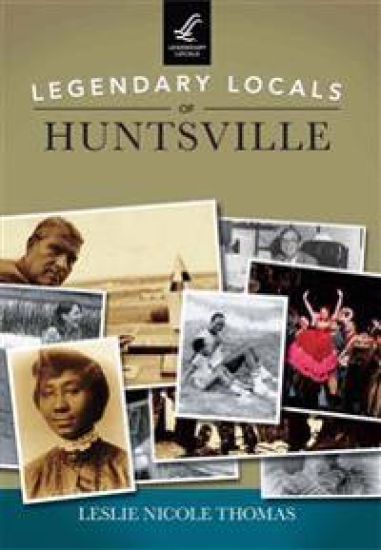
Legendary Locals of Huntsville

Legendary Locals of Huntsville

Leslie Nicole Thomas

Arcadia Publishing (SC)
2015
nidottu
First they came for the land, later they came for the stars and the moon; all found themselves against the glorious backdrop of the Tennessee Valley. Legendary Locals of Huntsville chronicles the story of Rocket City, a sleepy, Southern cotton town that weathered the Great Depression with its mill villages, gained national attention with Redstone Arsenal, blossomed into the center of aerospace development, and became the home of the largest arts center in the Southeast. Notables include pioneer John Hunt and founding father LeRoy Pope; aerospace engineer Wernher von Braun; world-renowned portrait artist and poet Howard Weeden and cobweb artist Anne Clopton; internationally known soprano Susanna Phillips; Professional Football Hall of Fame member John Stallworth; performing arts pioneers Helen Herriott and Loyd Tygett; and entrepreneur and philanthropist Mark C. Smith. The stories herein celebrate just a handful of the many people who have made a memorable impact on this community and who continue to propel Huntsville forward through leadership by example.
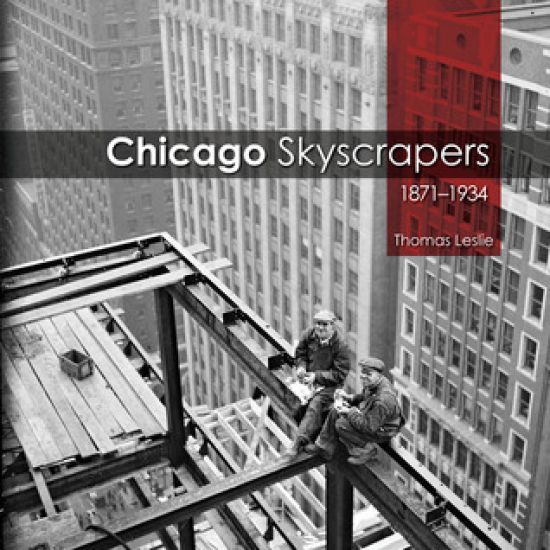
Chicago Skyscrapers, 1871-1934

Chicago Skyscrapers, 1871-1934

Thomas Leslie

University of Illinois Press
2013
sidottu
A detailed tour, inside and out, of Chicago's distinctive towers from an earlier age For more than a century, Chicago's skyline has included some of the world's most distinctive and inspiring buildings. This history of the Windy City's skyscrapers begins in the key period of reconstruction after the Great Fire of 1871 and concludes in 1934 with the onset of the Great Depression, which brought architectural progress to a standstill. During this time, such iconic landmarks as the Chicago Tribune Tower, the Wrigley Building, the Marshall Field and Company Building, the Chicago Stock Exchange, the Palmolive Building, the Masonic Temple, the City Opera, Merchandise Mart, and many others rose to impressive new heights, thanks to innovations in building methods and materials. Solid, earthbound edifices of iron, brick, and stone made way for towers of steel and plate glass, imparting a striking new look to Chicago's growing urban landscape. Thomas Leslie reveals the daily struggles, technical breakthroughs, and negotiations that produced these magnificent buildings. He also considers how the city's infamous political climate contributed to its architecture, as building and zoning codes were often disputed by shifting networks of rivals, labor unions, professional organizations, and municipal bodies. Featuring more than a hundred photographs and illustrations of the city's physically impressive and beautifully diverse architecture, Chicago Skyscrapers, 1871–1934 highlights an exceptionally dynamic, energetic period of architectural progress in Chicago.
Beauty's Rigor

Beauty's Rigor

Thomas Leslie

University of Illinois Press
2017
sidottu
Born in Sondrio, Italy, in 1891, Pier Luigi Nervi was a pioneer in the engineering and architecture of reinforced concrete. His buildings showed how the use of reinforced concrete expanded the possibilities of form and structure. His methods, meanwhile, ingrained his structures with patterns that came directly out of his economical, manual construction processes. The results were buildings that matched awe-inspiring spans with surprisingly human scale. Beauty's Rigor offers a comprehensive overview of Nervi's long career. Drawing on the Nervi archives and a wealth of photographs and architectural drawings, Thomas Leslie explores celebrated buildings like Palazetto dello Sport built for the 1960 Rome Olympics, St. Mary's Cathedral in San Francisco, and the UNESCO headquarters in Paris. He also sheds new light on unbuilt projects such as the Pavilion of Italian Civilization for the Universal Exposition of Rome E42. What emerges is the first complete account of Nervi's contributions to modern architecture and his essential role in a revolution that realized concrete's potential to match grace with strength.
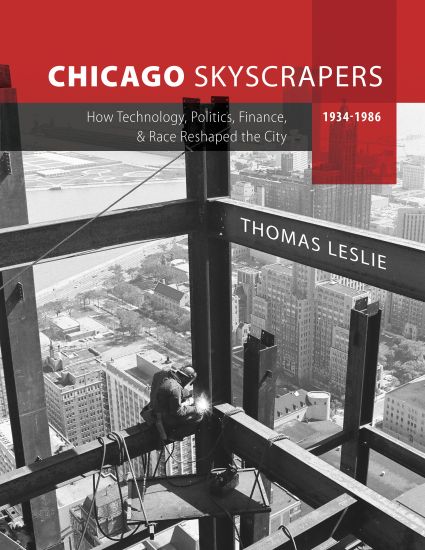
Chicago Skyscrapers, 1934-1986

Chicago Skyscrapers, 1934-1986

Thomas Leslie

UNIVERSITY OF ILLINOIS PRESS
2023
sidottu
Winner of The Pattis Family Foundation Chicago Book Award, by The Pattis Family Foundation and the Newberry Library From skyline-defining icons to wonders of the world, the second period of the Chicago skyscraper transformed the way Chicagoans lived and worked. Thomas Leslie’s comprehensive look at the modern skyscraper era views the skyscraper idea, and the buildings themselves, within the broad expanse of city history. As construction emerged from the Great Depression, structural, mechanical, and cladding innovations evolved while continuing to influence designs. But the truly radical changes concerned the motivations that drove construction. While profit remained key in the Loop, developers elsewhere in Chicago worked with a Daley political regime that saw tall buildings as tools for a wholesale recasting of the city’s appearance, demography, and economy. Focusing on both the wider cityscape and specific buildings, Leslie reveals skyscrapers to be the physical results of negotiations between motivating and mechanical causes. Illustrated with more than 140 photographs, Chicago Skyscrapers, 1934–1986 tells the fascinating stories of the people, ideas, negotiations, decision-making, compromises, and strategies that changed the history of architecture and one of its showcase cities.
Chicago Skyscrapers, 1871-1934

Chicago Skyscrapers, 1871-1934

Thomas Leslie

UNIVERSITY OF ILLINOIS PRESS
2024
nidottu
A detailed tour, inside and out, of Chicago's distinctive towers from an earlier age For more than a century, Chicago's skyline has included some of the world's most distinctive and inspiring buildings. This history of the Windy City's skyscrapers begins in the key period of reconstruction after the Great Fire of 1871 and concludes in 1934 with the onset of the Great Depression, which brought architectural progress to a standstill. During this time, such iconic landmarks as the Chicago Tribune Tower, the Wrigley Building, the Marshall Field and Company Building, the Chicago Stock Exchange, the Palmolive Building, the Masonic Temple, the City Opera, Merchandise Mart, and many others rose to impressive new heights, thanks to innovations in building methods and materials. Solid, earthbound edifices of iron, brick, and stone made way for towers of steel and plate glass, imparting a striking new look to Chicago's growing urban landscape. Thomas Leslie reveals the daily struggles, technical breakthroughs, and negotiations that produced these magnificent buildings. He also considers how the city's infamous political climate contributed to its architecture, as building and zoning codes were often disputed by shifting networks of rivals, labor unions, professional organizations, and municipal bodies. Featuring more than a hundred photographs and illustrations of the city's physically impressive and beautifully diverse architecture, Chicago Skyscrapers, 1871–1934 highlights an exceptionally dynamic, energetic period of architectural progress in Chicago.