Kirjojen hintavertailu. Mukana 11 244 527 kirjaa ja 12 kauppaa.

Kirjahaku

Etsi kirjoja tekijän nimen, kirjan nimen tai ISBN:n perusteella.

1000 tulosta hakusanalla Lewis Leary

Planning and Implementing Assessment

Planning and Implementing Assessment

Richard Freeman; Roger (BP Professor of Learning Development Lewis

Routledge Falmer
1998
sidottu
This title outlines a set of principles and analytical methods that can be adapted to different assessment scenarios designed to enable readers to construct their own effective methods for assessment. Guidelines for design and methods of planning, choosing and implementation are provided.
Planning and Implementing Assessment

Planning and Implementing Assessment

Richard Freeman; Roger (BP Professor of Learning Development Lewis

Routledge Falmer
1998
nidottu
This title outlines a set of principles and analytical methods that can be adapted to different assessment scenarios designed to enable readers to construct their own effective methods for assessment. Guidelines for design and methods of planning, choosing and implementation are provided.
A Brief History of the Rise and Progress of Anabaptism in England. to Which Is Prefixed, Some Account of the Learned Dr. Wiclif, and a Defence of Him from the False Charge of His, and His Followers, Denying Infant Baptism. by John Lewis,
The 18th century was a wealth of knowledge, exploration and rapidly growing technology and expanding record-keeping made possible by advances in the printing press. In its determination to preserve the century of revolution, Gale initiated a revolution of its own: digitization of epic proportions to preserve these invaluable works in the largest archive of its kind. Now for the first time these high-quality digital copies of original 18th century manuscripts are available in print, making them highly accessible to libraries, undergraduate students, and independent scholars.The Age of Enlightenment profoundly enriched religious and philosophical understanding and continues to influence present-day thinking. Works collected here include masterpieces by David Hume, Immanuel Kant, and Jean-Jacques Rousseau, as well as religious sermons and moral debates on the issues of the day, such as the slave trade. The Age of Reason saw conflict between Protestantism and Catholicism transformed into one between faith and logic -- a debate that continues in the twenty-first century.++++The below data was compiled from various identification fields in the bibliographic record of this title. This data is provided as an additional tool in helping to insure edition identification: ++++British LibraryT029631London: printed for J. Roberts, 1738. xxiv,115, 1]p.; 8
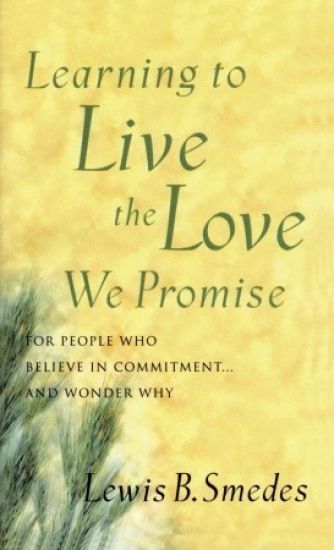
Learning to Live the Love We Promise

Learning to Live the Love We Promise

Lewis B. Smedes

Shaw (Harold) Publishers,U.S.
2001
nidottu
Each one of us enjoys deep relationships held together by an invisible cord called commitment, and every important community depends on the strength of that unseen cord. At times, we find it a joy to keep our commitments. At others, it seems difficult-even impossible-to honor those spoken and unspoken pledges. If you deeply desire to make and keep commitments... If you want insight into what makes relationships work-or to learn what to do when a relationship is in crisis... If you feel trapped by a bad commitment and wonder if you can experience grace and a new beginning... Best-selling author Lewis Smedes offers insights that will profoundly affect the way you interact with and relate to others. Find out what you and those you love can gain from committed relationships; discover how to cope when someone close to you breaks your trust; and determine which, if any, relationships should continue forever-as well as how you can make these relationships last-in "Learning to Live the Love We Promise. "
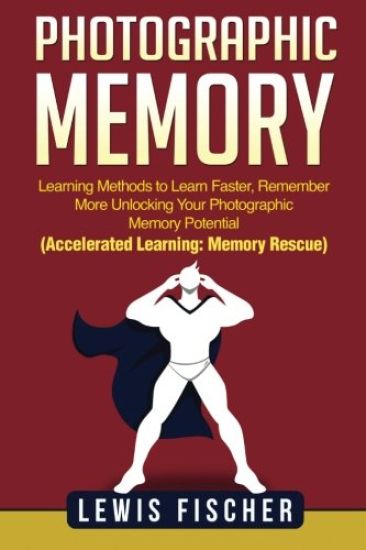
Photographic Memory: Learning Methods to Learn Faster, Remember More Unlocking Your Photographic Memory Potential (Accelerated Learning: Memory Rescue
We capture everything that happens to us and around us. We even capture things that we are not aware of. Each event is captured by all the senses we poses to the extent that they emit the relevant stimuli. If there is a sound, our ears pick it up, if there is movement and light, our eyes pick it up. If there is odor, our nose picks it up. Everything is picked up and sent to the brain for processing before it is stored. If you want to have better memory, you need to learn how to access all that information. It's all within you and the ways to do it are within this book.Scientists across multiple medicinal philosophies have spent decades trying to understand the brain. We understand more of its psychology than we do about the technical methods of recording and recall, until now.This book brings together the most powerful explanation of how the brain works at creating and storing memories. It ties all the factors of stimuli detection and impulse encoding and talks about how to develop a better way to encode and to recall. You just have to follow the steps in this book to be able to build on the priceless asset you have and you will be able to change the way you see things and the way you live your life. Memorization is the tip of the sword and we show you how to wield it.
Inoperative Learning

Inoperative Learning

Tyson Lewis

Routledge
2019
nidottu
Inoperative Learning embodies a weak philosophy of education. It does not offer a set of solutions or guidelines for improving educational outcomes, but rather renders taken-for-granted assumptions about the theory-practice coupling inoperative. By arguing that such logic reduces education to instrumental ends, this book presents a challenge to contemporary notions of education as outcomesbased, goal-directed learning. From the perspective of learning, the neutralization of progress, growth, and maturity would usually be seen as obstacles needing to be overcome on the path toward set goals. Yet Lewis argues that a serious investigation of inoperativity opens up possibilities that would be otherwise unavailable in a world fixated on the question of learning. In dialogue with philosophers (Agamben, Benjamin, and Esposito), authors (Kafka and Walser) and qualitative researchers (Lather), Lewis turns our collective attention to what remains when concepts such as learning, child development, teacher effectivity, and personal growth are left idle.Inoperative Learning presents a radical rewriting of educational possibilities. It should therefore be of great interest to educational researchers and educational philosophers concerned with the question of alternative logics of education beyond learning. The book may also be of interest to theorists in the critical humanities that are engaged in education as a thematic concern in their research and classroom practices.
Inoperative Learning

Inoperative Learning

Tyson Lewis

Routledge
2017
sidottu
Inoperative Learning embodies a weak philosophy of education. It does not offer a set of solutions or guidelines for improving educational outcomes, but rather renders taken-for-granted assumptions about the theory-practice coupling inoperative. By arguing that such logic reduces education to instrumental ends, this book presents a challenge to contemporary notions of education as outcomesbased, goal-directed learning. From the perspective of learning, the neutralization of progress, growth, and maturity would usually be seen as obstacles needing to be overcome on the path toward set goals. Yet Lewis argues that a serious investigation of inoperativity opens up possibilities that would be otherwise unavailable in a world fixated on the question of learning. In dialogue with philosophers (Agamben, Benjamin, and Esposito), authors (Kafka and Walser) and qualitative researchers (Lather), Lewis turns our collective attention to what remains when concepts such as learning, child development, teacher effectivity, and personal growth are left idle.Inoperative Learning presents a radical rewriting of educational possibilities. It should therefore be of great interest to educational researchers and educational philosophers concerned with the question of alternative logics of education beyond learning. The book may also be of interest to theorists in the critical humanities that are engaged in education as a thematic concern in their research and classroom practices.
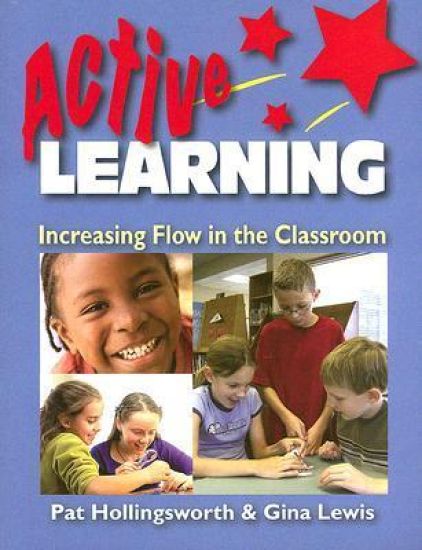
Active Learning

Active Learning

Gina Lewis; Patricia Hollingsworth

Crown House Publishing
2006
nidottu
A key to real learning and understanding is student engagement and enjoyment. In Active Learning experienced teachers share plans for complete lessons that motivate students through active involvement in the process of learning. Ancient Greece comes alive when students dramatise historical events. Architectural styles translated into movement, sound, and body shapes are easy to remember. Student-created board games make reviewing maths facts fun. This book will assist teacher planning, improve lesson quality, and illuminate your approach to teaching. Measurable objectives, step-by-step procedures, optional teacher scripts, student handouts, evaluation tools, and enrichment activities provide structure for lessons to use in maths, languages, social studies and art. Students are actively learning when they are intensely engaged, mentally or physically. Active learning is vigorous, lively, energetic, intense, strong, and effective. Active learning is involved learning: it takes place when the learners are excited, involved, mentally alert, and caught up in the experience.
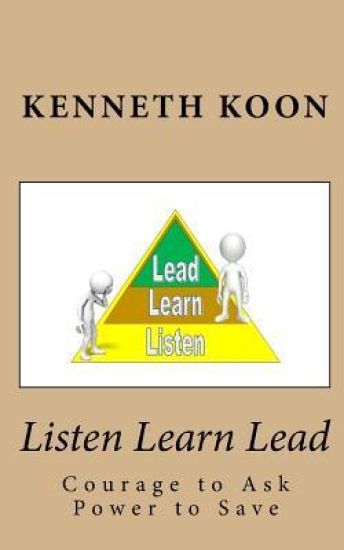
Listen Learn Lead: Courage to Ask Power to Save

Listen Learn Lead: Courage to Ask Power to Save

Kenneth Lewis Koon

Createspace Independent Publishing Platform
2018
nidottu
Suicide is a national epidemic. Listen Learn Lead will save lives. L3 is a suicide intervention model developed by a military and law enforcement Crisis Intervention Chaplain based on his work in conducting more than 2,000 successful suicide interventions. Kenneth Lou Koon has trained more than 25,000 care givers in the skills that save lives. Suicide is preventable and trained people save people. Listen Learn Lead is a model that anyone can use to renew resilience and restore hope for those at risk of suicide. You may be a parent wanting to know how to help your child at risk or the adult child concerned about a parent. You may be a school teacher, a First Responder, or a nurse. You may be a current military member, a veteran, or a civilian. But you have someone in your life right now that you want to help. Peripherally, this book is also for every legislator that has the power to introduce bills that will strengthen the mental fiber of our nation for our veterans and the one million other Americans that attempt suicide each year. This book is for the Grant makers who have the ability to write grants for training that will equip thousands, instill courage, and restore hope. This book is for pastors and the flock you tend. The typical seminary student receives no training in suicide interventnion; later as ministers many feel unsure how to respond to the person at risk. Finally, this book is for the one that has already experienced loss and is overwhelmed with feelings of hopelessness and even anger. Listen Learn Lead will encourage those who have experienced loss to turn their pain into a passion for saving others. Join the growing network of courageous individuals that have learned the skills and are building a culture of care as a beacon of hope that guides others to safe harbor.
The Science of Learning Meets AI

The Science of Learning Meets AI

Lewis D. Ludwig; Todd D. Zakrajsek

TAYLOR FRANCIS LTD
2026
sidottu
This research-grounded guide helps college educators use generative AI to strengthen, not sideline, what they already know about effective teaching. Drawing on decades of experience in faculty development and learning science, Ludwig and Zakrajsek propose a three-stage progression model—Adapt, Create, Embed—to help faculty from any discipline thoughtfully incorporate AI into their teaching. Rather than chasing the latest tech tools, this book focuses on how AI can deepen student learning by enhancing time-tested frameworks such as TILT, Universal Design for Learning, Bloom’s Taxonomy, and Backward Design, all summarized in a handy appendix. Each chapter includes classroom-tested examples, reflection prompts, and activities ready for individual exploration or group discussion. Whether you’re skeptical, curious, or cautiously optimistic, this book offers a clear, practical path to using AI as a partner, not a replacement, in ways that support students and reinvigorate teaching.
The Science of Learning Meets AI

The Science of Learning Meets AI

Lewis D. Ludwig; Todd D. Zakrajsek

TAYLOR FRANCIS LTD
2026
nidottu
This research-grounded guide helps college educators use generative AI to strengthen, not sideline, what they already know about effective teaching. Drawing on decades of experience in faculty development and learning science, Ludwig and Zakrajsek propose a three-stage progression model—Adapt, Create, Embed—to help faculty from any discipline thoughtfully incorporate AI into their teaching. Rather than chasing the latest tech tools, this book focuses on how AI can deepen student learning by enhancing time-tested frameworks such as TILT, Universal Design for Learning, Bloom’s Taxonomy, and Backward Design, all summarized in a handy appendix. Each chapter includes classroom-tested examples, reflection prompts, and activities ready for individual exploration or group discussion. Whether you’re skeptical, curious, or cautiously optimistic, this book offers a clear, practical path to using AI as a partner, not a replacement, in ways that support students and reinvigorate teaching.
CLEP Humanities Vocabulary Workbook: Learn the key words of the CLEP Humanities Exam
Learn the Secret to Success on the CLEP Humanities Exam Ever wonder why learning comes so easily to some people? This remarkable workbook reveals a system that shows you how to learn faster, easier and without frustration. By mastering the hidden language of the exam, you will be poised to tackle the toughest of questions with ease. We've discovered that the key to success in CLEP Humanities test lies with mastering the Insider's Language of the subject. People who score high on their exams have a strong working vocabulary in the subject tested. They know how to decode the course vocabulary and use this as a model for test success. People with a strong Humanities Insider's Language consistently: Perform better on the CLEP Humanities ExamLearn faster and retain more informationFeel more confident in their coursesPerform better in upper level coursesGain more satisfaction in learningThe CLEP Humanities Exam Success Guide is different from traditional review books because it focuses on the exam's Insider's Language. It is an outstanding supplement to a traditional review program. It helps your preparation for the exam become easier and more efficient. The strategies, puzzles, and questions give you enough exposure to the Insider Language to use it with confidence and make it part of your long-term memory. The CLEP Humanities Exam Success Guide is an awesome tool to use before a course of study as it will help you develop a strong working Insider's Language before you even begin your review. Learn the Secret to Success on your Humanities exam After nearly 20 years of teaching Lewis Morris discovered a startling fact: Most students didn't struggle with the subject, they struggled with the language. It was never about brains or ability. His students simply didn't have the knowledge of the specific language needed to succeed. Through experimentation and research, he discovered that for any subject there was a list of essential words, that, when mastered, unlocked a student's ability to progress in the subject. Lewis called this set of vocabulary the "Insider's Words". When he applied these "Insider's Words" the results were incredible. His students began to learn with ease. He was on his way to developing the landmark series of workbooks and applications to teach this "Insider's Language" to students around the world.