Kirjojen hintavertailu. Mukana 11 699 587 kirjaa ja 12 kauppaa.

Kirjahaku

Etsi kirjoja tekijän nimen, kirjan nimen tai ISBN:n perusteella.

1000 tulosta hakusanalla Lewis a Howard

Lewis A. Grant

Lewis A. Grant

VDM Publishing House
2010
nidottu
Observera att förlaget som ger ut denna produkt baserar innehållet i sina produkter på fria källor som Wikipedia. Boken är med stor sannolikhet endast ett utdrag ur dessa informationskällor, alltså inte en vanlig bok i den bemärkelsen.
Lewis A. Coser

Lewis A. Coser

VDM Publishing House
2010
nidottu
Observera att förlaget som ger ut denna produkt baserar innehållet i sina produkter på fria källor som Wikipedia. Boken är med stor sannolikhet endast ett utdrag ur dessa informationskällor, alltså inte en vanlig bok i den bemärkelsen.
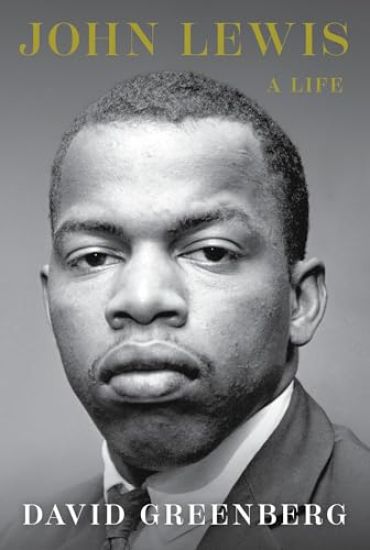
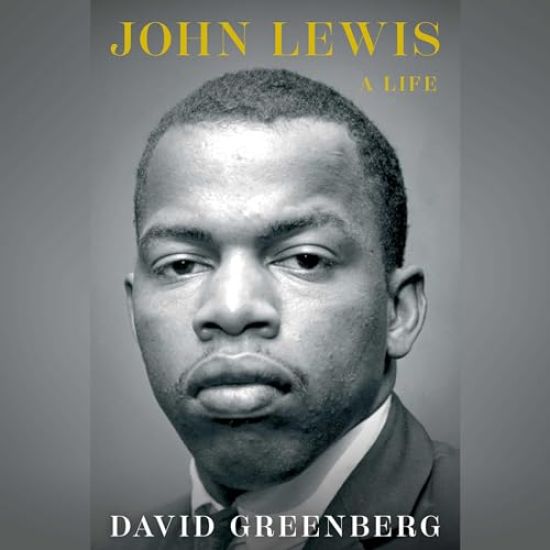
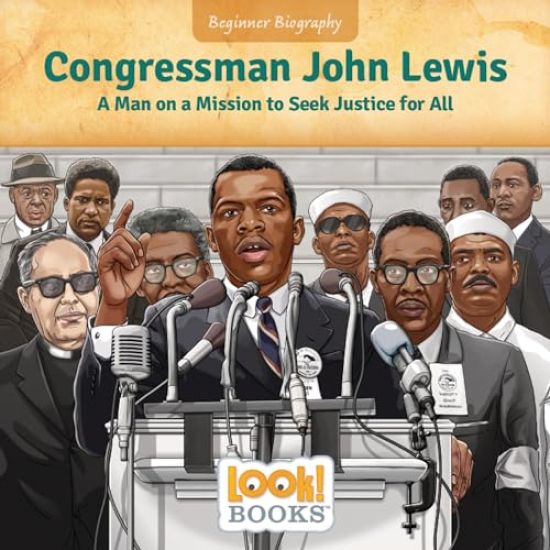
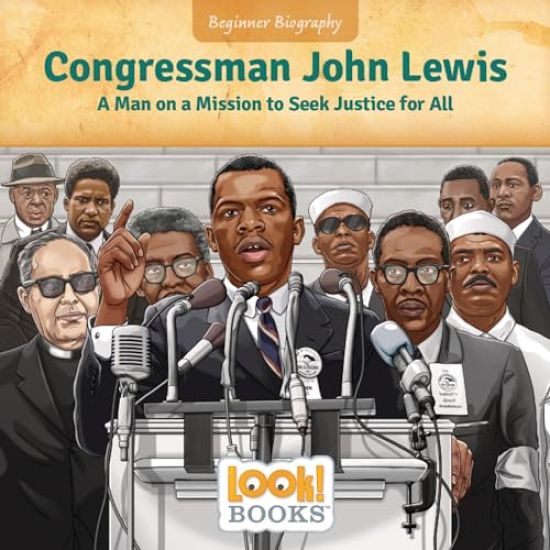
John Lewis: A Life

John Lewis: A Life

David Greenberg

Thorndike Press Large Print
2025
sidottu
"A comprehensive, authoritative biography of Civil Rights icon John Lewis, "the conscience of the Congress," drawing on interviews with Lewis and approximately 275 others who knew him at various stages of his life, as well as never-before-used FBI files and documents. Born into poverty in rural Alabama, Lewis would become second only to Martin Luther King, Jr. in his contributions to the Civil Rights Movement. He was a Freedom Rider who helped to integrate bus stations in the South, a leader of the Nashville sit-in movement, the youngest speaker at the 1963 March on Washington, and the chairman of the Student Nonviolent Coordinating Committee (SNCC), which he made into one of the major civil rights organizations. He may be best remembered as the victim of a vicious beating by Alabama state troopers at the foot of the Edmund Pettus Bridge in Selma, Alabama, where he nearly died. Greenberg's biography traces Lewis's life through the post-Civil Rights years, when he headed the Voter Education Project, which enrolled millions of African American voters across the South. The book reveals the little-known story of his political ascent first locally in Atlanta, and then as a member of Congress. Tapped to be a part of the Democratic leadership in Congress, he earned respect on both sides of the aisle for the sacrifices he had made on behalf of nonviolent integration in the South and came to be known as the "conscience of the Congress." Thoroughly researched and dramatically told, Greenberg's biography captures John Lewis's influential career through documents from dozens of archives, interviews with hundreds of people who knew Lewis, and long-lost footage of Lewis himself speaking to reporters from his hospital bed following his severe beating on "Bloody Sunday" in Selma. With new details about his personal and professional relationships, John Lewis: A Life is the definitive biography of a man whose heroism during the Civil Rights movement helped to bring America a new birth of freedom."
C. S. Lewis: A Biography

C. S. Lewis: A Biography

A. N. Wilson

W. W. Norton Company
2002
nidottu
Brilliant. Agnostic. Prejudiced. Gregarious. Bullying. Loyal friend. Heavy drinker. One of the most learned scholars of his generation. A controversial Christian apologist. Author of a children's fantasy that has sold millions upon millions of copies. And, after his death, almost a cult figure. C. S. Lewis was an incredibly complicated man, and, as revealed in this splendid biography, a mystery to those who knew him best. "I know of no modern biographer who equals Wilson's delicacy of touch and sensitivity to human quandaries. An astonishing book." Leon Edel "The mixture presented in Wilson's biography of the life of learning...of domestic drama and bad temper, religion, and sex, is irresistible." New York Review of Books"
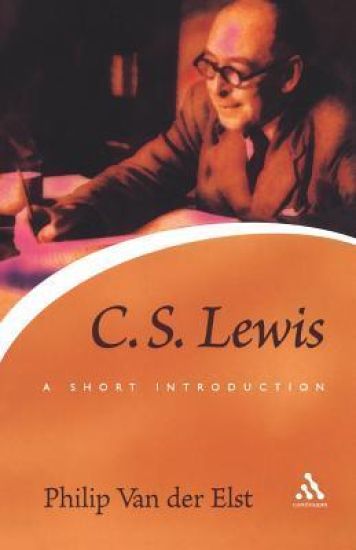
C.S. Lewis: A Short Introduction

C.S. Lewis: A Short Introduction

Philip Vander Elst

Continuum International Publishing Group Ltd.
2005
nidottu
C.S. Lewis (1898-1953) was the most talented and lucid apologist for Christianity that the last century produced. In essays, critical studies, poems, novels and works of autobiography, he turned his formidable literary gifts to the task of re-presenting the Christian view of human destiny to a world bewildered by scientific materialism. He did not shrik the real difficulties that Christian belief encounters, nor did he downplay the cost of faith in an age of self-indulgence. Nevertheless, the radiant happiness and good sense that shine through his prose have never ceased to find new and eager readers, and his books remain part of the canonical wisdom of our culture. Philip Van der Elst surveys the whole of Lewis's vast output and gives a clear and illuminating summary of his stance towards the outstanding questions of our civilisation. Setting the writings within the context of Lewis's own painful life and striking conversion, he shows the enduring importance of a thinker whose vision of modern life was both comprehensive and profoundly optimistic. Van der Elst's book provides a lucid and stimulating introduction; for those already familiar with Lewis's writings it offers a challenging analysis of their meaning and of the continuous thread of argument which runs all through their various themes. An indispensable guide to an indispensable thinker. Philip Van der Elst's previous book, Resisting Leviathan: The Case Against a European State, was published by Claridge Press (Continuum) in 1991.
C. S. Lewis: A Life

C. S. Lewis: A Life

Alister E McGrath

Hodder Stoughton
2013
pokkari
The recent Narnia films have inspired a resurgence of interest in C. S. Lewis, the Oxford academic, popular theologian and, most famously, creator of the magical world of Narnia - and this authoritative new biography, published to mark the 50th anniversary of Lewis's death, sets out to introduce him to a new generation. Completely up to date with scholarly studies of Lewis, it also focuses on how Lewis came to write the Narnia books, and why they have proved so consistently engaging. Accessible and engaging, this new biography will appeal to fans of the films, readers of Lewis and of theologian and apologist Alister McGrath himself.
C. S. Lewis A Life

C. S. Lewis A Life

McGrath Alister

Tyndale House Publishers
2016
nidottu
ECPA 2014 Christian Book Award Winner (Non-Fiction) Fifty years after his death, C. S. Lewis continues to inspire and fascinate millions. His legacy remains varied and vast. He was a towering intellectual figure, a popular fiction author who inspired a global movie franchise around the world of Narnia, and an atheist-turned-Christian thinker.In C.S. Lewis--A Life, Alister McGrath, prolific author and respected professor at King's College of London, paints a definitive portrait of the life of C. S. Lewis. After thoroughly examining recently published Lewis correspondence, Alister challenges some of the previously held beliefs about the exact timing of Lewis's shift from atheism to theism and then to Christianity. He paints a portrait of an eccentric thinker who became an inspiring, though reluctant, prophet for our times.You won't want to miss this fascinating portrait of a creative genius who inspired generations.
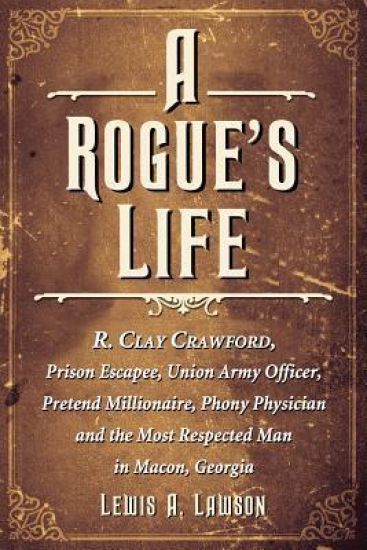
A Rogue's Life

A Rogue's Life

Lewis A. Lawson

McFarland Co Inc
2013
pokkari
This book reveals the life of R. Clay Crawford, his dreams, his schemes, his successes and his failures, as he launched himself into many of the most turbulent episodes of 19th century United States history. Like everyone, he was born with a family history, not just genetic but also cultural determinants; this book reveals the influences on his behavior inherited from his father and his grandfathers. He likewise passed on to his children a model, not just genetic but cultural. Even so, Clay Crawford's story is not just a family affair. He was a "self-made man" living in an age when such was thought to be a national asset--and thus stands out as a warning that the worship of the "self-made man" may produce more rogues than Rockefellers.
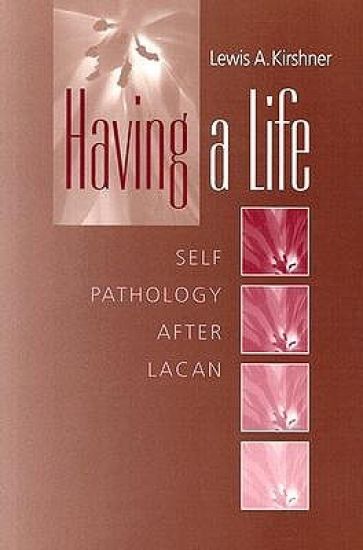
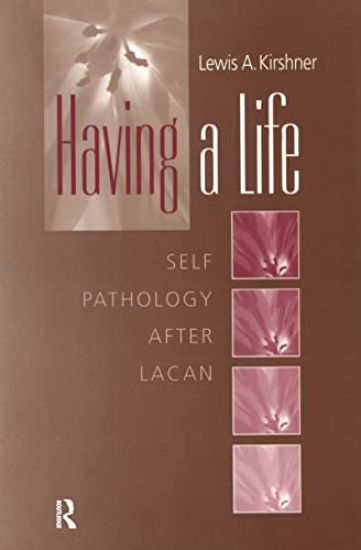
Having A Life

Having A Life

Lewis A. Kirshner

Analytic Press,U.S.
2004
nidottu
What is it about "having a life"- which is to say, about having a sense of separate existence as a subject or self - that is usually taken for granted but is so fragilely maintained in certain patients and, indeed, in most of us at especially difficult times? In Having A Life: Self Pathology After Lacan, Lewis Kirshner takes this Lacanian question as the point of departure for a thoughtful meditation on the conceptual problems and clinical manifestations of pathologies of the self. Beginning with the case of Margaret Little, analyzed by D. W. Winnicott, and proceeding to extended case presentations from his own practice, Kirshner weaves together an avowedly American reading of Lacan with the approaches to self pathology of an influential coterie of theorists. By drawing out common threads in their respective discourses on the self, Kirshner achieves an original integration of Lacanian theory with other contemporary approaches to self pathology. Of special note is his ability to sustain a dialogue between Lacan and Kohut, whose shared clinical object, discernible through divergent vocabularies and conceptions, is the struggle of the subject to avoid fragmentation that would obliterate a sense of aliveness and preclude active engagement with the world. Kirshner's opening chapter on the gifted, troubled Margaret Little and his concluding chapter on the eminent political philosopher Louis Althusser, whose self pathology culminated in his strangling of his wife, Hélène Rytman, in 1980, frame a study that is brilliantly successful in bringing "self" issues down to the messy actualities of lived experience. Analytic therapists no less than students of the human sciences will be edified by this cogent, readable attempt to infuse Lacanian concepts with the conceptual rigor and clinical pragmatism of American psychoanalysis and to apply the resulting model of therapeutic action to a fascinating range of case material.
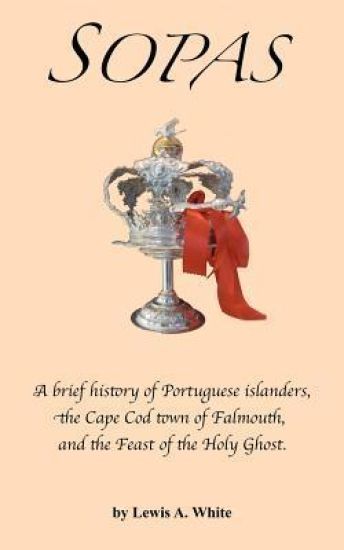
Sopas: A Brief History of Portuguese Islanders, the Cape Cod Town of Falmouth, and the Feast of the Holy Ghost
A brief history of Holy Ghost Societies in Falmouth, Massachusetts, focusing on the first group formed around 1900. Includes information on why Portuguese islanders from the first new world - Azores and Cape Verde - emigrated to America, how Quaker sympathizers settled near a Wampanoag village, and how Falmouth prospered for two centuries before American expansion spurred the Portuguese population of Falmouth to explode from zero to 30]% in two generations. Describes the eight century old religious folk tradition of the Holy Ghost, how three different groups celebrate it, concluding with a summary of Holy Ghost festas in the Azores today. Appendices include summary of political turmoil in 19th century Portugal, and recipes for traditional foods available at the festa.
Having A Life

Having A Life

Lewis A. Kirshner

Routledge
2016
sidottu
What is it about "having a life"- which is to say, about having a sense of separate existence as a subject or self - that is usually taken for granted but is so fragilely maintained in certain patients and, indeed, in most of us at especially difficult times? In Having A Life: Self Pathology After Lacan, Lewis Kirshner takes this Lacanian question as the point of departure for a thoughtful meditation on the conceptual problems and clinical manifestations of pathologies of the self. Beginning with the case of Margaret Little, analyzed by D. W. Winnicott, and proceeding to extended case presentations from his own practice, Kirshner weaves together an avowedly American reading of Lacan with the approaches to self pathology of an influential coterie of theorists. By drawing out common threads in their respective discourses on the self, Kirshner achieves an original integration of Lacanian theory with other contemporary approaches to self pathology. Of special note is his ability to sustain a dialogue between Lacan and Kohut, whose shared clinical object, discernible through divergent vocabularies and conceptions, is the struggle of the subject to avoid fragmentation that would obliterate a sense of aliveness and preclude active engagement with the world. Kirshner's opening chapter on the gifted, troubled Margaret Little and his concluding chapter on the eminent political philosopher Louis Althusser, whose self pathology culminated in his strangling of his wife, Hélène Rytman, in 1980, frame a study that is brilliantly successful in bringing "self" issues down to the messy actualities of lived experience. Analytic therapists no less than students of the human sciences will be edified by this cogent, readable attempt to infuse Lacanian concepts with the conceptual rigor and clinical pragmatism of American psychoanalysis and to apply the resulting model of therapeutic action to a fascinating range of case material.