Kirjojen hintavertailu. Mukana 11 239 951 kirjaa ja 12 kauppaa.

Kirjahaku

Etsi kirjoja tekijän nimen, kirjan nimen tai ISBN:n perusteella.

1000 tulosta hakusanalla Library of Congress

The Library Of Congress

The Library Of Congress

Charles A Goodrum; Helen W Dalrymple

Routledge
2020
sidottu
From a review of the first edition: "For those of us whose minds unhinge at the sheer immensity of the Library of Congress, with its maze of corridors, multilayered stacks and circuitous subterranean passages, this study will prevent many a false step."—Smithsonian Since the first edition of this book appeared in 1972, there have been many changes in the Library, including a massive reorganization begun in 1977 under the leadership of Daniel J. Boorstin, the present Librarian of Congress. This completely revised and updated look at the Library brings the story up to date, discussing the Library's history, how it works, how the user can take advantage of its many services, where it is going, and how it meets the wide-ranging needs of Congress, other federal government offices, and the library, scholarly, and creative worlds. The authors emphasize the recent impact of technology on what is the largest information-storage and retrieval "machine" in the world. Lively writing and accessible language make this book an ideal introduction to the Library of Congress for the visitor, the first-time user, or the general reader, but it is also a must for every library and librarian, as well as an excellent textbook for library administration courses. The information it contains will make it of great interest even to the most experienced users of the Library.
The Library Of Congress

The Library Of Congress

Charles A Goodrum; Helen W Dalrymple

TAYLOR FRANCIS LTD
2024
nidottu
From a review of the first edition: "For those of us whose minds unhinge at the sheer immensity of the Library of Congress, with its maze of corridors, multilayered stacks and circuitous subterranean passages, this study will prevent many a false step."—Smithsonian Since the first edition of this book appeared in 1972, there have been many changes in the Library, including a massive reorganization begun in 1977 under the leadership of Daniel J. Boorstin, the present Librarian of Congress. This completely revised and updated look at the Library brings the story up to date, discussing the Library's history, how it works, how the user can take advantage of its many services, where it is going, and how it meets the wide-ranging needs of Congress, other federal government offices, and the library, scholarly, and creative worlds. The authors emphasize the recent impact of technology on what is the largest information-storage and retrieval "machine" in the world. Lively writing and accessible language make this book an ideal introduction to the Library of Congress for the visitor, the first-time user, or the general reader, but it is also a must for every library and librarian, as well as an excellent textbook for library administration courses. The information it contains will make it of great interest even to the most experienced users of the Library.
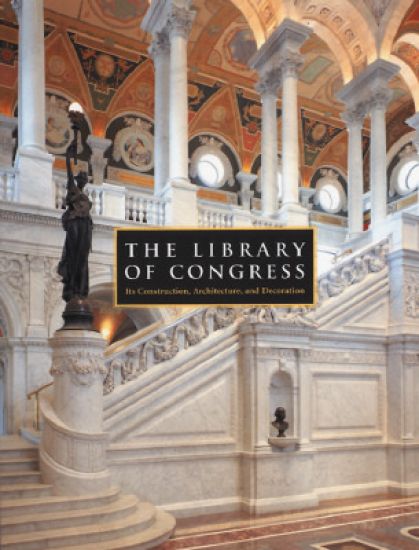
The Library of Congress
Arguably the most beautifully decorated building in the United States, the Library of Congress building (recently renamed the Jefferson Building) is celebrating its one hundredth anniversary this year after an eighty million dollar restoration that returned it to its original state. Designed by John L. Smithmeyer and completed in 1897 at a cost of under seven million dollars, the building is enhanced by the art of over forty sculptors and painters whose ranks include such notables as Herbert Adams, Kenyon Cox, Edward Clark Potter, Louis Saint-Gaudens, and John Quincy Adams Ward. The planning and construction are detailed in John Y. Cole's essay, followed by discussions by Henry Hope Reed, Richard Murray, and Thomas P. Somma of the decorations, paintings, and sculptures. The volume concludes with a study of the restoration by Barbara Wolanin, a chronology, a glossary of architectural and decorative terms, and a biographical dictionary of all the artists, architects, and designers who worked on the building. Throughout, noted photographer Anne Day's color images enhance this splendid book.
The Library of Congress and You
This work has been selected by scholars as being culturally important, and is part of the knowledge base of civilization as we know it. This work was reproduced from the original artifact, and remains as true to the original work as possible. Therefore, you will see the original copyright references, library stamps (as most of these works have been housed in our most important libraries around the world), and other notations in the work.This work is in the public domain in the United States of America, and possibly other nations. Within the United States, you may freely copy and distribute this work, as no entity (individual or corporate) has a copyright on the body of the work.As a reproduction of a historical artifact, this work may contain missing or blurred pages, poor pictures, errant marks, etc. Scholars believe, and we concur, that this work is important enough to be preserved, reproduced, and made generally available to the public. We appreciate your support of the preservation process, and thank you for being an important part of keeping this knowledge alive and relevant.
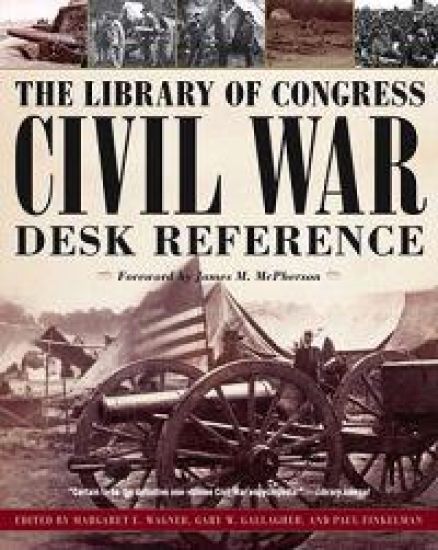
The Library of Congress Civil War Desk Reference
"The Civil War was the most dramatic, violent, and fateful experience in American history. . . . Little wonder that the Civil War had a profound impact that has echoed down the generations and remains undiminished today. That impact helps explain why at least 50,000 books and pamphlets . . . on the Civil War have been published since the 1860s. Most of these are in the Library of Congress, along with thousands of unpublished letters, diaries, and other documents that make this depository an unparalleled resource for studying the war. From these sources, the editors of The Library of Congress Civil War Desk Reference have compiled a volume that every library, every student of the Civil War--indeed everyone with an interest in the American past--will find indispensable." --From the Foreword by James M. McPherson, Pulitzer Prize-winning author of Battle Cry of Freedom
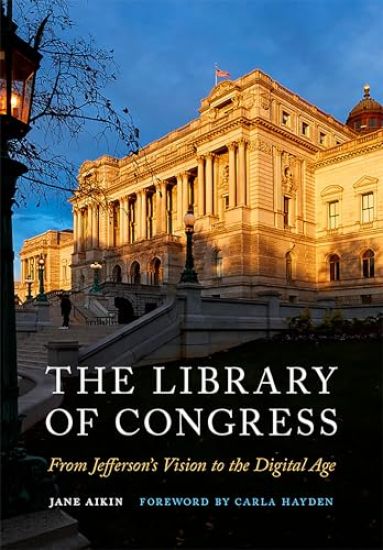
The Library of Congress

The Library of Congress

Jane Aikin; Carla Hayden

GEORGETOWN UNIVERSITY PRESS
2025
sidottu
The first comprehensive history of the Library of CongressThe Library of Congress is the research arm of Congress, home of the US Copyright Office, and a public forum for artistic and literary culture. It is generally considered the national library of the United States, and it has influenced cultural affairs worldwide in myriad ways since its founding more than two centuries ago. In The Library of Congress, Jane Aikin draws on a wealth of primary and secondary sources to weave a narrative of the individuals, events, and controversies that have shaped the history of this venerable institution.Punctuated by stories about key donors and pivotal performances by poets, authors, and celebrities, this engaging and informative narrative sheds new light on the world's largest library and its global impact on knowledge and culture.
Essential Library of Congress Subject Headings

Essential Library of Congress Subject Headings

Vanda Broughton

Facet Publishing
2011
nidottu
Library of Congress Subject Headings (LCSH) are increasingly seen as 'the' English language controlled vocabulary, despite their lack of a theoretical foundation, and their evident US bias. In mapping exercises between national subject heading lists, and in exercises in digital resource organization and management, LCSH are often chosen because of the lack of any other widely accepted English language standard for subject cataloguing. It is therefore important that the basic nature of LCSH, their advantages, and their limitations, are well understood both by LIS practitioners and those in the wider information community. Information professionals who attended library school before 1995 - and many more recent library school graduates - are unlikely to have had a formal introduction to LCSH. Paraprofessionals who undertake cataloguing are similarly unlikely to have enjoyed an induction to the broad principles of LCSH. This is the first compact guide to LCSH written from a UK viewpoint. Key topics include:background and history of LCSHsubject heading listsstructure and display in LCSHform of entryapplication of LCSHdocument analysismain headingstopical, geographical and free-floating sub-divisionsbuilding compound headingsname headingsheadings for literature, art, music, history and lawLCSH in the online environment. Readership: There is a strong emphasis throughout on worked examples and practical exercises in the application of the scheme, and a full glossary of terms is supplied. No prior knowledge or experience of subject cataloguing is assumed. This is an indispensable guide to LCSH for practitioners and students alike.