

Kirjahaku
Etsi kirjoja tekijän nimen, kirjan nimen tai ISBN:n perusteella.
1000 tulosta hakusanalla Louis J. Slovinsky






Eighty Years Of Republican Government In The United States (1868)
Louis J. Jennings
KESSINGER PUBLISHING CO
2007
pokkari

In all of life, it is God's will for us to be partnered with Him. As our Lord Jesus gave us example, we can do nothing on our own but only what the Father is doing (John 5:19). In this book, you will learn what it means to truly abide in Christ in every aspect of your life - to be partnered with God in all that you do. We can do absolutely nothing without Him and yet He chooses to work in partnership with us Throughout the pages of this book, you will learn to be sensitive to the Holy Spirit as He reveals the Father's perfect will for your life.


The Art of Expectations: A Simple Way to Predict Outcomes Using Expectations
Louis J. Ebner III
Lou Ebner
2011
nidottu
The Art of Expectations is a new perspective on forecasting markets. Includes how to construct and track the Expectations Indicator which provides an objective approach to making investment decisions. BR> You will learn three things in "The Art of Expectations" BR> 1. How expectations influence our decisions and shape our world and the world around us. 2. How to use expectation cycles to help predict outcomes. 3. How to construct, track and use the Expectations Indicator to determine likely stock market direction.

MacMillan French Series; French Commercial Correspondence, Pp. 1-228
Louis J Fish
Trieste Publishing
2018
nidottu
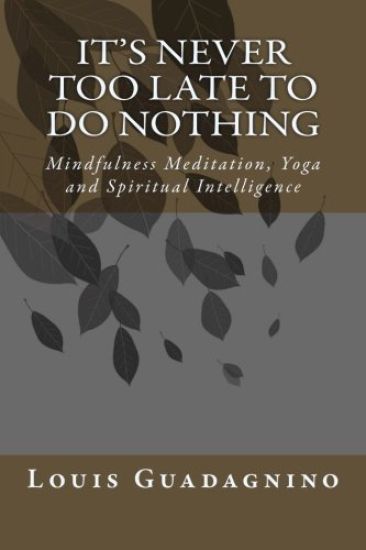
It's Never Too Late to Do Nothing: Mindfulness Meditation, Yoga and Spiritual Intelligence
Louis J. Guadagnino
Living Stress Free, Inc
2014
nidottu
This book offers a new paradigm in the fields of Spirituality, Self-Help, Psychology and Personal Growth. Guadagnino transitions the benefits of meditation and yoga into our real everyday lives, making them understandable and practical. But it would be incorrect to characterize It's Never Too Late To Do Nothing, as a book about yoga and meditation per se.It's Never Too Late offers a new spirituality, which Guadagnino calls Secular Spirituality. A spirituality absent of doctrines but rich in ancient practices and wisdom. Secular Spirituality is simultaneously spirituality, self-help, a new understanding of the human mind and human behaviors, and is also a celebration of human unity and human individuality. It's Never Too Late To Do Nothing was designed to be a game changer and it is a game changer from the inside out.

Since at least the time of Justinian—under statutes, codes of judicial ethics, and the common law—judges have been expected to recuse themselves from cases in which they might have a stake. Thesame holds true for the justices of the US Supreme Court. For instance, there were calls for Ruth Bader Ginsburg and ElenaKagan, both of whom had officiated at gay weddings, to recuse themselves from the recent marriage equality case, Obergefell v.Hodges. Even a case like this, where no justice bowed out, reveals what a tricky ethical issue recusal can be. But as Louis J.Virelli demonstrates in this provocative work, recusal at the Supreme Court also presents questions of constitutional power. Disqualifying the High Court shows that our current understanding of how and when justices should recuse themselves is at odds with our constitutional design.Viewing recusal through a constitutional lens, Virelli reveals new and compelling information about how justices should decide recusal questions and, in turn, how our government should function morebroadly. Along the way he traces the roots and development of federal recusal law in America from as early as the Roman Empire up to the present day. The Supreme Court’s unique place at the top of the judicial branch protects the justices from some forms of congressional interference. Virelli argues that constitutional law, in particular the separation of powers, prohibits Congress from regulating the recusal practices of the Supreme Court. Instead thosedecisions must be left to the justices themselves, grounded in principles of due process—assuring parties fair treatment bythe judicial system—and balanced against the justices’ rights to free speech. Along with the clarity it brings to this highly controversial issue, Virelli’s work also offers insight into constitutional problems presented by separation of powers. It will inform our evolving understanding of theory and practice in the American judicialsystem.


This volume contains some of Louis Halle's most memorable historical and political essays. Contents: On Push-Button War; The Berlin Wall; Mr. Spaak and the Doctrine of Collective Guilt; On a Certain Impatience with Latin America; The Davies Case; Goodness is Not Enough; The Making of Foreign Policy in a Democracy; The Evolution of World Politics; On Understanding Politics; Argentina and the Formulation of American Foreign Policy; Explaining Vietnam; Foreign Policy and the Democratic Process: The American Experience; The Concept of Sovereign Equality; R. W. Livingstone and the Nature of History; Herbert Butterfield: The Historian as Philosopher; De Gaulle and the Politics of Bismarck; The Conceptual Roots of War and Genocide; Lessons of the Nuclear Age; A Hopeful Future for Humankind; The World of George Kennan; The Identification of the Enemy; Does War Have a Future?
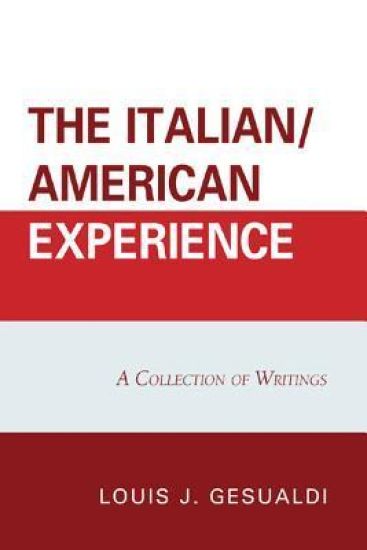
The Italian/American Experience: A Collection of Writings represents a meaningful attempt to inform Italian Americans about their group’s varied experiences in America. This book, unlike many works on the Italian American experience, contains writings that explain why popular negative notions of Italian/American life are inaccurate. The Italian/American Experience lists a number of organizations and journals specializing in Italian American culture and provides brief descriptions of many leading researchers in the field of Italian American studies. This unique text also contains an annotated bibliography of key books that deal with the lives of Italians and Italian Americans. This collection of eleven works offers readers an in-depth view of Italian American culture and heritage.

A peacemaking approach to criminology is a humane, nonviolent, and scientific approach to the treatment of crime and the offender. It looks at crime as just one of the many types of suffering that exemplify human life. According to peacemaking criminologists, efforts to put a stop to such suffering need to take into account a main rebuilding of America’s social institutions—such as the economic system and the criminal justice system—so that they no longer create suffering. In short, the U.S. as a society pays no notice to prevention but rather embraces the tenets of imprisonment and punishment. A peacemaking approach to criminology deals with prevention of crime and rehabilitation of offenders and involves principles of social justice and human rights. This collection of twenty-two essays provides a comprehensive introduction to a peacemaking approach to criminology.

A Small Book of Essays on Peacemaking Criminology
Louis J. Gesualdi
UNIVERSITY PRESS OF AMERICA
2024
nidottu
In this concise and valuable collection of essays, Louis J. Gesualdi provides readers with an understanding of peacemaking criminology. Peacemaking criminology is a humane, nonviolent, and scientific approach in its treatment of crime and the offender. It looks at crime as just one of the many types of suffering that exemplify human life. Efforts to put a stop to such suffering—according to peacemaking criminologists—should take into account a main rebuilding of America’s social institutions, such as the economic system, the criminal justice system, and the health care system so that they no longer create suffering. The United States as a society pays no notice to prevention, but rather adheres to the belief of imprisonment and punishment. The twelve essays in this book focus on how peacemaking criminology aids in the prevention of crime, the rehabilitation of offenders, and involves the core principles of social justice and human rights.


This memoir by an American journalist explores how entrenched notions of self, family, and tribalism dictate human behavior in our modern world. Salome's work as a foreign correspondent, reporting from such places as Belfast, Kabul, Bosnia and Somalia, provided him with a unique perspective on the role nationalism and tribalism play in conflicts around the globe. While sweeping in its scope, the work bears witness to one man's examination of his familial roots and ethnicity, and the ways in which tribalism is found lurking under his own roof. Includes 26 photographs, as well as maps to familiarize readers with some of the world's most misunderstood and volatile regions.