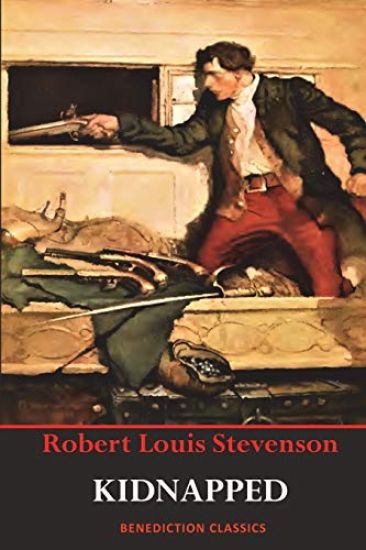
Stevenson was fascinated by eighteenth century Scottish history. Kidnapped, set in eighteenth century Scotland, is inspired by real events, notably the "Appin murder" which occurred in the aftermath of the Jacobite rising of 1745; many of the characters, such as Alan Breck Stewart, are based on real people. The hero, David Balfour, was a composite of members of Stevenson's family. However, Stevenson writes: "This is no furniture for the scholar's library, but a book for the winter evening ... to steal some young gentleman's attention from his Ovid, carry him awhile into the Highlands and the last century, and pack him to bed with some engaging images to mingle with his dreams."Kidnapped does just that, and, with its mix of suspense, crime, danger, escape, shipwrecks and pistols, it was an immediate success. However, Kidnapped is more than an adventure story, and has been praised by writers including Henry James, Jorge Luis Borges, and Hilary Mantel.This unabridged edition contains 60 illustrations by Louis Rhead, the well-known children's book illustrator. The text is set in modern crisp easy-to-read font and would be a pleasure for children or adults to read.The Scottish writer Robert Louis Stevenson, a celebrity during his lifetime, is best known for Treasure Island, Kidnapped, The Strange Case of Dr Jekyll and Mr Hyde, and A Child's Garden of Verse. He was a great traveller, journeying to Europe, America and the South Pacific, where spent his last years in Samoa. There he was much loved by the Samoans who called him Tusitala (Samoan for "Teller of Tales").
Stevenson was fascinated by eighteenth century Scottish history. Kidnapped, set in eighteenth century Scotland, is inspired by real events, notably the "Appin murder" which occurred in the aftermath of the Jacobite rising of 1745; many of the characters, such as Alan Breck Stewart, are based on real people. The hero, David Balfour, was a composite of members of Stevenson's family. However, Stevenson writes: "This is no furniture for the scholar's library, but a book for the winter evening ... to steal some young gentleman's attention from his Ovid, carry him awhile into the Highlands and the last century, and pack him to bed with some engaging images to mingle with his dreams."Kidnapped does just that, and, with its mix of suspense, crime, danger, escape, shipwrecks and pistols, it was an immediate success. However, Kidnapped is more than an adventure story, and has been praised by writers including Henry James, Jorge Luis Borges, and Hilary Mantel.This unabridged edition contains 60 illustrations by Louis Rhead, the well-known children's book illustrator. The text is set in modern crisp easy-to-read font and would be a pleasure for children or adults to read.The Scottish writer Robert Louis Stevenson, a celebrity during his lifetime, is best known for Treasure Island, Kidnapped, The Strange Case of Dr Jekyll and Mr Hyde, and A Child's Garden of Verse. He was a great traveller, journeying to Europe, America and the South Pacific, where spent his last years in Samoa. There he was much loved by the Samoans who called him Tusitala (Samoan for "Teller of Tales").
Sindbad, der Seefahrer, erz hlt von den Abenteuern seiner sieben Reisen: Von dem gro en Fisch, der f r eine Insel gehalten wird, dem Vogel Rock, der Affeninsel, den schwarzen Menschen und den gefl gelten Gottesanbetern. Werkgetreu und vollst ndig aus dem Urtext bersetzt von Dr. Gustav Weil und mit Illustrationen von Louis Rhead.
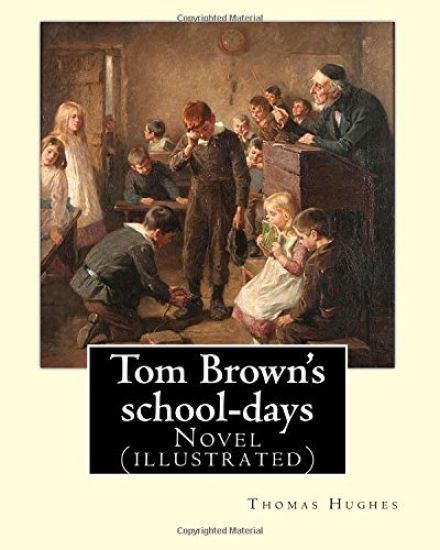
The story is set in the 1830s at Rugby School, a public school for boys. Hughes attended Rugby School from 1834 to 1842. The novel was originally published as being "by an Old Boy of Rugby", and much of it is based on the author's experiences. Tom Brown is largely based on the author's brother George Hughes. George Arthur, another of the book's main characters, is generally believed to be based on Arthur Penrhyn Stanley. The fictional Tom's life also resembles the author's, in that the culminating event of his school career was a cricket match. 3] The novel also features Dr Thomas Arnold (1795-1842), who was the actual headmaster of Rugby School from 1828 to 1841. Tom Brown's School Days has been the source for several film and television adaptations. It also influenced the genre of British school novels, which began in the nineteenth century, and led to fictional depictions of schools such as Billy Bunter's Greyfriars School, Mr Chips' Brookfield, St. Trinian's, and Harry Potter's Hogwarts. A sequel, Tom Brown at Oxford, was published in 1861.Tom Brown is energetic, stubborn, kind-hearted and athletic, rather than intellectual. He follows his feelings and the unwritten rules of the boys. The early chapters of the novel deal with his childhood at his home in the Vale of White Horse. Much of the scene setting in the first chapter is deeply revealing of Victorian England's attitudes towards society and class, and contains a comparison of so-called Saxon and Norman influences on England. This part of the book, when young Tom wanders the valleys freely on his pony, serves as a contrast with the hellish experiences in his first years at school. His first school year is at a local school. His second year starts at a private school, but due to an epidemic of fever in the area, all the school's boys are sent home, and Tom is transferred mid-term to Rugby School. On his arrival, the eleven-year-old Tom Brown is looked after by a more experienced classmate, Harry "Scud" East. Tom's nemesis at Rugby is the bully Flashman. The intensity of the bullying increases, and, after refusing to hand over a sweepstake ticket for the favourite in a horse race, Tom is deliberately burned in front of a fire. Tom and East defeat Flashman with the help of Diggs, a kind, comical, older boy. In their triumph they become unruly........ Edmund Joseph Sullivan (1869-1933), usually known as E. J. Sullivan, was a British book illustrator who worked in a style which merged the British tradition of illustration from the 1860s with aspects of Art Nouveau. Louis John Rhead (November 6, 1857 - July 29, 1926) was an English-born American artist, illustrator, author and angler who was born in Etruria, Staffordshire, England. He emigrated to the United States at the age of twenty-four. William Dean Howells ( March 1, 1837 - May 11, 1920) was an American realist novelist, literary critic, and playwright, nicknamed "The Dean of American Letters". He was particularly known for his tenure as editor of The Atlantic Monthly, as well as for his own prolific writings, including the Christmas story "Christmas Every Day" and the novels The Rise of Silas Lapham and A Traveler from Altruria.... Thomas Hughes QC (20 October 1822 - 22 March 1896) was an English lawyer, judge, politician and author. He is most famous for his novel Tom Brown's School Days (1857), a semi-autobiographical work set at Rugby School, which Hughes had attended. It had a lesser-known sequel, Tom Brown at Oxford (1861). Hughes had numerous other interests, in particular as a Member of Parliament, in the British co-operative movement, and in a settlement in Tennessee reflecting his values.....
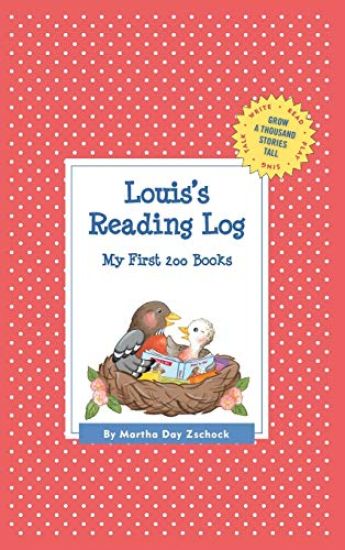
Hello, Louis Welcome to the world of books. This colorful, personalized keepsake is just for you. In Louis s Reading Log, your family and friends will be able to record the first 200 books you read and prepare you for a lifetime of reading, achievement, and success. Sprinkled with great advice and inspiration, this memory book will remind you throughout your life of those books and people who inspired you. A note for adults: recording a child s first books creates a mindset of reading the first steps to a lifetime of learning and growth."
Hello, Louis Welcome to the world of books. This colorful, personalized keepsake is just for you. In Louis s Reading Log, your family and friends will be able to record the first 200 books you read and prepare you for a lifetime of reading, achievement, and success. Sprinkled with great advice and inspiration, this memory book will remind you throughout your life of those books and people who inspired you. A note for adults: recording a child s first books creates a mindset of reading the first steps to a lifetime of learning and growth."
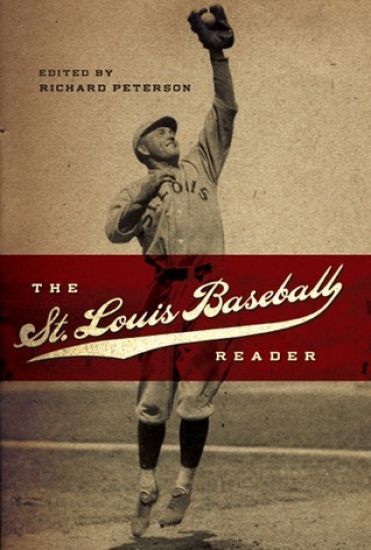
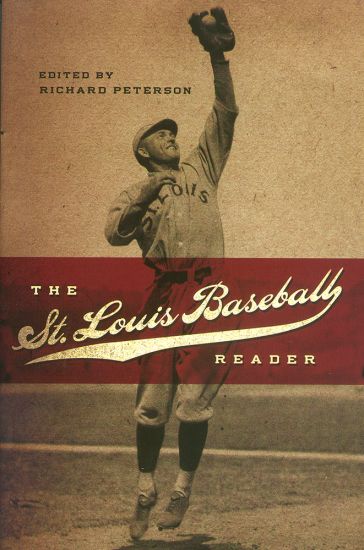
The St. Louis Baseball Reader is a tale of two teams: one the city's lovable losers, the other a formidable dynasty. The St. Louis Cardinals are the most successful franchise in National League history and the St. Louis Browns one of the most colorful. Now Richard Peterson has collected the writings of some of baseball's greatest storytellers to pay tribute to both these teams. His book, the first anthology devoted exclusively to the Cardinals and Browns, covers the rich history of St. Louis baseball from its late-nineteenth-century origins to the modern era. ""The St. Louis Baseball Reader"" is a celebration of the many legendary stars and colorful characters who wore St. Louis uniforms, and the writers who told their stories, including Alfred Spink, Roger Angell, George Will, and Baseball Hall of Fame writers Bob Broeg, J. Roy Stockton, Red Smith, and Fred Lieb. Here, too, are John Grisham, who grew up a Redbirds fan in Mississippi, and Jack Buck, the most identifiable voice in Cardinal history. Great players - Grover Cleveland Alexander, Rogers Hornsby, Marty Marion, and Satchel Paige - tell their own stories, while Bill Veeck offers an account of his wild ride as the last Browns owner and Whitey Herzog shares regrets about the play that cost the Cardinals the 1985 World Series. From the days of the Gas House Gang to the 1944 ""Streetcar Series,"" from Bill Veeck's legendary stunts to Mark McGwire's pursuit of Roger Maris's home-run record, the Reader will bring back memories for every fan. It takes in all of the magic of the ballpark - whether re-counting the unhittable pitching of Bob Gibson, the slugging prowess of Stan ""The Man"" Musial, or the sterling glove-work of Ozzie Smith - along with reflective commentaries that tell how Jackie Robinson confronted racism and Curt Flood challenged the reserve clause. St. Louis is a city blessed with a memorable baseball history, and ""The St. Louis Baseball Reader"" perfectly captures the joy and heartbreak of its winning and losing teams. It's a book that will delight current fans of the Cardinals and old-timers who fondly recall the Browns.
The St. Louis Baseball Reader is a tale of two teams: one the city’s lovable losers, the other a formidable dynasty. The St. Louis Cardinals are the most successful franchise in National League history, while the St. Louis Browns were one of the least successful, yet most colorful, American League teams. Now Richard Peterson has collected the writings of some of baseball’s greatest storytellers to pay tribute to both these teams. His book, the first anthology devoted exclusively to the Cardinals and Browns, covers the rich history of St. Louis baseball from its late-nineteenth-century origins to the modern era.The St. Louis Baseball Reader is a celebration of the many legendary stars and colorful characters who wore St. Louis uniforms and the writers who told their stories, including Alfred Spink, Roger Angell, George Will, and Baseball Hall of Fame writers Bob Broeg, J. Roy Stockton, Red Smith, and Fred Lieb. Here, too, are John Grisham, who grew up a Redbirds fan in Mississippi, and Jack Buck, the most identifiable voice in Cardinal history. Great players—Grover Cleveland Alexander, Rogers Hornsby, Marty Marion, and Satchel Paige—tell their own stories, while Bill Veeck offers an account of his wild ride as the last Browns owner and Whitey Herzog shares regrets about the play that cost the Cardinals the 1985 World Series.From the days of the Gas House Gang to the 1944 “Streetcar Series,” from Bill Veeck’s legendary stunts to Mark McGwire’s pursuit of Roger Maris’s home-run record, the Reader will bring back memories for every fan. It takes in all of the magic of the ballpark—whether recounting the unhittable pitching of Bob Gibson, the slugging prowess of Stan “The Man” Musial, or the sterling glove-work of Ozzie Smith—along with reflective commentaries that tell how Jackie Robinson confronted racism and Curt Flood challenged the reserve clause.St. Louis is a city blessed with a memorable baseball history, and The St. Louis Baseball Reader perfectly captures the joy and heartbreak of its winning and losing teams. It’s a book that will delight current fans of the Cardinals and old-timers who fondly recall the Browns.
All Stevensonians owe a debt of gratitude to the Bibliophile Society of Boston for having discovered the following poems and given them light in a privately printed edition, thus making them known, in fact, to the world at large. Otherwise they would have remained scattered and hidden indefinitely in the hands of various collectors. They will be found extraordinarily interesting in their self-revelation, and some, indeed, are so intimate and personal that one understands why Stevenson withheld them from all eyes save his own.
Robert Louis Stevenson and theories of reading is both an exceptionally well researched study of the novelist, and well as an intriguing exploration of 'literary consumption'.Glenda Norquay presents fresh interpretations of Stevenson’s literary essays, of major works including The Master of Ballantrae, and some of his more neglected fiction such as St Ives and The Wrecker, as well as illuminating our understanding of his role within debates over popular fiction, romance and reading pleasure. She offers an unusual combination of literary history and reception theory and argues that Stevenson both exemplified tensions within the literary market of his time and anticipated later developments in reading theory. By combining the study of nineteenth-century cultural politics with detailed analysis of his Scottish Calvinism, Stevenson is reassessed as both a Victorian and Scottish writer.The book is aimed at scholars, postgraduates and undergraduates with an interest in the nineteenth-century literary marketplace, in Scottish culture, and in reading /reception theory as well as Stevenson enthusiasts.