
Kirjahaku
Etsi kirjoja tekijän nimen, kirjan nimen tai ISBN:n perusteella.
1000 tulosta hakusanalla Louis Rowen
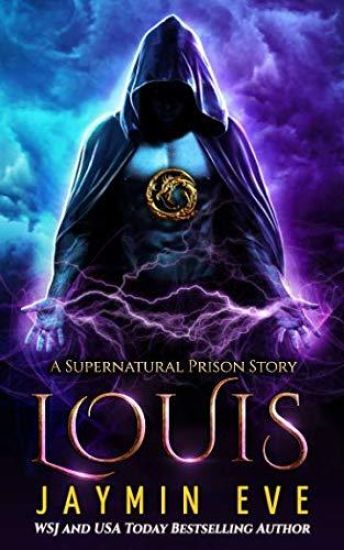
Trapped in the demon world, Louis, one of the most powerful sorcerers in existence, will find himself struggling with the darkness that has seeped into his soul. His family is determined to save him, but they have no idea what the demons have unleashed. And when a sorcerer of his strength loses control, there's a chance that no one will survive the fallout.This is book 6 in the Supernatural Prison series. Recommended 17+ due to language and sexual situations.

Observations de Louis Bonaparte, Cte de St-Leu, Sur l''Histoire de Napoléon'
Louis
Hachette Livre - BNF
2013
pokkari
Observations de Louis Bonaparte, Cte de St-Leu, sur l'"Histoire de Napoleon, par M. de Norvins"Date de l'edition originale: 1834Ce livre est la reproduction fidele d'une oeuvre publiee avant 1920 et fait partie d'une collection de livres reimprimes a la demande editee par Hachette Livre, dans le cadre d'un partenariat avec la Bibliotheque nationale de France, offrant l'opportunite d'acceder a des ouvrages anciens et souvent rares issus des fonds patrimoniaux de la BnF.Les oeuvres faisant partie de cette collection ont ete numerisees par la BnF et sont presentes sur Gallica, sa bibliotheque numerique.En entreprenant de redonner vie a ces ouvrages au travers d'une collection de livres reimprimes a la demande, nous leur donnons la possibilite de rencontrer un public elargi et participons a la transmission de connaissances et de savoirs parfois difficilement accessibles.Nous avons cherche a concilier la reproduction fidele d'un livre ancien a partir de sa version numerisee avec le souci d'un confort de lecture optimal. Nous esperons que les ouvrages de cette nouvelle collection vous apporteront entiere satisfaction.Pour plus d'informations, rendez-vous sur www.hachettebnf.fr




So who is Louis van Gaal? An inflexible ex-PE teacher who only knows how to act like a dictator or a footballing visionary that has made him one of the greatest ever European managers? Wherever he has gone, Van Gaal has been accused of being a domineering disciplinarian and a control freak. He is certainly, by his own admission, a man who leaves nothing to chance. A disciple in the 1970s of Rinus Michels’ Total Football philosophy, he is a fascinating contradiction – an ultra-individualist utterly devoted to the collective effort. He believes in the team over the individual, in always having a plan and a team prepared to follow it. Van Gaal led the young Ajax team he moulded to Champions League glory in 1995, went on to win titles across Europe with Barcelona, AZ Alkmaar and Bayern Munich and served two stints as national coach of Holland. It is a career that has never been short on colour and drama – from fallouts with players to rants at the media wherever he has managed. Dutch football commentator Maarten Meijer’s has written the definitive biography of van Gaal – both the man and his methods. It offers the best psychological insight so far – from his earliest roots to his greatest triumphs – into the man given the task of returning the glory days to Manchester United.**New chapter on Louis van Gaal's first season with Manchester United**
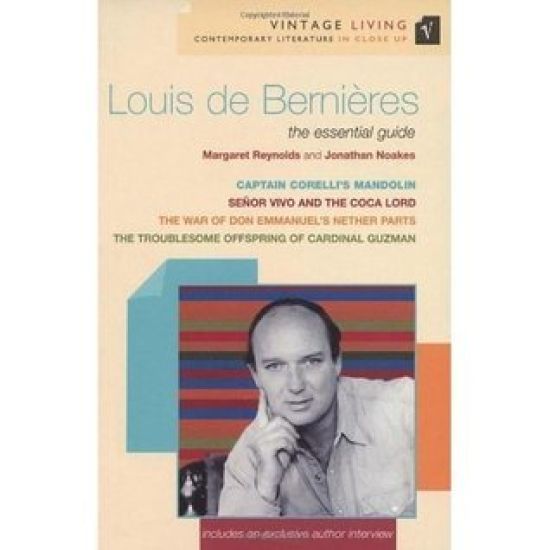
In Vintage Living Texts teachers and students will find the essential guide to the works of Louis de Bernières. Vintage Living Texts is unique in that it offers an in-depth interview with Louis de Bernières, relating specifically to the texts under discussion.This guide will deal with de Bernières' themes, genre and narrative technique, and a close reading of the texts will be accompanied with likely exam questions, and contexts and comparisons - as well as providing a rich source of ideas for intelligent and inventive ways of approaching the novels.Also included in this guide are detailed reading plans for all four novels, questions for essays and discussion, contextual material, suggested texts for complimentary and comparative reading, extracts from reviews, a biography, a bibliography and a glossary of literary terms.

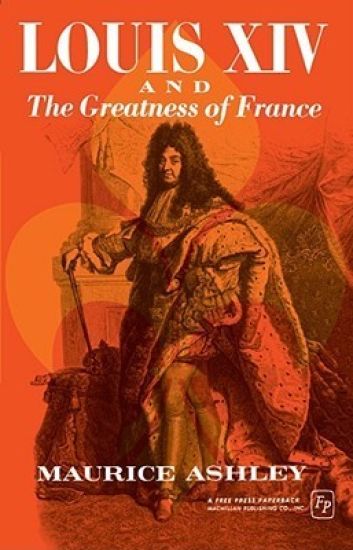
France eagerly awaits the day the young King, Louis XV, comes of age and breaks free from the rule of his ministers. From the gentle persuasions of Madame de Mailley to her overtly ambitious sister, Madame Vintimille, France stands by and watches a King ruled by his women...
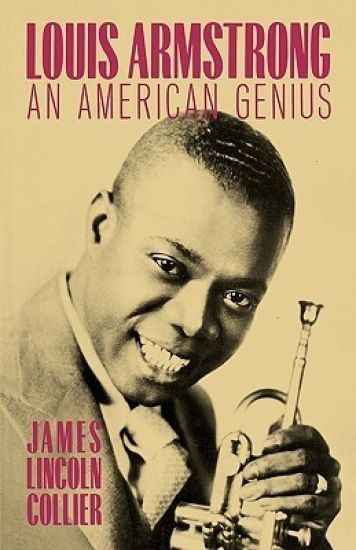
Louis Armstrong. "Satchmo". Tomillions of fans, he was just a great entertainer. But to jazz aficionados, he was one of the most important musicians of our times-not only a key figure in the history of jazz but a formative influence on all of 20th-century popular music. Set against the backdrop of New Orleans, Chicago, and New York during the "jazz age", Collier re-creates the saga of an old-fashioned black man making it in a white world. He chronicles Armstrong's rise as a musician, his scrapes with the law, his relationships with four wives, and his frequent feuds with fellow musicians Earl Hines and Zutty Singleton. He also sheds new light on Armstrong's endless need for approval, his streak of jealousy, and perhaps most important, what some consider his betrayal of his gift as he opted for commercial success and stardom. A unique biography, knowledgeable, insightful, and packed with information, it ends with Armstrong's death in 1971 as one of the best-known figures in American entertainment.
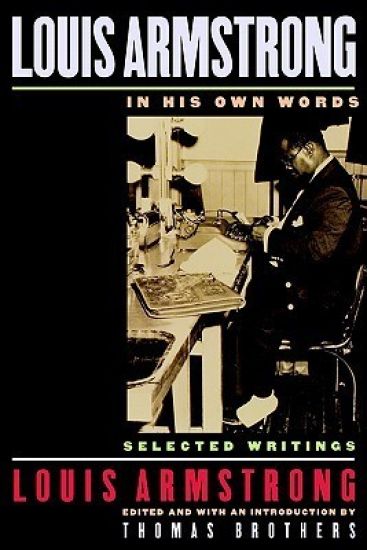
Louis Armstrong, In His Own Words
Oxford University Press Inc
2001
nidottu
Louis Armstrong has been the subject of countless biographies and music histories. Yet scant attention has been paid to the remarkable array of writings he left behind. Louis Armstrong: In His Own Words introduces readers to a little-known facet of this master trumpeter, band leader, and entertainer. Based on extensive research through the Armstrong archives, this important volume includes some of his earliest letters, personal correspondence with one of his first biographers in 1943-44, autobiographical writings, magazine articles, and essays. Here are Armstrong's own thoughts on his life and career—from poverty in New Orleans to playing in the famous cafes, cabarets, and saloons of Storyville, from his big break in 1922 with the King Oliver band to his storming of New York, from his breaking of color barriers in Hollywood to the infamous King of the Zulus incident in 1949, and finally, to his last days in Queens, New York. Along the way Armstrong recorded touching portraits of his times and offered candid, often controversial, opinions about racism, marijuana, bebop, and other jazz artists such as Jelly Roll Morton and Coleman Hawkins. Indeed, these writings provide a balanced portrait of his life as a musician, entertainer, civil rights activist, and cultural icon. Armstrong's idiosyncratic use of language and punctuation have been preserved to give the reader an unvarnished portrayal of this compelling artist. This volume also includes introductions to the writings, as well as an annotated index of names and places significant to Armstrong's life.

Louis Armstrong's Hot Five and Hot Seven Recordings
Harker Brian
Oxford University Press Inc
2011
nidottu
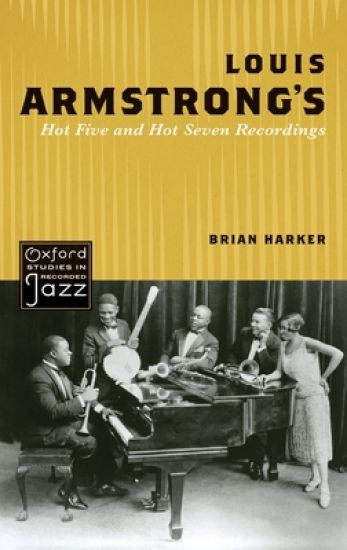
For jazz historians, Louis Armstrong's Hot Five and Hot Seven recordings mark the first revolution in the history of a music riven by upheaval. Yet few traces of this revolution can be found in the historical record of the late 1920s, when the records were made. Even black newspapers covered Armstrong as just one name among many, and descriptions of his playing, while laudatory, bear little resemblance to those of today. For this reason, the perspective of Armstrong's first listeners is usually regarded as inadequate, as if they had missed the true significance of his music. This attitude overlooks the possibility that those early listeners might have heard something valuable on its own terms, something we ourselves have lost. If we could somehow recapture their perspective-without abandoning our own-how might it change our understanding of these seminal recordings? In Louis Armstrong's Hot Five and Hot Seven Recordings, Harker selects seven exceptional records to study at length: "Cornet Chop Suey," "Big Butter and Egg Man," "Potato Head Blues," "S.O.L. Blues"/"Gully Low Blues," "Savoy Blues," and "West End Blues." The world of vaudeville and show business provide crucial context, revealing how the demands of making a living in a competitive environment could catalyze Armstrong's unique artistic gifts. Technical achievements such as virtuosity, structural coherence, harmonic improvisation, and high-register playing are all shown to have a basis in the workaday requirements of Armstrong's profession. Invoking a breadth of influences ranging from New Orleans clarinet style to Guy Lombardo, and from tap dancing to classical music, this book offers bold insights, fresh anecdotes, and, ultimately, a new interpretation of Louis Armstrong and his most influential body of recordings.
Louis Armstrong's Hot Five and Hot Seven Recordings
Harker Brian
Oxford University Press Inc
2011
sidottu
For jazz historians, Louis Armstrong's Hot Five and Hot Seven recordings mark the first revolution in the history of a music riven by upheaval. Yet few traces of this revolution can be found in the historical record of the late 1920s, when the records were made. Even black newspapers covered Armstrong as just one name among many, and descriptions of his playing, while laudatory, bear little resemblance to those of today. For this reason, the perspective of Armstrong's first listeners is usually regarded as inadequate, as if they had missed the true significance of his music. This attitude overlooks the possibility that those early listeners might have heard something valuable on its own terms, something we ourselves have lost. If we could somehow recapture their perspective-without abandoning our own-how might it change our understanding of these seminal recordings? In Louis Armstrong's Hot Five and Hot Seven Recordings, Harker selects seven exceptional records to study at length: "Cornet Chop Suey," "Big Butter and Egg Man," "Potato Head Blues," "S.O.L. Blues"/"Gully Low Blues," "Savoy Blues," and "West End Blues." The world of vaudeville and show business provide crucial context, revealing how the demands of making a living in a competitive environment could catalyze Armstrong's unique artistic gifts. Technical achievements such as virtuosity, structural coherence, harmonic improvisation, and high-register playing are all shown to have a basis in the workaday requirements of Armstrong's profession. Invoking a breadth of influences ranging from New Orleans clarinet style to Guy Lombardo, and from tap dancing to classical music, this book offers bold insights, fresh anecdotes, and, ultimately, a new interpretation of Louis Armstrong and his most influential body of recordings.

The rise and fall of Louis Riel (1844-85) spanned only fifteen years, yet he is one of the most controversial and colourful people in Canadian history. The central figure in two rebellions, which he led on behalf of the French-speaking half-breeds called Metis, Riel has caught the imagination of Canadians as few other historical personalities have done. His career began with the acts of resistance at the Red River Settlement in 1869, and continued through the formation of a Provisional Government and the notorious shooting of Thomas Scott in 1870, through years of mental illness and exile in the United States, to the North West Rebellion of 1885. It reached an inevitable climax with his surrender and trial and the passionate outpouring of feeling that rocked the country when he was found guilty of treason and executed. The religious and racial emotions of the time, the bigotry and opportunism of politicians, and Riel's own unstable mental condition all combine to make of his life a Canadian tragedy, one that had profound consequences for Confederation.
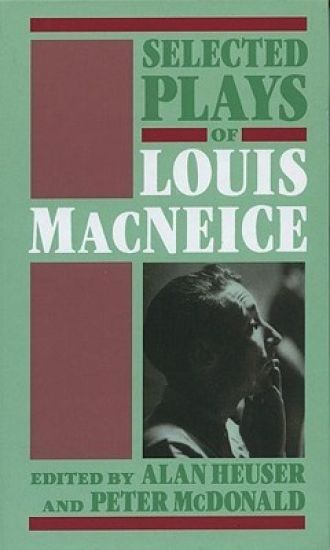
Louis MacNeice (1907-1963) is rightly regarded as one of the foremost Irish poets of this century, but he was also a distinctive, gifted, and popular playwright. This unique selection of eight of MacNeice's best-known plays, most of which were written for BBC Radio, draws on the most authoritative texts to provide a much-needed reminder of the power of his dramatic writing. All the plays are published here in authentic versions for the first time, several considerably changed, and two entirely new plays, never before published. The volume comprises MacNeice's famous The Dark Tower, published here for the first time in its third and final version; the saga play They Met on Good Friday and the parable The Mad Islands, both of which use explicitly Irish subject-matter; the stage play One for the Grave, which mercilessly satirizes television and commercialism; the epic Christopher Columbus; He Had a Date (in its second version), an experiment in radio biography; Prisoner's Progress, a prize-winning parable about an escape from a prisoner-of-war camp; and MacNeice's last play, Persons from Porlock, which traces the nemesis of an artist and was broadcast just four days before MacNeice's own death. This generous and representative selection makes available again MacNeice's entertaining and innovative Irish blend of fantasy and realism, prose and verse, and offers important new perspectives on MacNeice's poetry.
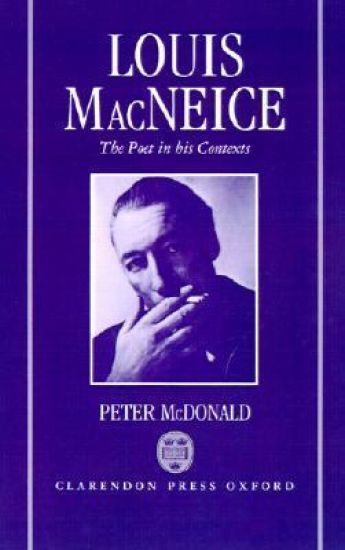
Since his death in 1963, Louis MacNeice's critical standing has risen steadily. This new study addresses the contexts of MacNeice's writings which are of greatest relevance to his place in modern poetry: his problematic, and still controversial relationship with Ireland and his significance for the understanding of the largely English `thirties generation' with which he is often identified. The influence of these contexts upon the nature of MacNeice's poetic development is studied in detail here together with the important questions of his relation to Yeats and Modernism. The book examines MacNeice's conception of parable as key imaginative response to these influences, and it includes the first study of the poet's revealing and little-known early writings. Peter McDonald demonstrates that MacNeice is a central figure in modern Irish and British poetry of greater substantial complexity than is often thought, and suggests that his through his work we should see its contexts in a challenging new light.

This is the second of two collections of MacNeice's prose writings, prepared by Alan Heuser. The first, concentrating on his literary criticism, came out in 1987 (still available from OUP). The present collection will be of interest to a wider readership, since it covers the sweep of MacNeice's many ardently-pursued interests outside the strictly literary: philosophy and travel, history, autobiography, Ireland (the country of his birth, and one of the mainsprings of his writing of both prose and poetry), India, Greece - and rugby football. The volume also contains the `London letters', written during the Blitz; and a previously unpublished piece: Northern Ireland and her People. These writings convey the visual perceptiveness, humour, seriousness, and enthusiasm of MacNeice's personality and poetry: they are more than simply reflections of the decades in which they were written (from the thirties to the early sixties), revealing MacNeice's particular gifts as a writer, and throwing light on his personality and preoccupations. The complete bibliography of the shorter prose, included in Selected Literary Criticism of Louis MacNeice, is repeated here; and there is annotation and an index. This title also appears in the Oxford General Books catalogue for Autumn 1990.
This study focuses on Louis MacNeice's creative and critical engagement with other Irish poets during his lifetime. It draws on extensive archival research to uncover the previously unrecognised extent of the poet's contact with Irish literary mores and networks. Poetic dialogues with contemporaries including F.R. Higgins, John Hewitt, W.R. Rodgers, Austin Clarke, Patrick Kavanagh, John Montague, and Richard Murphy are traced against the persistent rhetoric of cultural and geographical attachment at large in Irish poetry and criticism during the period. These comparative readings are framed by accounts of MacNeice's complex relationship with the oeuvre of W.B. Yeats, which forms a meta-narrative to MacNeice's broader engagement with Irish poetry. Yeats is shown to have been MacNeice's contemporary in the 1930s, reading and reacting to the younger poet's work, just as MacNeice read and reacted to the older poet's work. But the ongoing challenge of the intellectual and formal complexity of Yeats's poetry also provided a means through which MacNeice, across his whole career, dialectically developed various modes through which to confront modernity's cultural, political and philosophical challenges. This book offers new and revisionary perspectives on MacNeice's work and its relationship to Ireland's literary traditions, as well as making an innovative contribution to the history of Irish literature and anglophone poetry in the twentieth century.

Louis MacNeice: The Classical Radio Plays
Amanda Wrigley; S. J. Harrison
Oxford University Press
2013
sidottu
This volume presents eleven radio scripts written and produced by the poet and writer Louis MacNeice (1907-1963) over the span of his twenty-year career at the BBC, during which he wrote and produced well over a hundred radio scripts on an impressively wide variety of subjects. This volume's selection of scripts, all but one of which is published for the first time, illustrates the various ways that MacNeice re-worked one particular and recurrent source of material for radio broadcast - ancient Greek and Roman history and literature. The volume thus seeks to explore MacNeice's literary relationship with classical antiquity, including engagements with authors such as Homer, Thucydides, Aristophanes, Xenophon, Petronius, Apuleius, and Horace, in a variety of types of programmes from wartime propaganda work, which used ancient Greek history to comment on the international situation, to lighter entertainment programmes drawing on the Roman novel. MacNeice's educational background in classics, combined with his skill as a writer and his ability in exploring radio's potential for creative work, resulted in programmes which brought the ancient world imaginatively alive for a massive, popular audience at home and abroad. Each script is prefaced by an individual introduction, written by the editors and guest contributor Gonda Van Steen, detailing the political and broadcasting contexts, the relationship of the script with classical antiquity, notes on cast and credits, and the reception of each script's radio performance amongst contemporary listeners. The volume opens with a general introduction which seeks to contextualise the scripts in MacNeice's wider life and work for radio, and it includes an appendix of extant MacNeicean scripts and recordings.