Kirjahaku
Etsi kirjoja tekijän nimen, kirjan nimen tai ISBN:n perusteella.
1000 tulosta hakusanalla Louis V. Allene
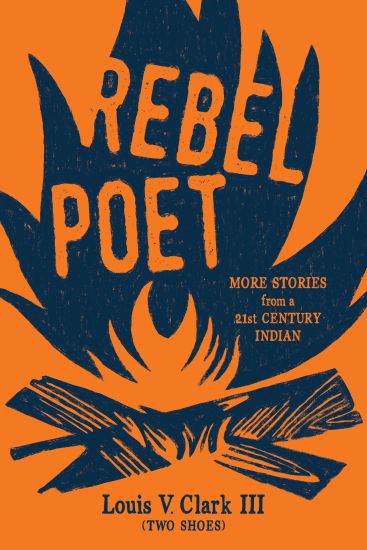
Rebel Poet (Continuing the Oral Tradition): More Stories from a 21st Century Indian
Louis V. Clark (Two Shoes)
Wisconsin Historical Society Press
2019
nidottu

This work has been selected by scholars as being culturally important and is part of the knowledge base of civilization as we know it.This work is in the public domain in the United States of America, and possibly other nations. Within the United States, you may freely copy and distribute this work, as no entity (individual or corporate) has a copyright on the body of the work.Scholars believe, and we concur, that this work is important enough to be preserved, reproduced, and made generally available to the public. To ensure a quality reading experience, this work has been proofread and republished using a format that seamlessly blends the original graphical elements with text in an easy-to-read typeface.We appreciate your support of the preservation process, and thank you for being an important part of keeping this knowledge alive and relevant.

On the Direct Numerical Calculation of Elliptic Functions and Integrals
Louis V. King
Cambridge University Press
2016
pokkari
Originally published in 1924, this book presents an account regarding the direct numerical calculation of elliptic functions and integrals. Notes are incorporated and an appendix section containing examples is also included. This book will be of value to anyone with an interest in the history of mathematics.

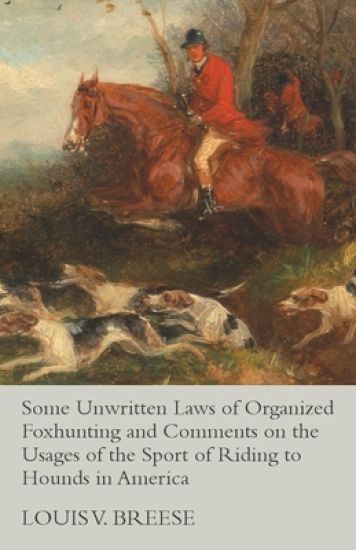
Some Unwritten Laws of Organized Foxhunting and Comments on the Usages of the Sport of Riding to Hounds in America
Louis V Breese
Read Books
2015
pokkari
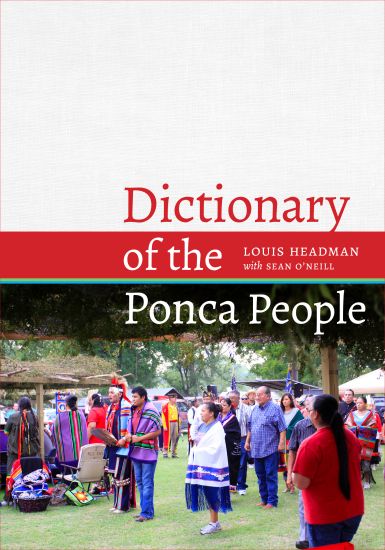
Dictionary of the Ponca People
Louis V. Headman; Sean O'Neill
University of Nebraska Press
2019
sidottu
Published through the Recovering Languages and Literacies of the Americas initiative, supported by the Andrew W. Mellon Foundation. Dictionary of the Ponca People presents approximately five thousand words and definitions used by Ponca speakers from the late nineteenth century to the present. Until relatively recently, the Ponca language had been passed down solely as part of an oral tradition in which children learned the language at home by listening to their elders. Almost every family on the southern Ponca reservation in Oklahoma spoke the language fluently until the 1940s, when English began to replace the Ponca language as children entered government boarding schools and were forced to learn English. In response to demand, Ponca language classes are now being offered to children and adults as people seek to gain knowledge of this important link to tradition and culture. The approximately five thousand words in this volume encompass the main artery of the language heard and spoken by the parents and grandparents of the Ponca Council of Elders. Additional words are included, such as those related to modern devices and technology. This dictionary has been compiled at a time when the southern Poncas are initiating a new syntactic structure to the language, as few can speak a full sentence. This dictionary is not intended to recover a cultural period or practice but rather as a reference to the spoken language of the people.
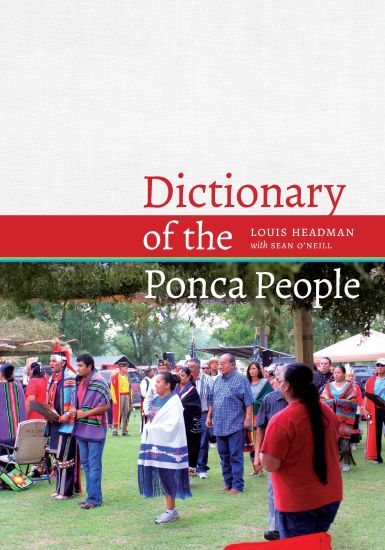
Dictionary of the Ponca People
Louis V. Headman; Sean O'Neill
University of Nebraska Press
2020
pokkari
Published through the Recovering Languages and Literacies of the Americas initiative, supported by the Andrew W. Mellon Foundation. Dictionary of the Ponca People presents approximately five thousand words and definitions used by Ponca speakers from the late nineteenth century to the present. Until relatively recently, the Ponca language had been passed down solely as part of an oral tradition in which children learned the language at home by listening to their elders. Almost every family on the southern Ponca reservation in Oklahoma spoke the language fluently until the 1940s, when English began to replace the Ponca language as children entered government boarding schools and were forced to learn English. In response to demand, Ponca language classes are now being offered to children and adults as people seek to gain knowledge of this important link to tradition and culture. The approximately five thousand words in this volume encompass the main artery of the language heard and spoken by the parents and grandparents of the Ponca Council of Elders. Additional words are included, such as those related to modern devices and technology. This dictionary has been compiled at a time when the southern Poncas are initiating a new syntactic structure to the language, as few can speak a full sentence. This dictionary is not intended to recover a cultural period or practice but rather as a reference to the spoken language of the people.

Named a 2020 Choice Outstanding Academic TitleWalks on the Ground is a record of Louis V. Headman’s personal study of the Southern Ponca people, spanning seven decades beginning with the historic notation of the Ponca people’s origins in the East. The last of the true Ponca speakers and storytellers entered Indian Territory in 1877 and most lived into the 1940s. In Ponca heritage, the history of individuals is told and passed along in songs of tribal members. Headman acquired information primarily when singing with known ceremonial singers such as Harry Buffalohead, Ed Littlecook, Oliver Littlecook, Eli Warrior, Dr. Sherman Warrior (son of Sylvester Warrior), Roland No Ear, and “Pee-wee” Clark. Headman’s father, Kenneth Headman, shared most of this history and culture with Louis. During winter nights, after putting a large log into the fireplace, Kenneth would begin his storytelling. The other elders in the tribe confirmed Kenneth’s stories and insights and contributed to the history Louis has written about the Ponca.Walks on the Ground traces changes in the tribe as reflected in educational processes, the influences and effects of the federal government, and the dominant social structure and culture. Headman includes children’s stories and recognizes the contribution made by Ponca soldiers who served during both world wars, the Korean Conflict, the Vietnam War, Desert Storm, and the ongoing conflict in the Middle East.

Named a 2020 Choice Outstanding Academic TitleWalks on the Ground is a record of Louis V. Headman’s personal study of the Southern Ponca people, spanning seven decades beginning with the historic notation of the Ponca people’s origins in the East. The last of the true Ponca speakers and storytellers entered Indian Territory in 1877 and most lived into the 1940s. In Ponca heritage, the history of individuals is told and passed along in songs of tribal members. Headman acquired information primarily when singing with known ceremonial singers such as Harry Buffalohead, Ed Littlecook, Oliver Littlecook, Eli Warrior, Dr. Sherman Warrior (son of Sylvester Warrior), Roland No Ear, and “Pee-wee” Clark. Headman’s father, Kenneth Headman, shared most of this history and culture with Louis. During winter nights, after putting a large log into the fireplace, Kenneth would begin his storytelling. The other elders in the tribe confirmed Kenneth’s stories and insights and contributed to the history Louis has written about the Ponca.Walks on the Ground traces changes in the tribe as reflected in educational processes, the influences and effects of the federal government, and the dominant social structure and culture. Headman includes children’s stories and recognizes the contribution made by Ponca soldiers who served during both world wars, the Korean Conflict, the Vietnam War, Desert Storm, and the ongoing conflict in the Middle East.
The story of Eleusis, a lyrical drama
Louis V. LeDoux
Createspace Independent Publishing Platform
2016
nidottu

Survival SymphonyNot too long ago, stage 4 lung cancer was considered a death sentence. Today, thanks to advances in lung cancer treatment, lung cancer can be considered a chronic disease. Survival Symphony is one man's amazing story of living in the solution.A lifelong athlete, at age fifty-nine, Louis V. Cesarini maintained a healthy lifestyle, including training and competing in 5k races. When he was diagnosed with stage 4, non-small cell lung cancer, Louis said: "This is not how I'm going to die." That was two years ago, more than twice the life span prognosis for lung cancer patients, and Louis is still here to share his inspiring story of hope, courage, and survival.As a career pharmaceutical marketer specializing in oncology, Louis is in a small category of highly informed patients, now finding himself battling the illness he spent years studying. Survival Symphony is a daily chronicle of his lung cancer journey, including his proactive approach to his own survival. Louis shares guidance for how lung cancer and other patients can and should be informed, advocate for themselves, and exercise the deep reserve of power they have in their care and treatment. Louis's journey rightfully depicts lung cancer as a chronic illness that can be managed alongside living life to the fullest. One of his techniques for doing just that is by playing his French horn, which for Louis is both a measure of his lung health and a reminder of the joyful expression of music. Survival Symphony offers a multidimensional experience for the reader with each of the four parts: Discovery, Treatment, Courage and Believe, drawing inspiration from the four movements of Ludwig van Beethoven's triumphal 9th Symphony. Readers can use the QR codes or footnotes to access online recordings of the music, including performances by Louis on his French horn."Stage 4 lung cancer is no longer a death sentence," Louis writes in his letter to cancer. "I will spread the word and share how I got rid of you." With an author undaunted by lung cancer, even amidst the COVID-19 pandemic, Survival Symphony gives voice to courage and pure joy for life. As an inspirational speaker, Louis continues to share his journey as an advocate for lung cancer patients and their caregivers. He is committed to sharing hope, empowerment and courage so that everyone can believe there is life after lung cancer.
Thirty Days to Overcoming: Meditations for the Way Forward
Louis V. Alexander
Searchlight Press
2012
nidottu
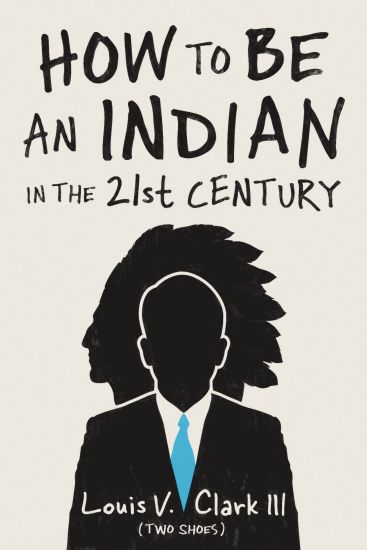
How to Be an Indian in the 21st Century: Continuing the Oral Tradition: Tales of an Iroquois Storyteller
Louis V. Clark (Two Shoes)
Wisconsin Historical Society Press
2017
nidottu
In deceptively simple prose and verse, Louis V. "Two Shoes" Clark III shares his life story, from childhood on the Rez, through school and into the working world, and ultimately as an elder, grandfather, and published poet. How to Be an Indian in the 21st Century explores Clark's deeply personal and profound take on a wide range of subjects, from schoolyard bullying to workplace racism to falling in love. Warm, plainspoken, and wryly funny, Clark's is a unique voice talking frankly about a culture's struggle to maintain its heritage. His poetic storytelling style matches the rhythm of the life he recounts, what he calls "the heartbeat of my nation."
Voyage De M. Le Marechal Duc De Raguse V3 (1837)
Auguste Frederic Louis V. De Marmont
KESSINGER PUBLISHING, LLC
2010
pokkari