
Kirjahaku
Etsi kirjoja tekijän nimen, kirjan nimen tai ISBN:n perusteella.
261 tulosta hakusanalla Loy L Layman
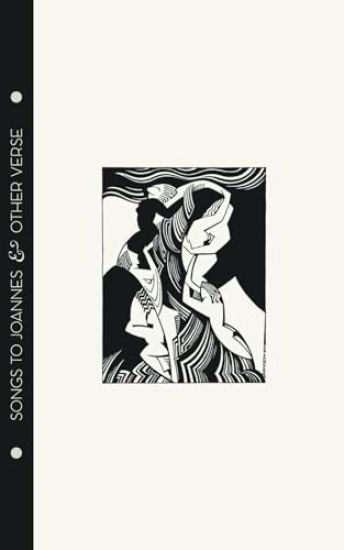
Mina Loy - Songs to Joannes & Other VerseForgotten Poets #7 / forgottenpoets.substack.com'Songs to Joannes & Other Verse' 146 pages] brings together a selection of poems by London poet Mina Loy, later based in Paris and New York, including the entire 34 song sequence, 'Songs to Joannes', and a generous selection of Loy's other verses (originally published 1914-1923), as well as selected short essays, manifestos, and aphorisms; with illustrations by Mina Loy, Djuna Barnes, and Clara Tice. Loy was a revolutionary poet, and a member of the Futurist and Dada groups in the mid-1910s, and a forerunner to the 'free' and 'new verse' movements of the 1920s.. . . . . . . . .-: From: Songs To Joannes: -Out of the severingOf hill from hillThe interimOf star from starThe nascentStaticOf night. . . . . . . . .-: Gertrude Stein: -CurieOf the laboratoryof vocabularyshe crushedthe tonnageof consciousnesscongealed to phrasesto extracta radium of the word. . . . . . . . .The Forgotten Poets Newsletter presents: new collections of out-of-print and obscure poetry, with a focus on compressed & fragmented 'free' and 'new' verse from the late-1800s & early-1900s, & the early history of English-language tanka & haiku. Verses are carefully selected & spaciously laid-out, adorned with illustrations & ornaments from the books & magazines they originally appeared in.
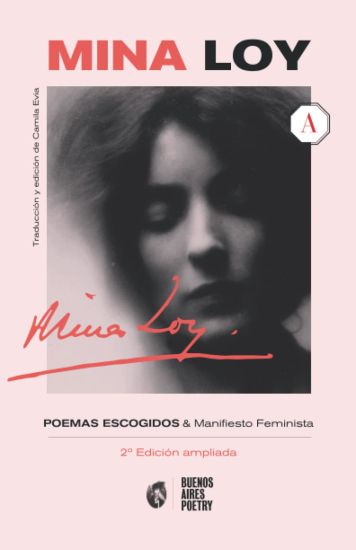
Mina Loy (Mina Lowy / 1882, Londres - 1966, Aspen, Colorado) fue una poeta modernista cuya obra fuertemente feminista retrat los aspectos m s ntimos de la sexualidad femenina y su vida emocional. Loy comenz a estudiar arte en 1987 en St. John's Wood School en Londres. En 1899 dej Inglaterra para estudiar pintura en Munich, Alemania, y luego viaj a Par s en 1902. En 1907 viaj a Florencia y entr en contacto con los futuristas. Gertrude Stein y otros artistas y escritores expatriados alentaron las tendencias modernistas de Loy. Ya en 1913 la poeta estaba utilizando teor as futuristas en la literatura para promover la pol tica feminista desde su trabajo. En 1915 public "Love Songs" para la revista modernista Others, y en 1916 se uni al movimiento vanguardista de la ciudad de Nueva York, ganando elogios de los contempor neos modernistas William Carlos Williams, Ezra Pound y T. S. Eliot. En "Songs to Jannes" de 1917 (una expansi n de "Love Songs"). Una completa colecci n de su obra, The Last Lunar Baedeker, apareci en 1982.

James Loy
VDM Publishing House
2010
nidottu
Observera att förlaget som ger ut denna produkt baserar innehållet i sina produkter på fria källor som Wikipedia. Boken är med stor sannolikhet endast ett utdrag ur dessa informationskällor, alltså inte en vanlig bok i den bemärkelsen.
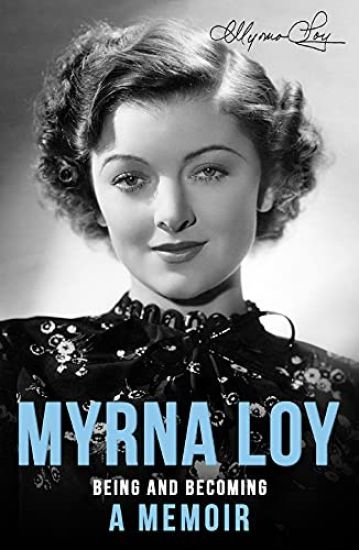
The actress recalls her long, rich, and varied career in Hollywood, on the stage, and as a political activist
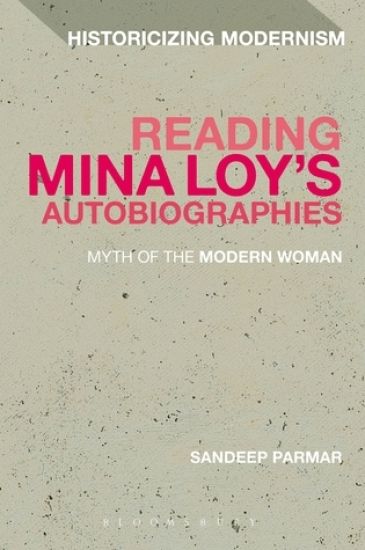
Mina Loy is recognised today as one of the most innovative modernist poets, numbering Gertrude Stein, Marcel Duchamp, Djuna Barnes and T.S. Eliot amongst her admirers. Drawing on substantial new archival research, this book challenges the existing critical myth of Loy as a ‘modern woman' through an analysis of her unpublished autobiographical prose. Mina Loy's Autobiographies explores this major twentieth century writer's ideas about the ‘modern' and how they apply to the ‘modernist' writer—based on her engagement with twentieth-century avant-garde aesthetics—and charts how Loy herself uniquely defined modernity in her essays on literature and art. Sandeep Parmar here shows how, ultimately, Loy's autobiographies extend the modernist project by rejecting earlier impressions of avant-garde futurity and newness in favour of a ‘late modernist' aesthetic, one that is more pessimistic, inward and interested in the fragmentary interplay between the past and present.
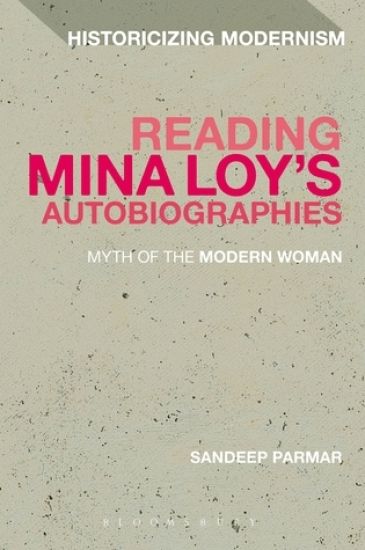
Mina Loy is recognised today as one of the most innovative modernist poets, numbering Gertrude Stein, Marcel Duchamp, Djuna Barnes and T.S. Eliot amongst her admirers. Drawing on substantial new archival research, this book challenges the existing critical myth of Loy as a ‘modern woman' through an analysis of her unpublished autobiographical prose. Reading Mina Loy's Autobiographies explores this major twentieth century writer's ideas about the ‘modern' and how they apply to the ‘modernist' writer—based on her engagement with twentieth-century avant-garde aesthetics—and charts how Loy herself uniquely defined modernity in her essays on literature and art. Sandeep Parmar here shows how, ultimately, Loy's autobiographies extend the modernist project by rejecting earlier impressions of avant-garde futurity and newness in favour of a ‘late modernist' aesthetic, one that is more pessimistic, inward and interested in the fragmentary interplay between the past and present.
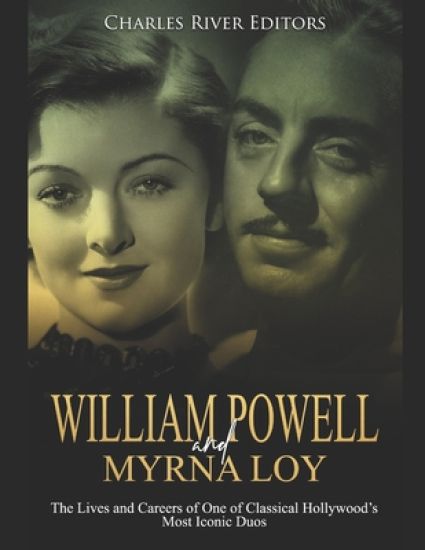
William Powell and Myrna Loy: The Lives and Careers of One of Classical Hollywood's Most Iconic Duos
Charles River
Independently Published
2019
nidottu
*Includes pictures*Includes a bibliography for further reading"My first scene with Bill, a night shot on the back lot, happened before we'd even met. Woody was apparently too busy for introductions. My instructions were to run out of a building, through a crowd, and into a strange car. When Woody called 'Action, ' I opened the car door, jumped in, and landed smack on William Powell's lap. He looked up nonchalantly: 'Miss Loy, I presume' I said, 'Mr. Powell' And that's how I met the man who would be my partner in fourteen films." - Myrna LoyIt is something of a clich to say that an actor's life was like a movie he or she might have starred in, but in the case of Myrna Loy, the clich is true. It is easy to picture her as a little girl, riding the range with her rancher father, sitting around the table and participating charmingly in family discussions of current events. It is not hard to imagine the camera panning to her first and then second visits to Hollywood, her backlot tour, and starry-eyed decision to become an actress. There would have to be some drama, which the story of her father's untimely death would provide, along with some sort of deathbed promise made to him to care for the rest of the family. Her mother would be brave but resolute as she moved her young family to California. The lighting on set would brighten and the tempo of the background would pick up as she walked down the Los Angeles streets.Perhaps the camera would spin to show the passage of time, as the now adult Myrna got a job as a dancer and was then "discovered." There would have to be a scene of her signing her new surname, Loy, to her MGM contract, likely as several cigar smoking men looked on. Later the audience would see her fight off casting couch advances, earning her the reputation as the only good girl in Hollywood even as she was cast again and again in sultry, vampish roles. She would endure these with a positive attitude while always being on the lookout for something better. Then, her big break would come. The camera would show her first comical meeting with William Powell and then a spinning scene of ticket after ticket being sold to their new picture, The Thin Man. Her star obviously on the rise, ominous music would suddenly play, followed by booming cannons and falling bombs. A newspaper would flash on screen, "Pearl Harbor Bombed." Then the audience would see her stride determinedly into the movie studio offices and announce to those above that her love of country superseded her career ambitions and that she would be taking the duration of the war off from making pictures. Patriotic music would play as she was shown gathering clothing and giving speeches until, once more, the boys came marching home.In the 1920s, the burgeoning movie industry was starting to come into its own, and while older silent film stars like Charlie Chaplin and Buster Keaton reached the peak of Hollywood, some actors born near the beginning of the 20th century were ready to capitalize. While actors like Humphrey Bogart and Cary Grant remain household names, and actresses like Greta Garbo are still widely remembered, few had careers that enjoyed the success of William Powell.In a career spanning several decades, Powell would receive three Oscar nominations for Best Actor for critically acclaimed movies, so it is somewhat ironic that he is mostly remembered today for his association with the more famous Myrna Loy. Together, they starred in 14 films, including the 1934 box office hit, The Thin Man. One thing that helped Powell's career along in the old days when Hollywood would only cast white actors in major roles, no matter what the nationality of the character was supposed to be, were his dark good looks.
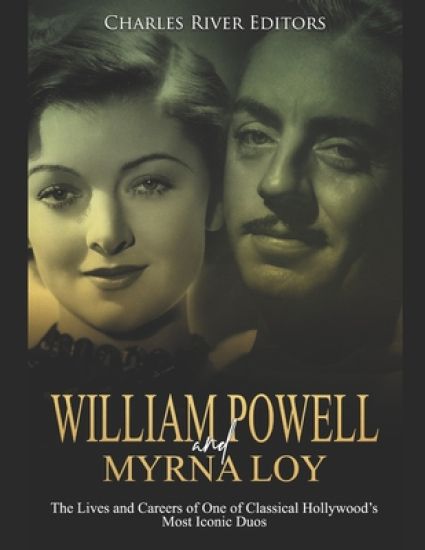
William Powell and Myrna Loy: The Lives and Careers of One of Classical Hollywood's Most Iconic Duos
Charles River
Independently Published
2019
nidottu
*Includes pictures*Includes a bibliography for further reading"My first scene with Bill, a night shot on the back lot, happened before we'd even met. Woody was apparently too busy for introductions. My instructions were to run out of a building, through a crowd, and into a strange car. When Woody called 'Action, ' I opened the car door, jumped in, and landed smack on William Powell's lap. He looked up nonchalantly: 'Miss Loy, I presume' I said, 'Mr. Powell' And that's how I met the man who would be my partner in fourteen films." - Myrna LoyIt is something of a clich to say that an actor's life was like a movie he or she might have starred in, but in the case of Myrna Loy, the clich is true. It is easy to picture her as a little girl, riding the range with her rancher father, sitting around the table and participating charmingly in family discussions of current events. It is not hard to imagine the camera panning to her first and then second visits to Hollywood, her backlot tour, and starry-eyed decision to become an actress. There would have to be some drama, which the story of her father's untimely death would provide, along with some sort of deathbed promise made to him to care for the rest of the family. Her mother would be brave but resolute as she moved her young family to California. The lighting on set would brighten and the tempo of the background would pick up as she walked down the Los Angeles streets.Perhaps the camera would spin to show the passage of time, as the now adult Myrna got a job as a dancer and was then "discovered." There would have to be a scene of her signing her new surname, Loy, to her MGM contract, likely as several cigar smoking men looked on. Later the audience would see her fight off casting couch advances, earning her the reputation as the only good girl in Hollywood even as she was cast again and again in sultry, vampish roles. She would endure these with a positive attitude while always being on the lookout for something better. Then, her big break would come. The camera would show her first comical meeting with William Powell and then a spinning scene of ticket after ticket being sold to their new picture, The Thin Man. Her star obviously on the rise, ominous music would suddenly play, followed by booming cannons and falling bombs. A newspaper would flash on screen, "Pearl Harbor Bombed." Then the audience would see her stride determinedly into the movie studio offices and announce to those above that her love of country superseded her career ambitions and that she would be taking the duration of the war off from making pictures. Patriotic music would play as she was shown gathering clothing and giving speeches until, once more, the boys came marching home.In the 1920s, the burgeoning movie industry was starting to come into its own, and while older silent film stars like Charlie Chaplin and Buster Keaton reached the peak of Hollywood, some actors born near the beginning of the 20th century were ready to capitalize. While actors like Humphrey Bogart and Cary Grant remain household names, and actresses like Greta Garbo are still widely remembered, few had careers that enjoyed the success of William Powell.In a career spanning several decades, Powell would receive three Oscar nominations for Best Actor for critically acclaimed movies, so it is somewhat ironic that he is mostly remembered today for his association with the more famous Myrna Loy. Together, they starred in 14 films, including the 1934 box office hit, The Thin Man. One thing that helped Powell's career along in the old days when Hollywood would only cast white actors in major roles, no matter what the nationality of the character was supposed to be, were his dark good looks.
Melinda Renee Loy: Memory Jar Book
Tracy Renee Lee
Createspace Independent Publishing Platform
2018
nidottu

Traicté de la Loy Salique, Armes Blasons Et Devises Des François
Claude Malingre
Hachette Livre - BNF
2018
pokkari
Poetics of Identity: Mina Loy Voicing the Fluid Female Body
Pavlina Ferfeli
Peter Lang AG
2011
sidottu
Examining closely the intersection of Continental theories of difference and a predominantly American ethic of diversity, the book uses phenomenology and interdisciplinary study to investigate female embodiment in Mina Loy’s poetic and visual work. It contends that Loy’s female embodied subjectivity is enacted in the mode of a subject-in-process, forever active in the transformation of materiality, intercorporeality, visuality and ideology. It shows that the representation of a forcefully fluid and unfetished female body endows Loy and her contemporary Surrealist women artists with the necessary tool to redefine the rigid ethics and aesthetics of existing Surrealism, complicate gender identity and set a new basis for the social sciences. As it appears both sexed and asexual, corporeal and transcendent, the female body suggests the impasse of the antagonism between sperm and ovum as well as that of body and mind, with Loy’s ardent feminism finally evolving into humanitarian wisdom. The book suggests that even though Loy’s work has been traditionally viewed mainly as an instance of modernist rupture, it also forms a humanitarian feminist poetry that bridges, compensates and heals.
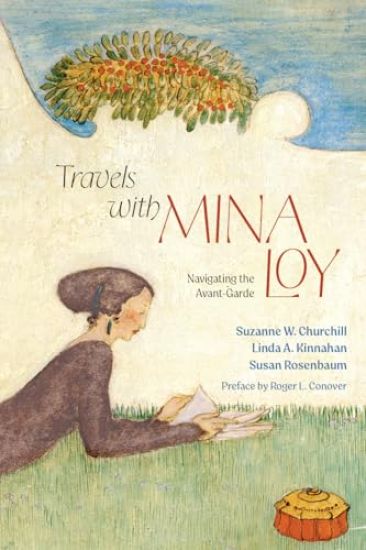
Travels with Mina Loy: Navigating the Avant-Garde
Suzanne W. Churchill; Linda a. Kinnahan; Susan Rosenbaum
Lever Press
2026
nidottu
Artist and writer Mina Loy (1882-1966) traversed continents, participated in Futurism, Dada, and Surrealism, and depicted poetic and painterly vistas ranging from lunar landscapes to the gritty streets of the Bowery. Travels with Mina Loy: Navigating the Avant-Garde, a companion text to the award-winning, multi-authored web resource Mina Loy: Navigating the Avant-Garde, offers an illustrated tour of Mina Loy's long and varied career, contextualized with in-depth explorations of key places that shaped her life and work. Shedding new light on Loy's poetic responses to Italy, her theatrical explorations in New York City, and her forays into the museums of Paris and New York, the book brings in newly discovered and critically overlooked Loy works, as well as fresh timelines and surveys of the critical corpus on her creative output. This essential guidebook to Mina Loy charts her migrations across geography, movements among artistic circles and people, and transit across arts to illuminate her evolving aesthetics, politics, and artistic commitments.

Yap Ah Loy
VDM Publishing House
2010
nidottu
Observera att förlaget som ger ut denna produkt baserar innehållet i sina produkter på fria källor som Wikipedia. Boken är med stor sannolikhet endast ett utdrag ur dessa informationskällor, alltså inte en vanlig bok i den bemärkelsen.
Mina Loy is recognised as a writer who insists on the primacy of the body, but her fascination with corporeality is inextricable from her esoteric understanding of the soul. Over two volumes, Sara Crangle demonstrates how Loy’s visceral focus propels a prescient, mystical feminist vision that aims to resituate marginalised subjects within modernist culture. Nethered Regions – An Anatomy of Mina Loy provides new thinking on Loy’s approach to the foundations of existence, exploring sentience, primitivism, evolution, vitalism, and sensibility. Dubbing Loy an atavistic vanguardist, this book aligns sacrifice with satire, showing how Loy resists modernist anti-sentimentality by devising a feminist satirical mode in which sardonic aggression generates intimacy and proximity, rather than ironised distance. Loy’s attention to “low” body parts – feet, legs, genitals, bellies, wombs – is illuminated in chapters theorising her engagement with dissident sexualities (queerness, prostitution, women’s pleasure); pictorial-poetic cartographies of desire; and the accursed muse, the unsung counterpart to the poète maudit.
A Study Guide for Mina Loy's "Moreover, the Moon"
Cengage Learning Gale
Gale, Study Guides
2017
pokkari
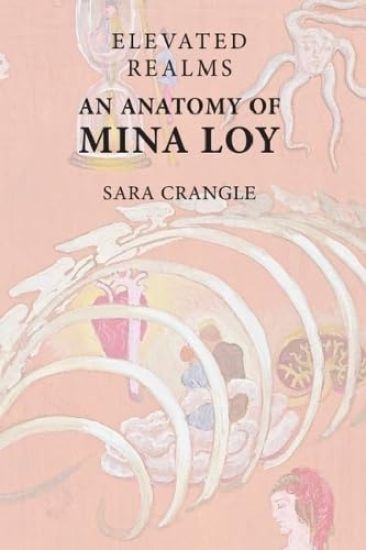
Mina Loy is recognised as a writer who insists on the primacy of the body, but her fascination with corporeality is inextricable from her esoteric understanding of the soul. Over two volumes, Sara Crangle demonstrates how Loy’s visceral focus propels a prescient feminist vision that aims to resituate marginalised subjects within modernist culture. Elevated Realms – An Anatomy of Mina Loy is the first book-length study devoted to Loy’s affinities with alternative spiritualities ancient and modern. Aligning Loy’s heterodoxies with her vanguardism, this volume analyses Loy’s engagements with mesmerism, spiritualism, and telepathy; enchantment and visionariness; psychoanalysis, philosophy, and physics; Christian Science and Theosophy. Attending to Loy’s presentations of the upper half of the body – heartscapes, spines, eyes, nerve centres – Elevated Realms unearths the coordinates of Loy’s esoteric Eros, a transcendent, orgasmic love that is cosmic, aesthetic, and a corrective to women’s disregarded satiation. The counterpart to her acerbic feminist satires, Loy’s Eros transforms abjectified, feminised posturing. Always singular, Loy’s embodied mysticism remains a potent model for the study of feminist spirituality in the modernist period and beyond.
Mina Loy is recognised as a writer who insists on the primacy of the body, but her fascination with corporeality is inextricable from her esoteric understanding of the soul. Over two volumes, Sara Crangle demonstrates how Loy's visceral focus propels a prescient feminist vision that aims to resituate marginalised subjects within modernist culture.Elevated Realms An Anatomy of Mina Loy is the first book-length study devoted to Loy's affinities with alternative spiritualities ancient and modern. Aligning Loy's heterodoxies with her vanguardism, this volume analyses Loy's engagements with mesmerism, spiritualism, and telepathy; enchantment and visionariness; psychoanalysis, philosophy, and physics; Christian Science and Theosophy.Attending to Loy's presentations of the upper half of the body heartscapes, spines, eyes, nerve centres Elevated Realms unearths the coordinates of Loy's esoteric Eros, a transcendent, orgasmic love that is cosmic, aesthetic, and a corrective to women's disregarded satiation. The counterpart to her acerbic feminist satires, Loy's Eros transforms abjectified, feminised posturing. Always singular, Loy's embodied mysticism remains a potent model for the study of feminist spirituality in the modernist period and beyond.

Film Actresses Vol.21 MYRNA LOY: Part 1
Iacob Adrian
Createspace Independent Publishing Platform
2014
nidottu
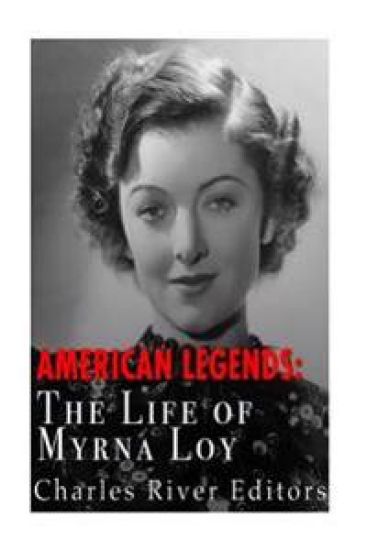
American Legends: The Life of Myrna Loy
Charles River
Createspace Independent Publishing Platform
2016
nidottu
*Includes pictures *Includes Loy's quotes about her own life and career *Includes contemporary reviews of her movies *Includes online resources and a bibliography for further reading "I think that carrying on a life that is meant to be private in public is a breach of taste, common sense, and mental hygiene." - Myrna Loy "Life is not a having and a getting but a being and a becoming." - Myrna Loy A lot of ink has been spilled covering the lives of history's most influential figures, but how much of the forest is lost for the trees? In Charles River Editors' American Legends series, readers can get caught up to speed on the lives of America's most important men and women in the time it takes to finish a commute, while learning interesting facts long forgotten or never known. It is something of a clich to say that an actor's life was like a movie he or she might have starred in, but in the case of Myrna Loy, the clich is true. It is easy to picture her as a little girl, riding the range with her rancher father, sitting around the table and participating charmingly in family discussions of current events. It is not hard to imagine the camera panning to her first and then second visits to Hollywood, her backlot tour, and starry-eyed decision to become an actress. There would have to be some drama, which the story of her father's untimely death would provide, along with some sort of deathbed promise made to him to care for the rest of the family. Her mother would be brave but resolute as she moved her young family to California. The lighting on set would brighten and the tempo of the background would pick up as she walked down the Los Angeles streets. Perhaps the camera would spin to show the passage of time, as the now adult Myrna got a job as a dancer and was then "discovered." There would have to be a scene of her signing her new surname, Loy, to her MGM contract, likely as several cigar smoking men looked on. Later the audience would see her fight off casting couch advances, earning her the reputation as the only good girl in Hollywood even as she was cast again and again in sultry, vampish roles. She would endure these with a positive attitude while always being on the lookout for something better. Then, her big break would come. The camera would show her first comical meeting with William Powell and then a spinning scene of ticket after ticket being sold to their new picture, The Thin Man. Her star obviously on the rise, ominous music would suddenly play, followed by booming cannons and falling bombs. A newspaper would flash on screen, "Pearl Harbor Bombed." Then the audience would see her stride determinedly into the movie studio offices and announce to those above that her love of country superseded her career ambitions and that she would be taking the duration of the war off from making pictures. Patriotic music would play as she was shown gathering clothing and giving speeches until, once more, the boys came marching home. There would be a price to pay for her choices as she grew older, but they would not fully bother the heroine, who happily settled into several solid roles of "perfect mother." At the same time, much would be made of her own sad love life, with four marriages that ended in with divorces instead of children. She would be seen settling cheerfully for ever smaller roles until, finally, the glamorous actress in the movie would grow older and her health would fail, finally driving those who had long admired her work to recognize and honor her talent. She would write her memoirs, a charming book that was steered away from telling it all only to tell the best. It could make for a classic Hollywood movie, but for Myrna Loy, it was life, and American Legends: The Life of Myrna Loy chronicles all of it. Along with pictures of important people, places, and events, you will learn about Myrna Loy like never before, in no time at all.