The first scholarly monograph in English devoted to Lucio Fontana's sculptural production, this richly illustrated volume charts the uncategorizable artist's exploration of sculpture from the 1920s until his death in 1968.Lucio Fontana: Sculpture considers bodies of work from different periods together, highlighting continuity and evolution in his oeuvre. Edited by Luca Massimo Barbero in collaboration with the Fondazione Lucio Fontana, this richly illustrated volume allows readers to discover Fontana’s rarely seen sculptural works, exhibited at Hauser & Wirth New York, 69th Street from November 2022 until February 2023.
Drawings, LPs and an architectural survey by Mexico City–based artist, architect and musician Lucio Muniain This volume presents three bodies of work by Mexico City–based architect, painter and double bassist Lucio Muniain (born 1969): blue-and-black graphic drawings from 2001 to the present; three LPs from his band Another; and a selection of 30 architectural projects.
Encontros (Meetings) is the largest and most prestigious book collection of interviews with Brazilian artists and thinkers. With more than 50 published titles, Encontros provides a broad panorama of Brazil's cultural and intellectual wealth. Lucio Costa was the strong arm in the implementation and development of modern architecture in Brazil. With determination, intelligence, and critical spirit, he produced texts and works that are still today the object of admiration and polemic. His reflection, always forceful, is found in this book, in the collection of his main interviews.
In this catalogue of works by Lucio Fontana, one of the greatest Italian artists of the 20th Century, you will find an impressive selection of iconic tagli and pietre paintings as well as ceramics and sculptures spanning the breadth of Fontana's career as an artist. The featured ceramics are a less well known facet of Fontana's oeuvre but a medium he continued to explore from his early days right through to the end of his life. Included in this catalogue is Concetto Spaziale (1962), the only ceramic which was exhibited in the acclaimed 1977 Guggenheim retrospective. The Lucio Fontana exhibition at the Hayward Gallery in 1999 went some way to rectifying this underrepresentation, as have other recent museum shows including the beautiful exhibition at the Musée d'Art Moderne de La Ville de Paris in 2014. This project is the result of many years' work and of the collaboration between Amedeo Porro Fine Arts and Ben Brown Fine Arts, with their in-depth knowledge of Fontana's work and close relationship with the Fondazione Fontana. Text in English and Italian.
Lucio Fontana (1899-1968), is universally acknowledged as one of the foremost figures in the generation of artists who, in the 1950s and '60s, helped bring about a radical conceptual and linguistic change in contemporary art. The role he played was explored by scholars and critics in the early years of the post-war period, and his work constituted a model for the younger generation of artists in Europe. In the past two decades, Fontana has achieved significant international renown. The essays in this catalogue by Enrico Crispolti, Luca Massimo Barbero, Caterina Toschi and Piero Dorazio offer insights into the origins and characteristics of Spatialism, the artistic movement Fontana founded, which synthesised colour, sound, space, movement, and time into a new type of art. Text in English and Italian.
The catalogue raisonné of the works on paper by Lucio Fontana (Rosario de Santa Fe, 1899 – Varese, 1968) is one the most complete and cutting-edge publications on this fundamental aspect of the work of one among the leading protagonists of twentiethcentury’s artistic development. Experimentation on paper was Fontana’s chosen means to test the richness and novelty of his inspiration. In fact, through his works on paper he would constantly verify his insights, both in the embryonic and defining stage of his formal and conceptual discoveries. This catalogue raisonné starts with the astonishing corpus of figural works and culminates in the artist’s original invention of “spatial” art, which led to the creation and development of the highly individual “holes,” “environments” and “slashes.” The catalogue raisonné presents more than 5,500 works executed between 1928 and 1968, with individual entries that include bibliographical and exhibition reference.
An unparalleled exhibition catalogue of Lucio Fontana's architectural work. For the first time in the United States, the exhibition Lucio Fontana: Ambienti Spaziali presents a substantial number of the spatial environments conceived by the artist between 1948 and 1968, works that can be regarded as forerunners of the environments created by figures such as Allan Kaprow and Robert Irwin and the light art of the likes of Dan Flavin and Bruce Nauman. The book reproduces all the works in the exhibition, including drawings, sketches, environments, sculptures, and paintings.
This in-depth account of the iconic Argentine-Italian artist Lucio Fontana’s career provides Mandarin speakers with a thorough introduction to his revolutionary practice. Lucio Fontana' is the first widely available introduction to Lucio Fontana’s practice in Mandarin, offering Chinese audiences a long-overdue opportunity to discover the full scope of the artist’s groundbreaking work. Published on the occasion of an exhibition of Fontana’s work at Hauser & Wirth in Hong Kong, this new monograph marks the gallery’s third collaboration with Fondazione Lucio Fontana and curator Luca Massimo Barbero, following the exhibitions and accompanying publications Lucio Fontana: Walking the Space; Spatial Environments, 1948-1968 (2021) and Lucio Fontana: Sculpture (2022). Edited by Barbero, a leading expert in Fontana’s practice, the book provides a detailed account of the artist’s influential career, richly illustrated with artwork and archival images. Over four chapters, texts by Barbero and Maria Villa, the Vice President of the Foundation, track the evolution of Fontana’s work, beginning with his early days as an artist in Europe and Argentina in the 1920s and 1930s, moving through the birth of Spatialism in the 1940s and the development of his pioneering Ambienti Spaziali in the 1950s, and concluding with the innovative late works created in his final decade, including his iconic slashed canvases. Offering further insight into the artist’s theories, aims, and intentions are a selection of original texts written by Fontana between 1939 and 1968, which have been translated into Mandarin for the very first time.
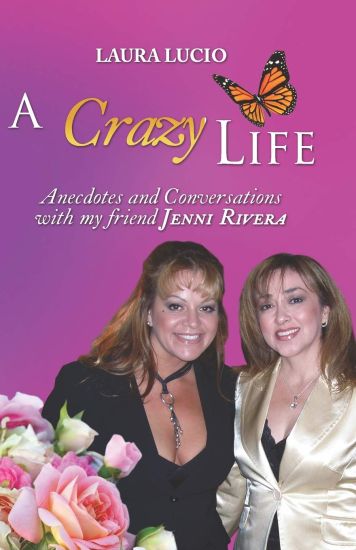
A Crazy LifeBy: Laura Lucio Anecdotes and conversations with my friend Jenni RiveraA Crazy Life, by Laura Lucio, Anecdotes and Conversations with my friend Jenni Rivera is a story about two strong women planning and conspiring to break through and succeed in the male dominated world of Regional Mexican Music. This book focuses on the planning behind the scenes that help turn Jenni Rivera into a high grossing superstar and about the process in converting the Jenni Rivera name into a 'brand.'"I gave her pep talks, and kept her focused on her singing career for there were many distractions, says Television Producer and Author, Laura Lucio. "Throughout my television career as a news correspondent and producer, I made important friendships and contacts that helped support the music career of my friend Jenni. Just as I had foreseen and told her in 2005, when I worked on a plan to launch her music promotion and publicity in the U.S. and Mexico, Jenni Rivera would become the highest grossing female artist of her time and one of the highest paid in her genre. She sold over 20 million albums while alive and still counting," says book author Laura Lucio. There have been many books and television series released about Jenni Rivera; however Laura Lucio was the only one Jenni authorized to tell her story. What is special about this book and of great interest to her fans are Laura's personal conversations with Jenni throughout the nine (9) years that she guided, produced and assessed Jenni Rivera's career moves. Jenni tells Laura about her dreams, her doubts, her fears as well as what moved her and was dear to her heart. The book touches on Jenni's love life and how even in the hardest of times, through careful design Jenni's image remains intact. Events like the tragic days she lived in court while her first husband who had been at large for 10 years was finally convicted of sexually abusing their two daughters and Jenni's sister, the very public divorce from her second husband, the events when she dated a a musician from her band whom she felt betrayed her when a sex video tape of the two of them lands in the hands of the media in 2008. Her passion for a man from the barrio who was experimenting with drugs drives Jenni into a tumultuous rollercoaster ride as she spends much time and energy trying to help him. No matter her challenges with men Jenni never gives up on LOVE. After meeting at one of Jenn's concerts, she dates and later marries major league baseball pitcher, Esteban Loaiza in a lavish wedding on September 8th 2010 but her happiness will not last long. Jenni felt betrayed by his actions and those of a family friend that leave Jenni questioning their loyalty towards her including that of her eldest daughter. These events break Jenni's spirit to the point of depression just a few weeks before the tragic accident that took her life. "Throughout my association with Jenni, there was never a dull moment and I share as much as possible with her fans," says book author, Laura Lucio."Our friendship and work was constantly challenged by the acts of cowardly individuals who continuously worked behind our back to negatively affect our progress . Our strong willed manner would not allow that, we smiled and kept going. When Jenni decides to host a talk show for Spanish Television Network Estrella TV she requests that I executive produce it. The unfolding of the behind the scenes drama is a 'telenovela' all in itself."Facing the 'payola' practice, the lawsuits and the media during major scandals plus Jenni's search for a psychic during a crucial time in her life. This book highlights that special relationship she had with her fans. If you want to know about the behind the scenes in the music industry you'll find this book interesting. Each chapter is written like a mini episode, in Love and Light, enjoy this read.
Architecture as Civil Commitment analyses the many ways in which Lucio Costa shaped the discourse of Brazilian modern architecture, tracing the roots, developments, and counter-marches of a singular form of engagement that programmatically chose to act by cultural means rather than by political ones. Split into five chapters, the book addresses specific case-studies of Costa’s professional activity, pointing towards his multiple roles in the Brazilian federal government and focusing on passages of his work that are much less known outside of Brazil, such as his role inside Estado Novo bureaucracy, his leadership at SPHAN, and his participation in UNESCO’s headquarters project, all the way to the design of Brasilia. Digging deep into the original documents, the book crafts a powerful historical reconstruction that gives the international readership a detailed picture of one of the most fascinating architects of the 20th century, in all his contradictory geniality. It is an ideal read for those interested in Brazilian modernism, students and scholars of architectural and urban planning history, socio-cultural and political history, and visual arts.
Architecture as Civil Commitment analyses the many ways in which Lucio Costa shaped the discourse of Brazilian modern architecture, tracing the roots, developments, and counter-marches of a singular form of engagement that programmatically chose to act by cultural means rather than by political ones. Split into five chapters, the book addresses specific case-studies of Costa’s professional activity, pointing towards his multiple roles in the Brazilian federal government and focusing on passages of his work that are much less known outside of Brazil, such as his role inside Estado Novo bureaucracy, his leadership at SPHAN, and his participation in UNESCO’s headquarters project, all the way to the design of Brasilia. Digging deep into the original documents, the book crafts a powerful historical reconstruction that gives the international readership a detailed picture of one of the most fascinating architects of the 20th century, in all his contradictory geniality. It is an ideal read for those interested in Brazilian modernism, students and scholars of architectural and urban planning history, socio-cultural and political history, and visual arts.