Kirjojen hintavertailu. Mukana 11 244 527 kirjaa ja 12 kauppaa.

Kirjahaku

Etsi kirjoja tekijän nimen, kirjan nimen tai ISBN:n perusteella.

1000 tulosta hakusanalla Ludwig Duncker

Ludwig Wittgenstein

Ludwig Wittgenstein

Norman Malcolm

Clarendon Press
2001
nidottu
This memoir of Ludwig Wittgenstein was written by his friend Norman Malcolm in 1958. This edition includes the complete text of the 57 letters which Wittgenstein wrote to Malcolm over a period of 11 years. The letters give an insight into how much friendships mattered to Wittgenstein.
Ludwig Von Mises

Ludwig Von Mises

Eamonn Butler

Institute of Economic Affairs
2010
nidottu
Ludwig von Mises was one of the greatest economists and political scientists of the twentieth century. He revolutionised the understanding of money, inflation and recessions; comprehensively refuted the arguments for socialism; and, provided a devastating critique of the methodologies of mainstream economics. His contributions to the Austrian School laid the intellectual groundwork for thinkers such as F.A. Hayek, Murray Rothbard and Israel Kirzner. In this book, Eamonn Butler provides a comprehensive yet accessible overview of Mises' outstanding achievements. At a time of economic crisis, this monograph makes it clear that Mises' work is highly relevant today. Indeed, while mainstream economics has been found wanting, the latest recession appears to have been entirely consistent with his analysis. Furthermore, the poor performance of state health and education services can be explained by Mises' Austrian theories. Nevertheless, Mises remains neglected by the economics profession, policymakers and academics. This readable primer explains why his work should be at the core of economic thinking.
Ludwig Wittgenstein

Ludwig Wittgenstein

Anthony Gottlieb

YALE UNIVERSITY PRESS
2026
sidottu
The first biography in more than three decades of the Austrian-born thinker Ludwig Wittgenstein, one of the most influential philosophers of the twentieth century According to the philosopher Ludwig Wittgenstein (1889–1951), philosophy is a “battle against the bewitchment of our intelligence by means of language.” This audacious idea changed the way many of its practitioners saw their subject. In the first biography of Wittgenstein in more than three decades, Anthony Gottlieb evaluates this revolutionary idea, explaining the evolution of Wittgenstein’s thought and his place in the history of philosophy. Wittgenstein was born into an immensely rich Viennese family but yearned to live a simple life, and he gave away his inheritance. After studying with Bertrand Russell in Cambridge, he wrote his famous Tractatus Logico-Philosophicus while serving in World War I. He then took several positions as a primary-school teacher in rural Austria before returning as a fellow to Cambridge, where a cultlike following developed around him. Wittgenstein worked not only as a philosopher and schoolteacher, but also as an aeronautical engineer in Manchester and as an architect in Vienna. Gottlieb’s meticulously researched book traces the itinerant and troubled life of Wittgenstein, the development of his influential ideas, and the Viennese intellectual milieu and family background that shaped him.
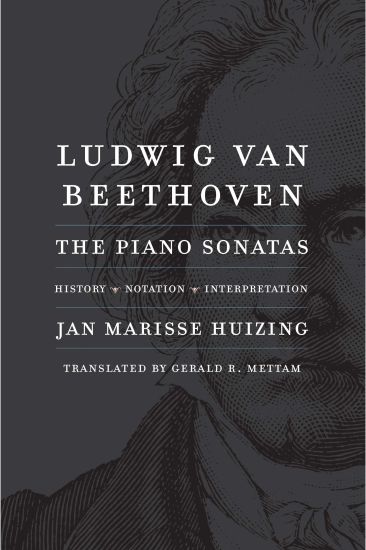
Ludwig van Beethoven

Ludwig van Beethoven

Jan Marisse Huizing

Yale University Press
2022
pokkari
A comprehensive and immersive survey of thirty-five Beethoven piano sonatas “Beethoven piano sonatas accompany every pianist, amateur or professional for his or her entire life and constitute one of the most miraculous constants of the human civilization. To help us around the exciting journey through those masterpieces Jan Marisse Huizing combines his expertise, knowledge, and above all his unconditional love for this music.”— Alexander Melnikov, pianist Beethoven’s piano sonatas are among the iconic cornerstones of the classical music repertoire. Jan Marisse Huizing offers an in-depth study of the sonatas using available autographs, first editions, recordings, and nearly three hundred musical examples. Digging into the historical background and historical performance practice, the book provides illuminating detail on Beethoven’s pianism as well as his characteristics of notation, form and content, “types of touch,” articulation, beaming, pedal indications, character, rubato, meter, metric constructions, tempo, and metronome marks. Packed with anecdotes, quotations, and considerable new information, the book will inspire all involved with these masterworks, playing a fortepiano or modern Grand, giving the sense of the composer sitting beside them as he translates his inspiration and ideas into his notation.
Ludwig Wittgenstein

Ludwig Wittgenstein

F Lapointe

Greenwood Press
1980
sidottu
The first complete and up-to-date listing of the Wittgenstein literature ever produced. Its more than 3000 entries include material on all phases of the philosopher's life and thought. Coverage is inclusive for publications in English and the major European languages. Index includes concepts and ideas.
Ludwig's Applied Process Design for Chemical and Petrochemical Plants Incorporating Process Safety Incidents
Ludwig’s Applied Process Design for Chemical and Petrochemical Plants Incorporating Process Safety Incidents is ever evolving starting with the first edition some 60 years ago. The volumes in this fifth edition provide improved techniques and fundamental design methodologies to guide the practicing engineer in designing process equipment and applying chemical processes to the properly detailed hardware. As indicative of the new title, process safety incidents are incorporated in many of the chapters, reviewing the root causes, and how these could be mitigated in future. Like its predecessor, this new edition continues to present updated information for achieving optimum operational and process conditions and to avoid problems caused by inadequate sizing and lack of internally detailed hardware. The volumes provide both fundamental theories where applicable and direct application of these theories to applied equations essential in the design effort. This approach in presenting design information is essential for troubleshooting process equipment and in executing system performance analysis. Volume 1A covers (chapters 1 - 6), process planning, flow-sheeting and scheduling, cost estimation and economic, physical properties of liquids and gases, fluid flow, mechanical separations. It builds upon Ernest E. Ludwig’s classic text to further enhance its use as a chemical engineering process design manual of methods and proven fundamentals. This new edition contains twelve chapters, which include new content on three-phase separation, mixing of liquids, ejectors, and mechanical vacuum systems, process safety and pressure relieving devices, metallurgy and corrosion, and optimization of chemical process/blending. The chapters in Volume 1A review pressure-relieving devices and provide case studies for process safety incidents, which are well illustrated from US Chemical Safety Hazard Investigation Board (www.csb.gov). Finally, this book contains an extensive glossary of Petroleum and Petrochemical Terminologies and Physical and Chemical Characteristics of Major Hydrocarbons
Ludwig Klages and the Philosophy of Life
This book provides a unique overview of and introduction to the work of the German psychologist and philosopher Ludwig Klages (1872-1956), an astonishing figure in the history of German ideas. Central to intellectual life in turn-of-the-century Munich, he went on to establish a reputation for himself as an original and provocative thinker. Nowadays he is often overlooked, partly because of the absence of an accessible and authoritative introduction to his thought; this volume offers just such a point of entry. With an emphasis on applicability and utility, Paul Bishop reinvigorates the discourse surrounding Klages, providing a neutral and compact account of his intellectual development and his impact on psychology and philosophy.Part 1 offers an overview of Klages’s life, visiting the major stations of his intellectual development. Part 2 examines in turn nine major conceptual ‘tools’ found in Klages’s extensive writings, aiming to clarify Klages’s terminology, to demystify his discourse, and to sift through Klages’s credentials as a psychological thinker. Part 3 consists of extracts from Klages’s writings, thematically oriented; these showcase the aphoristic and lyrical, as well as psychological and philosophical, qualities of Klages’s writing, including his interest in aesthetics. Taken together, all three parts constitute a vitalist ‘toolkit’ — to build a fuller, richer life.Drawing on previous studies of Klages that have only been available in German, Ludwig Klages and the Philosophy of Life provides a non-polemical account of Klages’s life and work, with explanations and commentaries to guide the reader through extracts from his writings. The book accessibly explains the most important ideas and concepts found in Klages’s work, including soul, spirit, character, expression, will, and consciousness, and it reveals Klages to be a serious figure whose thought remains relevant to many disciplines today. It will stimulate interest in his work and create a new readership for his remarkable worldview.
Ludwig Tieck

Ludwig Tieck

Dwight Klett

Routledge
2020
sidottu
When originally published in 1993, this was the first bibliography of the secondary literature on Tieck. Given as much secondary literature surrounding Tieck’s life and works has been generated outside of his native Germany as within, this bibliography focuses particularly on his life and work from an international perspective. In order to make the information surrounding Tieck accessible, the book provides a detailed table of contents, with corresponding text divisions, rather than a subject index. It therefore highlights Tieck’s achievements in their various national contexts so that not only students of German can get an accurate feel for Tieck’s versatility and range.
Ludwig Tieck

Ludwig Tieck

Dwight Klett

TAYLOR FRANCIS LTD
2021
nidottu
When originally published in 1993, this was the first bibliography of the secondary literature on Tieck. Given as much secondary literature surrounding Tieck’s life and works has been generated outside of his native Germany as within, this bibliography focuses particularly on his life and work from an international perspective. In order to make the information surrounding Tieck accessible, the book provides a detailed table of contents, with corresponding text divisions, rather than a subject index. It therefore highlights Tieck’s achievements in their various national contexts so that not only students of German can get an accurate feel for Tieck’s versatility and range.
Ludwig Wittgenstein
Wittgenstein scholarship has continued to grow at a pace few could have anticipated - a testament both to the fertility of his thought and to the thriving state of contemporary philosophy. In response to this ever-growing interest in the field, we are delighted to announce the publication of a second series of critical assessments on Wittgenstein, emphasising both the breadth and depth of contemporary Wittgenstein research. As well as papers on the nature and method of Wittgenstein's philosophy, this second collection also relates to a broader range of topics, including psychology, politics, art, music and culture.
Ludwig's Applied Process Design for Chemical and Petrochemical Plants Incorporating Process Safety Incidents
Ludwig’s Applied Process Design for Chemical and Petrochemical Plants Incorporating Process Safety Incidents is ever evolving starting with the first edition some 60 years ago. The volumes in this fifth edition provide improved techniques and fundamental design methodologies to guide the practicing engineer in designing process equipment and applying chemical processes to the properly detailed hardware. As indicative of the new title, process safety incidents are incorporated in many of the chapters, reviewing the root causes, and how these could be mitigated in future. Like its predecessor, this new edition continues to present updated information for achieving optimum operational and process conditions and to avoid problems caused by inadequate sizing and lack of internally detailed hardware. The volumes provide both fundamental theories where applicable and direct application of these theories to applied equations essential in the design effort. This approach in presenting design information is essential for troubleshooting process equipment and in executing system performance analysis. Volume 1B continues to cover mixing of liquids, process safety and pressure[1]relieving devices, metallurgy and corrosion, and process optimization. It builds upon Ernest E. Ludwig’s classic text to further enhance its use as a chemical engineering process design manual of methods and proven fundamentals. This new edition includes new content on three-phase separation, mixing of liquids, ejectors, and mechanical vacuum systems, process safety and pressure-relieving devices, metallurgy and corrosion, and optimization of chemical process/blending. Some chapters review pressure-relieving devices and provide case studies for process safety incidents, which are well illustrated from US Chemical Safety Hazard Investigation Board (www.csb.gov). Finally, this book contains a glossary of Petroleum and Petrochemical Terminologies and Physical and Chemical Characteristics of Major Hydrocarbons.