Kirjojen hintavertailu. Mukana 11 627 623 kirjaa ja 12 kauppaa.

Kirjahaku

Etsi kirjoja tekijän nimen, kirjan nimen tai ISBN:n perusteella.

1000 tulosta hakusanalla Mélanie Ackerman

Melanie's Melanin

Melanie's Melanin

Kiana Knibbs

Tellwell Talent
2023
pokkari
Melanie is a brave little girl with a head full of curls. She is faced with the challenge of loving herself more than feeling scared or sad about what others think of her. Melanie is a little girl that loves her melanin, and, most importantly, is not afraid to tell the world about how special she is.Join Melanie as she teaches about her melanin and the powers that she has because of it. Allow her wisdom to increase the self love in your home.
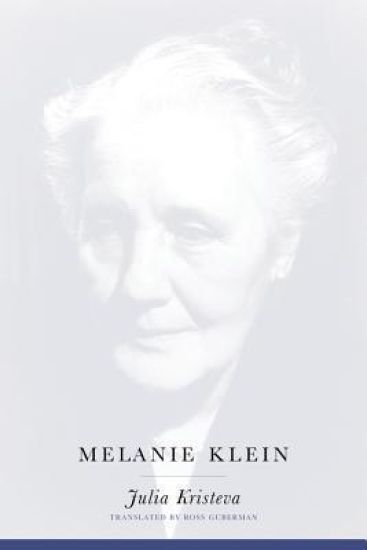
Melanie Klein

Melanie Klein

Julia Kristeva

Columbia University Press
2001
sidottu
To the renowned psychoanalyst, philosopher, and linguist Julia Kristeva, Melanie Klein (1882-1960) was the most original innovator, male or female, in the psychoanalytic arena. Klein pioneered psychoanalytic practice with children and made major contributions to our understanding of both psychosis and autism. Along the way, she successfully introduced a new approach to the theory of the unconscious without abandoning the principles set forth by Freud. In her first biography of a fellow psychoanalyst, the prolific Kristeva considers Klein's life and intellectual development, weaving a narrative that covers the history of psychoanalysis and illuminates Kristeva's own life and work. Kristeva tells the remarkable story of Klein's life: an unhappy wife and mother who underwent analysis, and-without a medical or other advanced degree-became an analyst herself at the age of 40. In examining her work, Kristeva proposes that Klein's "break" with Freud was really an attempt to complete his theory of the unconscious. Kristeva addresses Klein's numerous critics, and, in doing so, bridges the wide gulf between the clinical and theoretical worlds of psychoanalysis. Klein is celebrated here as the first person to see the mother as the source of not only creativity, but of thought itself, and the first to consider the place of matricide in psychic development. As such, Klein is a seminal figure in the evolution of the provocative ideas about motherhood and the psyche for which Kristeva is most famous. Klein is thus, in a sense, a mother to Kristeva, making this book an account of the development of Kristeva's own thought as well as Klein's.
Melanie Klein

Melanie Klein

Julia Kristeva

Columbia University Press
2004
pokkari
To the renowned psychoanalyst, philosopher, and linguist Julia Kristeva, Melanie Klein (1882-1960) was the most original innovator, male or female, in the psychoanalytic arena. Klein pioneered psychoanalytic practice with children and made major contributions to our understanding of both psychosis and autism. Along the way, she successfully introduced a new approach to the theory of the unconscious without abandoning the principles set forth by Freud. In her first biography of a fellow psychoanalyst, the prolific Kristeva considers Klein's life and intellectual development, weaving a narrative that covers the history of psychoanalysis and illuminates Kristeva's own life and work. Kristeva tells the remarkable story of Klein's life: an unhappy wife and mother who underwent analysis, and-without a medical or other advanced degree-became an analyst herself at the age of 40. In examining her work, Kristeva proposes that Klein's "break" with Freud was really an attempt to complete his theory of the unconscious. Kristeva addresses Klein's numerous critics, and, in doing so, bridges the wide gulf between the clinical and theoretical worlds of psychoanalysis. Klein is celebrated here as the first person to see the mother as the source of not only creativity, but of thought itself, and the first to consider the place of matricide in psychic development. As such, Klein is a seminal figure in the evolution of the provocative ideas about motherhood and the psyche for which Kristeva is most famous. Klein is thus, in a sense, a mother to Kristeva, making this book an account of the development of Kristeva's own thought as well as Klein's.

Melanie Klein and Critical Social Theory

Melanie Klein and Critical Social Theory

C. Fred Alford

Yale University Press
2005
pokkari
In this thoughtful and lucid book, C. Fred Alford shows how the psychoanalytic theory of Melanie Klein can be extended to groups and culture and thus can illuminate issues of social theory and moral philosophy of the sort considered by the Frankfurt School. He then applies this expanded theory to the politics of large groups, the appeal of works of art, and the psychological sources of reason.
Melanie Klein Revisited

Melanie Klein Revisited

Susan Sherwin-White

Routledge
2019
sidottu
While much writing has been devoted, predominantly by contemporary Kleinian adult psychoanalysts, to the Kleinian and post Kleinian development of Klein's work, comparatively little has recently been written about the ongoing importance and character of Klein's clinical work for contemporary psychoanalytic psychotherapy or analysis with very small children (2 - 6 year olds). Little attention now seems to be paid to the revolutionary character of her work from the start (in the early 1920s) with this age group and its challenges, still relevant today, or to her recognition of the importance of mother-infant relations in the period long before World War II brought investigation into and understanding of problems of attachment, separation and loss. This book addresses these issues and re-explores Klein's work in these (and other) areas. This book is concerned primarily with Klein's work with pre-latency children and aims to give these small children more of the voice today that Melanie Klein herself discovered.
Melanie Klein and Beyond

Melanie Klein and Beyond

Harry Karnac

Routledge
2019
sidottu
This book is a bibliography of Melanie Klein's writings together with other books, articles, and papers, dealing with her life, ideas and work. It is of immense potential use for clinicians, students, and researchers.
Melanie Klein in Berlin

Melanie Klein in Berlin

Claudia Frank

Routledge
2009
sidottu
In this book Claudia Frank discusses how Melanie Klein began to develop her psychoanalysis of children. Melanie Klein in Berlin: Her First Psychoanalyses of Children offers a detailed comparative analysis of both published and unpublished material from the Melanie Klein Archives.By using previously unpublished studies, Frank demonstrates how Klein enriched the concept of negative transference and laid the basis for the innovations on both technique and theory that eventually led not only to changes in child analysis, but also to changes in the analysis of adults. Frank also uncovers the influence that this had on Klein's later theories of the paranoid-schizoid and depressive positions, and on her understanding of psychotic anxieties.The first seven chapters in the book provide an explanation of the essence of Klein's approach to child psychoanalysis covering topics including:the inevitability and usefulness of negative transferencedevelopment of playearly conscious and unconscious phantasies. Part two provides a translation of Klein's unpublished notes on the treatments of four of the children she analysed in Berlin: 7-year-old Grete, 2-year-old Rita, 7-year-old Inge and 6-year-old Erna.Melanie Klein in Berlin is the first text to make extensive use of Klein's unpublished papers, clinical notes, diaries and manuscripts. It will appeal to anyone involved in child psychoanalysis and the development of Melanie Klein's thinking.
Melanie Klein in Berlin

Melanie Klein in Berlin

Claudia Frank

Routledge
2009
nidottu
In this book Claudia Frank discusses how Melanie Klein began to develop her psychoanalysis of children. Melanie Klein in Berlin: Her First Psychoanalyses of Children offers a detailed comparative analysis of both published and unpublished material from the Melanie Klein Archives.By using previously unpublished studies, Frank demonstrates how Klein enriched the concept of negative transference and laid the basis for the innovations on both technique and theory that eventually led not only to changes in child analysis, but also to changes in the analysis of adults. Frank also uncovers the influence that this had on Klein's later theories of the paranoid-schizoid and depressive positions, and on her understanding of psychotic anxieties.The first seven chapters in the book provide an explanation of the essence of Klein's approach to child psychoanalysis covering topics including:the inevitability and usefulness of negative transferencedevelopment of playearly conscious and unconscious phantasies. Part two provides a translation of Klein's unpublished notes on the treatments of four of the children she analysed in Berlin: 7-year-old Grete, 2-year-old Rita, 7-year-old Inge and 6-year-old Erna.Melanie Klein in Berlin is the first text to make extensive use of Klein's unpublished papers, clinical notes, diaries and manuscripts. It will appeal to anyone involved in child psychoanalysis and the development of Melanie Klein's thinking.
Melanie Klein and Marcelle Spira: Their correspondence and context
Melanie Klein and Marcelle Spira: Their Correspondence and Context includes 45 letters Melanie Klein wrote to the Swiss psychoanalyst Marcelle Spira between 1955 and 1960, as well as six rough drafts from Spira. They were discovered in Spira’s library after her death in 2006. As only a few of the letters that Klein wrote to her colleagues have been preserved, this moving, historically important correspondence sheds new light upon the last five years of Klein’s creative life.The common theme of the letters is their discussion of the French translation of The Psycho-Analysis of Children by Boulanger in collaboration with Spira. The translation, first undertaken by Lacan, went through many ups and downs until it was published in 1959 by the Presses Universitaires de France. Klein also discusses her current work, in particular Envy and Gratitude (1957). She encourages her pioneering Swiss colleague Spira to be patient in the face of the resistance shown towards Kleinian thinking. Identifying herself to some extent with her younger follower, Klein reveals a very touching autobiographical account of the difficulties that she herself had encountered in her work and how she overcame them.In Melanie Klein and Marcelle Spira: Their Correspondence and Context, Jean-Michel Quinodoz brings together these important letters. This rare collection of their correspondence is a valuable contribution to the history of psychoanalysis and will be essential reading for psychoanalysts, trainee psychoanalysts and lay readers with an interest in the work of Klein and Spira.
Melanie Nemesis Catchpole

Melanie Nemesis Catchpole

Wol-Vriey

Burning Bulb Publishing
2015
nidottu
Reality has henceforth been abolished - The Fixer.In Springfield, Massachusetts, Melanie Catchpole is hired to fetch back a magic teddy bear worth millions of dollars from a warehouse across town.Problem is, the warehouse is down in Springfield's O-Zone-that totally weird sector of the city where Bizarro fell to Earth. The 'O' is a fairytale land, a place where dreams and nightmares literally live and breathe.Worse still, the gingers-mutant cannibals-prowl the O. The gingers have already eaten everyone else Melanie's employers sent to get back the magic teddy bear.Accompanied by the handsome but ruthless Doug Fisher (who she finds sexy but doesn't dare entrust her heart to), Melanie enters the O-Zone.Melanie and Doug are instantly caught up in an adventure they'd never have believed credible even if written as fiction . . . and Melanie's used to experiencing the very weird as the norm.And now, additionally, there's a mystery to unravel: What does the dark, freezing-cold being called The Fixer want with Mary, the barkeep's daughter?
Melanie Klein

Melanie Klein

Julia Segal

SAGE Publications Inc
2004
sidottu
Praise for First Edition: `The book is very intimate; the first chapter on Klein's personal and professional life is extremely candid and enlightening. Will be enjoyed by pre-professional students and psychoanalytically oriented theoreticians and practitioners' - Choice Melanie Klein was without doubt one of the most influential figures in the development of psychoanalysis. Whilst constantly challenging Freud's theories, and at the same time placing more importance on some of the neglected aspects of his work, Klein developed new psychoanalytic concepts from her detailed observations of the behaviour and thought processes of the children and adults she treated in the consulting room. In this Second Edition of Melanie Klein, Julia Segal uses case studies of Klein's sessions with children to show how she developed her unique form of communication with her clients. As well as assessing Klein's major theoretical and practical contributions to the profession, the author examines and challenges the criticisms aimed at Klein, and traces her influence on counsellors and psychotherapists working today. In contrast to existing books, which require specialist psychoanalytic knowledge, Julia Segal provides a concise and refreshing introduction to Klein's life and work which is accessible to all.
Melanie Klein

Melanie Klein

Julia Segal

SAGE Publications Inc
2004
nidottu
Praise for First Edition: `The book is very intimate; the first chapter on Klein's personal and professional life is extremely candid and enlightening. Will be enjoyed by pre-professional students and psychoanalytically oriented theoreticians and practitioners' - Choice Melanie Klein was without doubt one of the most influential figures in the development of psychoanalysis. Whilst constantly challenging Freud's theories, and at the same time placing more importance on some of the neglected aspects of his work, Klein developed new psychoanalytic concepts from her detailed observations of the behaviour and thought processes of the children and adults she treated in the consulting room. In this Second Edition of Melanie Klein, Julia Segal uses case studies of Klein's sessions with children to show how she developed her unique form of communication with her clients. As well as assessing Klein's major theoretical and practical contributions to the profession, the author examines and challenges the criticisms aimed at Klein, and traces her influence on counsellors and psychotherapists working today. In contrast to existing books, which require specialist psychoanalytic knowledge, Julia Segal provides a concise and refreshing introduction to Klein's life and work which is accessible to all.
Melanie Klein

Melanie Klein

Meira Likierman

BLOOMSBURY PUBLISHING PLC
2002
sidottu
Melanie Klein was probably the most controversial and influential figure that has yet appeared on the British psychoanalytic scene. She left Germany in 1926 and settled in London where she soon quarrelled with Anna Freud. Klein pioneered the psychoanalysis of children and applied her insights on the infantile origins of unconscious drives to adult analysis. Her relationship with her own children was highly troubled. In this critical yet sympathetic book Meira Likierman of the Tavistock clinic assesses the work, life and lasting influence of this brilliant figure.
Melanie Klein

Melanie Klein

Meira Likierman

Continuum International Publishing Group Ltd.
2002
nidottu
Melanie Klein remains one of the most important and influential figures in psychoanalysis. Klein pioneered the analysis of children and applied her insights on the infantile origins of unconscious drives to adult analysis.Meira Likierman's study is the best available introduction to Melanie Klein's thought and work.
Melanie Schiff: Sun Land

Melanie Schiff: Sun Land

Illinois State University, University Galleries
2013
sidottu
In photographs characterized by subtle geometries and penetrating natural light, Los Angeles–based artist Melanie Schiff (born 1977) achieves dramatic effects with everyday objects, found landscapes and interiors. This is the first survey of Schiff’s photographs including work from 2002–2012.
Melanie: Through the Shadowland

Melanie: Through the Shadowland

Steven Marks

Coburn Birge Publishing
2020
nidottu
Melanie Taylor lived a charmed life complete with doting parents, a younger brother who idolized her, a covey of friends who admired her, and one of the hottest boyfriends at St Andrews High School. In a single night she lost all that in one cruel twist of fate. Her parents and her boyfriend are dead and her brother is lying unconscious in a hospital ward. Confined to a wheelchair, deserted by all but one of her friends, and forced to live with an aunt she resents, Melanie couldn't imagine that her new life could be more miserable.But things have gone from bad to worse; now she's having nightmares, terrifying dreams that invade her waking hours and alter her reality. Who is the man that haunts her dreams, the familiar face she' s never seen before, and what does he want from her?