Englannin kielellä toimitettu suomen kielen kurssi ulkomaalaisille. Kurssi lähtee alkeista ja sen 25 lukukappaletta on äänitetty. Äänitteen kesto on noin 1,5 tuntia. Sarjaan kuuluu kaksi oppikirjaa, äänitteet sekä kaksi harjoituskirjaa. Oppikirjat, harjoituskirjat sekä CD:t ovat kaikki erillisiä tuotteita.
Why are contracts incomplete? Transaction costs and bounded rationality cannot be a total explanation since states of the world are often describable, foreseeable, and yet are not mentioned in a contract. Asymmetric information theories also have limitations. We offer an explanation based on 'contracts as reference points'. Including a contingency of the form, 'The buyer will require a good in event E', has a benefit and a cost. The benefit is that if E occurs there is less to argue about; the cost is that the additional reference point provided by the outcome in E can hinder (re)negotiation in states outside E. We show that if parties agree about a reasonable division of surplus, an incomplete contract is strictly superior to a contingent contract. If parties have different views about the division of surplus, an incomplete contract can be superior if including a contingency would lead to divergent reference points.
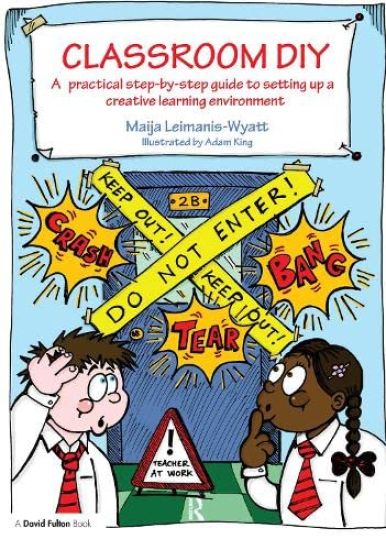
Setting up the classroom is a fundamental part of a teacher’s job, as a well-planned, aesthetically pleasing environment encourages children to learn and helps with classroom management. However, knowing how to create this environment is not instinctive and teachers are given little guidance, yet are expected to create a stimulating environment that is conducive to learning. The task can often be daunting and time-consuming, and teachers don’t know where to begin. Classroom DIY provides teachers with the answer to these problems. A practical, step-by-step guide, written from firsthand experience, Classroom DIY will enable any primary teacher to make a spectacular job of setting up their room using any materials they have available. Guiding teachers through the process of setting up their space from planning to practice, this book includes advice on: laying out the room: what furniture to use and where best to position itorganising areas for specific subjects, including maths, literacy, science and humanitieshow to create an inspiring classroom on a budget: recycling items for use in the classroom and the homemade approachhow the learning environment can inspire and motivate pupils to learn, taking into account multiple intelligences and routinesmeeting the expectations of senior management teams.With ‘teachers’ tales’ from a range of individuals in different schools and case studies illustrating solutions to teachers’ specific problems with their classrooms, this book is must have for all newly qualified and practising teachers looking to inspire their pupils to learn through their classroom environment.
Over recent years, education systems across the globe have experimented with the concept of the autonomous school. This takes a variety of forms and the schools involved have different titles, such as charter schools in the USA, academies in England, free schools in Sweden and independent public schools in Australia. As this radical trend in policy gains momentum, Inside the Autonomous School considers whether the model is achieving its desired aims. Drawing on evidence from an in-depth, longitudinal study of an academy located in an urban district in England, this book traces the various developments which took place in the school on its journey from ‘failing’, to achieving an inspection rating of ‘outstanding’.The authors present a rich, first-hand account of the impacts that various policies and practices have had on the autonomous school and at the same time, situate their accounts and analyses within a wider national and international context. This leads them to consider what can be done to ensure that school autonomy consistently promotes excellence and equity within education systems.A fascinating read and invaluable resource for practitioners, researchers and policy makers in the field of education, Inside the Autonomous School sheds much needed light on an increasingly established policy which is set to have far-reaching effects.
Over recent years, education systems across the globe have experimented with the concept of the autonomous school. This takes a variety of forms and the schools involved have different titles, such as charter schools in the USA, academies in England, free schools in Sweden and independent public schools in Australia. As this radical trend in policy gains momentum, Inside the Autonomous School considers whether the model is achieving its desired aims. Drawing on evidence from an in-depth, longitudinal study of an academy located in an urban district in England, this book traces the various developments which took place in the school on its journey from ‘failing’, to achieving an inspection rating of ‘outstanding’.The authors present a rich, first-hand account of the impacts that various policies and practices have had on the autonomous school and at the same time, situate their accounts and analyses within a wider national and international context. This leads them to consider what can be done to ensure that school autonomy consistently promotes excellence and equity within education systems.A fascinating read and invaluable resource for practitioners, researchers and policy makers in the field of education, Inside the Autonomous School sheds much needed light on an increasingly established policy which is set to have far-reaching effects.
You don't fight bodies you fight minds. In this slender volume, Maija Soderholm of Sonny Umpad's Visayan Style Corto Kadena and Larga Mano system presents the details of one of the most important and least understood aspects of personal combat. How to control the opponent's mind. The Liar, The Cheat, and The Thief explores the drills and the mindset of one of the last modern duelists. As Sun Tzu said "All warfare is deception". On the surface, this is a book about learning to deceive one's opponent in the fighting arts. And it would be a great addition to the canon if that were all it managed to be. Yet, a closer read suggests that this book is pretending to be less than it is to conceal some deeper lessons. We should hardly be surprised by this. Just as Musashi and others have taught us, the sword is a vehicle for understanding other things. In truth, what Ms. Soderholm has provided us is a guide not merely to reading one's opponent, but to writing him. The advantages of that having that ability are limited only by one's imagination, whether the context is the ring, the battlefield, or the boardroom. These are deep waters, and the tools provided are powerful - to be used cautiously and wisely. Rob Crowley, former MAJ, US Army Special Forces My focus, for many years, has been on surviving violent encounters. I don't duel. I don't square off and try to keep things fair. So why am I excited about a book on dueling, using weapons I don't even carry from a culture not my own? Because there are principles underlying all things, and sometimes the principles are easier to see if you force yourself to shift perspective. There are three things that the long blade teaches better than any other medium: distance, timing and deception. Maija Soderholm understands these nuances deeply. I've been waiting for this book for a long time. It will make me better in my totally unrelated field. Rory Miller, author of Meditations on Violence, Facing Violence and ConCom - Conflict Communications: A new paradigm in Conscious Communication After 35 years studying the Filipino martial arts, I thought I knew what 'flow' was until I met Maija; flashing smile hiding the glint of steel. To improve your art, watch, in the videos, how her feet and torso turn in different directions and the hands deliver the attack on a third line. Deception within deception. P.H. (Mac) McRedmond, Deputy Sheriff, Retired and 50 year martial arts student and instructor There are teachers and there are teachers. Rarely do you find the ability to both DO and TEACH at a high level of skill within the same person. I have seen Maija Soderholm's skill in technique and teaching ability firsthand, flowed with her on many occasions and been the recipient of embarrassing lessons in humility. As a 28 year practitioner of the martial arts, that's not an easy thing to bring about. Maija's Art of Deception is the brass ring. There's no holding back, nor is there any mystification - you can't simply let your mind relax, the game is more mental than it is physical and learning to integrate the two has been the stumbling block of many teachers. Maija's art isn't a *system* per se, but the essence of every martial art on the planet; It's a living, evolving manual of motion you can return to for years, and get something new every time. Maija never lets you relax in a drill, she constantly reminds you (sometimes painfully) that higher martial arts demands deeper concentration. No matter what art you train in or from what country, The Art of Deception is applicable across the board in a way few other methods even address. These are the "secrets" that most martial art masters hold close to the vest, and Maija puts them on display for everyone. Bobbe Edmonds, teacher, author, student, curry thief.
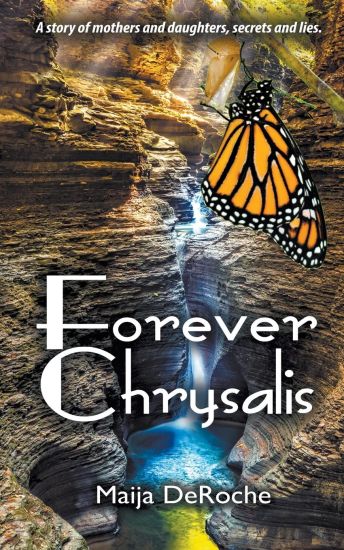
Years after high school, Christine, Crystal, Alice, and Lisa return to the Finger Lakes to perform again as Chrysalis, their schooldays quartet. They discover that what still binds them together is not only their music but having to deal with their problematic mothers. One wonders what her deceased mother was like as a person, not just the "mother figure" she knew. Another thinks her mother lives her life recklessly. The parent perceived as controlling is also struggling to hide her Parkinson's from the outside world, and the fourth has burgeoning dementia. While the adult daughters are rediscovering harmony in their singing and in their friendships, the mothers form bonds of their own--bonds made of secrets and new discoveries--and ultimately they find answers that bring the mothers and their daughters to a deeper understanding of themselves and their relationships to each other.
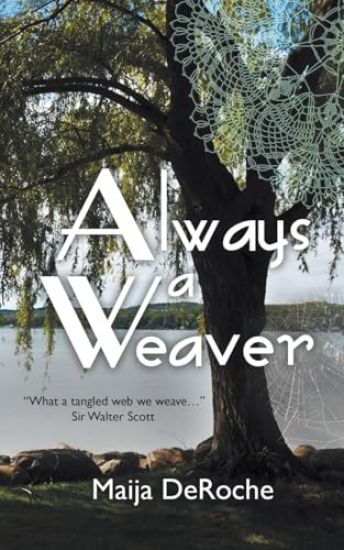
The lives of the Chrysalis quartet members-Christine, Crystal, Alice, and Lisa-continue to be intertwined with worry about failing mothers and troubles of the younger generation, issues with childbirth, and new relationships with representatives of other cultures and nations. Problematic social and cultural issues create tension, yet form strong ties through a web of interlacing fates and mutual problem-solving on such questions as... What should Christine's gay brother Magnus do about his wish to be a parent? Has Lisa's experience with Doctors Without Borders been worth the disturbance for her peace of mind? How can everyone be supportive of Stephanie, a pregnant teen? What will they do about Kaisa, Alice's elderly mother, who insists her new neighbor is a murderer?
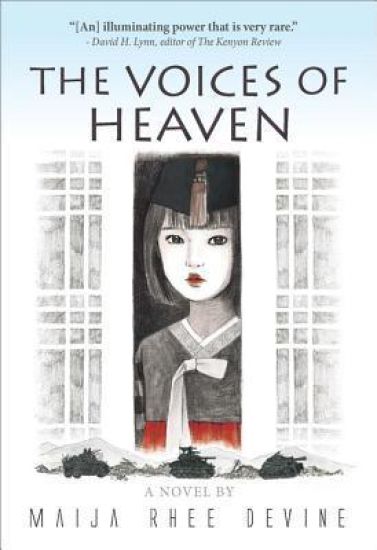
During the final years of the Japanese Occupation, Gui-yong and Eum-chun strike gold by finding ?a love as sweet as sticky rice. But their love for each other and for their secretly adopted daughter is not enough, as they must soon accept the impossible--a mistress moving in to bear Gui-yong the male child deemed necessary in a society still smouldering in Confucianism.
Arteidolia Press 2022 Poetry by maija mist "mist writes 'Listening to your own voice is distinct medicine, ' and this book speaks distinctly as itself. It feels like weaving through the streets when no one is around, lighting fireworks with your friends then falling down high on a blanket, and leaving a party to sit alone outside. It's beautiful, and the poems' languageis like dream speak.They invite you to playin mystery for a while." - Lora Mathis, author of Instinct to Ruin & The Women Widowed to Themselves "Simultaneously celestial and grounded." - Erica Avey, editor of Spectra Poets.
Topsy-Turvy Tasks is a modern nursery rhyme. It's part of a collectible series of six new classics by Latvian authors, translated into English for the first time. Maija Laukmane presents us with a world where everything is out of place. Once one thing changes, daily routines and chores get all mixed up for a child and her pets: soon, Annie is being chased by mice and her dog has taken her place at school. But some things never change. As soon as Morris the cat gets at a bowl of milk, no amount of havoc can prise him away... Sabine Moore's bold illustrations are a mix of cartoon and cut-out styles, bringing their own bright and manic energy to this topsy-turvy world.
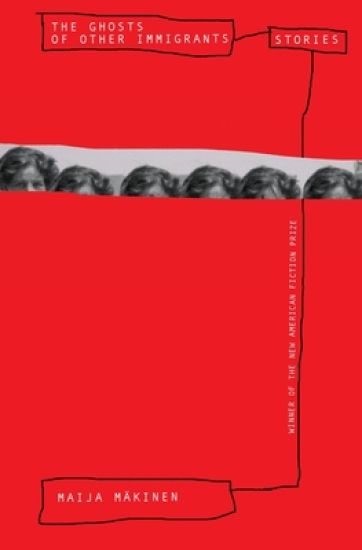
The characters in these stories of migration are marked by heritage and the pasts that follow them wherever they go. A young woman in 1970s Washington, D.C., is changed forever after her love interest is kidnapped; a woman's personal crisis melds with the climate crisis on the darkened shores of Southwest Finland; a Karelian refugee attempts to control her legacy as she nears death; a threesome of young queer immigrants in New York discover their mutual friendship costs more than it gives. Each of these characters tries to find a way to accept-or erase-the ghosts and hollow spaces that follow their displacements.
C-235 lives in a world plagued by war between humans and sentient AI. C is an Angel, a person raised and harvested for body parts. He's allowed to live until 18, and then his body is used to support the Dragons--genetically-superior soldiers--injured in the war. But C possesses a forbidden skill the other Angels don't have: C knows how to read. When Ethan, a Dragon-in-training, notices C covertly reading over his shoulder, the two strike up a friendship, and he begins secretly lending C books. However, after learning that C is scheduled to donate his heart to a prominent Dragon soldier, Ethan decides to find a way to help his friend. If C can learn to read and intercept AI data, he could be spared. But can C prove his worth before it's too late?
This work aims at understanding behavior around location information, including why users share such information, why they protect the data, and what kind of other factors influence the decision to behave in a certain way. This book explores privacy in the context of location data, and answers questions such as what are the privacy related behaviors in this context, and what are the factors influencing such behaviors. The book gives an overview to what privacy means for users in terms of understandings, attitudes and valuations. This book discusses reasons for why research around this topic is challenging, and presents various methods for diving into the topic through empirical studies. The work is relevant for professionals, researchers, and users of technology.